Qutb complex, Building complex in Mehrauli, India.
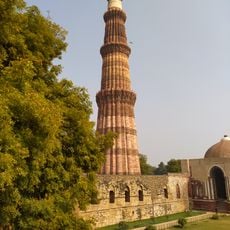
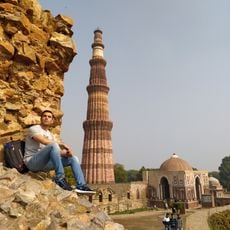
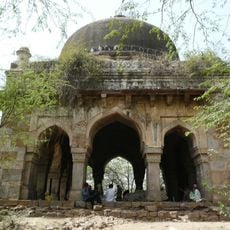
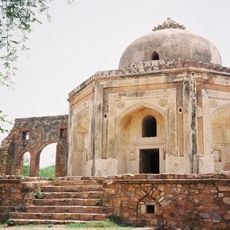
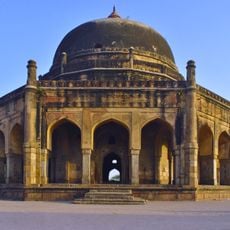
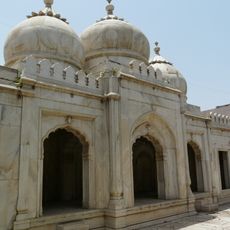
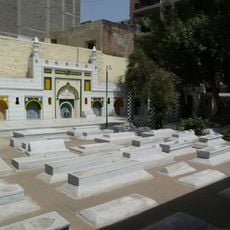
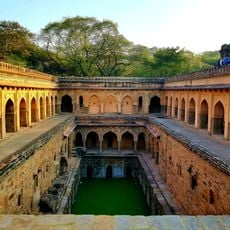
The Qutb complex in Mehrauli, South Delhi, is a walled group of Delhi Sultanate monuments. Its centrepiece is the Qutb Minar, a tapering tower of red sandstone and marble, 72.5 m high, with five storeys, projecting balconies on muqarnas corbels and scalloped brackets, and a shaft that shifts from angular to circular. Beside it stand the Quwwat-ul-Islam Mosque, the Alai Darwaza, the Alai Minar and an iron pillar.
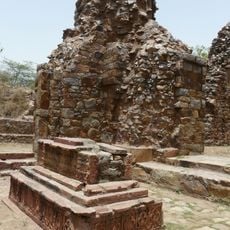
Construction started in 1192 after Turkic forces defeated the Tomar Rajputs, when Qutb-ud-din Aibak ordered the demolition of existing Hindu and Jain temples and raised the Quwwat-ul-Islam Mosque on their foundations. Later rulers added new structures, including Iltutmish, who extended the minaret upward, and Alauddin Khalji, who built a second gateway and further buildings.
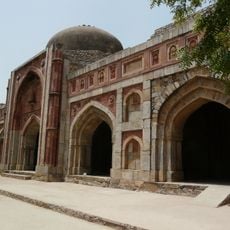
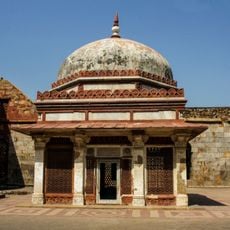
The minaret is named after the Sufi saint Khwaja Qutbuddin Bakhtiar Kaki, not after Sultan Qutb-ud-din Aibak, who began building it. The complex also hosts the annual Qutub Festival in November–December, when artists, musicians and dancers perform over three days. In the mosque courtyard stands the small tomb of Imam Zamin, the mosque's imam under Sikander Lodi (1488–1517).
The minaret viewing platform has been closed to visitors for many years due to safety concerns, but the courtyards, tombs, and archaeological remains remain open to walk through freely. The best time to visit is early morning or late afternoon, when light catches the red sandstone surfaces and crowds thin out.
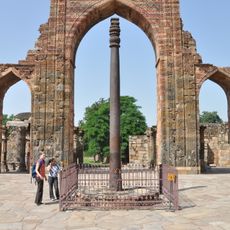
An iron pillar from the 4th century stands in the courtyard, showing an unusual resistance to rust that results from its chemical composition with high phosphorus content. Scientists have studied how ancient craftsmen produced this alloy, which has withstood monsoon rains for over 16 centuries.
The community of curious travelers
AroundUs brings together thousands of curated places, local tips, and hidden gems, enriched daily by 92,297 contributors worldwide.