Tomb of Adham Khan, 16th-century mausoleum in Mehrauli, India
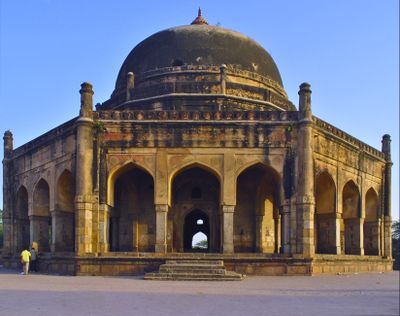
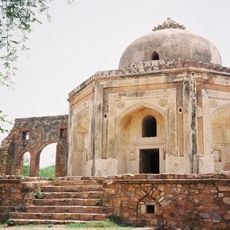
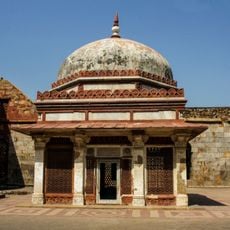
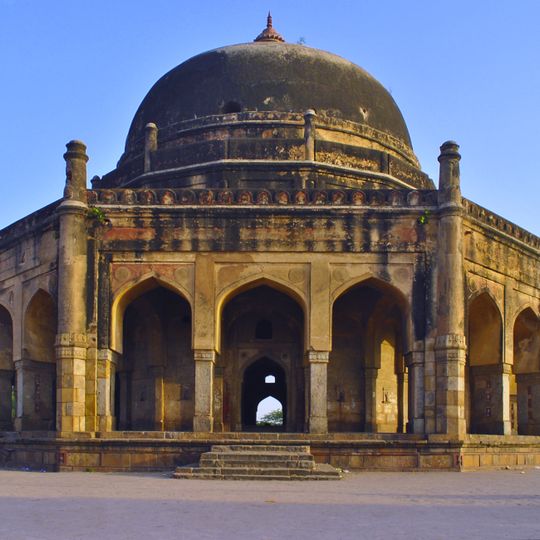
The Tomb of Adham Khan is an octagonal mausoleum of quartzite, its stone weathered to grey, brown and yellow, standing on a terrace within a walled enclosure in Mehrauli, South Delhi. A dark, slightly mottled hemispherical dome with a small finial crowns the building above a band of small arched recesses. Each of the eight faces has a verandah pierced by three large pointed arches on thick pillars, and a short flight of stone steps leads to the central entrance.
Emperor Akbar ordered this tomb built in 1562 for Adham Khan, his foster brother and military commander, following his execution after he killed a senior court official. The structure belongs to an early phase of Mughal building in India, when the style still drew heavily from Lodhi-era architecture.
Locals call the tomb Bul-bulaiyan, meaning labyrinth or maze, because visitors lose their way among the passages inside the thickness of its walls. Adham Khan and his mother Maham Anga, who died on the fortieth day of mourning, are both buried here. The tomb stands opposite the Mehrauli bus terminus, and passengers often wait in its grounds.
The monument is close to Qutub Minar metro station and can be reached on foot through the lanes of Mehrauli village. Entry is free and the site is open during standard daylight hours, so an early morning visit tends to be the quietest time to look around.
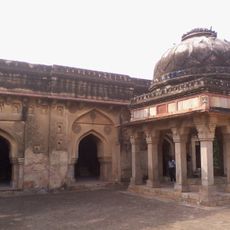
During the 19th century, the British used the building at different times as a residence, a rest house, and a police station before it was eventually recognized as a protected monument. Some marks left by these later uses can still be spotted on the interior walls if you look closely.
The community of curious travelers
AroundUs brings together thousands of curated places, local tips, and hidden gems, enriched daily by 94,561 contributors worldwide.