Hauz-i-Shamsi, Medieval reservoir in Mehrauli, South Delhi, India.
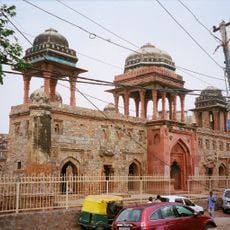
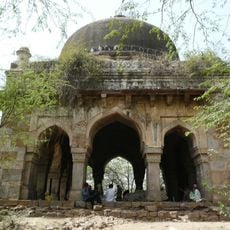
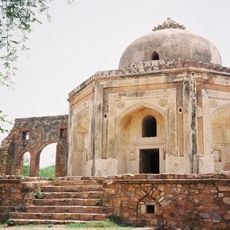
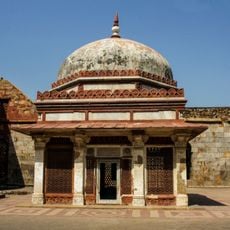
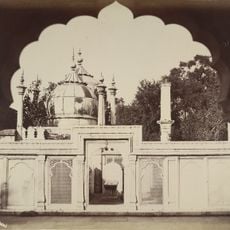
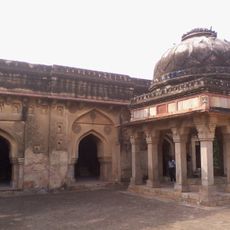
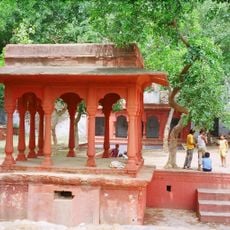
Hauz-i-Shamsi is a large open water tank in Mehrauli, Delhi, built in 1230 CE by Sultan Iltutmish. In its water stands a double-storeyed pavilion of red sandstone blocks, a rounded weathered dome over a band of short vertical supports and a wide eave, carried on twelve plain pillars. The tank originally covered 2 hectares; siltation and encroachment have shrunk it, so the pavilion now sits near the eastern edge and is reached by a footbridge.
Sultan Iltutmish of the Slave Dynasty ordered the construction of this water storage facility around 1230 CE to address the region's water needs. The project reflects how crucial water management was for urban development during the medieval period.
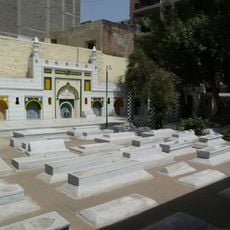
The name Hauz-i-Shamsi means "sunny water tank", also called Shamsi Talab. The tank's water is regarded as sacred, and graves of Muslim saints lie around it. The domed pavilion, now near the south-western corner, originally stood in the centre and could be reached only by boat; a foot-bridge now connects it.
The site is easily accessible by public transportation in South Delhi and is maintained by the Archaeological Survey of India. Visitors should bring water and wear appropriate clothing, especially during the hot season.
The domed pavilion once stood in the middle of the tank and could be reached only by boat; a footbridge now links it to the bank. The stone said to bear the hoof print of Muhammad's horse was removed and replaced by a later one. The tank originally covered 2 hectares, and siltation and encroachment have since pushed the pavilion to the eastern edge.
The community of curious travelers
AroundUs brings together thousands of curated places, local tips, and hidden gems, enriched daily by 94,107 contributors worldwide.