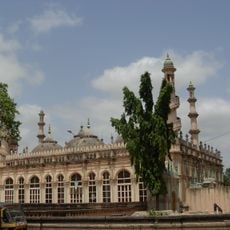
Sakkarbaug Zoological Garden, Zoo in Junagadh district, India.
Sakkarbaug Zoological Garden covers 84 hectares in Junagadh, Gujarat, with about 100 enclosures. In 2008 it held 525 mammals, 597 birds and 111 reptiles. A natural history museum opened in 2003 in a hall of the veterinary hospital, displaying skeletons of two Asiatic lions plus panther, deer, wild boar, antelope, blackbuck, nilgai and spotted deer, along with bird eggs, beaks and feathers.
The facility was founded in 1863 by Mohabat Khanji Babi-II, the ruler of Junagadh state, making it the oldest zoo in India and the fourth largest in the country. This long history reflects its sustained importance as a place for preserving knowledge about animals across many generations.
The zoo's name is thought to come from a freshwater well, sakkar, on the grounds. Its natural history museum opened in 2003 in a hall of the veterinary hospital, with skeletons of two Asiatic lions plus panther, deer, wild boar, antelope, blackbuck, nilgai and spotted deer, and displays of birds' eggs, beaks and feathers.
The zoo lies on the eastern edge of Junagadh, beside the road to Girnar Hill and the Gir Forest, the last wild home of the Asiatic lion. Its 84 hectares are laid out along shaded paths, so allow several hours to walk between the lion enclosures, the vulture breeding centre and the natural history museum in the veterinary hospital.
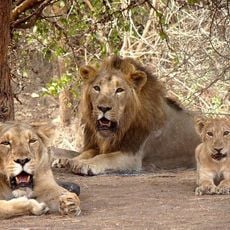
The facility runs a specialized breeding program for Asiatic lions, contributing specimens to international conservation efforts for this endangered species. This work makes it an important player in global animal protection projects.
The community of curious travelers
AroundUs brings together thousands of curated places, local tips, and hidden gems, enriched daily by 93,860 contributors worldwide.