Harmukh Mountain, Sacred mountain summit in Ganderbal district, India
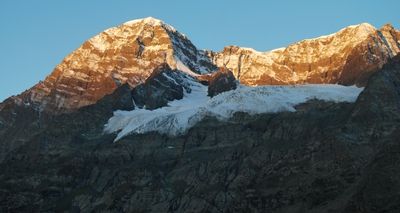
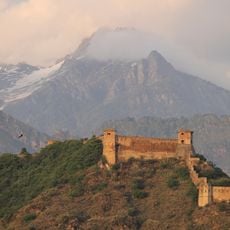
Harmukh, also called Haramukh, is a glaciated Himalayan peak in Ganderbal district, 40 km north of Srinagar, rising between the Sind valley to the south and the Kishanganga to the north. Its massif carries several summits: the highest eastern peak at 5,142 m, a western summit of about 4,875 m used by surveyors, and the lower Station Peak at 4,698 m. The mountain forms a consistently steep pyramid, dropping sharply east and south, with the eastern slope the steepest; Gangabal Lake lies at its northeastern foot.
The mountain was first climbed in 1899 when Dr. Ernest Neve and Geoffrey Millais reached the highest eastern peak after multiple attempts. This expedition marked an important moment in Western mountaineers' exploration of the Himalaya.
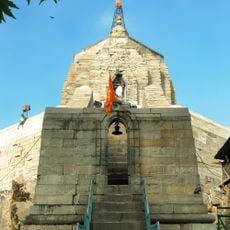
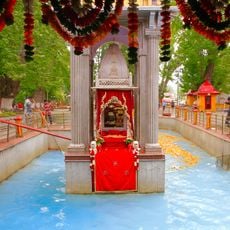
Hindus call Harmukh the "Kailash of Kashmir" and hold it sacred, with Gangabal Lake at its foot. Each year on the eve of Ganga Ashtami the Harmukh Gangbal Yatra sets out from Naranag. The name comes from Haramukuta, "the diadem of Hara (Shiva)", and the whole massif is also called Ramaradhan, where Parashurama is said to have meditated by the lakes.
The easiest approach starts at Erin (Arin) in Bandipore, about 47 km by road from Srinagar, followed by roughly 18 km of high-altitude alpine trek to the base. An alternative trail runs from Naranag to Gangabal Lake at the foot of the peak, but it is steep in places. The mountain is mostly climbed from the northwest side.
In 1856 Thomas Montgomerie of the Great Trigonometric Survey climbed Station Peak, the lowest summit at 4,698 m, and from there surveyed the Karakoram some 210 km north, sketching and labelling the peaks K1 (Masherbrum) and K2. The name Harmukh comes from Haramukuta, "the diadem of Hara (Shiva)".
The community of curious travelers
AroundUs brings together thousands of curated places, local tips, and hidden gems, enriched daily by 92,788 contributors worldwide.