Mount Hor, Mountain in Ma'an Governorate, Jordan
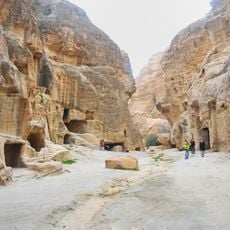
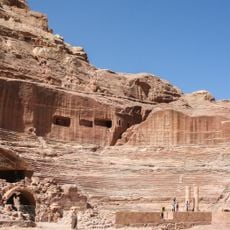
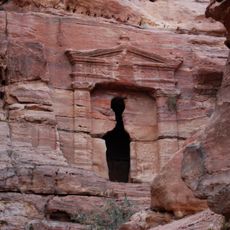
Mount Hor is a mountain near Petra with two prominent peaks and steep rocky slopes rising from the surrounding terrain. The landscape consists of reddish stone formations that stand out against the desert environment of the Edomite range.
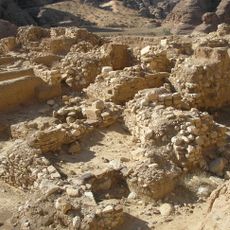
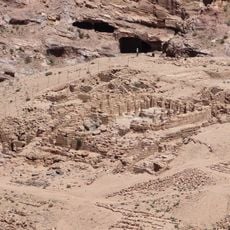
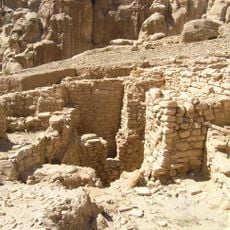
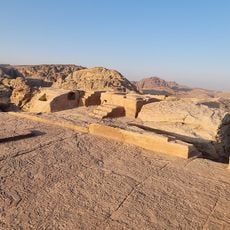
Identified since Josephus with Jebel Nebi Harun, the twin-peaked mountain near Petra, Mount Hor is where Aaron died and was buried according to Numbers 20:23 and 33:37. A 5th-century memorial church became a monastic and pilgrimage centre, called "the House of our Lord the Saint High-Priest Aaron" in a Petra Papyrus of 573. The summit mosque dates from the Mamluk period and was built over a Byzantine church; a Byzantine monastery's remains lie in the western saddle.
Jebel Nebi Harun, "Mountain of the Prophet Aaron" in Arabic, is topped by a Mamluk-period mosque built over the remains of a Byzantine church and held to mark Aaron's tomb. In the saddle west of the summit lie the ruins of a Byzantine monastery dedicated to Aaron; a 573 document from the Petra Papyri calls the site "the House of our Lord the Saint High-Priest Aaron" outside Petra.
The usual route starts from the village of Wadi Musa near Petra and climbs to the twin peaks of Jebel Harun, reaching 1,350 m above sea level. The summit shrine is a Mamluk-period mosque built over a Byzantine church, and the saddle to the west holds the remains of a Byzantine monastery. Carry water and allow several hours for the ascent.
The summit mosque dates from the Mamluk period and was built over the remains of a Byzantine church; in the saddle west of the peak lie the ruins of a Byzantine monastery dedicated to Aaron. A 5th-century memorial church there grew into a monastic and pilgrimage centre, called "the House of our Lord the Saint High-Priest Aaron" in a Petra Papyri document of 573.
The community of curious travelers
AroundUs brings together thousands of curated places, local tips, and hidden gems, enriched daily by 93,109 contributors worldwide.