Temples of Baalbek, Roman archaeological site in Beqaa Valley, Lebanon
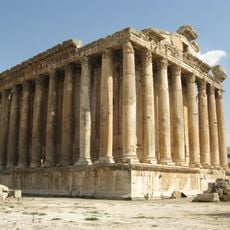
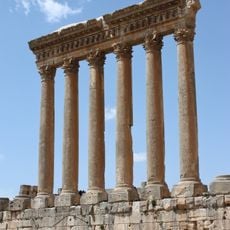
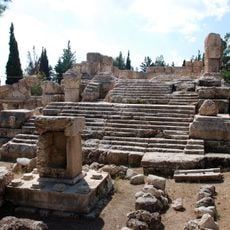
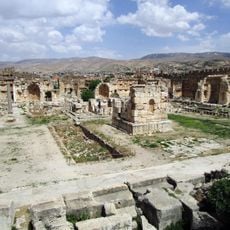
The temples of Baalbek form a sprawling ensemble of Roman sanctuaries in the Beqaa Valley, recognizable by their colossal columns and chiseled facades. The structures extend across several terraces with preserved courtyards, porticos, and the remains of three major temples.
Construction of the Jupiter sanctuary began in the 1st century AD around an ancient prehistoric settlement mound; there is no evidence of pre-Roman sacred architecture or earlier cults. Work continued into the 3rd century, when the temples and the city of Baalbek reached their peak. The temple's destruction, by fire, earthquake or human action, is undated, though most sources point to the 6th century; the anonymous continuator of Zacharias Rhetor reports it burned after a lightning strike in 554.
The god worshipped in the sanctuary is named in numerous inscriptions as Jupiter Optimus Maximus Heliopolitanus. The complex's Greek name Heliopolis, "city of the sun", survives in the modern city name Baalbek. The hexagonal forecourt, 52 by 73 metres, has no known parallel in Roman architecture and its function remains unexplained.
The site is easiest to visit in the morning before midday heat becomes intense in the valley. Sturdy footwear helps when walking over uneven stone pavement and steps.
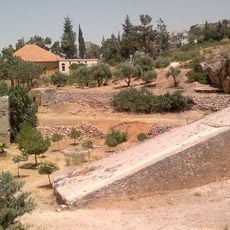
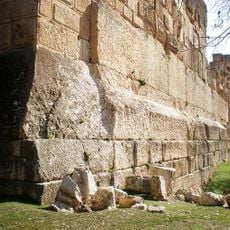
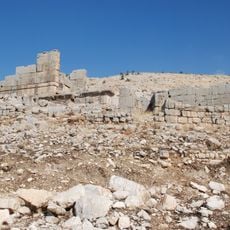
Three stones in the foundation each weigh over 800 tons and rank among the heaviest building components ever moved in antiquity. No one knows exactly how the builders transported and positioned these blocks.
The community of curious travelers
AroundUs brings together thousands of curated places, local tips, and hidden gems, enriched daily by 93,476 contributors worldwide.