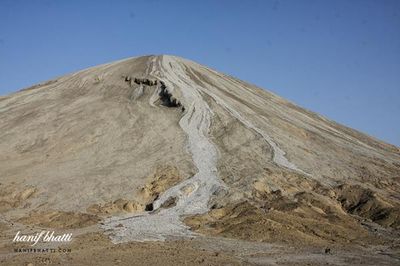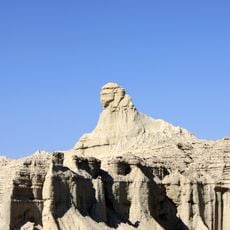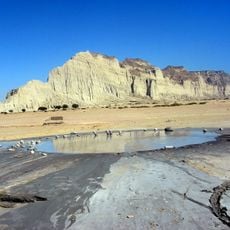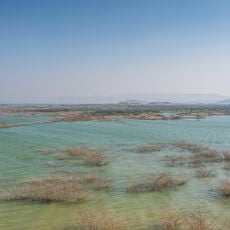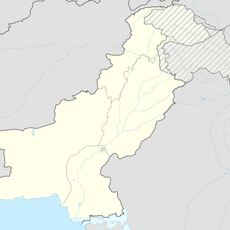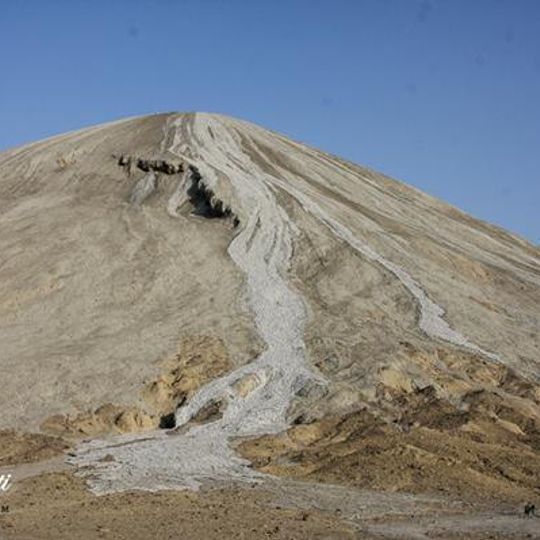
Chandragup, Mud volcano in Lasbela District, Pakistan.
Chandragup is a mud volcano in Lasbela District, Balochistan, Pakistan, with an open crater from which mud and gas continuously rise to the surface. Several active vents surround the main crater, slowly reshaping the ground around them over time.
The mud volcano formed through geological forces acting deep underground over a very long period of time. A 1935 earthquake sharply increased its activity, making the underground processes more visible at the surface.
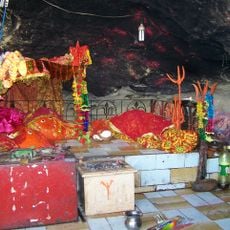
Hindu pilgrims stop at Chandragup on their way to the Hinglaj Mata temple, where they pray and leave offerings at the edge of the crater. For many devotees, this stop is a sacred part of a longer journey through the area.
Reaching the site requires a four-wheel-drive vehicle because the surrounding tracks are unpaved and difficult to navigate. Mobile phone coverage is generally unavailable in the area, so it is worth planning ahead and carrying supplies before setting off.
The area around Chandragup is home to about 80 active mud volcanoes, making it one of the most concentrated groups of this geological feature anywhere in the world. Beneath the crater, large amounts of methane hydrate are trapped, and these can be released suddenly if the ground temperature rises.
The community of curious travelers
AroundUs brings together thousands of curated places, local tips, and hidden gems, enriched daily by 91,821 contributors worldwide.