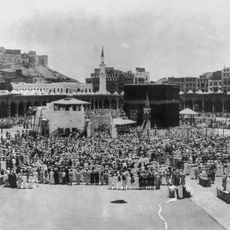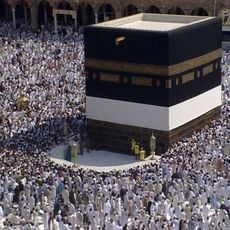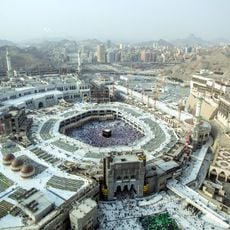
Black Stone, Religious relic in Mecca, Saudi Arabia.
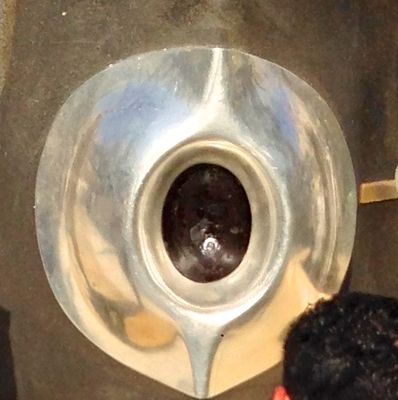
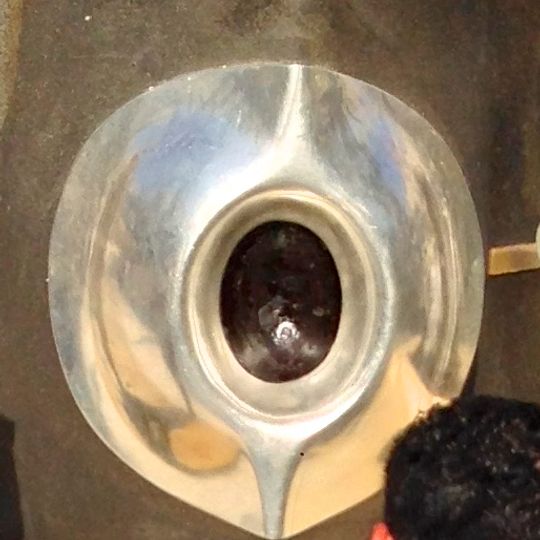
The Black Stone is a dark, polished object set into the eastern corner of Kaaba, held together by a silver frame that binds three large pieces and several smaller fragments. The surface sits about five feet (one and a half meters) above ground level, surrounded by a rounded silver casing that protects and stabilizes the broken pieces.
In 930, members of the Qarmatian sect removed the stone from Mecca and kept it for two decades until it was returned following payment. Over the centuries, the relic has been damaged and repaired multiple times, with the silver casing added later to hold the fragments in place.
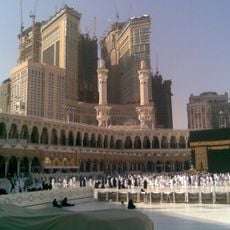
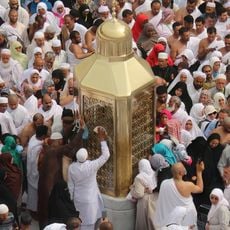
Muslims try to reach toward the stone or touch it during tawaf, the seven circuits around Kaaba, if the crowd allows. This moment is often accompanied by prayer and personal invocations as worshippers move in a steady flow around the central sanctuary.
The relic remains accessible to pilgrims throughout the year, with designated areas for approaching and viewing it during both Hajj and Umrah seasons. Crowds are often heavy, so patience is required, especially during peak pilgrimage months when millions of worshippers are present.
The stone has often been called a meteorite, but it has never been analysed with modern techniques, so its origin remains speculation. In 930 the Qarmatians carried it off to Hajar and held it for about twenty years; it came back broken into seven pieces, prompting the first silver frame.
The community of curious travelers
AroundUs brings together thousands of curated places, local tips, and hidden gems, enriched daily by 92,123 contributors worldwide.