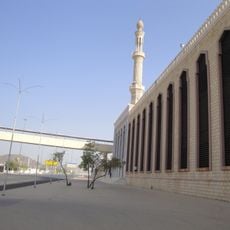
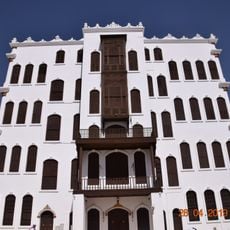
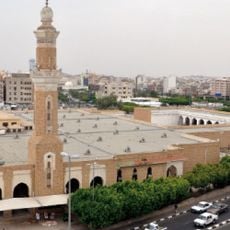
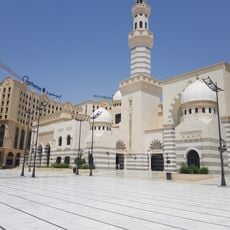
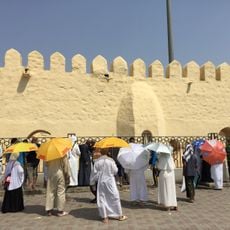
Al Qantara Mosque, Ottoman mosque in Al-Mathnah neighborhood of Taif, Saudi Arabia
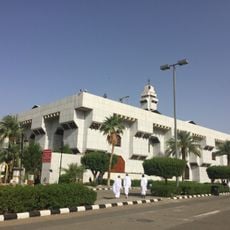
Al Qantara Mosque is a rectangular stone building with walls of irregular light-brown and grey stones set against a rocky hillside in Al-Mathnah, Taif. Its facade has two rectangular windows, and a cylindrical tan-brick tower with a small arched opening and a rounded finial rises from the top. The mosque is ruined and unused, with a hollow exterior mihrab and a projecting sloped roof that channels rainwater through a spout above the mihrab.
The mosque was built in the mid-19th century under Sharif Abd al-Muttalib ibn Ghalib, when Taif belonged to the Ottoman Habesh Eyalet. It marks a site where Muhammad and his adopted son Zayd ibn Harithah rested in an orchard after being stoned and expelled by Taif's leaders around 620 CE, during the Year of Sorrow.
The mosque's three names each come from a different feature: al-Madhoun from the mountain it sits beneath, al-Qantara from the arched bridge built over the spring channel that once ran in front of it, and Qabil from the nearby farm of the Al Qabil family. Pilgrims going to Mecca for Hajj and Umrah still stop here to pray.
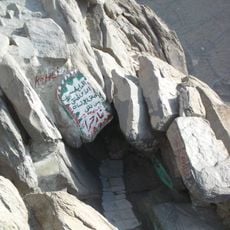
The mosque is abandoned and its structure is collapsing, so it cannot be entered or used for prayer; it is viewed from outside. It stands at the lower north-eastern foot of Jabal al-Madhoun in Al-Mathnah, where a signboard marks the site. Look up at the cylindrical, stepped brick minaret and the projecting, sloping roof above the hollow mihrab.
The orchard where Muhammad and Zayd ibn Harithah rested belonged to Utaba and Sheba, who sent their young Christian slave Addas to tend Muhammad's wounds in his hut. The mosque is named after Jabal al-Madhoun, the mountain on whose lower north-eastern slope it stands.
The community of curious travelers
AroundUs brings together thousands of curated places, local tips, and hidden gems, enriched daily by 93,359 contributors worldwide.