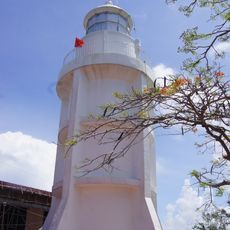
Kê Gà Lighthouse, French colonial lighthouse in Xã Tân Thành, Vietnam
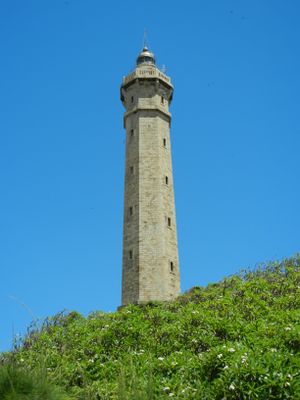
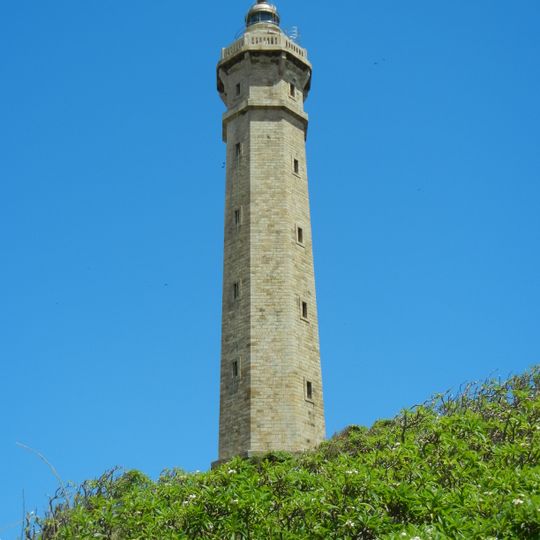
Kê Gà Lighthouse is a cylindrical stone tower with distinctive red and white stripes that stands on a rocky peninsula near Kê Gà Cape. The structure rises to a height of 35 meters and continues to function as a navigation aid for vessels passing through the South China Sea.
French engineers built the lighthouse in 1897 to guide ships through dangerous waters near Kê Gà Cape. The structure has stood for more than a century and reflects the colonial-era maritime engineering that shaped Vietnam's coastal development.
The lighthouse holds meaning for local fishing communities who see it as a guardian of maritime safety and a symbol of their ocean heritage. It represents the cultural exchange between French colonial times and Vietnamese traditions that remains visible in the region today.
To reach the island, visitors must arrange boat transportation since the lighthouse is accessible only by water. Travel is best planned between November and April when weather conditions are more stable and sea conditions calmer.
The name comes from the rocky peninsula's shape, which resembles a chicken's head, giving the lighthouse its Vietnamese name meaning chicken lighthouse. This distinctive geographic feature has helped seafarers for generations recognize and locate the structure.
The community of curious travelers
AroundUs brings together thousands of curated places, local tips, and hidden gems, enriched daily by 91,647 contributors worldwide.