See the monuments around you in AROpen chests in the app
Around Us is built for your phone — point your camera at the streets and discover the monuments and places around you in augmented reality.Around Us is built for your phone — chests unlock when you walk, explore and capture nearby places.
Hidden places in Vermont: granite quarries, covered bridges, historic villages
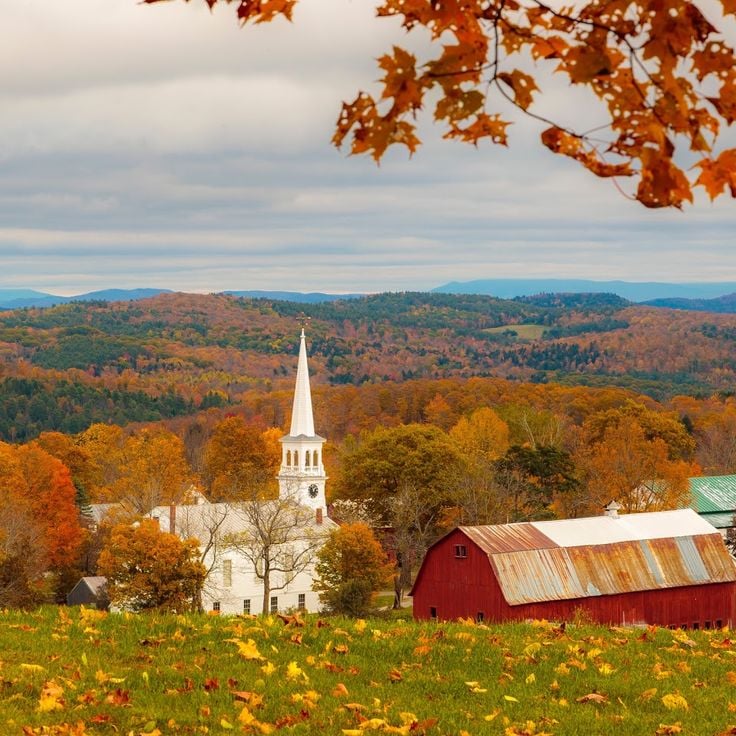
Vermont hides historic places away from main roads, often forgotten by hurried travelers. Here you find granite quarries still working or long abandoned, small rural schools from the 1800s where children learned together, wooden covered bridges, and waterfalls flowing through thick forests. Trails run through the Green Mountains and lead to lakes high in the hills, deserted villages, and farms that families have cared for for many years.
Vermont also shares its stories through well-known houses. The birthplace of Calvin Coolidge in Plymouth Notch has been kept just as it was and turned into a living museum. In Dummerston, Naulakha, the home of writer Rudyard Kipling, shows the work of famous artists. State parks give views over the Champlain Valley and the lake called Champlain. In Proctor, marble exhibits tell the story of the quarries that shaped the area.
These places show how people used to live in Vermont. They learned how to get stone, build homes, run farms, and find skills despite living far apart. This is a trip back into the state’s working past, where each spot has its own little story to tell.
Hidden places in Vermont: granite quarries, covered bridges, historic villages
Vermont hides historic places away from main roads, often forgotten by hurried travelers. Here you find granite quarries still working or long abandoned, small rural schools from the 1800s where children learned together, wooden covered bridges, and waterfalls flowing through thick forests. Trails run through the Green Mountains and lead to lakes high in the hills, deserted villages, and farms that families have cared for for many years.
Vermont also shares its stories through well-known houses. The birthplace of Calvin Coolidge in Plymouth Notch has been kept just as it was and turned into a living museum. In Dummerston, Naulakha, the home of writer Rudyard Kipling, shows the work of famous artists. State parks give views over the Champlain Valley and the lake called Champlain. In Proctor, marble exhibits tell the story of the quarries that shaped the area.
These places show how people used to live in Vermont. They learned how to get stone, build homes, run farms, and find skills despite living far apart. This is a trip back into the state’s working past, where each spot has its own little story to tell.
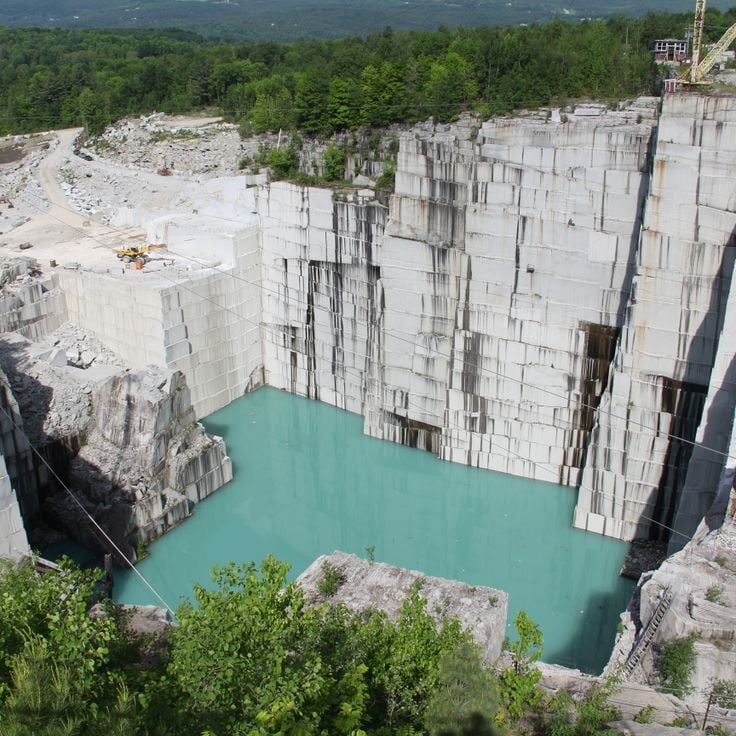
The Rock of Ages granite quarry in Barre is one of the largest granite extraction sites in North America. It has operated since 1885 and shaped the region's economy and identity. Visitors can look down from a viewing platform into the vast pit that cuts deep into the earth. You see workers and machinery removing enormous blocks of granite from the rock face. The site shows the physical demands of quarrying and the stone's importance for buildings and monuments across the world. A museum on site explains the history of granite extraction and its role in Vermont's development.
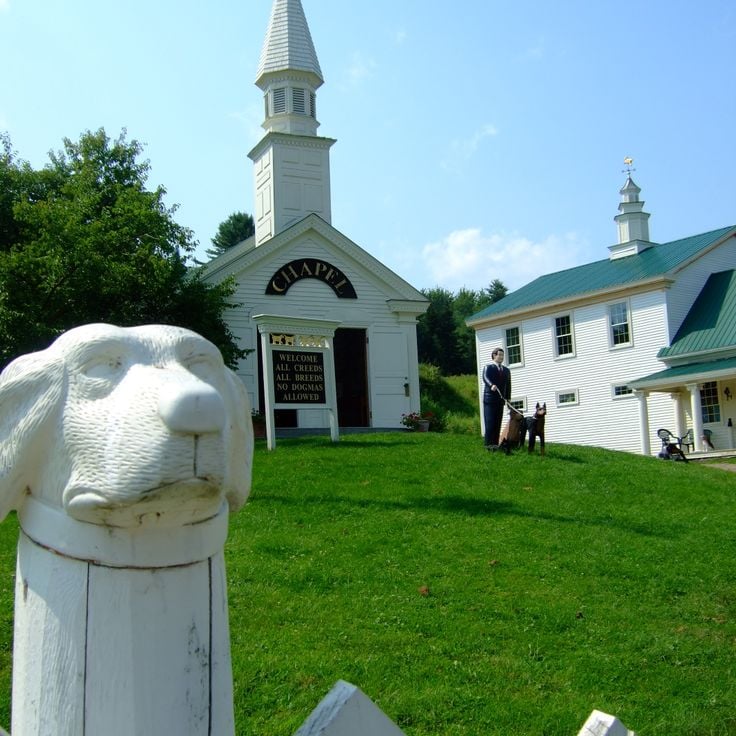
This 60-hectare (150-acre) property in St. Johnsbury was created in 2000 by artist Stephen Huneck as a tribute to dogs. Dog Mountain features several hiking trails that wind through forests and fields, along with an art gallery displaying Huneck's wood sculptures and engravings. At the summit stands a chapel with hand-carved reliefs depicting dogs. A fenced play area allows dogs to run freely and interact with one another.
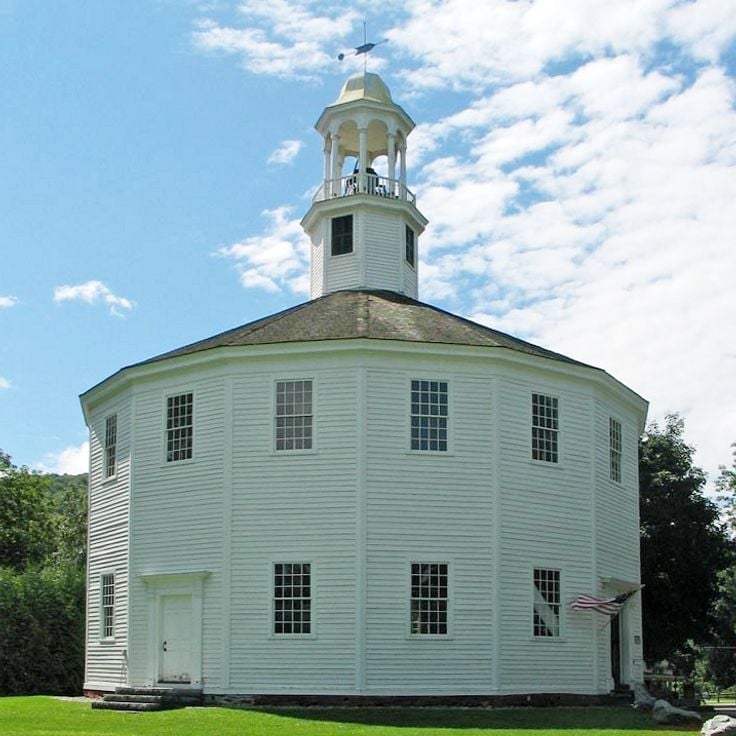
This church in Richmond was built in 1813 and features sixteen sides. Five Protestant denominations shared the building and split the costs and space. The unusual shape allowed the interior to be used efficiently by different congregations. Today, this church stands as a reminder of how religious groups worked together in early Vermont.
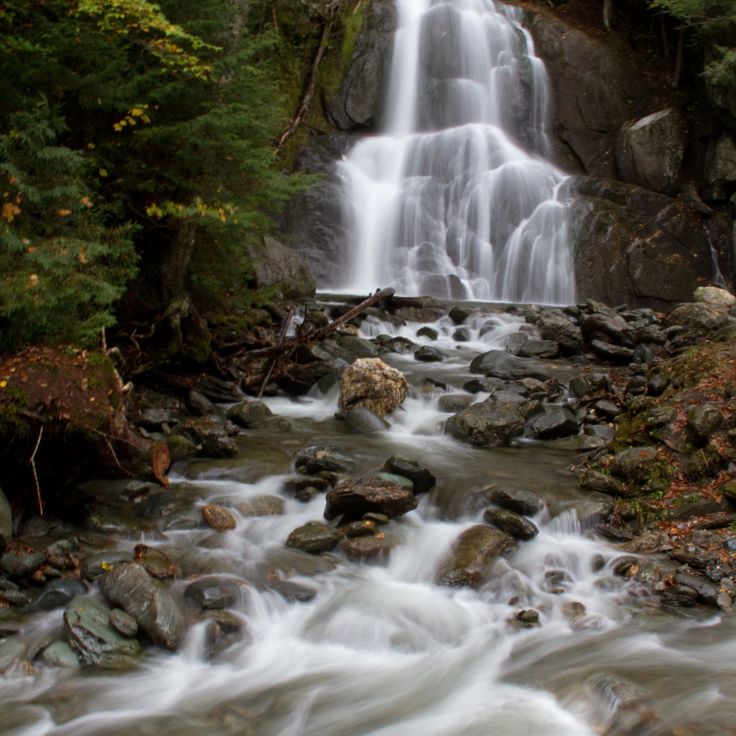
Moss Glen Falls drops about 40 feet in stages over smooth granite ledges in the forest. The water flows into a natural pool at the base of the falls. A short hiking trail leads from the parking area through dense woods to the viewing point. The falls runs strongest in spring when snow melts and after heavy rainfall.
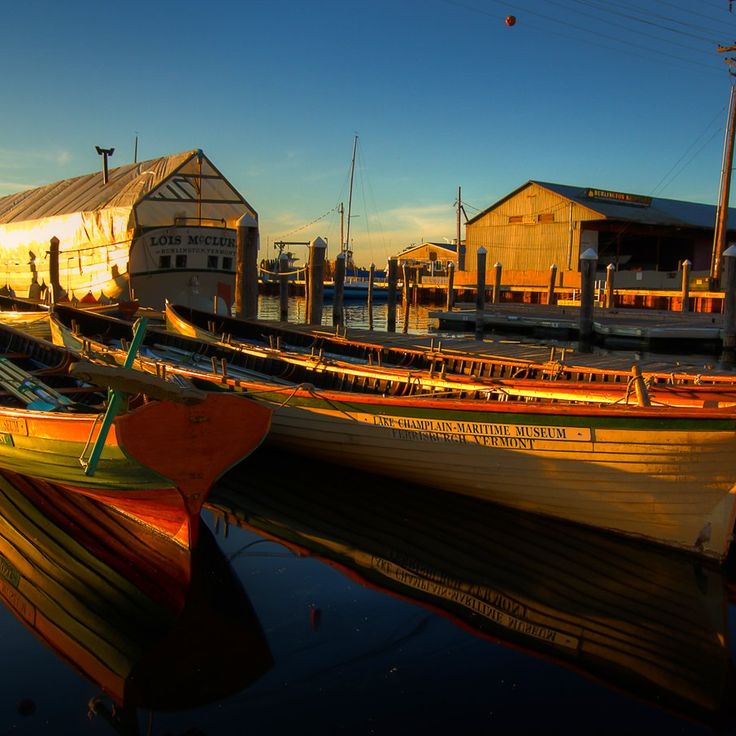
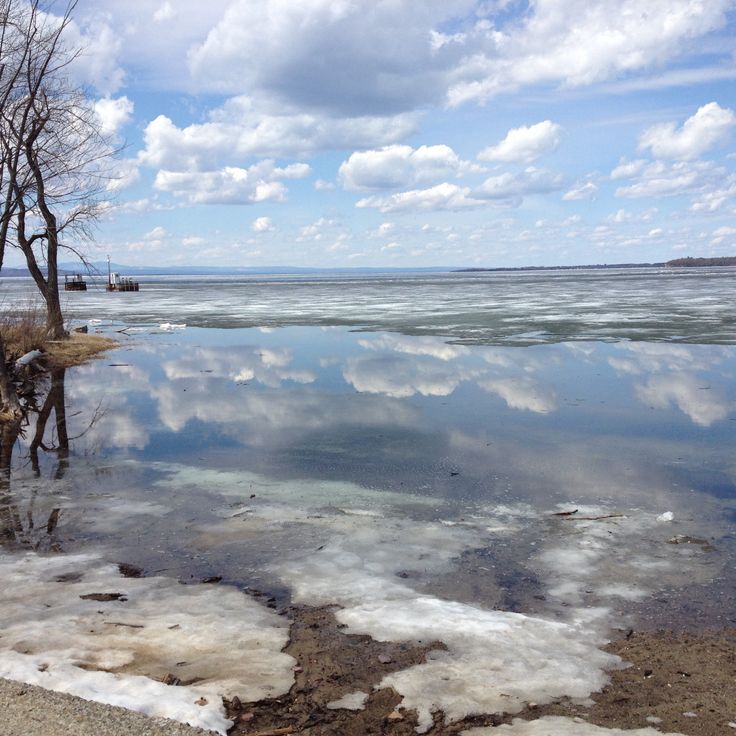
Perkins Pier in Burlington sits on the shore of Lake Champlain as a public walkway where people come to be near the water. From here, you can see across the lake to the Adirondack Mountains in New York. Wooden benches line the pier, and a working dock allows boats to come and go. This spot shows how people in Vermont connect with their lakes and the landscape beyond.
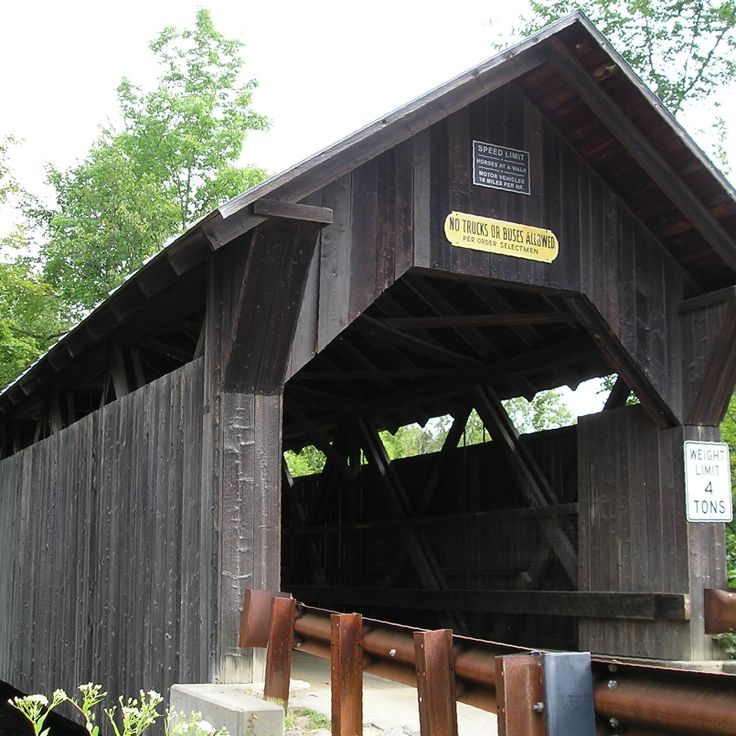
Emily's Bridge is a 19th century covered wooden bridge in Stowe that crosses Gold Brook and is officially named Gold Brook Covered Bridge. The structure follows the traditional design of New England covered bridges with its distinctive wooden roof and sturdy timber framework. Many local stories and legends surround this bridge, making it known for paranormal tales throughout Vermont. Visitors here encounter the craftsmanship of earlier generations and the history of the routes that once connected these thinly settled areas.
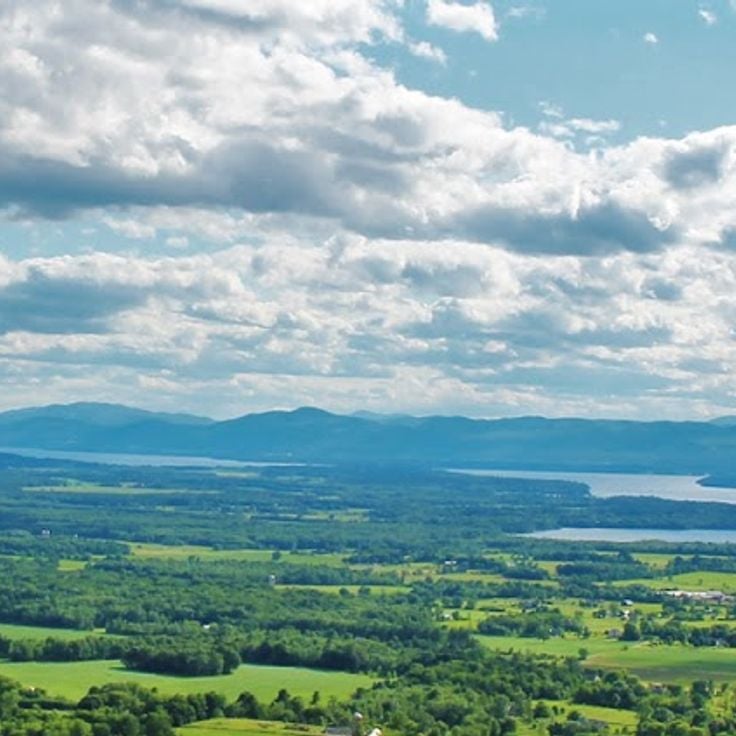
Mount Philo State Park in Charlotte is one of Vermont's earliest state parks, established in 1924. Multiple hiking trails lead to the summit, where visitors can see Lake Champlain, the Adirondack Mountains in New York, and the Green Mountains to the east. The park has picnic areas and a small campground with a few sites. This place shows how Vermont protected its natural spaces early on and how people here have connected nature with recreation.
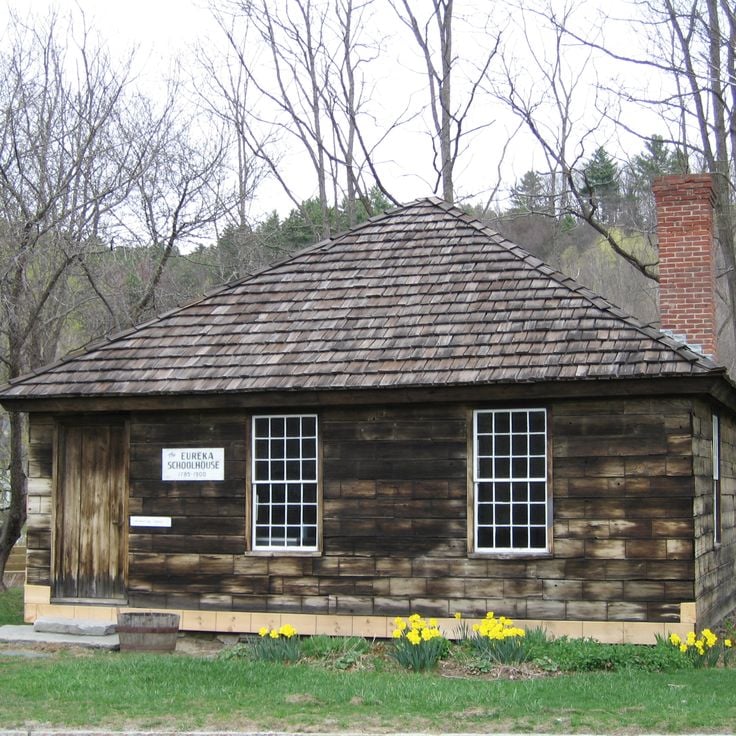
The Eureka Schoolhouse in Springfield is one of the oldest preserved school buildings in the state. Built in 1785, this wood structure shows the simple construction methods of colonial times. Visitors see original student desks, teaching materials, and documents from the 18th and 19th centuries. The schoolhouse tells the story of education in rural New England communities and how children learned together in a single room.
The Calvin Coolidge Homestead in Plymouth Notch displays life on a 19th-century farm. The rooms contain the furniture and personal belongings from the time when the 30th President of the United States grew up here. Much of the furnishing is original and tells the story of Coolidge's modest beginnings. This home is part of Vermont's hidden places that show how people once lived and worked in rural areas.
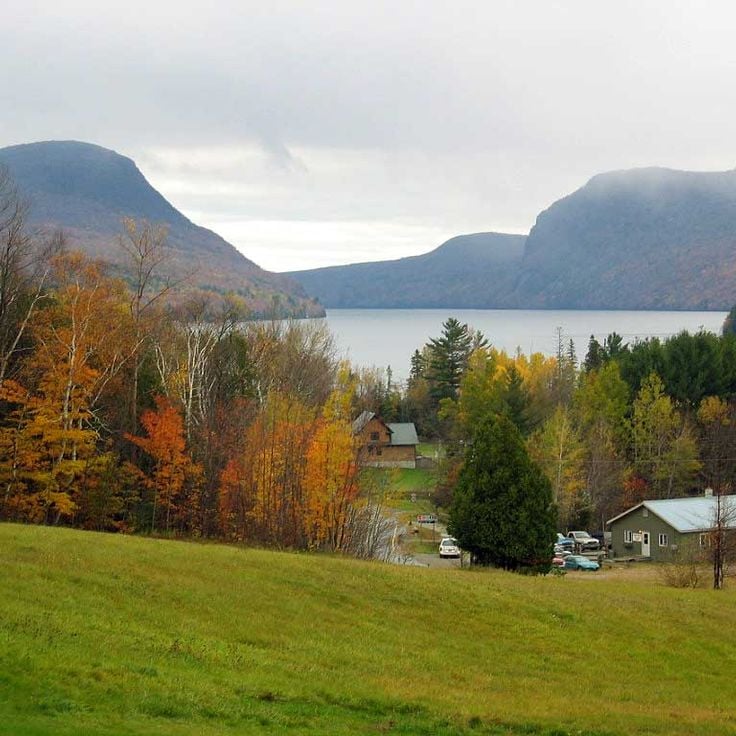
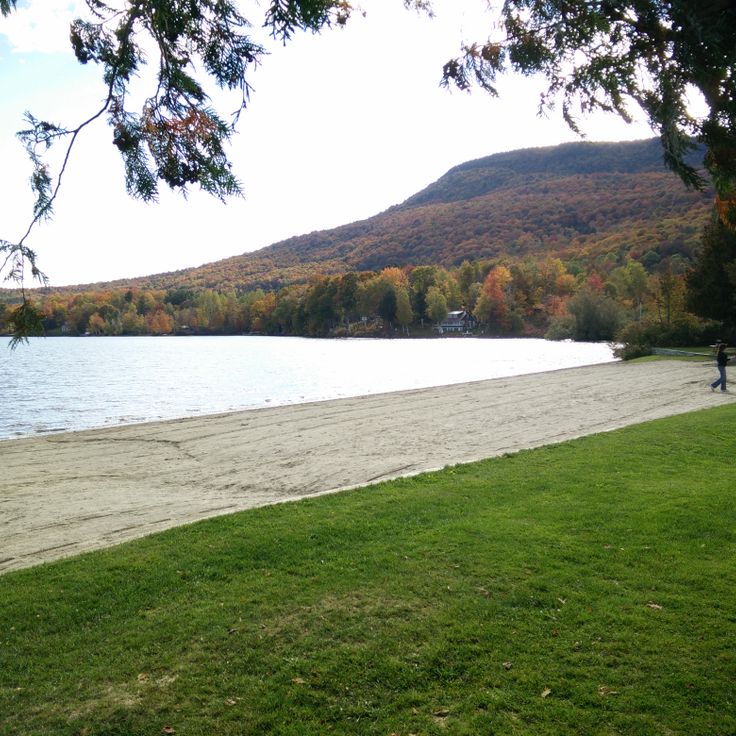
Lac Willoughby sits between two steep mountains and offers deep, clear water that invites swimming. This lake shows the natural character of Vermont, shaped by mountains that rise immediately from the water. Sandy beaches at both ends of the lake allow for summer swimming. The northern beach leads to hiking trails into the mountains, while the southern beach remains quieter. The lake is a place where visitors can directly experience Vermont's landscape, whether swimming, hiking, or simply taking in the mountain views.
The Peacham Library was founded in 1810 and has served its small community for over two centuries as a cultural gathering place and educational resource. The building, made of red brick with white columns, shows the traditional architecture of early New England. Inside, about 10,000 books tell the story of reading and learning in this rural Vermont community. This library is an example of how country villages kept their treasures of knowledge alive and how a simple building became the heart of community life.
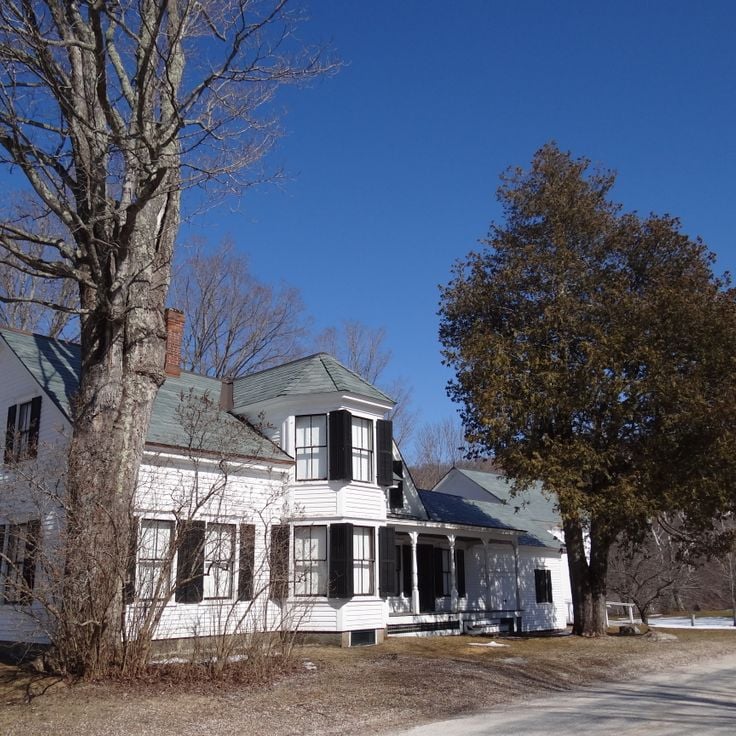
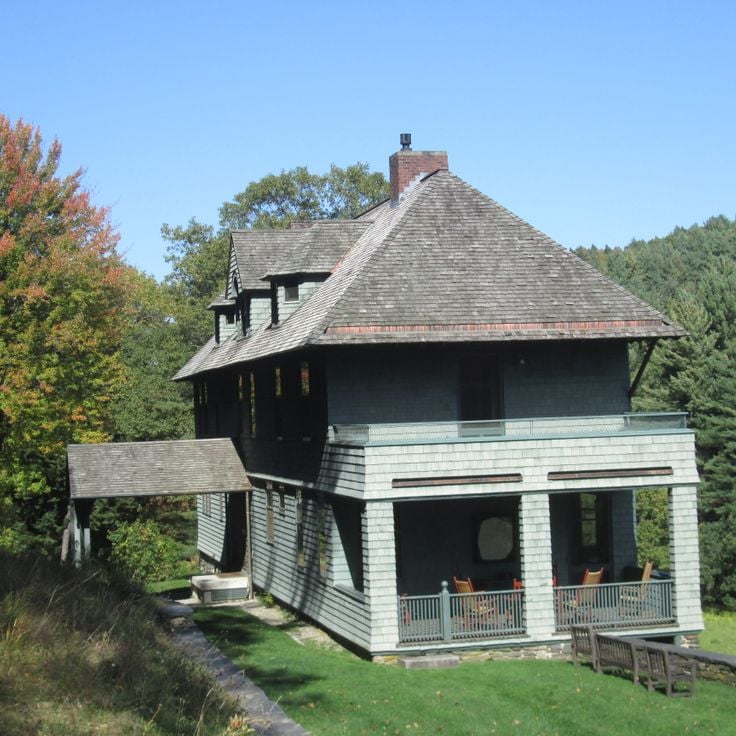
Naulakha is a wooden house built in 1893 in Dummerston that shows Indian architectural influences. The writer Rudyard Kipling lived here during his time in Vermont. The interior preserves furniture and objects from his era. The architecture blends American building traditions with Indian decorative elements and tells the story of Kipling's life between two continents.
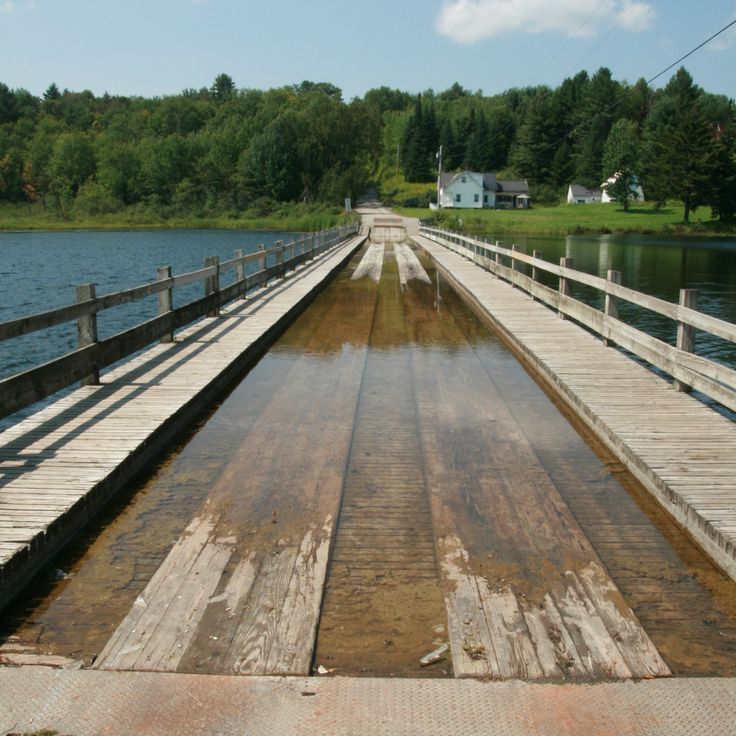
The Floating Bridge of Brookfield has spanned Sunset Lake since 1820 on a system of wooden pontoons, making it one of the few floating bridges still in use in the United States. This unusual structure allows vehicles to cross the water and serves the rural community. The bridge shows how early Vermont residents found creative solutions to connect isolated areas.
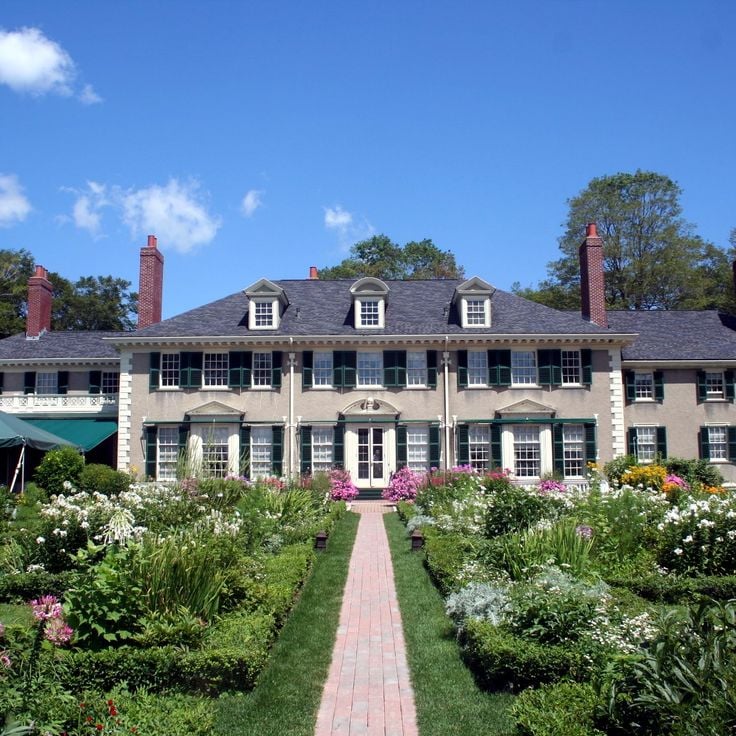
Hildene was built in 1905 as a rural residence for Robert Todd Lincoln, son of President Abraham Lincoln. The estate sits on several hectares and includes the original neoclassical mansion, a working vegetable garden, a goat farm that produces cheese, and exhibits about the Lincoln family. Visitors can walk through the furnished rooms of the house, explore the formal gardens, and learn about the lives and legacy of the Lincoln family through objects and historical records.
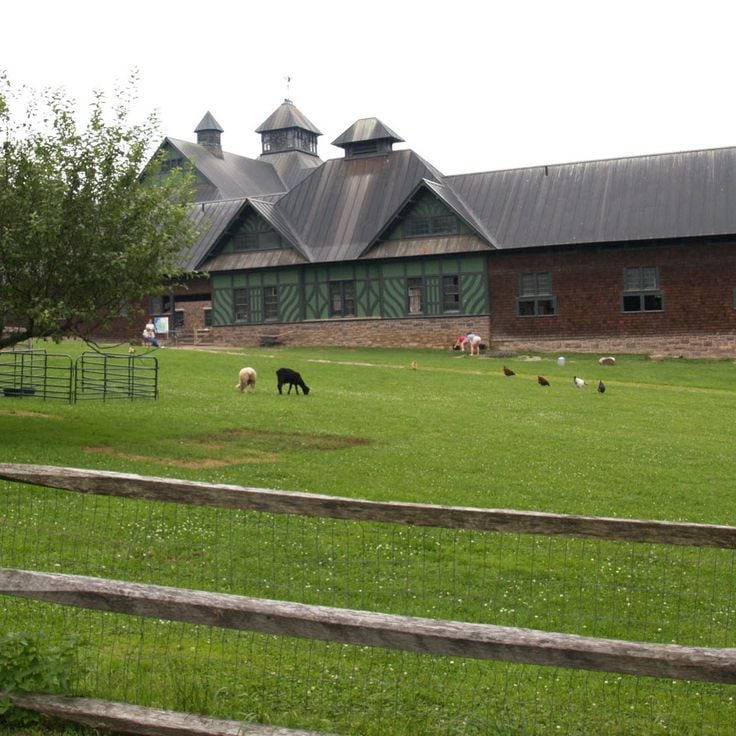
Shelburne Farms is a working farm on Lake Champlain founded in 1886 where visitors can see how cheese is made from the milk of Swiss brown cattle. The farm spans 567 hectares and offers walking trails through pastures, tours of the creamery, and programs about farming and land care. A restored mansion on the property provides lodging, and the farm hosts seasonal meals, educational workshops, and activities for children. It is a place to learn how farming works and how food comes from the land.
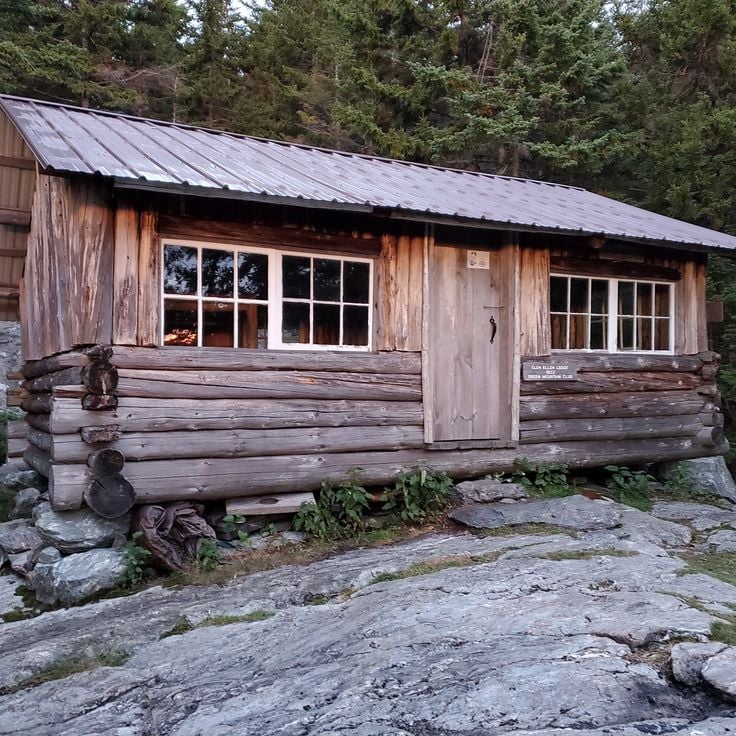
This mountain refuge sits in the isolated forest of the Green Mountains and provides shelter to hikers on the Long Trail. The Glen Ellen Lodge offers basic overnight accommodations for those walking this route through the mountains. The shelter is managed by the Green Mountain Club and serves as an important rest stop for people spending days traveling through nature.
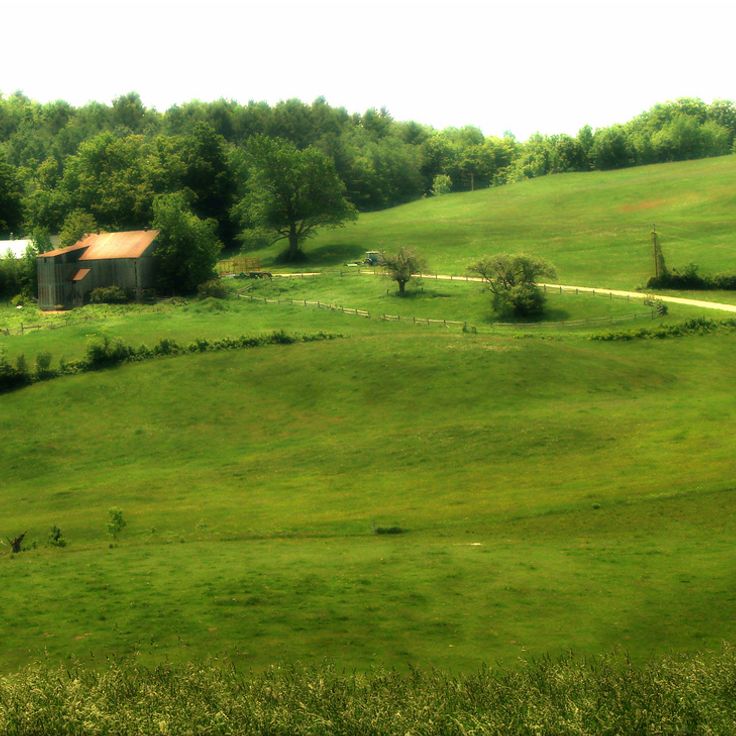
Jenne Farm is an active farmstead from the 1800s set in the rolling hills of Vermont. The property includes several traditional wooden barns with red facades, nestled among maple trees. The buildings date from the period of early American agriculture and show construction styles typical of the region. The farm is surrounded by pasture fields and offers a view into rural New England architecture.
The Interpretive Trail of Robert Frost sits near Ripton and connects a forest walk with the poetry of the American writer. The path runs through birch and spruce forests, with poems by Frost displayed at stations along the way. Each poem relates to the landscape the writer observed. Frost lived in this Vermont area for decades and wrote many of his works here. The loop trail is easy to walk and suitable for everyone. It shows how closely literature and nature are linked.
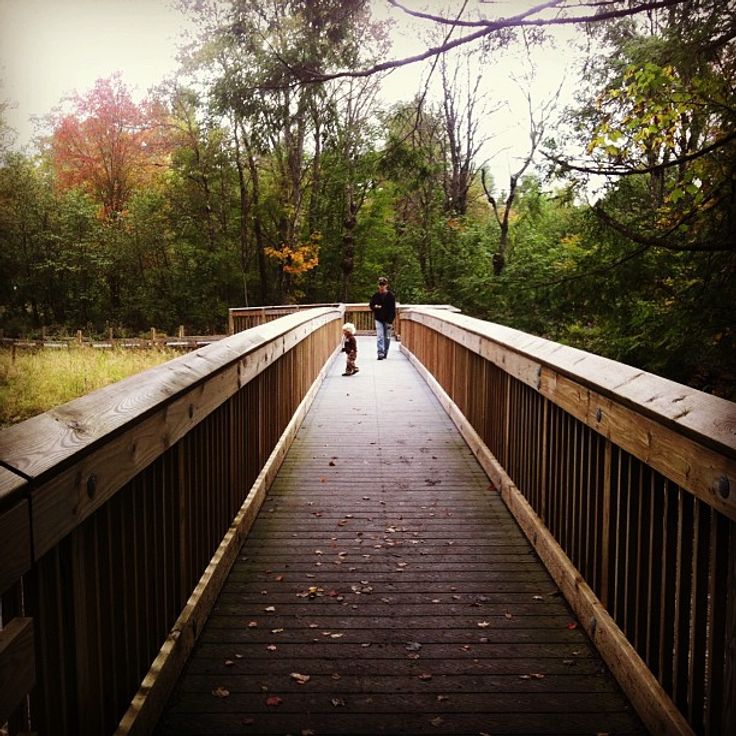
The wooden boardwalk at Great Cedars Swamp Boardwalk in Burlington takes visitors across a historic wetland within Oakledge Park. The elevated pathway lets you observe the marsh ecosystem, where century-old western arborvitae trees, several fern species, and native wetland plants grow. This structure protects the fragile environment while providing access to this natural space on the shores of Lake Champlain.
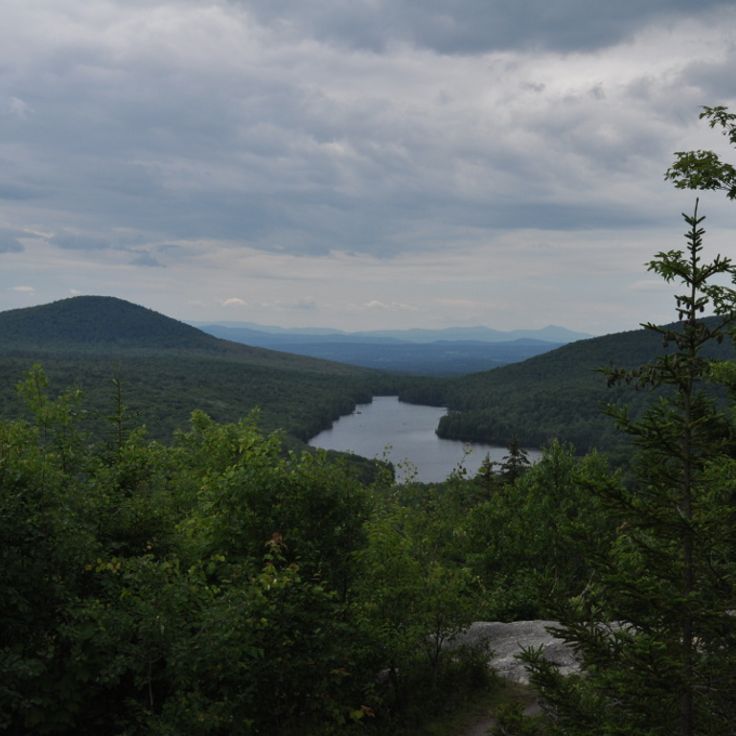
Kettle Pond State Park sits within Groton State Forest and surrounds a glacial lake formed during the last ice age. The park features about 5 kilometers (3 miles) of hiking trails that wind through mixed forests of hardwoods and provide access to the shoreline. The lake welcomes non-motorized boats, including canoes and kayaks. The park offers basic facilities for day visitors and serves as a starting point for exploring the surrounding forest. This place shows how Vermont protects its natural spaces and invites people to experience the variety of its landscapes.
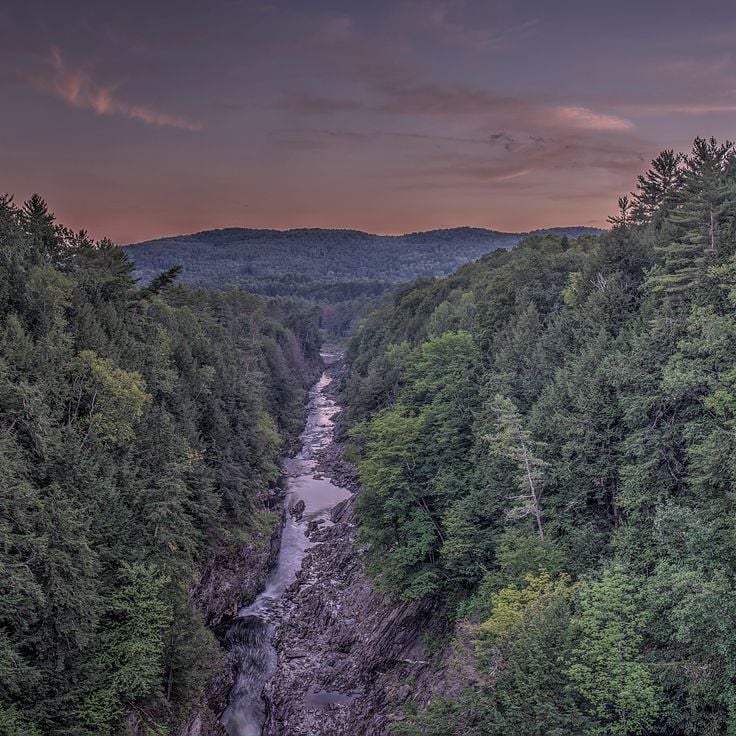
Quechee Gorge cuts about 50 meters deep into the landscape with striking red and brown rock walls. The Ottauquechee River flows through this cleft, which was carved by glacial meltwater at the end of the last ice age. Several hiking trails run along the rim or descend to the riverbed, where you can see the layers of metamorphic rock and watch how water continues to shape the stone.
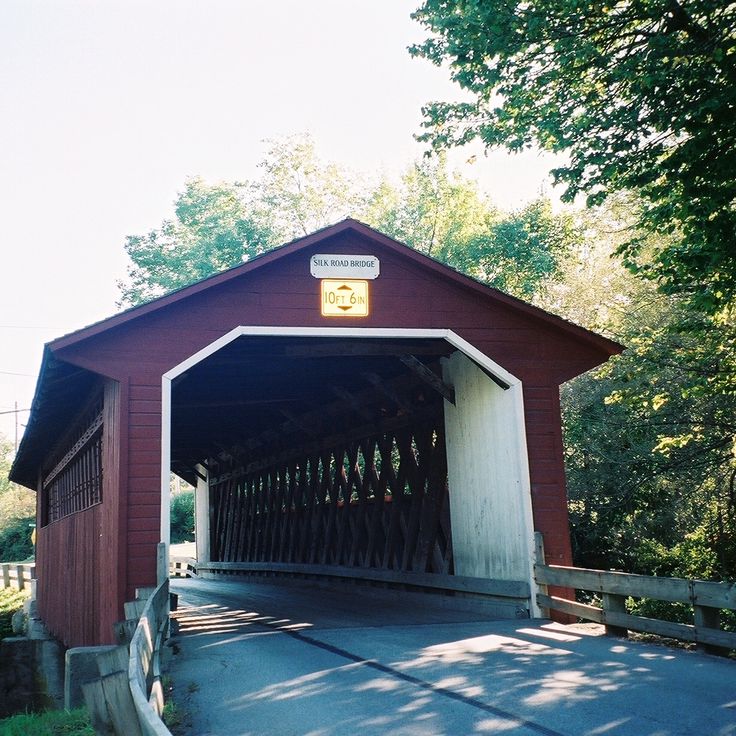
The Silk Road Covered Bridge in Bennington is a wooden structure built in 1840 that shows how engineers built bridges during the 1800s. The covered design protected the wooden beams from weather and wear. Its lattice framework demonstrates the practical solutions carpenters used to build passages over streams for horse-drawn vehicles and people traveling through Vermont's countryside. This bridge stands as a reminder of how rural communities solved transportation challenges and of the craftsmanship that went into everyday structures.
The Green River Reservoir State Park sits in the forests of northern Vermont and offers an undeveloped setting for visitors seeking solitude. The park contains a 264-acre reservoir where motorboats are forbidden. More than 30 basic campsites are accessible only by canoe or kayak. The surrounding forests are home to white-tailed deer, moose, and various bird species. Hiking trails wind through dense woods along the shoreline.
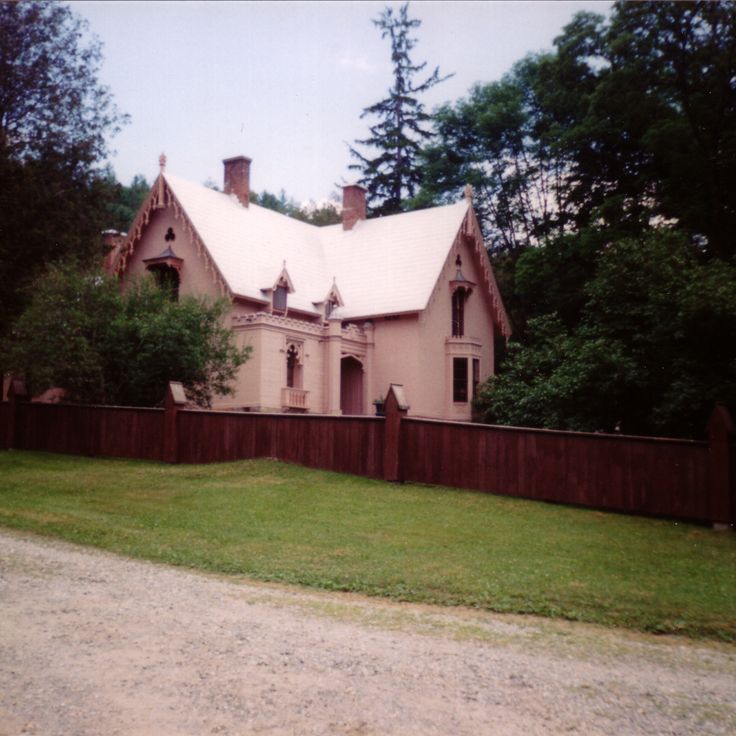
The Morrill Homestead in Strafford is a National Historic Landmark that shows how a powerful senator lived and thought during the 19th century. Justin Morrill played a major role in creating Land-Grant universities across the United States. The house was built in the Gothic Revival style and holds a substantial library along with original furniture from that era. Walking through the rooms gives you a sense of how influential politicians worked and lived during this period.
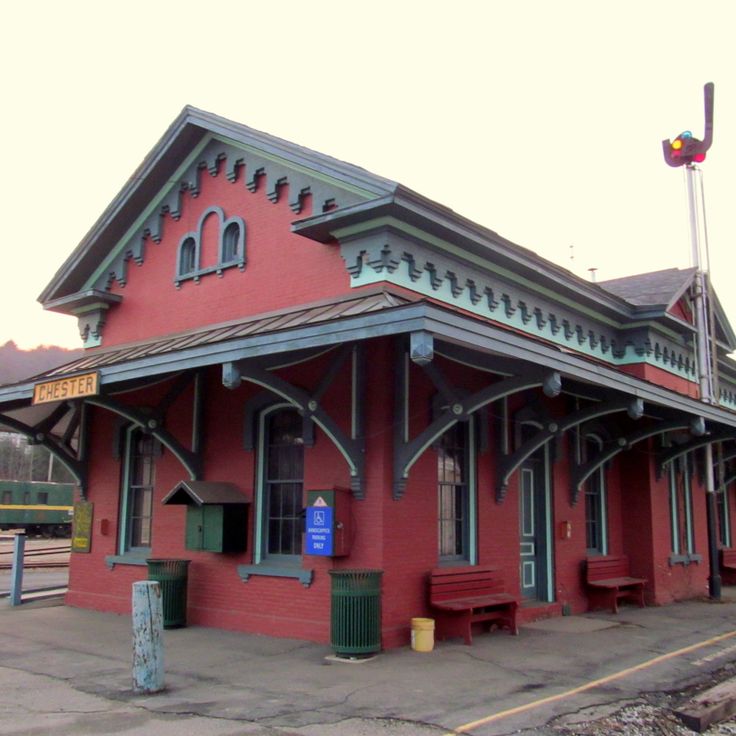
Chester Depot is a Victorian-era train station built in 1871 from red brick with a distinctive tower. This historic railroad building once served as a transportation hub and shows how the railway shaped life in Vermont. Today it stands as an example of 19th-century railroad architecture, telling the story of when trains carried people and goods through the Green Mountains.
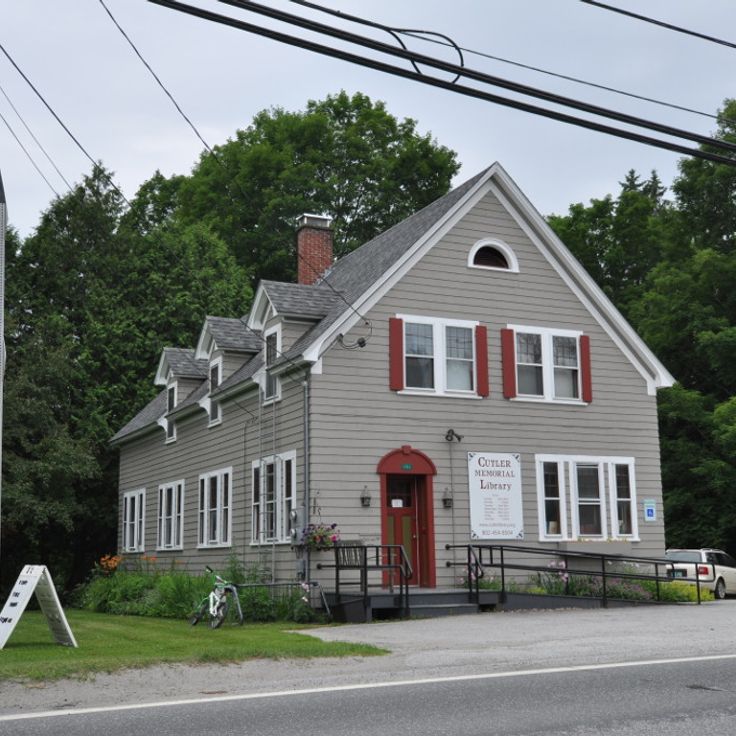
The Cutler Memorial Library in Plainfield was built in 1898 from granite and reflects the craftsmanship of that era. The building preserves original woodwork, carved staircases, and custom-made furnishings. This library serves the community as a public space for reading and events while holding documents related to local history.
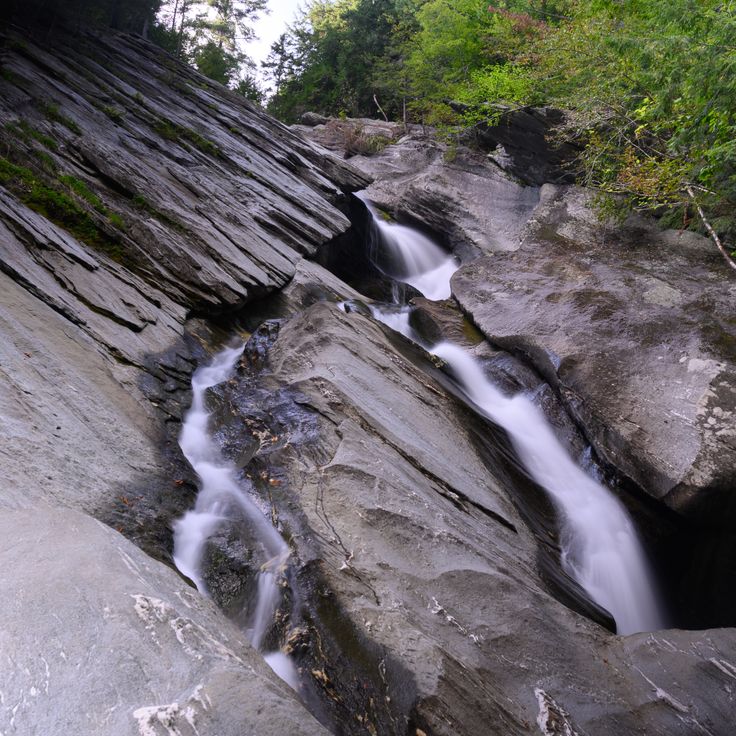
Hamilton Falls in Jamaica State Park is a 38-meter waterfall that plunges in a series of cascades over granite formations. The falls sit surrounded by dense coniferous forest and are reached by hiking about 1.2 miles (2 kilometers) along the Cobb Brook Trail. In spring, when snowmelt swells the water flow, the falls put on their strongest show. These falls are part of Vermont's less-known natural wonders.
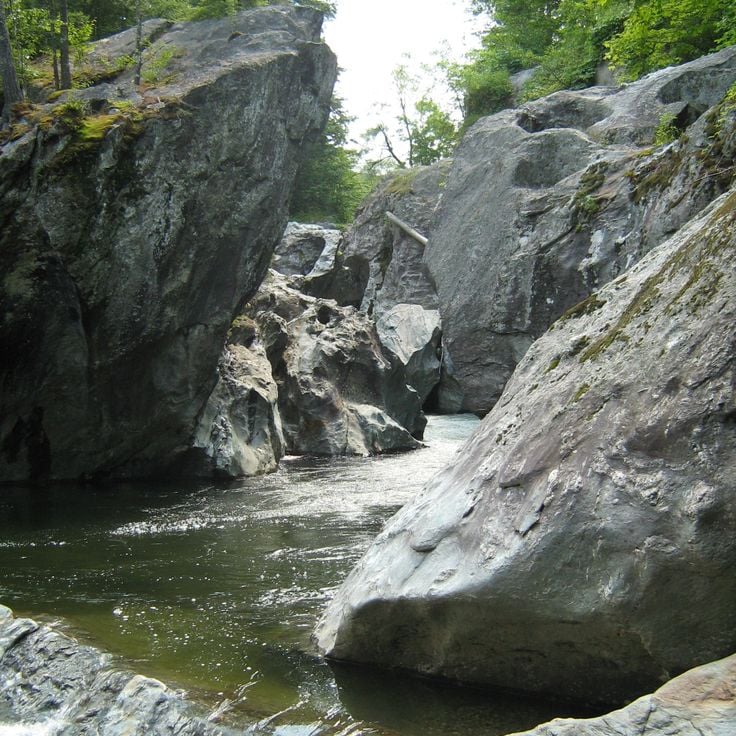
Huntington Gorge in Richmond is a rock chasm carved into the Huntington River about 12000 years ago by glacial erosion during the last ice age. Narrow rock passages guide the water with powerful force, creating several pools in the gorge. The site sits in a wooded setting and draws people interested in how the landscape was shaped. Because of strong currents and slippery rocks, swimming is dangerous and not recommended.
The Poland Covered Bridge spans the Lamoille River at Cambridge with its 43-meter wooden structure. Built in 1896, it continues to serve local traffic by connecting both riverbanks and providing access to farmland and residential areas in the rural countryside. The bridge uses the Town truss system, a building technique widely used for wooden bridges throughout New England. Its design shows how people in this area solved the challenge of crossing rivers with sturdy materials and practical construction methods that have lasted for generations.
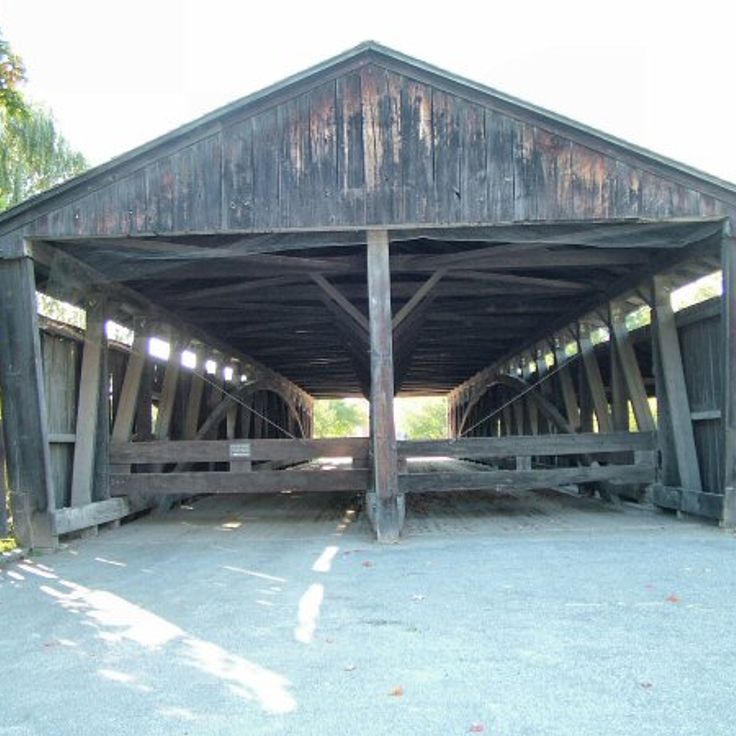
This covered bridge was built in 1845 and later moved to the Shelburne Museum. The wooden structure shows visitors how people built bridges using traditional methods and carpentry skills from the 1800s. The building documents engineering practices of that time and is now part of the museum's historical collections.
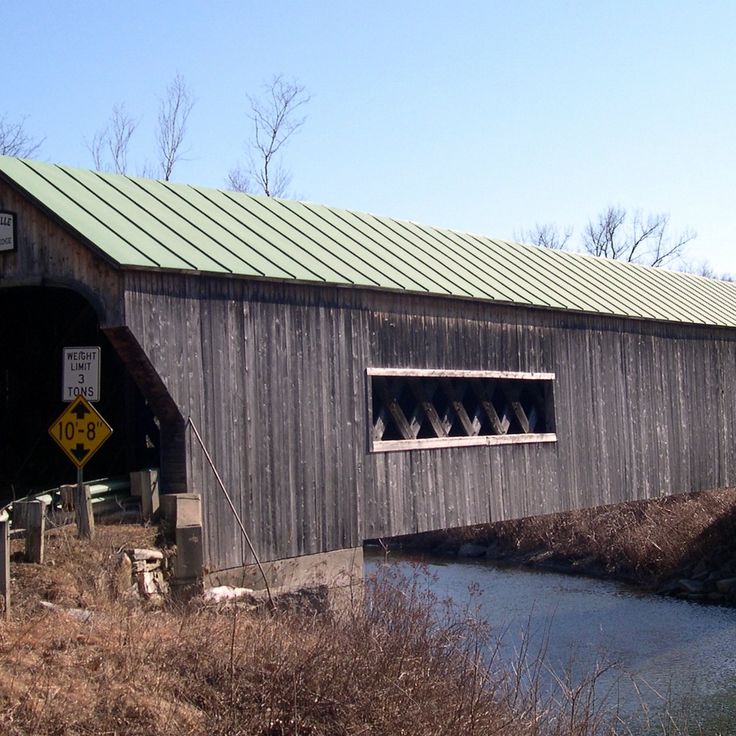
The Bartonsville covered bridge spans the Williams River and was built in 1870. Hurricane Irene completely destroyed this wooden structure in August 2011. Reconstruction took place between 2012 and 2013 using traditional building methods and historical plans. The bridge now serves local traffic and shows how Vermont maintains its architectural heritage. The dark wooden walls and handcrafted construction are typical of bridges from that era.
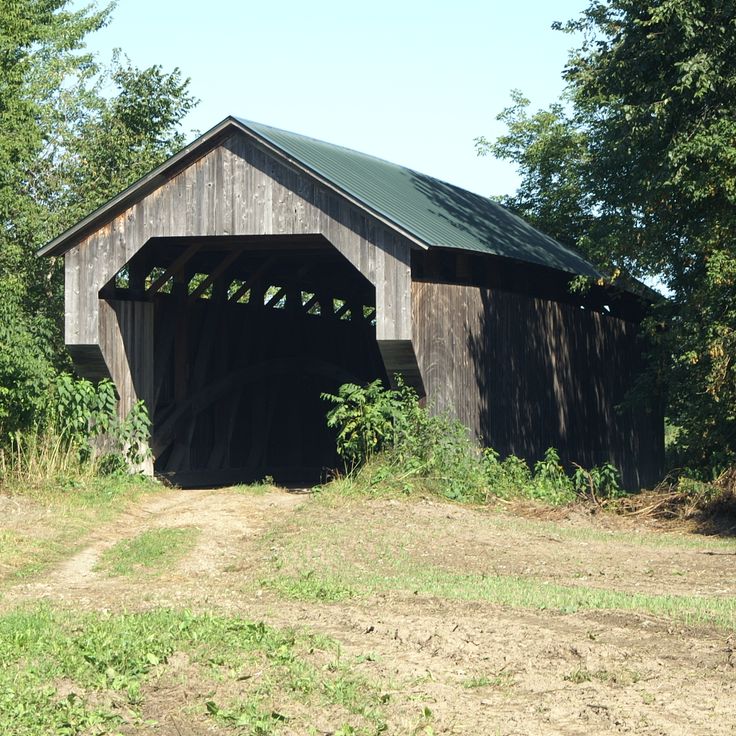
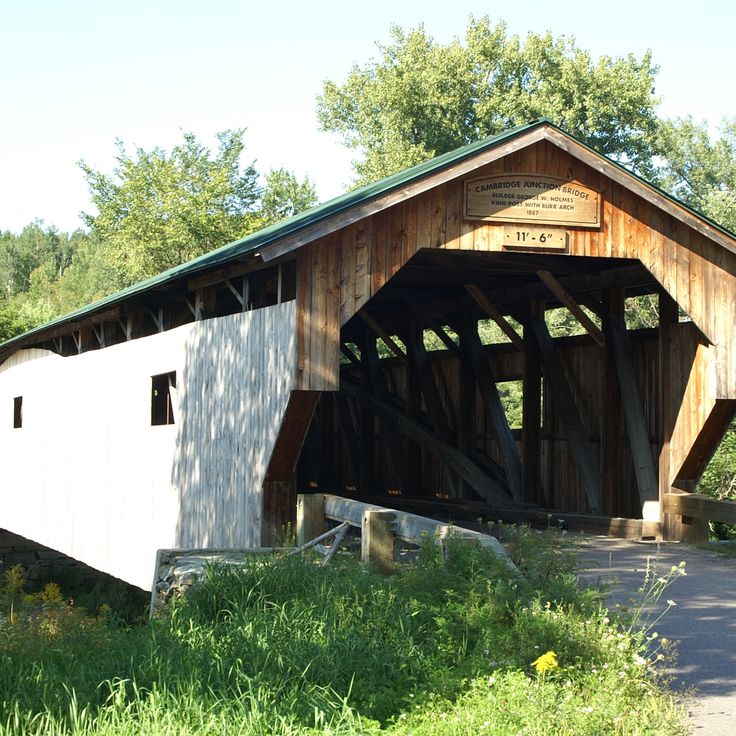
This bridge in Cambridge was built in 1897 to connect the Gates Farm with the main road. It uses the Town truss system and was built from local wood. For more than a century, the bridge has served agricultural traffic. It shows how people in 19th century Vermont built wooden bridges and is part of the state's overlooked places that preserve rural and craftsman heritage.
The Rock of Ages granite quarry in Barre is one of the largest granite extraction sites in North America. It has operated since 1885 and shaped the region's economy and identity. Visitors can look down from a viewing platform into the vast pit that cuts deep into the earth. You see workers and machinery removing enormous blocks of granite from the rock face. The site shows the physical demands of quarrying and the stone's importance for buildings and monuments across the world. A museum on site explains the history of granite extraction and its role in Vermont's development.
This 60-hectare (150-acre) property in St. Johnsbury was created in 2000 by artist Stephen Huneck as a tribute to dogs. Dog Mountain features several hiking trails that wind through forests and fields, along with an art gallery displaying Huneck's wood sculptures and engravings. At the summit stands a chapel with hand-carved reliefs depicting dogs. A fenced play area allows dogs to run freely and interact with one another.
This church in Richmond was built in 1813 and features sixteen sides. Five Protestant denominations shared the building and split the costs and space. The unusual shape allowed the interior to be used efficiently by different congregations. Today, this church stands as a reminder of how religious groups worked together in early Vermont.
Moss Glen Falls drops about 40 feet in stages over smooth granite ledges in the forest. The water flows into a natural pool at the base of the falls. A short hiking trail leads from the parking area through dense woods to the viewing point. The falls runs strongest in spring when snow melts and after heavy rainfall.
Perkins Pier in Burlington sits on the shore of Lake Champlain as a public walkway where people come to be near the water. From here, you can see across the lake to the Adirondack Mountains in New York. Wooden benches line the pier, and a working dock allows boats to come and go. This spot shows how people in Vermont connect with their lakes and the landscape beyond.
Emily's Bridge is a 19th century covered wooden bridge in Stowe that crosses Gold Brook and is officially named Gold Brook Covered Bridge. The structure follows the traditional design of New England covered bridges with its distinctive wooden roof and sturdy timber framework. Many local stories and legends surround this bridge, making it known for paranormal tales throughout Vermont. Visitors here encounter the craftsmanship of earlier generations and the history of the routes that once connected these thinly settled areas.
Mount Philo State Park in Charlotte is one of Vermont's earliest state parks, established in 1924. Multiple hiking trails lead to the summit, where visitors can see Lake Champlain, the Adirondack Mountains in New York, and the Green Mountains to the east. The park has picnic areas and a small campground with a few sites. This place shows how Vermont protected its natural spaces early on and how people here have connected nature with recreation.
The Eureka Schoolhouse in Springfield is one of the oldest preserved school buildings in the state. Built in 1785, this wood structure shows the simple construction methods of colonial times. Visitors see original student desks, teaching materials, and documents from the 18th and 19th centuries. The schoolhouse tells the story of education in rural New England communities and how children learned together in a single room.
The Calvin Coolidge Homestead in Plymouth Notch displays life on a 19th-century farm. The rooms contain the furniture and personal belongings from the time when the 30th President of the United States grew up here. Much of the furnishing is original and tells the story of Coolidge's modest beginnings. This home is part of Vermont's hidden places that show how people once lived and worked in rural areas.
Lac Willoughby sits between two steep mountains and offers deep, clear water that invites swimming. This lake shows the natural character of Vermont, shaped by mountains that rise immediately from the water. Sandy beaches at both ends of the lake allow for summer swimming. The northern beach leads to hiking trails into the mountains, while the southern beach remains quieter. The lake is a place where visitors can directly experience Vermont's landscape, whether swimming, hiking, or simply taking in the mountain views.
The Peacham Library was founded in 1810 and has served its small community for over two centuries as a cultural gathering place and educational resource. The building, made of red brick with white columns, shows the traditional architecture of early New England. Inside, about 10,000 books tell the story of reading and learning in this rural Vermont community. This library is an example of how country villages kept their treasures of knowledge alive and how a simple building became the heart of community life.
Naulakha is a wooden house built in 1893 in Dummerston that shows Indian architectural influences. The writer Rudyard Kipling lived here during his time in Vermont. The interior preserves furniture and objects from his era. The architecture blends American building traditions with Indian decorative elements and tells the story of Kipling's life between two continents.
The Floating Bridge of Brookfield has spanned Sunset Lake since 1820 on a system of wooden pontoons, making it one of the few floating bridges still in use in the United States. This unusual structure allows vehicles to cross the water and serves the rural community. The bridge shows how early Vermont residents found creative solutions to connect isolated areas.
Hildene was built in 1905 as a rural residence for Robert Todd Lincoln, son of President Abraham Lincoln. The estate sits on several hectares and includes the original neoclassical mansion, a working vegetable garden, a goat farm that produces cheese, and exhibits about the Lincoln family. Visitors can walk through the furnished rooms of the house, explore the formal gardens, and learn about the lives and legacy of the Lincoln family through objects and historical records.
Shelburne Farms is a working farm on Lake Champlain founded in 1886 where visitors can see how cheese is made from the milk of Swiss brown cattle. The farm spans 567 hectares and offers walking trails through pastures, tours of the creamery, and programs about farming and land care. A restored mansion on the property provides lodging, and the farm hosts seasonal meals, educational workshops, and activities for children. It is a place to learn how farming works and how food comes from the land.
This mountain refuge sits in the isolated forest of the Green Mountains and provides shelter to hikers on the Long Trail. The Glen Ellen Lodge offers basic overnight accommodations for those walking this route through the mountains. The shelter is managed by the Green Mountain Club and serves as an important rest stop for people spending days traveling through nature.
Jenne Farm is an active farmstead from the 1800s set in the rolling hills of Vermont. The property includes several traditional wooden barns with red facades, nestled among maple trees. The buildings date from the period of early American agriculture and show construction styles typical of the region. The farm is surrounded by pasture fields and offers a view into rural New England architecture.
The Interpretive Trail of Robert Frost sits near Ripton and connects a forest walk with the poetry of the American writer. The path runs through birch and spruce forests, with poems by Frost displayed at stations along the way. Each poem relates to the landscape the writer observed. Frost lived in this Vermont area for decades and wrote many of his works here. The loop trail is easy to walk and suitable for everyone. It shows how closely literature and nature are linked.
The wooden boardwalk at Great Cedars Swamp Boardwalk in Burlington takes visitors across a historic wetland within Oakledge Park. The elevated pathway lets you observe the marsh ecosystem, where century-old western arborvitae trees, several fern species, and native wetland plants grow. This structure protects the fragile environment while providing access to this natural space on the shores of Lake Champlain.
Kettle Pond State Park sits within Groton State Forest and surrounds a glacial lake formed during the last ice age. The park features about 5 kilometers (3 miles) of hiking trails that wind through mixed forests of hardwoods and provide access to the shoreline. The lake welcomes non-motorized boats, including canoes and kayaks. The park offers basic facilities for day visitors and serves as a starting point for exploring the surrounding forest. This place shows how Vermont protects its natural spaces and invites people to experience the variety of its landscapes.
Quechee Gorge cuts about 50 meters deep into the landscape with striking red and brown rock walls. The Ottauquechee River flows through this cleft, which was carved by glacial meltwater at the end of the last ice age. Several hiking trails run along the rim or descend to the riverbed, where you can see the layers of metamorphic rock and watch how water continues to shape the stone.
The Silk Road Covered Bridge in Bennington is a wooden structure built in 1840 that shows how engineers built bridges during the 1800s. The covered design protected the wooden beams from weather and wear. Its lattice framework demonstrates the practical solutions carpenters used to build passages over streams for horse-drawn vehicles and people traveling through Vermont's countryside. This bridge stands as a reminder of how rural communities solved transportation challenges and of the craftsmanship that went into everyday structures.
The Green River Reservoir State Park sits in the forests of northern Vermont and offers an undeveloped setting for visitors seeking solitude. The park contains a 264-acre reservoir where motorboats are forbidden. More than 30 basic campsites are accessible only by canoe or kayak. The surrounding forests are home to white-tailed deer, moose, and various bird species. Hiking trails wind through dense woods along the shoreline.
The Morrill Homestead in Strafford is a National Historic Landmark that shows how a powerful senator lived and thought during the 19th century. Justin Morrill played a major role in creating Land-Grant universities across the United States. The house was built in the Gothic Revival style and holds a substantial library along with original furniture from that era. Walking through the rooms gives you a sense of how influential politicians worked and lived during this period.
Chester Depot is a Victorian-era train station built in 1871 from red brick with a distinctive tower. This historic railroad building once served as a transportation hub and shows how the railway shaped life in Vermont. Today it stands as an example of 19th-century railroad architecture, telling the story of when trains carried people and goods through the Green Mountains.
The Cutler Memorial Library in Plainfield was built in 1898 from granite and reflects the craftsmanship of that era. The building preserves original woodwork, carved staircases, and custom-made furnishings. This library serves the community as a public space for reading and events while holding documents related to local history.
Hamilton Falls in Jamaica State Park is a 38-meter waterfall that plunges in a series of cascades over granite formations. The falls sit surrounded by dense coniferous forest and are reached by hiking about 1.2 miles (2 kilometers) along the Cobb Brook Trail. In spring, when snowmelt swells the water flow, the falls put on their strongest show. These falls are part of Vermont's less-known natural wonders.
Huntington Gorge in Richmond is a rock chasm carved into the Huntington River about 12000 years ago by glacial erosion during the last ice age. Narrow rock passages guide the water with powerful force, creating several pools in the gorge. The site sits in a wooded setting and draws people interested in how the landscape was shaped. Because of strong currents and slippery rocks, swimming is dangerous and not recommended.
The Poland Covered Bridge spans the Lamoille River at Cambridge with its 43-meter wooden structure. Built in 1896, it continues to serve local traffic by connecting both riverbanks and providing access to farmland and residential areas in the rural countryside. The bridge uses the Town truss system, a building technique widely used for wooden bridges throughout New England. Its design shows how people in this area solved the challenge of crossing rivers with sturdy materials and practical construction methods that have lasted for generations.
This covered bridge was built in 1845 and later moved to the Shelburne Museum. The wooden structure shows visitors how people built bridges using traditional methods and carpentry skills from the 1800s. The building documents engineering practices of that time and is now part of the museum's historical collections.
The Bartonsville covered bridge spans the Williams River and was built in 1870. Hurricane Irene completely destroyed this wooden structure in August 2011. Reconstruction took place between 2012 and 2013 using traditional building methods and historical plans. The bridge now serves local traffic and shows how Vermont maintains its architectural heritage. The dark wooden walls and handcrafted construction are typical of bridges from that era.
This bridge in Cambridge was built in 1897 to connect the Gates Farm with the main road. It uses the Town truss system and was built from local wood. For more than a century, the bridge has served agricultural traffic. It shows how people in 19th century Vermont built wooden bridges and is part of the state's overlooked places that preserve rural and craftsman heritage.
The Rock of Ages granite quarry in Barre is one of the largest granite extraction sites in North America. It has operated since 1885 and shaped the region's economy and identity. Visitors can look down from a viewing platform into the vast pit that cuts deep into the earth. You see workers and machinery removing enormous blocks of granite from the rock face. The site shows the physical demands of quarrying and the stone's importance for buildings and monuments across the world. A museum on site explains the history of granite extraction and its role in Vermont's development.
This 60-hectare (150-acre) property in St. Johnsbury was created in 2000 by artist Stephen Huneck as a tribute to dogs. Dog Mountain features several hiking trails that wind through forests and fields, along with an art gallery displaying Huneck's wood sculptures and engravings. At the summit stands a chapel with hand-carved reliefs depicting dogs. A fenced play area allows dogs to run freely and interact with one another.
This church in Richmond was built in 1813 and features sixteen sides. Five Protestant denominations shared the building and split the costs and space. The unusual shape allowed the interior to be used efficiently by different congregations. Today, this church stands as a reminder of how religious groups worked together in early Vermont.
Moss Glen Falls drops about 40 feet in stages over smooth granite ledges in the forest. The water flows into a natural pool at the base of the falls. A short hiking trail leads from the parking area through dense woods to the viewing point. The falls runs strongest in spring when snow melts and after heavy rainfall.
Perkins Pier in Burlington sits on the shore of Lake Champlain as a public walkway where people come to be near the water. From here, you can see across the lake to the Adirondack Mountains in New York. Wooden benches line the pier, and a working dock allows boats to come and go. This spot shows how people in Vermont connect with their lakes and the landscape beyond.
Emily's Bridge is a 19th century covered wooden bridge in Stowe that crosses Gold Brook and is officially named Gold Brook Covered Bridge. The structure follows the traditional design of New England covered bridges with its distinctive wooden roof and sturdy timber framework. Many local stories and legends surround this bridge, making it known for paranormal tales throughout Vermont. Visitors here encounter the craftsmanship of earlier generations and the history of the routes that once connected these thinly settled areas.
Mount Philo State Park in Charlotte is one of Vermont's earliest state parks, established in 1924. Multiple hiking trails lead to the summit, where visitors can see Lake Champlain, the Adirondack Mountains in New York, and the Green Mountains to the east. The park has picnic areas and a small campground with a few sites. This place shows how Vermont protected its natural spaces early on and how people here have connected nature with recreation.
The Eureka Schoolhouse in Springfield is one of the oldest preserved school buildings in the state. Built in 1785, this wood structure shows the simple construction methods of colonial times. Visitors see original student desks, teaching materials, and documents from the 18th and 19th centuries. The schoolhouse tells the story of education in rural New England communities and how children learned together in a single room.
The Calvin Coolidge Homestead in Plymouth Notch displays life on a 19th-century farm. The rooms contain the furniture and personal belongings from the time when the 30th President of the United States grew up here. Much of the furnishing is original and tells the story of Coolidge's modest beginnings. This home is part of Vermont's hidden places that show how people once lived and worked in rural areas.
Lac Willoughby sits between two steep mountains and offers deep, clear water that invites swimming. This lake shows the natural character of Vermont, shaped by mountains that rise immediately from the water. Sandy beaches at both ends of the lake allow for summer swimming. The northern beach leads to hiking trails into the mountains, while the southern beach remains quieter. The lake is a place where visitors can directly experience Vermont's landscape, whether swimming, hiking, or simply taking in the mountain views.
The Peacham Library was founded in 1810 and has served its small community for over two centuries as a cultural gathering place and educational resource. The building, made of red brick with white columns, shows the traditional architecture of early New England. Inside, about 10,000 books tell the story of reading and learning in this rural Vermont community. This library is an example of how country villages kept their treasures of knowledge alive and how a simple building became the heart of community life.
Naulakha is a wooden house built in 1893 in Dummerston that shows Indian architectural influences. The writer Rudyard Kipling lived here during his time in Vermont. The interior preserves furniture and objects from his era. The architecture blends American building traditions with Indian decorative elements and tells the story of Kipling's life between two continents.
The Floating Bridge of Brookfield has spanned Sunset Lake since 1820 on a system of wooden pontoons, making it one of the few floating bridges still in use in the United States. This unusual structure allows vehicles to cross the water and serves the rural community. The bridge shows how early Vermont residents found creative solutions to connect isolated areas.
Hildene was built in 1905 as a rural residence for Robert Todd Lincoln, son of President Abraham Lincoln. The estate sits on several hectares and includes the original neoclassical mansion, a working vegetable garden, a goat farm that produces cheese, and exhibits about the Lincoln family. Visitors can walk through the furnished rooms of the house, explore the formal gardens, and learn about the lives and legacy of the Lincoln family through objects and historical records.
Shelburne Farms is a working farm on Lake Champlain founded in 1886 where visitors can see how cheese is made from the milk of Swiss brown cattle. The farm spans 567 hectares and offers walking trails through pastures, tours of the creamery, and programs about farming and land care. A restored mansion on the property provides lodging, and the farm hosts seasonal meals, educational workshops, and activities for children. It is a place to learn how farming works and how food comes from the land.
This mountain refuge sits in the isolated forest of the Green Mountains and provides shelter to hikers on the Long Trail. The Glen Ellen Lodge offers basic overnight accommodations for those walking this route through the mountains. The shelter is managed by the Green Mountain Club and serves as an important rest stop for people spending days traveling through nature.
Jenne Farm is an active farmstead from the 1800s set in the rolling hills of Vermont. The property includes several traditional wooden barns with red facades, nestled among maple trees. The buildings date from the period of early American agriculture and show construction styles typical of the region. The farm is surrounded by pasture fields and offers a view into rural New England architecture.
The Interpretive Trail of Robert Frost sits near Ripton and connects a forest walk with the poetry of the American writer. The path runs through birch and spruce forests, with poems by Frost displayed at stations along the way. Each poem relates to the landscape the writer observed. Frost lived in this Vermont area for decades and wrote many of his works here. The loop trail is easy to walk and suitable for everyone. It shows how closely literature and nature are linked.
The wooden boardwalk at Great Cedars Swamp Boardwalk in Burlington takes visitors across a historic wetland within Oakledge Park. The elevated pathway lets you observe the marsh ecosystem, where century-old western arborvitae trees, several fern species, and native wetland plants grow. This structure protects the fragile environment while providing access to this natural space on the shores of Lake Champlain.
Kettle Pond State Park sits within Groton State Forest and surrounds a glacial lake formed during the last ice age. The park features about 5 kilometers (3 miles) of hiking trails that wind through mixed forests of hardwoods and provide access to the shoreline. The lake welcomes non-motorized boats, including canoes and kayaks. The park offers basic facilities for day visitors and serves as a starting point for exploring the surrounding forest. This place shows how Vermont protects its natural spaces and invites people to experience the variety of its landscapes.
Quechee Gorge cuts about 50 meters deep into the landscape with striking red and brown rock walls. The Ottauquechee River flows through this cleft, which was carved by glacial meltwater at the end of the last ice age. Several hiking trails run along the rim or descend to the riverbed, where you can see the layers of metamorphic rock and watch how water continues to shape the stone.
The Silk Road Covered Bridge in Bennington is a wooden structure built in 1840 that shows how engineers built bridges during the 1800s. The covered design protected the wooden beams from weather and wear. Its lattice framework demonstrates the practical solutions carpenters used to build passages over streams for horse-drawn vehicles and people traveling through Vermont's countryside. This bridge stands as a reminder of how rural communities solved transportation challenges and of the craftsmanship that went into everyday structures.
The Green River Reservoir State Park sits in the forests of northern Vermont and offers an undeveloped setting for visitors seeking solitude. The park contains a 264-acre reservoir where motorboats are forbidden. More than 30 basic campsites are accessible only by canoe or kayak. The surrounding forests are home to white-tailed deer, moose, and various bird species. Hiking trails wind through dense woods along the shoreline.
The Morrill Homestead in Strafford is a National Historic Landmark that shows how a powerful senator lived and thought during the 19th century. Justin Morrill played a major role in creating Land-Grant universities across the United States. The house was built in the Gothic Revival style and holds a substantial library along with original furniture from that era. Walking through the rooms gives you a sense of how influential politicians worked and lived during this period.
Chester Depot is a Victorian-era train station built in 1871 from red brick with a distinctive tower. This historic railroad building once served as a transportation hub and shows how the railway shaped life in Vermont. Today it stands as an example of 19th-century railroad architecture, telling the story of when trains carried people and goods through the Green Mountains.
The Cutler Memorial Library in Plainfield was built in 1898 from granite and reflects the craftsmanship of that era. The building preserves original woodwork, carved staircases, and custom-made furnishings. This library serves the community as a public space for reading and events while holding documents related to local history.
Hamilton Falls in Jamaica State Park is a 38-meter waterfall that plunges in a series of cascades over granite formations. The falls sit surrounded by dense coniferous forest and are reached by hiking about 1.2 miles (2 kilometers) along the Cobb Brook Trail. In spring, when snowmelt swells the water flow, the falls put on their strongest show. These falls are part of Vermont's less-known natural wonders.
Huntington Gorge in Richmond is a rock chasm carved into the Huntington River about 12000 years ago by glacial erosion during the last ice age. Narrow rock passages guide the water with powerful force, creating several pools in the gorge. The site sits in a wooded setting and draws people interested in how the landscape was shaped. Because of strong currents and slippery rocks, swimming is dangerous and not recommended.
The Poland Covered Bridge spans the Lamoille River at Cambridge with its 43-meter wooden structure. Built in 1896, it continues to serve local traffic by connecting both riverbanks and providing access to farmland and residential areas in the rural countryside. The bridge uses the Town truss system, a building technique widely used for wooden bridges throughout New England. Its design shows how people in this area solved the challenge of crossing rivers with sturdy materials and practical construction methods that have lasted for generations.
This covered bridge was built in 1845 and later moved to the Shelburne Museum. The wooden structure shows visitors how people built bridges using traditional methods and carpentry skills from the 1800s. The building documents engineering practices of that time and is now part of the museum's historical collections.
The Bartonsville covered bridge spans the Williams River and was built in 1870. Hurricane Irene completely destroyed this wooden structure in August 2011. Reconstruction took place between 2012 and 2013 using traditional building methods and historical plans. The bridge now serves local traffic and shows how Vermont maintains its architectural heritage. The dark wooden walls and handcrafted construction are typical of bridges from that era.
This bridge in Cambridge was built in 1897 to connect the Gates Farm with the main road. It uses the Town truss system and was built from local wood. For more than a century, the bridge has served agricultural traffic. It shows how people in 19th century Vermont built wooden bridges and is part of the state's overlooked places that preserve rural and craftsman heritage.