See the monuments around you in AROpen chests in the app
Around Us is built for your phone — point your camera at the streets and discover the monuments and places around you in augmented reality.Around Us is built for your phone — chests unlock when you walk, explore and capture nearby places.
Bali presents a varied landscape where nature and spirituality intertwine. The island features dramatic coastal cliffs and quieter coves alongside waterfalls that flow through tropical vegetation. Sekumpul Falls and Kanto Lampo draw visitors with their cascading waters, while Tukad Cepung and Tibumana offer swimming holes nestled in rocky gorges. Rice terraces at Jatiluwih display generations of farming knowledge, their green curves following the hillsides.
Temples are woven throughout the landscape rather than concentrated in towns. Pura Luhur Lempuyang sits high on a mountainside, Gunung Kawi is carved into a cliff face, and Tirta Gangga water palace blends architecture with fountain gardens. Each reflects how Balinese people have built their spiritual life into the natural world. Ancient structures like Ujung Palace and Batu Bolong Temple show how style and function developed over time.
Beaches vary greatly across the island. Some like Bingin and Melasti draw surfers and sun-seekers, while others like Green Bowl Beach and Diamond Beach remain more secluded. The Nusa Penida islands offer dramatic rocky shorelines at Kelingking and Atuh, plus natural pools like Angel's Billabong. Thermal springs at Banjar and walking paths through valleys like Campuhan show that exploration goes beyond beaches and temples.
Bali presents a varied landscape where nature and spirituality intertwine. The island features dramatic coastal cliffs and quieter coves alongside waterfalls that flow through tropical vegetation. Sekumpul Falls and Kanto Lampo draw visitors with their cascading waters, while Tukad Cepung and Tibumana offer swimming holes nestled in rocky gorges. Rice terraces at Jatiluwih display generations of farming knowledge, their green curves following the hillsides.
Temples are woven throughout the landscape rather than concentrated in towns. Pura Luhur Lempuyang sits high on a mountainside, Gunung Kawi is carved into a cliff face, and Tirta Gangga water palace blends architecture with fountain gardens. Each reflects how Balinese people have built their spiritual life into the natural world. Ancient structures like Ujung Palace and Batu Bolong Temple show how style and function developed over time.
Beaches vary greatly across the island. Some like Bingin and Melasti draw surfers and sun-seekers, while others like Green Bowl Beach and Diamond Beach remain more secluded. The Nusa Penida islands offer dramatic rocky shorelines at Kelingking and Atuh, plus natural pools like Angel's Billabong. Thermal springs at Banjar and walking paths through valleys like Campuhan show that exploration goes beyond beaches and temples.
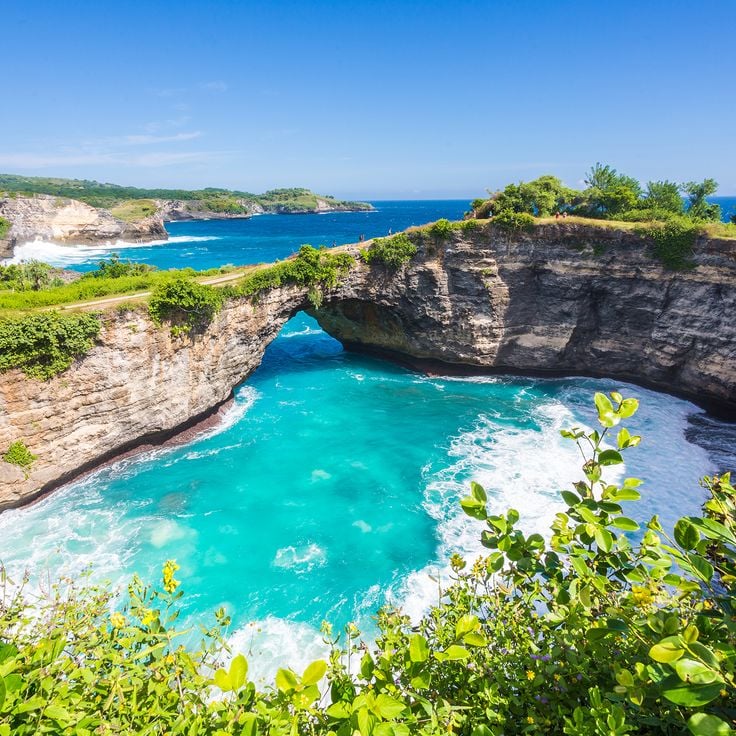
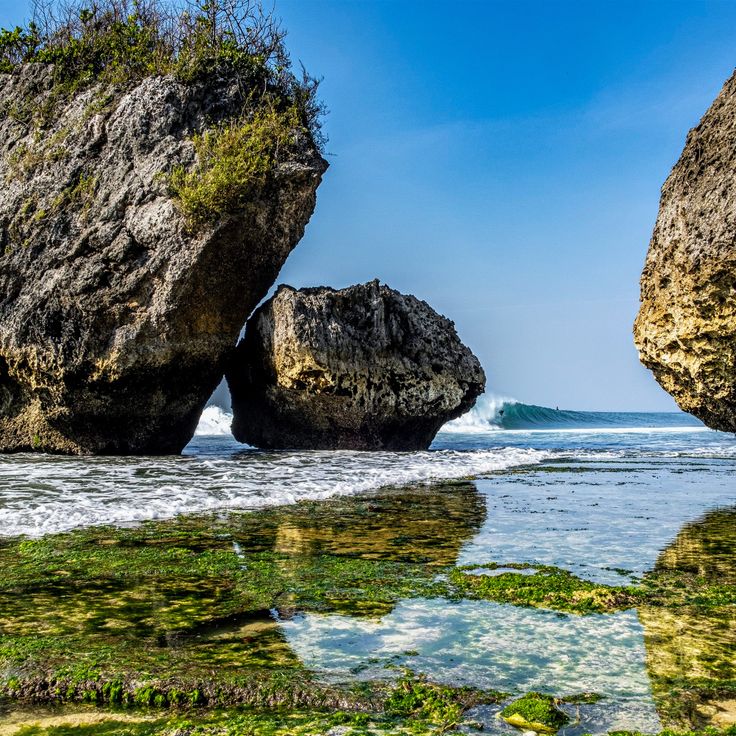
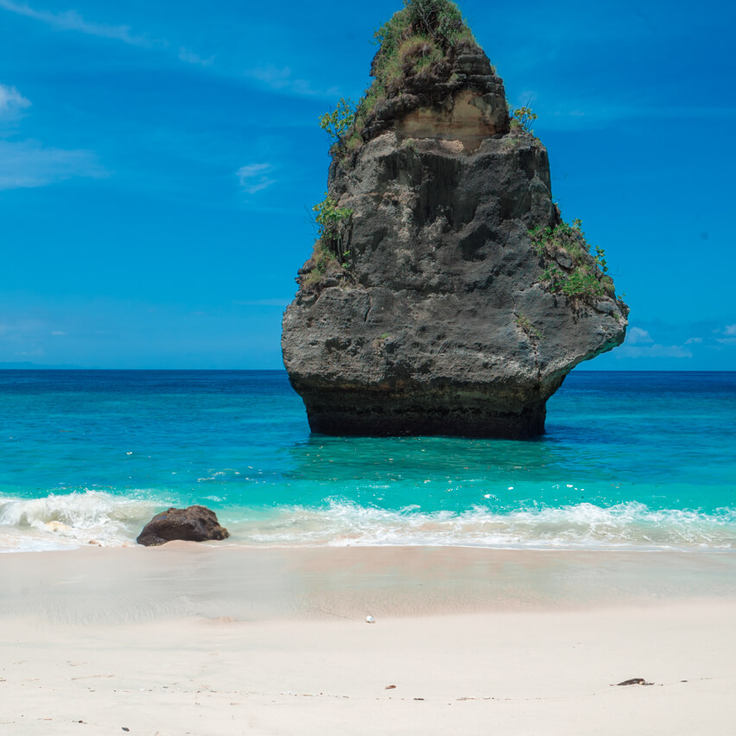
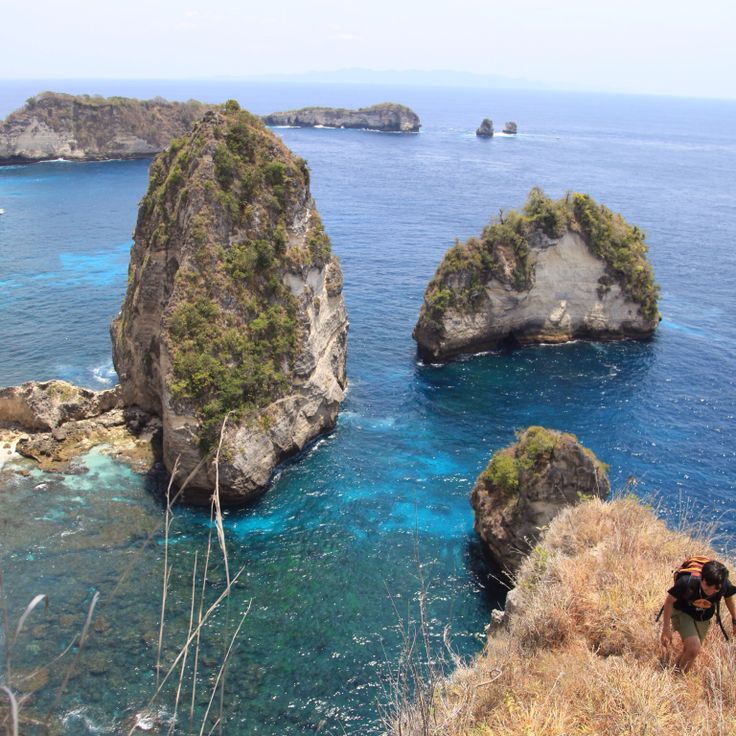
Pasih Uug is a natural limestone formation on the island of Nusa Penida that fits within Bali's diverse natural features and sacred sites. A natural arch of limestone creates a circular bay where ocean water flows beneath the rocks. The steep cliffs offer views of the Indian Ocean and showcase the geological character of the island's landscape.
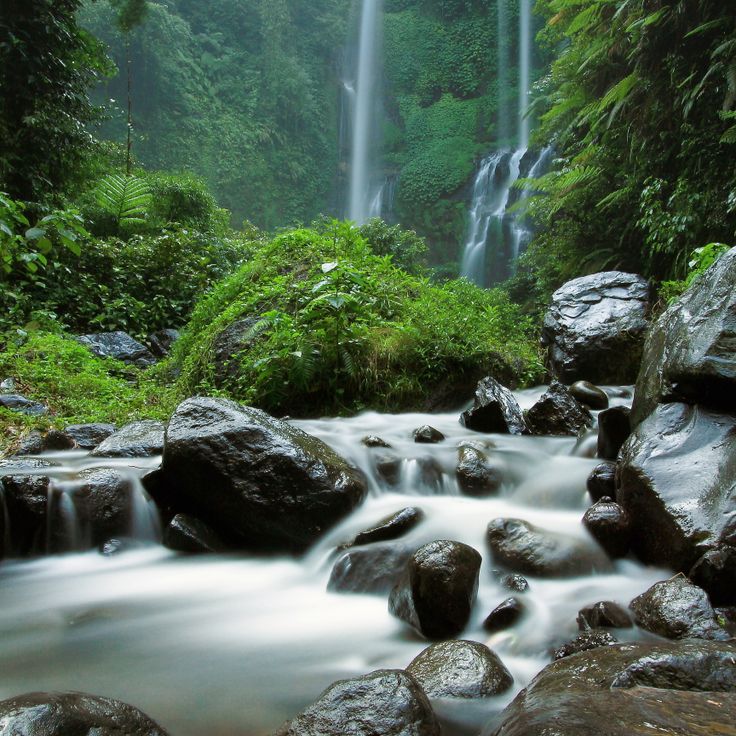
Sekumpul Waterfalls consists of seven waterfalls flowing from significant heights through thick forest, creating natural pools below. As part of Bali's diverse natural formations and sacred sites, these waterfalls demonstrate the island's natural beauty alongside coastal cliffs, ancient temples, beaches, and rice fields. The flowing water and forest setting offer visitors a chance to experience the raw landscape that defines much of Bali's character.
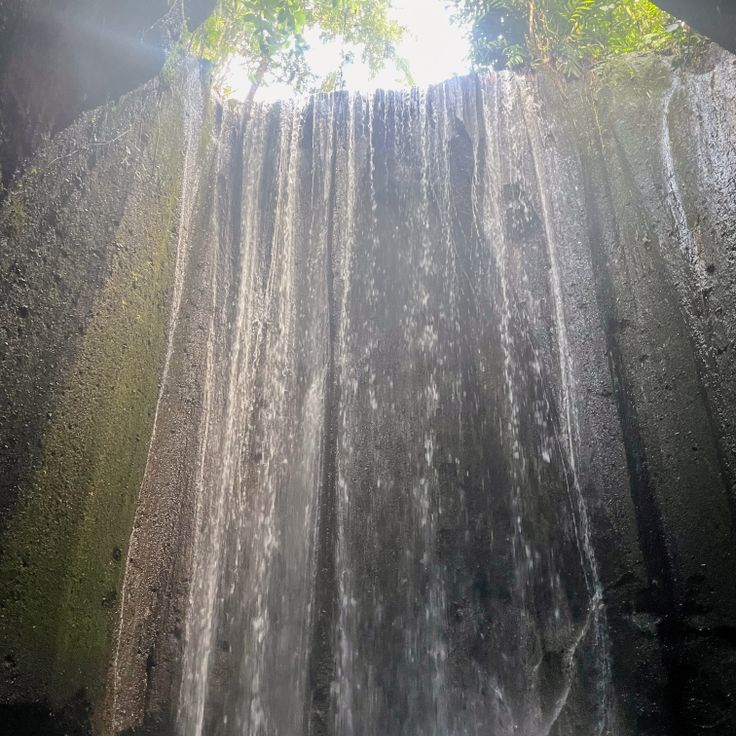
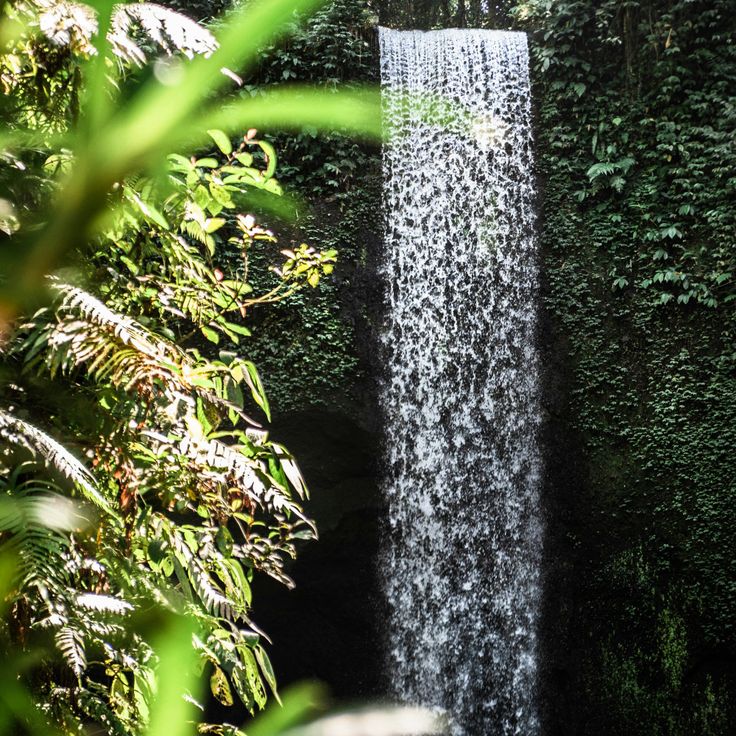
Tukad Cepung is a waterfall that drops through an opening in a cave ceiling. Sunlight enters the cavern between 10am and noon, creating patterns of light on the water and rocks below. This waterfall represents the natural formations found throughout Bali, alongside temples, rice fields, and coastal cliffs that shape the island's landscape.
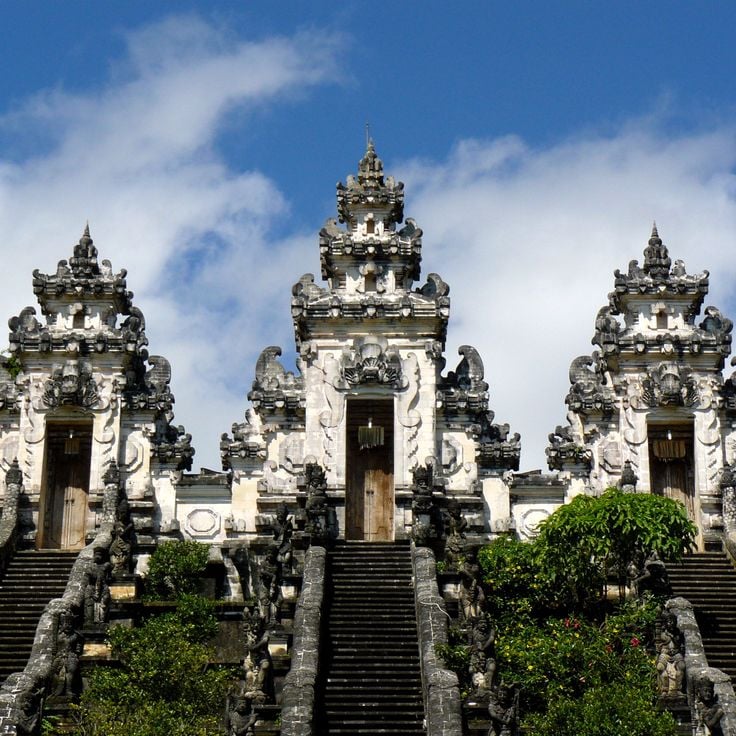
Pura Luhur Lempuyang is a Hindu temple complex situated at high elevation in Bali. The site contains seven sanctuaries built in the 11th century that rise along the mountainside. Mount Agung appears in the distance, framing the temple's setting. This temple represents the religious sites found across Bali that stand alongside natural formations such as waterfalls, beaches, and rice fields, reflecting the island's spiritual and agricultural heritage.
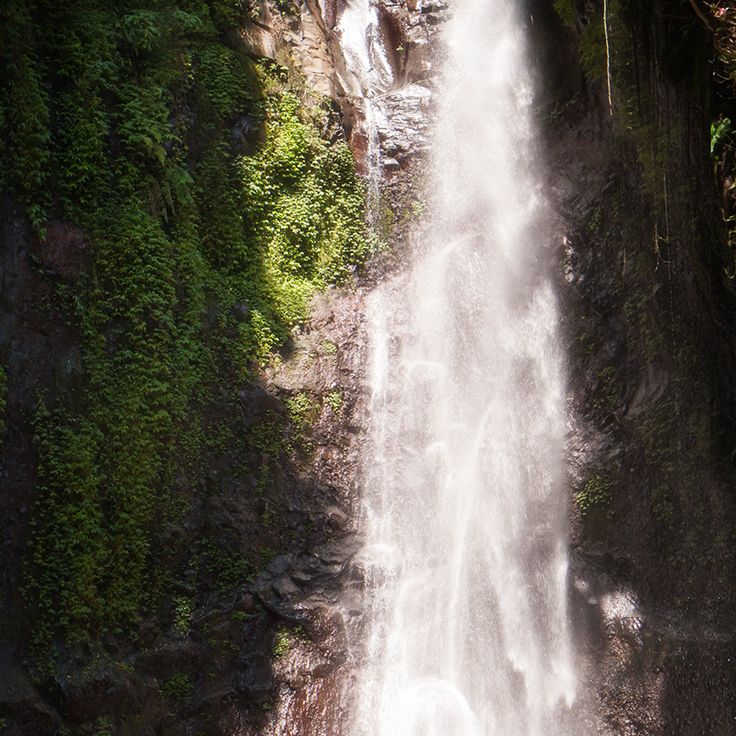
The Yeh Mampeh Waterfall is a 30-meter stream of water flowing through dense tropical vegetation in the mountain forests of northern Bali. This waterfall is part of Bali's diverse natural formations and sacred sites, ranging from coastal cliffs to ancient temples. The Yeh Mampeh Waterfall shows the natural beauty and forest landscapes that characterize Bali.
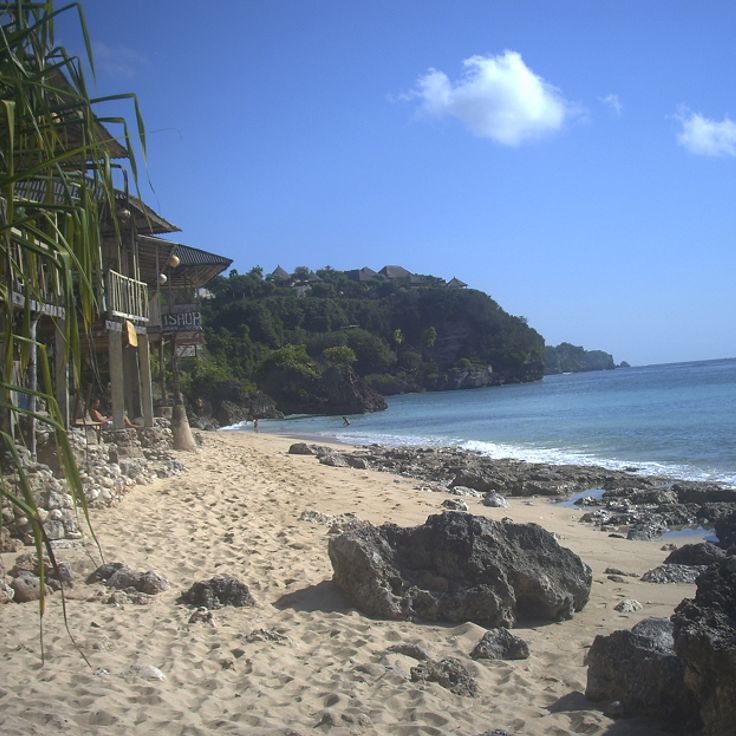
Bingin Beach is a small coastal inlet on Bali's southern shore, framed by limestone cliffs and white sand that you reach by descending stone steps. Located in South Kuta, this beach is known for its consistent waves that draw surfers throughout the year. The site exemplifies the natural coastal formations found across Bali, complementing the island's religious sites and agricultural landscapes.
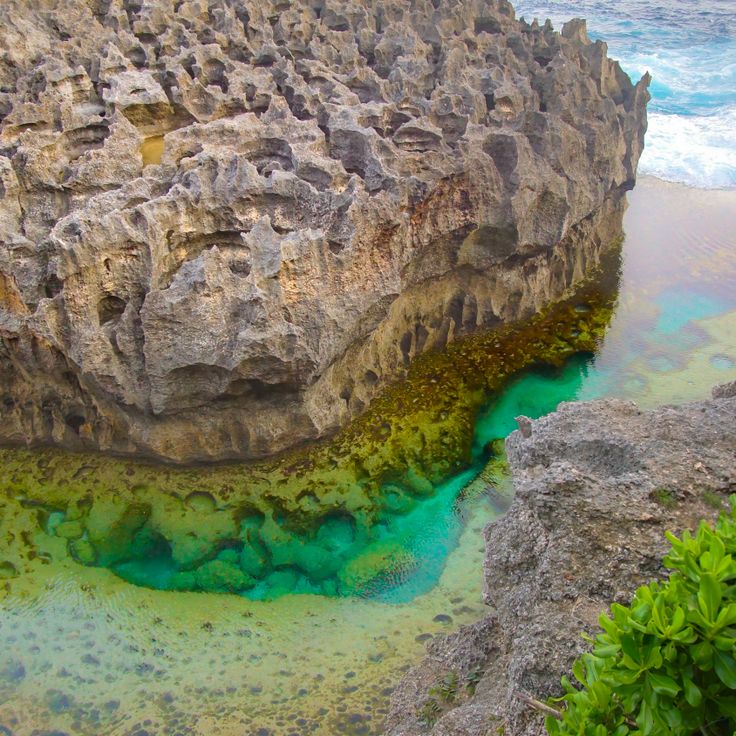
Angel's Billabong is a natural rock pool on the coast of Nusa Penida, formed between volcanic rocks with clear waters where the Indian Ocean meets the coastal edge. This pool is part of Bali's natural formations that, along with temples, rice fields, and waterfalls, shape the island's varied landscape.
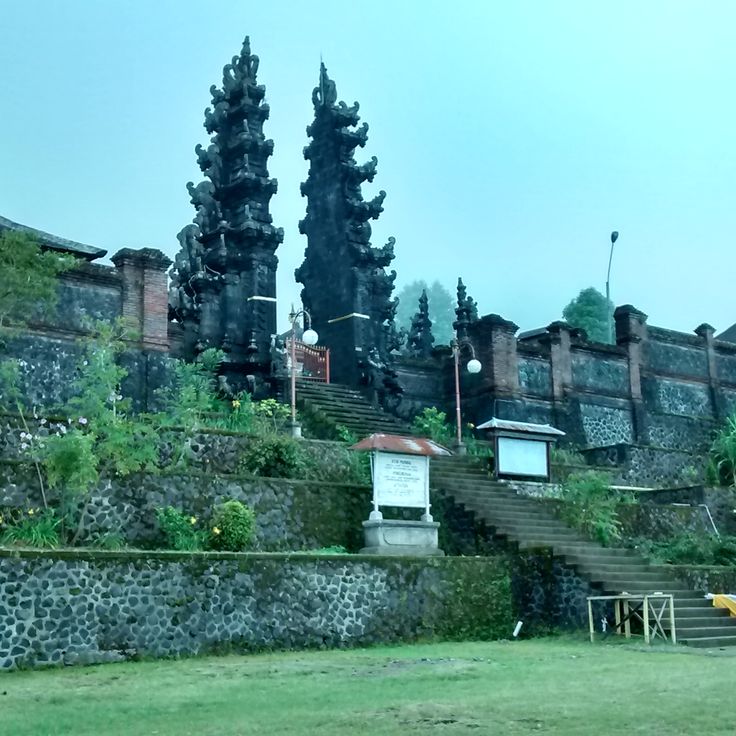
Pasar Agung Temple is a stone temple built on the slopes of Mount Agung at 1500 meters altitude. It features traditional Balinese architecture and offers views of the surrounding mountains. This temple is part of Bali's diverse religious sites, which together with natural formations like waterfalls, beaches, and rice fields reflect the island's cultural and landscape variety.
Green Bowl Beach is a small coastal area in South Kuta with limestone cliffs and a shallow reef, part of Bali's range of natural formations and religious sites. The beach requires descending 300 steps and proves popular among surfers at low tide. It reflects the island's diverse geography that stretches from coastal cliffs to ancient temples, waterfalls, and coral reef systems.
Gunung Kawi Temple is an ancient Hindu temple complex in Gianyar Regency featuring ten shrines carved directly into cliff faces. The site shows how people in Bali integrated historical structures into the natural landscape. The complex includes meditation caves and water features fed by natural springs. It represents Bali's religious and architectural heritage.
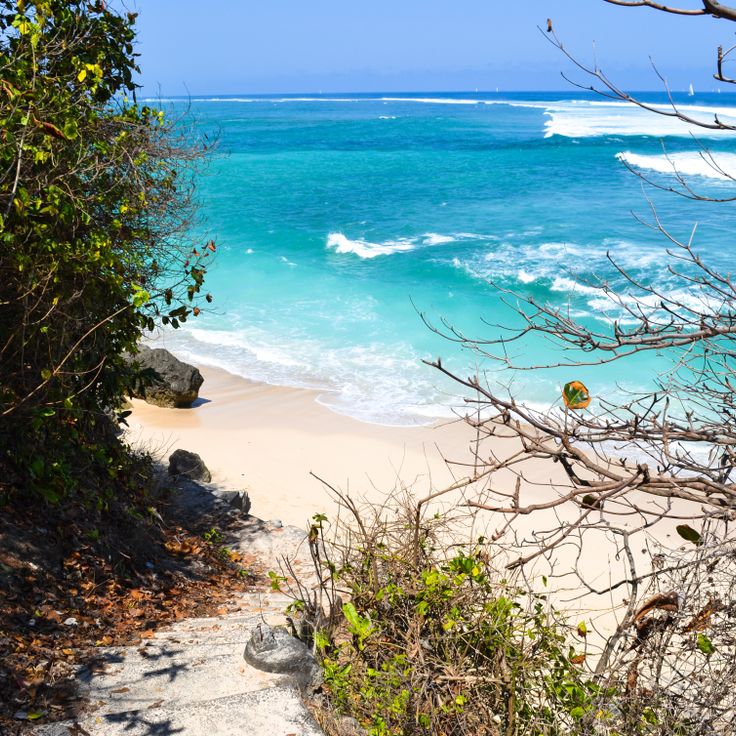
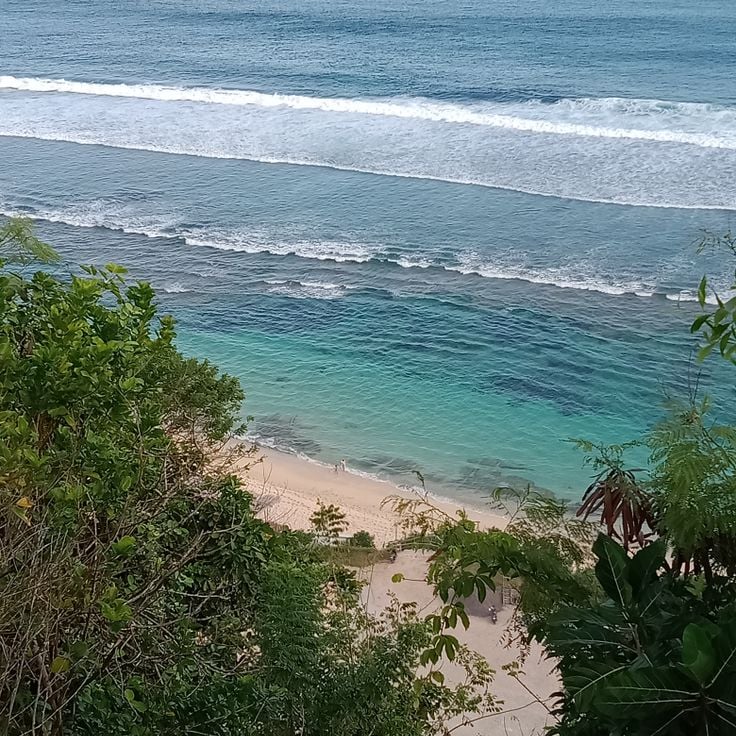
Thomas Beach is a white sand beach in South Kuta nestled between rocky outcrops and coral reefs. The beach sits in a sheltered cove, offering a quieter setting away from Bali's busier coastal areas. Access is down a set of stone steps that descend through thick vegetation, making the beach feel like a hidden spot to discover. As one of the natural formations along Bali's coast, it displays the island's diverse marine environments.
Suwehan Beach is a remote beach on Nusa Penida in Bali and represents one of the island's natural landmarks. The shore is framed by limestone cliffs and displays coral formations that characterize the marine environment. The appearance of the beach changes between monsoon seasons. Reaching the beach requires descending 400 concrete steps.
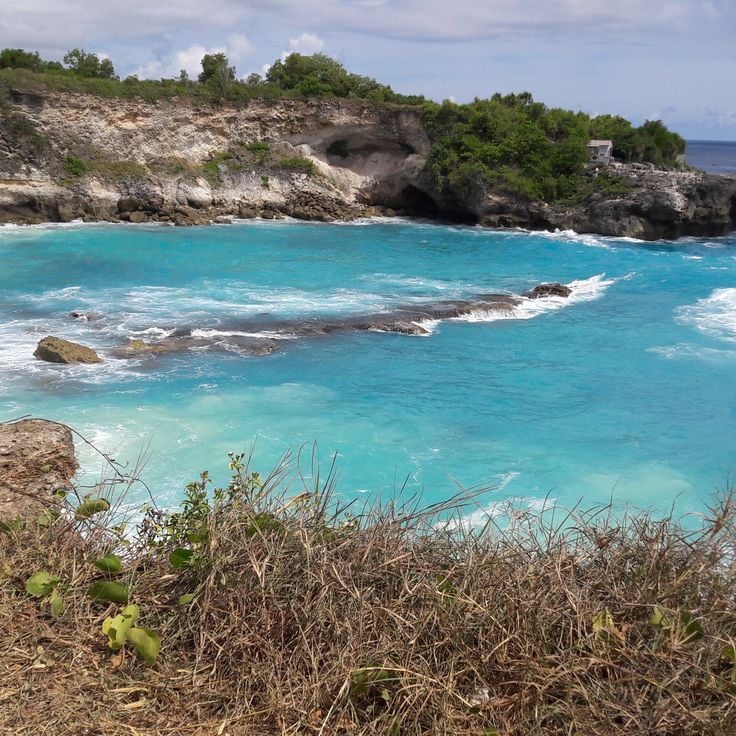
The Blue Lagoon is a protected cove in Padangbai and part of Bali's varied natural landscape. The sea here holds a coral reef where fish swim among soft and hard corals. Snorkelers can explore the underwater world and watch the colorful marine life up close.
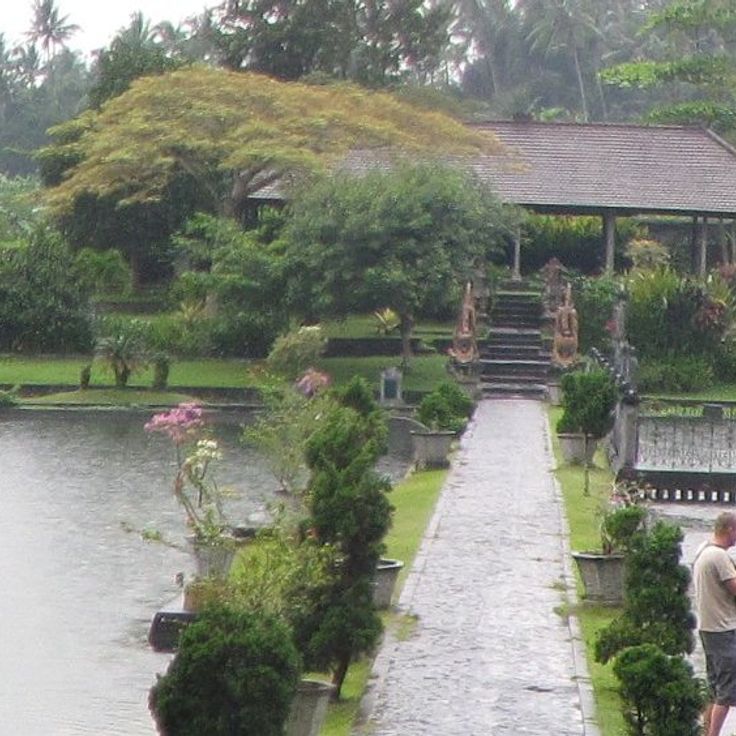
Tirta Gangga Water Palace is a royal garden featuring tiered fountains, pools, and stone statues set within manicured grounds. This site embodies the connection between water, nature, and architecture that defines Bali's landscape. The layered fountains and decorative elements reflect the craftsmanship of earlier times. Visitors can walk through the gardens, observe the movement of water, and notice the care taken in every detail of the design.
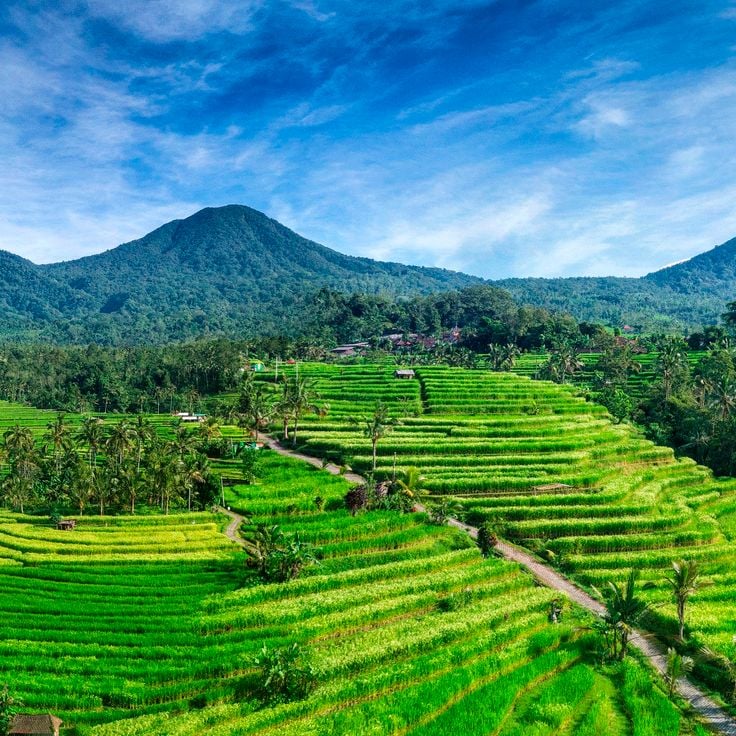
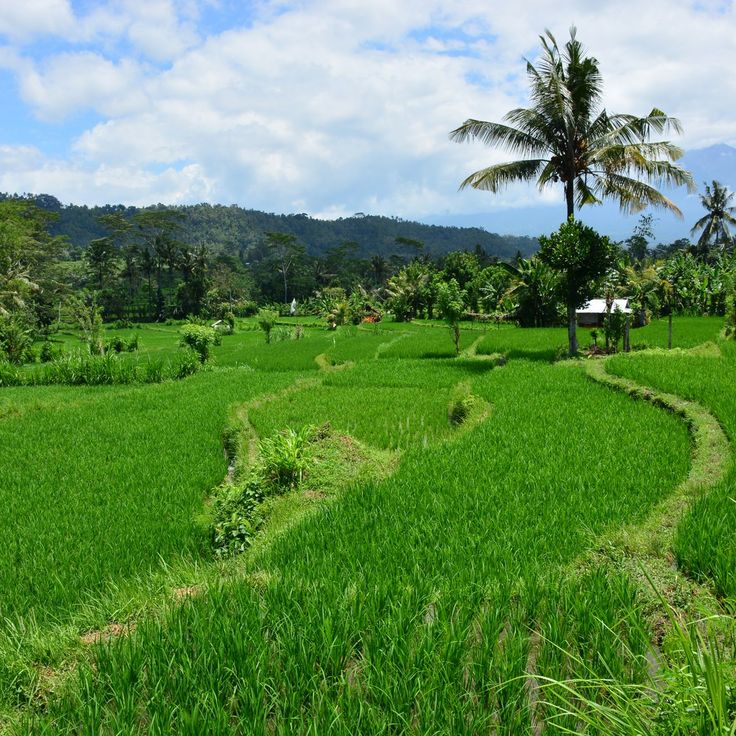
The Jatiluwih Rice Terraces display Bali's agricultural heritage through their traditional methods. These fields follow the natural contours of hills using the ancient Subak irrigation system. This area spans over 600 hectares and shows how farmers have worked with the land for generations. The green expanses shift with the seasons, revealing the daily rhythms of Bali's farming life.
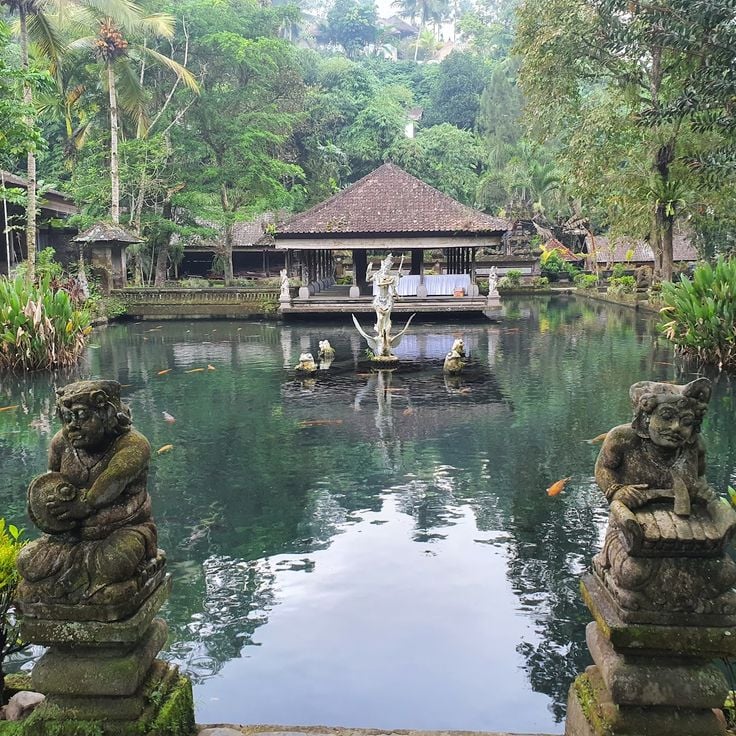
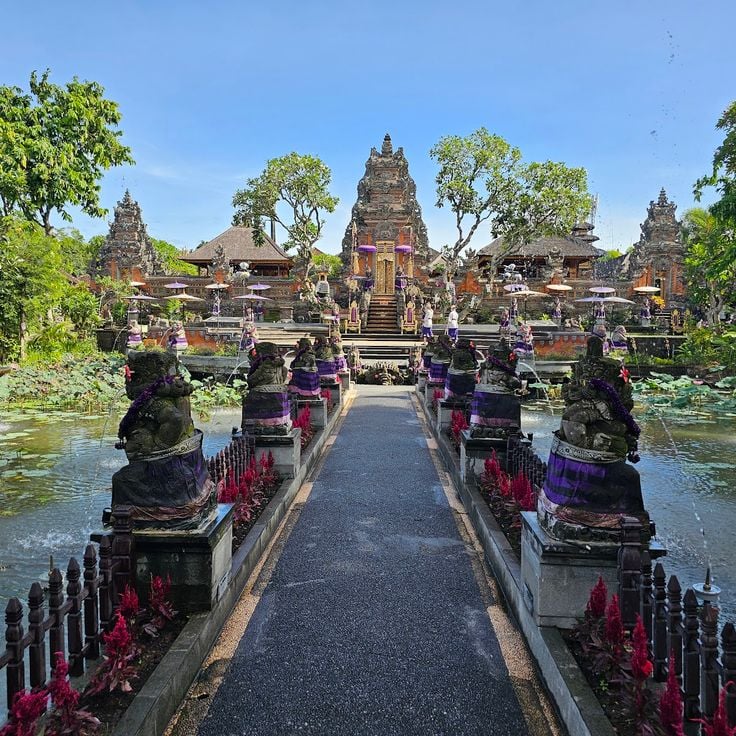
Saraswati Temple in Ubud is a Hindu temple built in 1951. It features ponds filled with pink lotus flowers and stone carvings that depict the goddess Saraswati. This temple is part of Bali's range of religious sites, which sit alongside natural features like waterfalls, beaches, and rice terraces that reflect the island's cultural heritage.
Atuh Beach is a white sand beach on Nusa Penida, part of Bali's diverse natural coastal landscapes. The beach is framed by limestone cliffs and rock formations that rise from the shore. The water shows clear shades of blue and green, and swimming is possible during low tide. This beach demonstrates the range of natural formations found across the island.
Sidemen Valley is part of Bali's collection of natural formations and religious sites, representing the island's agricultural character. Rice fields spread across green hills with Mount Agung rising in the background. Local farmers here practice traditional farming methods passed down through generations. The valley embodies the agricultural heritage that defines much of Bali, complementing the temples, waterfalls, and coastal features found across the island.
Kanto Lampo Waterfall displays the natural formations that shape Bali's character. Water flows over layered rock formations, creating multiple streams. The rocks form natural steps where visitors can stand near the falling water. This waterfall is part of Bali's diverse landscapes, which include ancient temples such as Pura Luhur Lempuyang and Gunung Kawi, rice fields, and coastal formations.
Tibumana Waterfall represents the natural beauty found across Bali's landscape. A single stream of water falls into a natural pool surrounded by lush vegetation. The water is clean and cold, reaching a depth suitable for swimming. This site showcases the island's natural formations alongside its ancient temples and terraced fields.
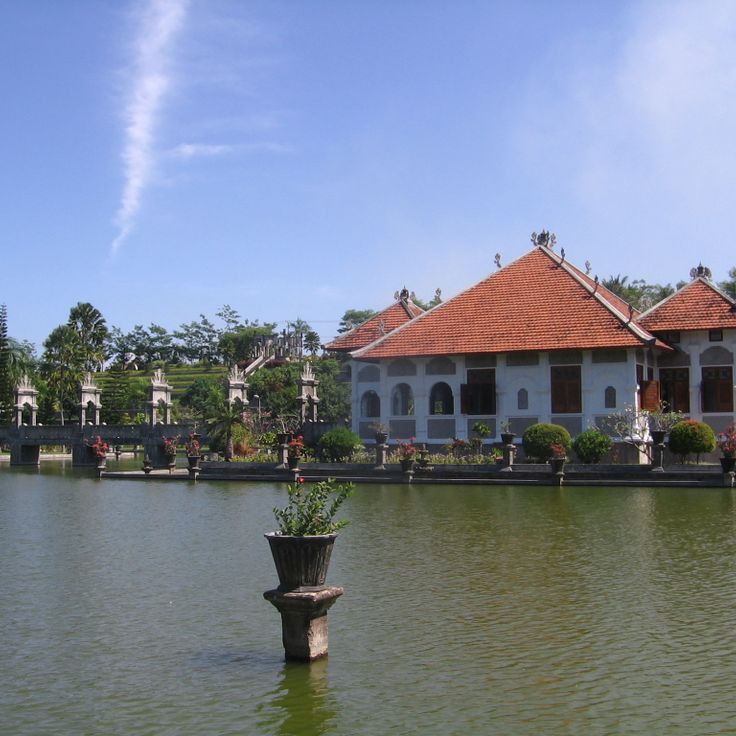
Ujung Palace is a royal residence built in 1919 in Karangasem. The building blends Indonesian and European architectural styles. The palace features swimming pools, gardens, and pavilions. As part of Bali's natural landmarks and sacred sites, it shows how the island's royal architecture reflects its history shaped by different cultural influences.
Melasti Beach is a wide sandy beach in south Kuta bordered by limestone cliffs. This beach fits into Bali's range of natural formations, from coastal cliffs to rice fields. The clear water invites swimming, and natural rock pools offer places to explore. This location shows the variety of coastal environments that characterize Bali.
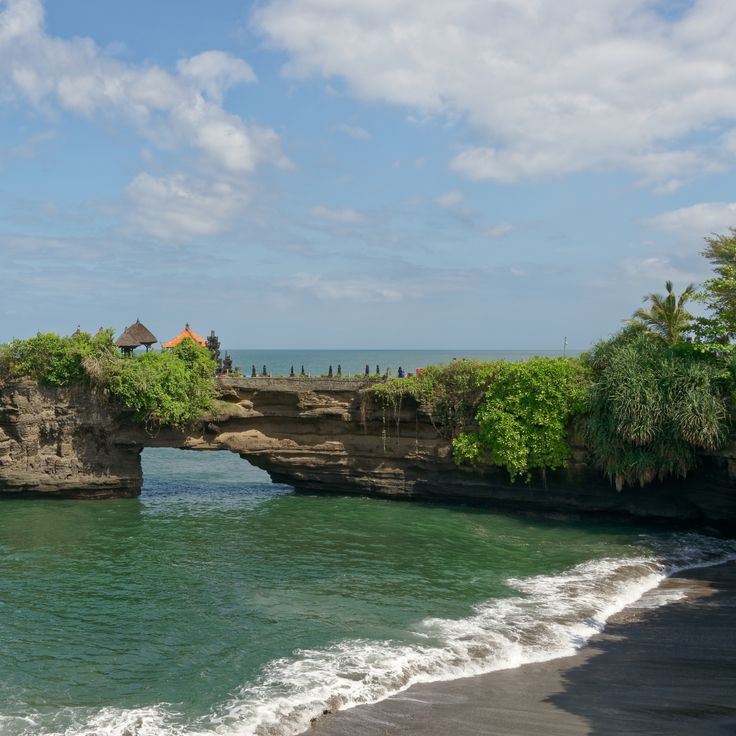
Batu Bolong Temple is a Hindu shrine built on a large rock formation that extends into the sea. As part of Bali's natural landmarks and sacred sites, it stands among coastal cliffs and ancient temples. The temple features ceremonial gates and traditional Balinese architecture that reflect the relationship between nature and faith.
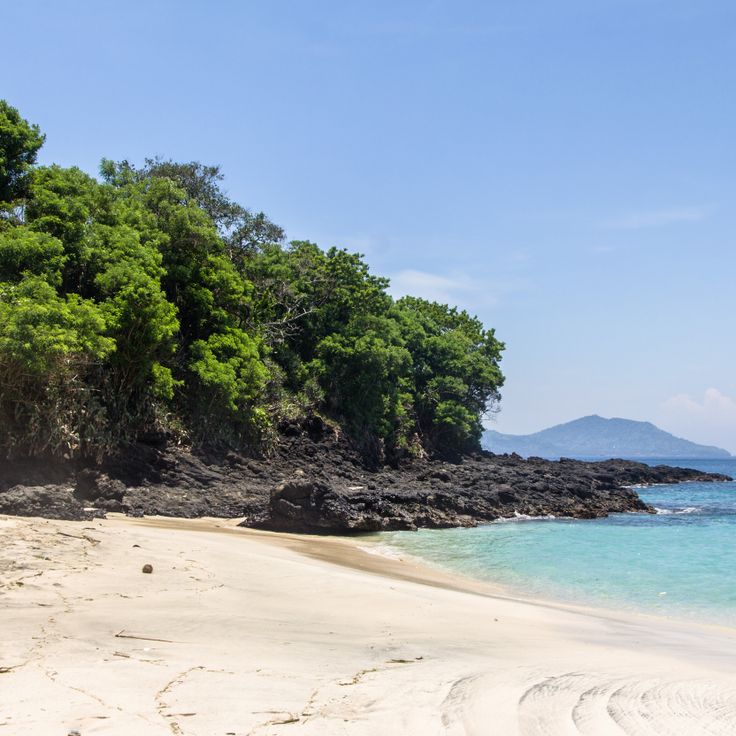
Bias Tugel Beach is a black sand beach on Bali surrounded by dense vegetation, reached by descending stone stairs. From this beach, you can see Mount Agung in the distance. The beach is part of Bali's diverse natural formations and religious sites, ranging from coastal cliffs to ancient temples. It displays the island's natural character alongside waterfalls, rice fields, and coral reefs.
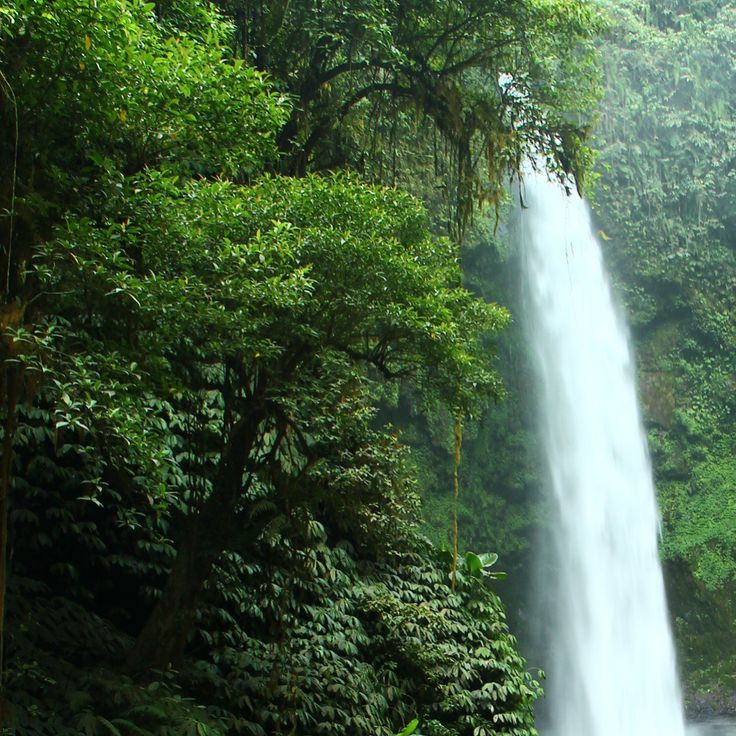
Nungnung Waterfall is part of Bali's natural landscape, showing a side of the island that feels remote and wild. This 70-meter waterfall sits in a rural area surrounded by dense forest, with a pool at its base that is good for swimming. The spot displays the natural formations and forests that define Bali alongside its temples and rice fields.
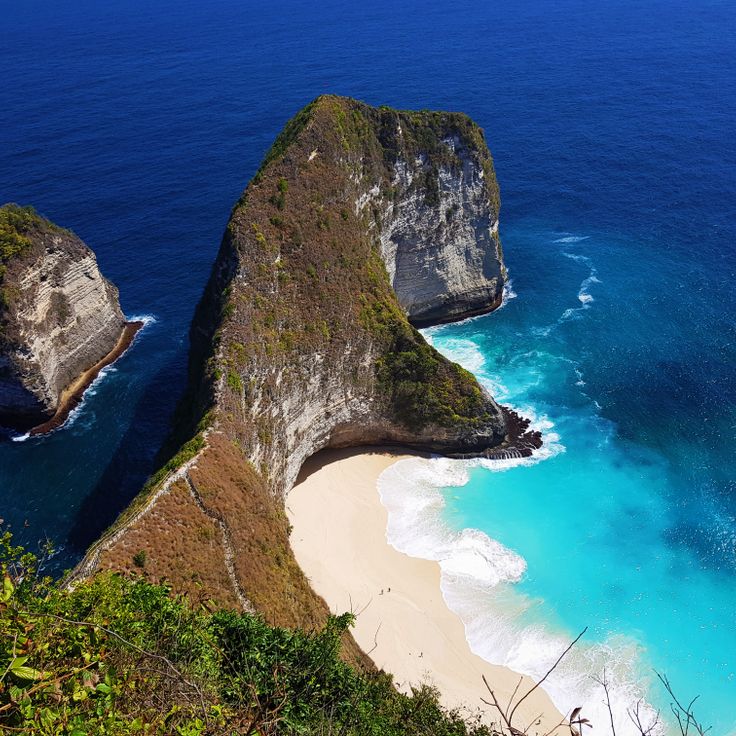
Kelingking Beach in Nusa Penida is a beach defined by limestone cliffs that resemble a T-Rex shape. The clear water and white sand line the coast. This location exemplifies Bali's natural formations, from dramatic coastal cliffs to sandy shores that invite exploration.
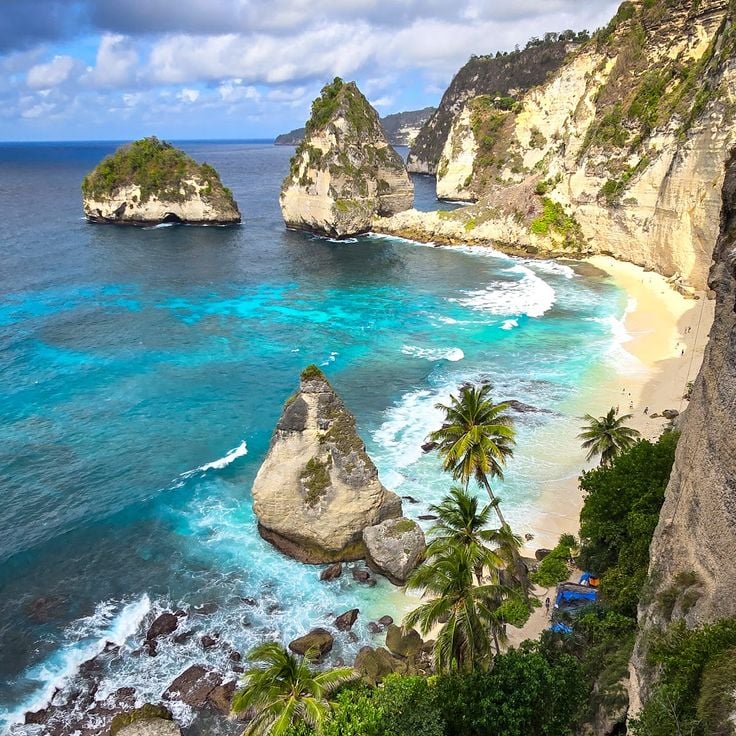
Diamond Beach is part of Bali's collection of natural formations and sacred sites. Located on Nusa Penida, this beach features white sand framed by steep green cliffs. A concrete staircase provides access down to the shore, where the blue water meets the coast.
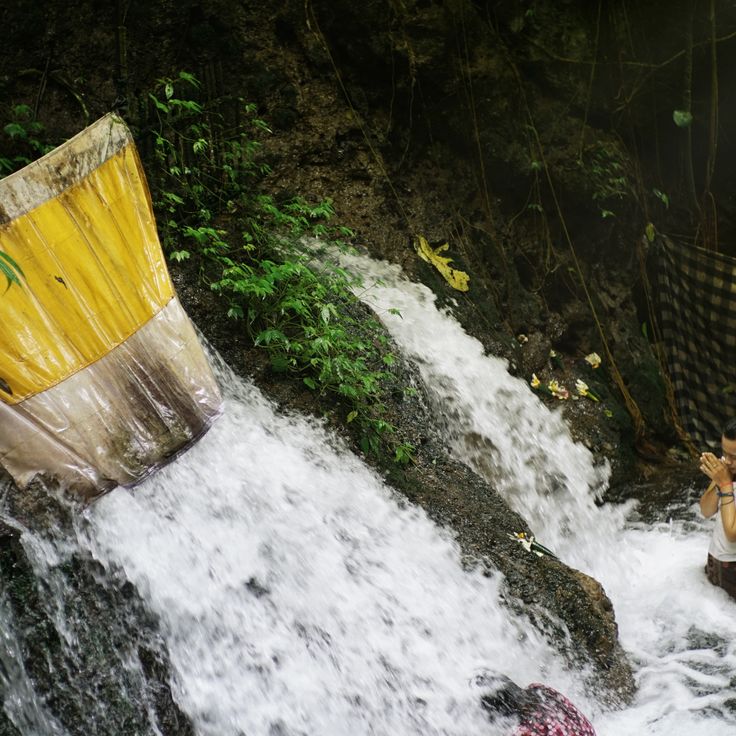
Pura Dalem Pingit Sebatu is a Hindu temple built beside a natural spring. The temple displays traditional Balinese stone architecture with carved details and contains water pools for ritual purification. As a sacred site in Gianyar, this temple connects Bali's natural springs with the island's religious practices and shows how water plays a role in both worship and daily life.
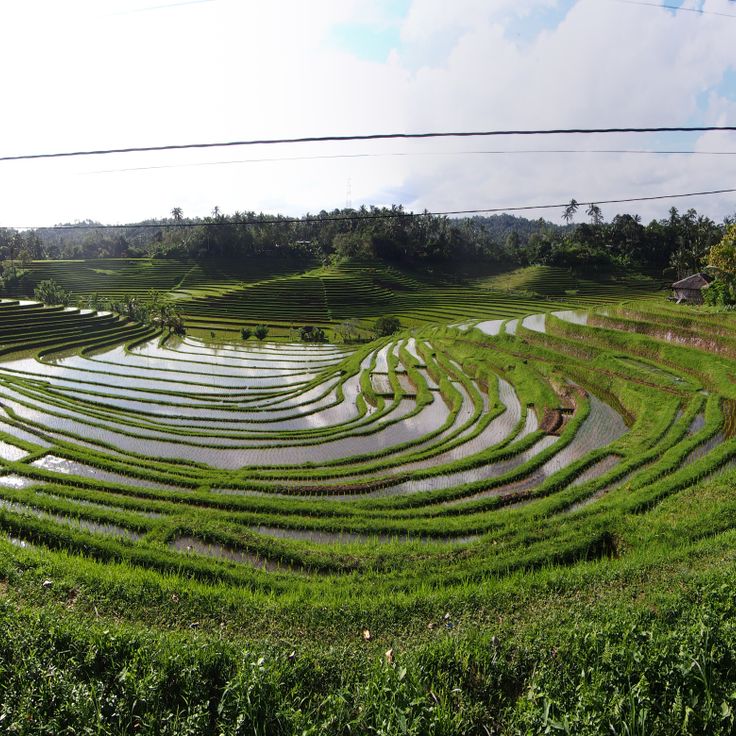
The rice fields of Belimbing display Bali's agricultural heritage through layered terraces arranged along mountain slopes. These green fields have been developed by local farmers over generations using traditional irrigation systems passed down through time. The rice fields of Belimbing represent the natural formations and farming traditions that characterize Bali's landscape, alongside the island's temples, waterfalls, and coastal areas.
Yeh Leh Stone Beach is a black sand coast in Jembrana, Bali, part of the island's diverse natural formations. The beach is characterized by round granite rocks of varying sizes that become visible during low tide. Steep cliffs surround this stretch of coastline, creating a dramatic landscape that reflects Bali's geological history.
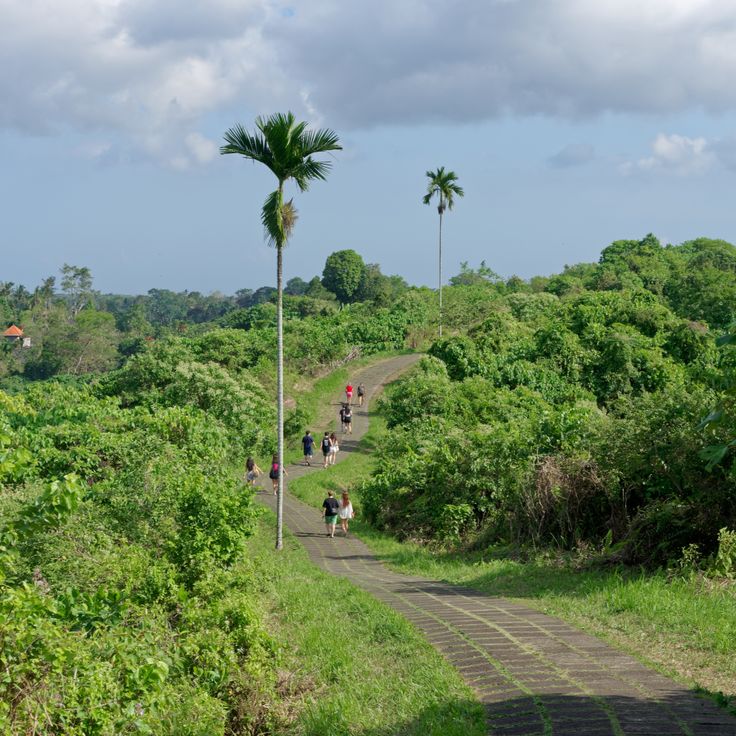
The Campuhan Path is a paved walking trail set on elevated ground between two valleys. It connects to Bali's collection of natural landmarks and religious sites, showcasing the landscape that surrounds Ubud. As you walk along its length, rice fields and local vegetation come into view. The path serves as a route for both residents and visitors moving through the village.
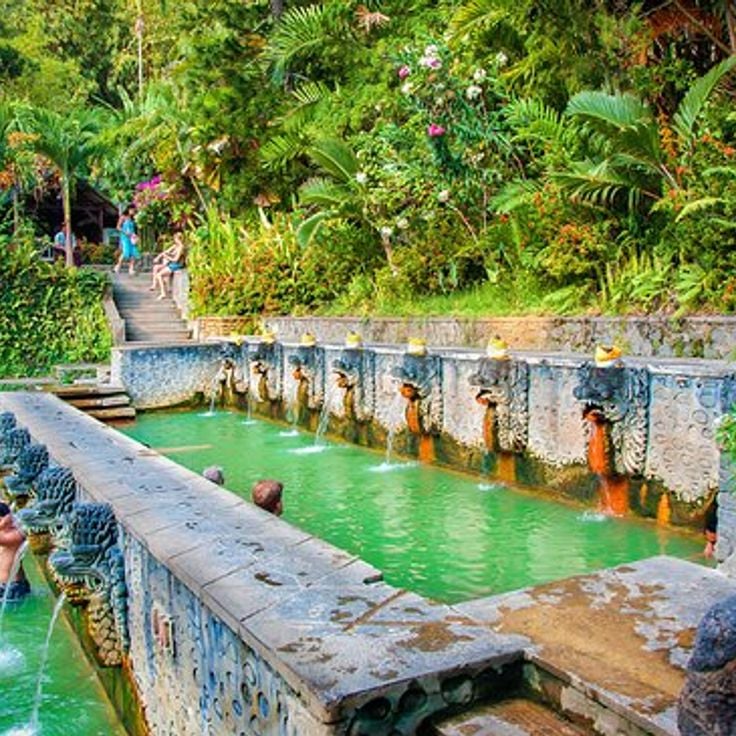
The Banjar Thermal Pools are natural stone basins filled with sulfur water, situated in Buleleng as part of Bali's diverse landscape of temples, waterfalls, and rice fields. The warm pools are surrounded by tropical plants and traditional Balinese architecture, creating a place where visitors can experience the island's geothermal features in a setting rooted in local culture.
Pasih Uug is a natural limestone formation on the island of Nusa Penida that fits within Bali's diverse natural features and sacred sites. A natural arch of limestone creates a circular bay where ocean water flows beneath the rocks. The steep cliffs offer views of the Indian Ocean and showcase the geological character of the island's landscape.
Sekumpul Waterfalls consists of seven waterfalls flowing from significant heights through thick forest, creating natural pools below. As part of Bali's diverse natural formations and sacred sites, these waterfalls demonstrate the island's natural beauty alongside coastal cliffs, ancient temples, beaches, and rice fields. The flowing water and forest setting offer visitors a chance to experience the raw landscape that defines much of Bali's character.
Tukad Cepung is a waterfall that drops through an opening in a cave ceiling. Sunlight enters the cavern between 10am and noon, creating patterns of light on the water and rocks below. This waterfall represents the natural formations found throughout Bali, alongside temples, rice fields, and coastal cliffs that shape the island's landscape.
Pura Luhur Lempuyang is a Hindu temple complex situated at high elevation in Bali. The site contains seven sanctuaries built in the 11th century that rise along the mountainside. Mount Agung appears in the distance, framing the temple's setting. This temple represents the religious sites found across Bali that stand alongside natural formations such as waterfalls, beaches, and rice fields, reflecting the island's spiritual and agricultural heritage.
The Yeh Mampeh Waterfall is a 30-meter stream of water flowing through dense tropical vegetation in the mountain forests of northern Bali. This waterfall is part of Bali's diverse natural formations and sacred sites, ranging from coastal cliffs to ancient temples. The Yeh Mampeh Waterfall shows the natural beauty and forest landscapes that characterize Bali.
Bingin Beach is a small coastal inlet on Bali's southern shore, framed by limestone cliffs and white sand that you reach by descending stone steps. Located in South Kuta, this beach is known for its consistent waves that draw surfers throughout the year. The site exemplifies the natural coastal formations found across Bali, complementing the island's religious sites and agricultural landscapes.
Angel's Billabong is a natural rock pool on the coast of Nusa Penida, formed between volcanic rocks with clear waters where the Indian Ocean meets the coastal edge. This pool is part of Bali's natural formations that, along with temples, rice fields, and waterfalls, shape the island's varied landscape.
Pasar Agung Temple is a stone temple built on the slopes of Mount Agung at 1500 meters altitude. It features traditional Balinese architecture and offers views of the surrounding mountains. This temple is part of Bali's diverse religious sites, which together with natural formations like waterfalls, beaches, and rice fields reflect the island's cultural and landscape variety.
Green Bowl Beach is a small coastal area in South Kuta with limestone cliffs and a shallow reef, part of Bali's range of natural formations and religious sites. The beach requires descending 300 steps and proves popular among surfers at low tide. It reflects the island's diverse geography that stretches from coastal cliffs to ancient temples, waterfalls, and coral reef systems.
Gunung Kawi Temple is an ancient Hindu temple complex in Gianyar Regency featuring ten shrines carved directly into cliff faces. The site shows how people in Bali integrated historical structures into the natural landscape. The complex includes meditation caves and water features fed by natural springs. It represents Bali's religious and architectural heritage.
Thomas Beach is a white sand beach in South Kuta nestled between rocky outcrops and coral reefs. The beach sits in a sheltered cove, offering a quieter setting away from Bali's busier coastal areas. Access is down a set of stone steps that descend through thick vegetation, making the beach feel like a hidden spot to discover. As one of the natural formations along Bali's coast, it displays the island's diverse marine environments.
Suwehan Beach is a remote beach on Nusa Penida in Bali and represents one of the island's natural landmarks. The shore is framed by limestone cliffs and displays coral formations that characterize the marine environment. The appearance of the beach changes between monsoon seasons. Reaching the beach requires descending 400 concrete steps.
The Blue Lagoon is a protected cove in Padangbai and part of Bali's varied natural landscape. The sea here holds a coral reef where fish swim among soft and hard corals. Snorkelers can explore the underwater world and watch the colorful marine life up close.
Tirta Gangga Water Palace is a royal garden featuring tiered fountains, pools, and stone statues set within manicured grounds. This site embodies the connection between water, nature, and architecture that defines Bali's landscape. The layered fountains and decorative elements reflect the craftsmanship of earlier times. Visitors can walk through the gardens, observe the movement of water, and notice the care taken in every detail of the design.
The Jatiluwih Rice Terraces display Bali's agricultural heritage through their traditional methods. These fields follow the natural contours of hills using the ancient Subak irrigation system. This area spans over 600 hectares and shows how farmers have worked with the land for generations. The green expanses shift with the seasons, revealing the daily rhythms of Bali's farming life.
Saraswati Temple in Ubud is a Hindu temple built in 1951. It features ponds filled with pink lotus flowers and stone carvings that depict the goddess Saraswati. This temple is part of Bali's range of religious sites, which sit alongside natural features like waterfalls, beaches, and rice terraces that reflect the island's cultural heritage.
Atuh Beach is a white sand beach on Nusa Penida, part of Bali's diverse natural coastal landscapes. The beach is framed by limestone cliffs and rock formations that rise from the shore. The water shows clear shades of blue and green, and swimming is possible during low tide. This beach demonstrates the range of natural formations found across the island.
Sidemen Valley is part of Bali's collection of natural formations and religious sites, representing the island's agricultural character. Rice fields spread across green hills with Mount Agung rising in the background. Local farmers here practice traditional farming methods passed down through generations. The valley embodies the agricultural heritage that defines much of Bali, complementing the temples, waterfalls, and coastal features found across the island.
Kanto Lampo Waterfall displays the natural formations that shape Bali's character. Water flows over layered rock formations, creating multiple streams. The rocks form natural steps where visitors can stand near the falling water. This waterfall is part of Bali's diverse landscapes, which include ancient temples such as Pura Luhur Lempuyang and Gunung Kawi, rice fields, and coastal formations.
Tibumana Waterfall represents the natural beauty found across Bali's landscape. A single stream of water falls into a natural pool surrounded by lush vegetation. The water is clean and cold, reaching a depth suitable for swimming. This site showcases the island's natural formations alongside its ancient temples and terraced fields.
Ujung Palace is a royal residence built in 1919 in Karangasem. The building blends Indonesian and European architectural styles. The palace features swimming pools, gardens, and pavilions. As part of Bali's natural landmarks and sacred sites, it shows how the island's royal architecture reflects its history shaped by different cultural influences.
Melasti Beach is a wide sandy beach in south Kuta bordered by limestone cliffs. This beach fits into Bali's range of natural formations, from coastal cliffs to rice fields. The clear water invites swimming, and natural rock pools offer places to explore. This location shows the variety of coastal environments that characterize Bali.
Batu Bolong Temple is a Hindu shrine built on a large rock formation that extends into the sea. As part of Bali's natural landmarks and sacred sites, it stands among coastal cliffs and ancient temples. The temple features ceremonial gates and traditional Balinese architecture that reflect the relationship between nature and faith.
Bias Tugel Beach is a black sand beach on Bali surrounded by dense vegetation, reached by descending stone stairs. From this beach, you can see Mount Agung in the distance. The beach is part of Bali's diverse natural formations and religious sites, ranging from coastal cliffs to ancient temples. It displays the island's natural character alongside waterfalls, rice fields, and coral reefs.
Nungnung Waterfall is part of Bali's natural landscape, showing a side of the island that feels remote and wild. This 70-meter waterfall sits in a rural area surrounded by dense forest, with a pool at its base that is good for swimming. The spot displays the natural formations and forests that define Bali alongside its temples and rice fields.
Kelingking Beach in Nusa Penida is a beach defined by limestone cliffs that resemble a T-Rex shape. The clear water and white sand line the coast. This location exemplifies Bali's natural formations, from dramatic coastal cliffs to sandy shores that invite exploration.
Diamond Beach is part of Bali's collection of natural formations and sacred sites. Located on Nusa Penida, this beach features white sand framed by steep green cliffs. A concrete staircase provides access down to the shore, where the blue water meets the coast.
Pura Dalem Pingit Sebatu is a Hindu temple built beside a natural spring. The temple displays traditional Balinese stone architecture with carved details and contains water pools for ritual purification. As a sacred site in Gianyar, this temple connects Bali's natural springs with the island's religious practices and shows how water plays a role in both worship and daily life.
The rice fields of Belimbing display Bali's agricultural heritage through layered terraces arranged along mountain slopes. These green fields have been developed by local farmers over generations using traditional irrigation systems passed down through time. The rice fields of Belimbing represent the natural formations and farming traditions that characterize Bali's landscape, alongside the island's temples, waterfalls, and coastal areas.
Yeh Leh Stone Beach is a black sand coast in Jembrana, Bali, part of the island's diverse natural formations. The beach is characterized by round granite rocks of varying sizes that become visible during low tide. Steep cliffs surround this stretch of coastline, creating a dramatic landscape that reflects Bali's geological history.
The Campuhan Path is a paved walking trail set on elevated ground between two valleys. It connects to Bali's collection of natural landmarks and religious sites, showcasing the landscape that surrounds Ubud. As you walk along its length, rice fields and local vegetation come into view. The path serves as a route for both residents and visitors moving through the village.
The Banjar Thermal Pools are natural stone basins filled with sulfur water, situated in Buleleng as part of Bali's diverse landscape of temples, waterfalls, and rice fields. The warm pools are surrounded by tropical plants and traditional Balinese architecture, creating a place where visitors can experience the island's geothermal features in a setting rooted in local culture.
Pasih Uug is a natural limestone formation on the island of Nusa Penida that fits within Bali's diverse natural features and sacred sites. A natural arch of limestone creates a circular bay where ocean water flows beneath the rocks. The steep cliffs offer views of the Indian Ocean and showcase the geological character of the island's landscape.
Sekumpul Waterfalls consists of seven waterfalls flowing from significant heights through thick forest, creating natural pools below. As part of Bali's diverse natural formations and sacred sites, these waterfalls demonstrate the island's natural beauty alongside coastal cliffs, ancient temples, beaches, and rice fields. The flowing water and forest setting offer visitors a chance to experience the raw landscape that defines much of Bali's character.
Tukad Cepung is a waterfall that drops through an opening in a cave ceiling. Sunlight enters the cavern between 10am and noon, creating patterns of light on the water and rocks below. This waterfall represents the natural formations found throughout Bali, alongside temples, rice fields, and coastal cliffs that shape the island's landscape.
Pura Luhur Lempuyang is a Hindu temple complex situated at high elevation in Bali. The site contains seven sanctuaries built in the 11th century that rise along the mountainside. Mount Agung appears in the distance, framing the temple's setting. This temple represents the religious sites found across Bali that stand alongside natural formations such as waterfalls, beaches, and rice fields, reflecting the island's spiritual and agricultural heritage.
The Yeh Mampeh Waterfall is a 30-meter stream of water flowing through dense tropical vegetation in the mountain forests of northern Bali. This waterfall is part of Bali's diverse natural formations and sacred sites, ranging from coastal cliffs to ancient temples. The Yeh Mampeh Waterfall shows the natural beauty and forest landscapes that characterize Bali.
Bingin Beach is a small coastal inlet on Bali's southern shore, framed by limestone cliffs and white sand that you reach by descending stone steps. Located in South Kuta, this beach is known for its consistent waves that draw surfers throughout the year. The site exemplifies the natural coastal formations found across Bali, complementing the island's religious sites and agricultural landscapes.
Angel's Billabong is a natural rock pool on the coast of Nusa Penida, formed between volcanic rocks with clear waters where the Indian Ocean meets the coastal edge. This pool is part of Bali's natural formations that, along with temples, rice fields, and waterfalls, shape the island's varied landscape.
Pasar Agung Temple is a stone temple built on the slopes of Mount Agung at 1500 meters altitude. It features traditional Balinese architecture and offers views of the surrounding mountains. This temple is part of Bali's diverse religious sites, which together with natural formations like waterfalls, beaches, and rice fields reflect the island's cultural and landscape variety.
Green Bowl Beach is a small coastal area in South Kuta with limestone cliffs and a shallow reef, part of Bali's range of natural formations and religious sites. The beach requires descending 300 steps and proves popular among surfers at low tide. It reflects the island's diverse geography that stretches from coastal cliffs to ancient temples, waterfalls, and coral reef systems.
Gunung Kawi Temple is an ancient Hindu temple complex in Gianyar Regency featuring ten shrines carved directly into cliff faces. The site shows how people in Bali integrated historical structures into the natural landscape. The complex includes meditation caves and water features fed by natural springs. It represents Bali's religious and architectural heritage.
Thomas Beach is a white sand beach in South Kuta nestled between rocky outcrops and coral reefs. The beach sits in a sheltered cove, offering a quieter setting away from Bali's busier coastal areas. Access is down a set of stone steps that descend through thick vegetation, making the beach feel like a hidden spot to discover. As one of the natural formations along Bali's coast, it displays the island's diverse marine environments.
Suwehan Beach is a remote beach on Nusa Penida in Bali and represents one of the island's natural landmarks. The shore is framed by limestone cliffs and displays coral formations that characterize the marine environment. The appearance of the beach changes between monsoon seasons. Reaching the beach requires descending 400 concrete steps.
The Blue Lagoon is a protected cove in Padangbai and part of Bali's varied natural landscape. The sea here holds a coral reef where fish swim among soft and hard corals. Snorkelers can explore the underwater world and watch the colorful marine life up close.
Tirta Gangga Water Palace is a royal garden featuring tiered fountains, pools, and stone statues set within manicured grounds. This site embodies the connection between water, nature, and architecture that defines Bali's landscape. The layered fountains and decorative elements reflect the craftsmanship of earlier times. Visitors can walk through the gardens, observe the movement of water, and notice the care taken in every detail of the design.
The Jatiluwih Rice Terraces display Bali's agricultural heritage through their traditional methods. These fields follow the natural contours of hills using the ancient Subak irrigation system. This area spans over 600 hectares and shows how farmers have worked with the land for generations. The green expanses shift with the seasons, revealing the daily rhythms of Bali's farming life.
Saraswati Temple in Ubud is a Hindu temple built in 1951. It features ponds filled with pink lotus flowers and stone carvings that depict the goddess Saraswati. This temple is part of Bali's range of religious sites, which sit alongside natural features like waterfalls, beaches, and rice terraces that reflect the island's cultural heritage.
Atuh Beach is a white sand beach on Nusa Penida, part of Bali's diverse natural coastal landscapes. The beach is framed by limestone cliffs and rock formations that rise from the shore. The water shows clear shades of blue and green, and swimming is possible during low tide. This beach demonstrates the range of natural formations found across the island.
Sidemen Valley is part of Bali's collection of natural formations and religious sites, representing the island's agricultural character. Rice fields spread across green hills with Mount Agung rising in the background. Local farmers here practice traditional farming methods passed down through generations. The valley embodies the agricultural heritage that defines much of Bali, complementing the temples, waterfalls, and coastal features found across the island.
Kanto Lampo Waterfall displays the natural formations that shape Bali's character. Water flows over layered rock formations, creating multiple streams. The rocks form natural steps where visitors can stand near the falling water. This waterfall is part of Bali's diverse landscapes, which include ancient temples such as Pura Luhur Lempuyang and Gunung Kawi, rice fields, and coastal formations.
Tibumana Waterfall represents the natural beauty found across Bali's landscape. A single stream of water falls into a natural pool surrounded by lush vegetation. The water is clean and cold, reaching a depth suitable for swimming. This site showcases the island's natural formations alongside its ancient temples and terraced fields.
Ujung Palace is a royal residence built in 1919 in Karangasem. The building blends Indonesian and European architectural styles. The palace features swimming pools, gardens, and pavilions. As part of Bali's natural landmarks and sacred sites, it shows how the island's royal architecture reflects its history shaped by different cultural influences.
Melasti Beach is a wide sandy beach in south Kuta bordered by limestone cliffs. This beach fits into Bali's range of natural formations, from coastal cliffs to rice fields. The clear water invites swimming, and natural rock pools offer places to explore. This location shows the variety of coastal environments that characterize Bali.
Batu Bolong Temple is a Hindu shrine built on a large rock formation that extends into the sea. As part of Bali's natural landmarks and sacred sites, it stands among coastal cliffs and ancient temples. The temple features ceremonial gates and traditional Balinese architecture that reflect the relationship between nature and faith.
Bias Tugel Beach is a black sand beach on Bali surrounded by dense vegetation, reached by descending stone stairs. From this beach, you can see Mount Agung in the distance. The beach is part of Bali's diverse natural formations and religious sites, ranging from coastal cliffs to ancient temples. It displays the island's natural character alongside waterfalls, rice fields, and coral reefs.
Nungnung Waterfall is part of Bali's natural landscape, showing a side of the island that feels remote and wild. This 70-meter waterfall sits in a rural area surrounded by dense forest, with a pool at its base that is good for swimming. The spot displays the natural formations and forests that define Bali alongside its temples and rice fields.
Kelingking Beach in Nusa Penida is a beach defined by limestone cliffs that resemble a T-Rex shape. The clear water and white sand line the coast. This location exemplifies Bali's natural formations, from dramatic coastal cliffs to sandy shores that invite exploration.
Diamond Beach is part of Bali's collection of natural formations and sacred sites. Located on Nusa Penida, this beach features white sand framed by steep green cliffs. A concrete staircase provides access down to the shore, where the blue water meets the coast.
Pura Dalem Pingit Sebatu is a Hindu temple built beside a natural spring. The temple displays traditional Balinese stone architecture with carved details and contains water pools for ritual purification. As a sacred site in Gianyar, this temple connects Bali's natural springs with the island's religious practices and shows how water plays a role in both worship and daily life.
The rice fields of Belimbing display Bali's agricultural heritage through layered terraces arranged along mountain slopes. These green fields have been developed by local farmers over generations using traditional irrigation systems passed down through time. The rice fields of Belimbing represent the natural formations and farming traditions that characterize Bali's landscape, alongside the island's temples, waterfalls, and coastal areas.
Yeh Leh Stone Beach is a black sand coast in Jembrana, Bali, part of the island's diverse natural formations. The beach is characterized by round granite rocks of varying sizes that become visible during low tide. Steep cliffs surround this stretch of coastline, creating a dramatic landscape that reflects Bali's geological history.
The Campuhan Path is a paved walking trail set on elevated ground between two valleys. It connects to Bali's collection of natural landmarks and religious sites, showcasing the landscape that surrounds Ubud. As you walk along its length, rice fields and local vegetation come into view. The path serves as a route for both residents and visitors moving through the village.
The Banjar Thermal Pools are natural stone basins filled with sulfur water, situated in Buleleng as part of Bali's diverse landscape of temples, waterfalls, and rice fields. The warm pools are surrounded by tropical plants and traditional Balinese architecture, creating a place where visitors can experience the island's geothermal features in a setting rooted in local culture.