Little Poland and the Carpathians: medieval castles, salt mines and historic towns
The south of Poland stretches between Krakow and the Carpathians. There are medieval castles on cliffs, salt mines that became real underground towns since the 13th century, and wooden churches protected by UNESCO. The national parks have trails through gorges and beech forests. The thermal baths have been welcoming visitors for over 100 years.
Krakow remains the easiest place to start. Its old town, the Wawel castle, and the Kazimierz area give a good sense of local history. Nearby, the Schindler factory and the Auschwitz-Birkenau memorial tell of 20th-century events. Moving south, the Carpathians offer mountain villages for skiing and walking, gorges for rafting, and shrines visited by pilgrims. Towns like Tarnów and Nowy Sącz still have market squares lined with colorful houses.
Little Poland and the Carpathians: medieval castles, salt mines and historic towns
The south of Poland stretches between Krakow and the Carpathians. There are medieval castles on cliffs, salt mines that became real underground towns since the 13th century, and wooden churches protected by UNESCO. The national parks have trails through gorges and beech forests. The thermal baths have been welcoming visitors for over 100 years.
Krakow remains the easiest place to start. Its old town, the Wawel castle, and the Kazimierz area give a good sense of local history. Nearby, the Schindler factory and the Auschwitz-Birkenau memorial tell of 20th-century events. Moving south, the Carpathians offer mountain villages for skiing and walking, gorges for rafting, and shrines visited by pilgrims. Towns like Tarnów and Nowy Sącz still have market squares lined with colorful houses.
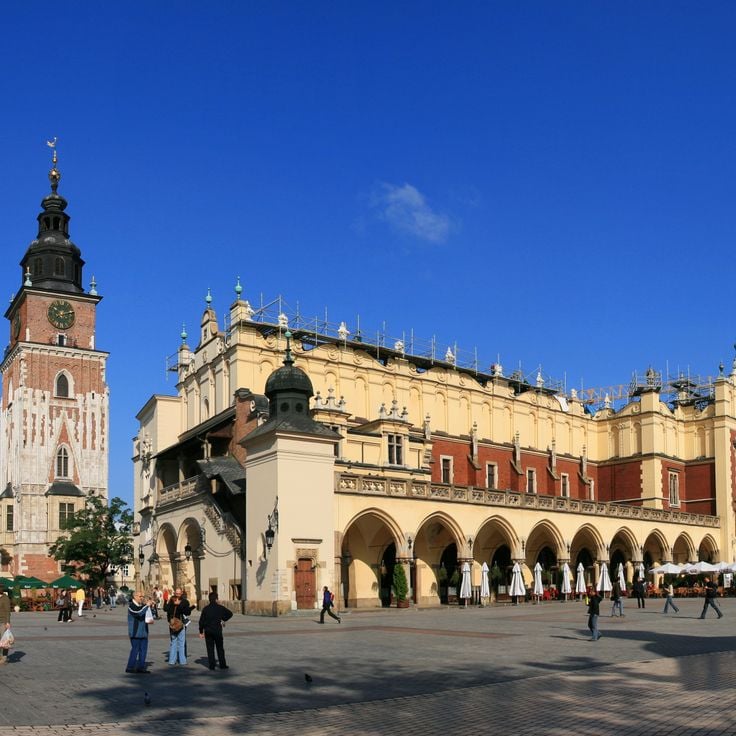
Krakow's historic center is the living heart of the city. The old town with its large medieval market square is surrounded by ancient buildings that tell centuries of history. Here you find winding streets, traditional guild houses and churches that rise since the Middle Ages. Rynek Glowny, the main square, has always been where the city's life unfolds. Merchants, artists and visitors gather on this vast open plaza. In the corners and alleys of the old town, you discover small shops, cafes and restaurants. History and everyday life mix here in a natural and welcoming way.
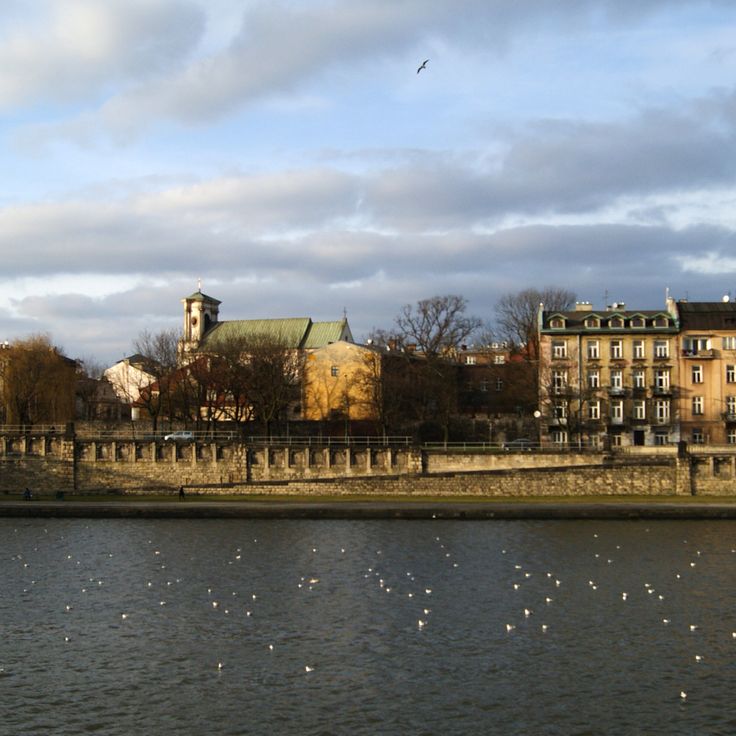
Wawel Royal Castle stands above the Vistula River and has dominated Krakow's horizon for centuries. A large courtyard surrounded by arcaded galleries houses exhibitions of royal chambers, art collections, weapons, and armor. This was the residence of the Polish kings and remains a symbol of the nation's power and history. From its terraces, you can view the city and the river flowing below.
The Jewish Quarter of Kazimierz in Krakow is a place where history and contemporary life coexist. Narrow streets are lined with synagogues, some of which still serve as places of worship while others now function as museums or cultural centers. Art galleries and workshops have settled into old buildings, and small restaurants offer traditional and modern cuisine. This district was once the heart of Jewish life in Krakow and today carries the memory of this rich past, while continuing to evolve as a living neighborhood.
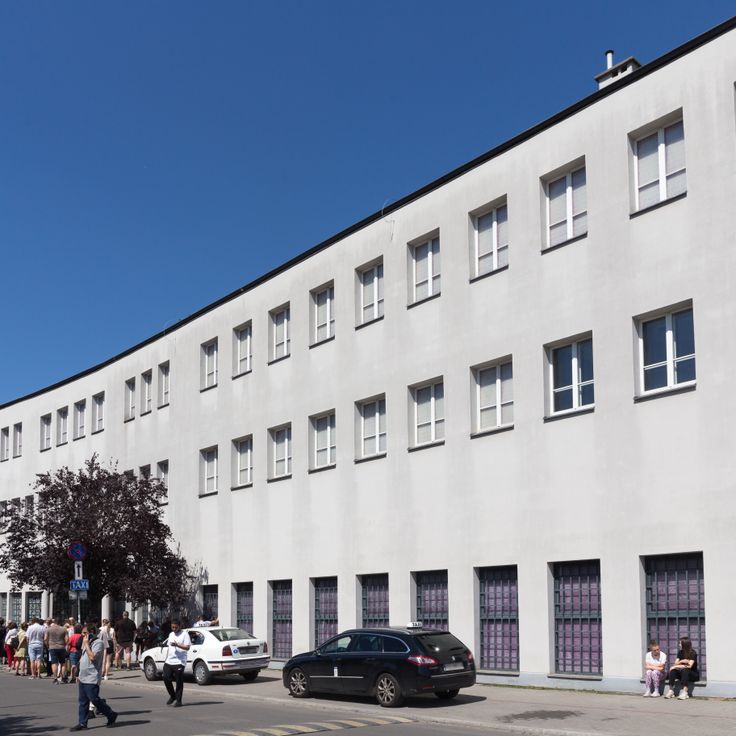
The Schindler Factory in Krakow is now a museum that tells the story of the Holocaust and the life of Oskar Schindler. The building was located in the Krakow Ghetto during World War II and became a refuge for Jewish workers. Visitors can see the workshops where people worked under Schindler's protection and learn about his courage that saved many lives. The museum displays personal belongings, photographs, and documents from that era. It is a place that remembers this dark period while preserving the hope that Schindler represented.
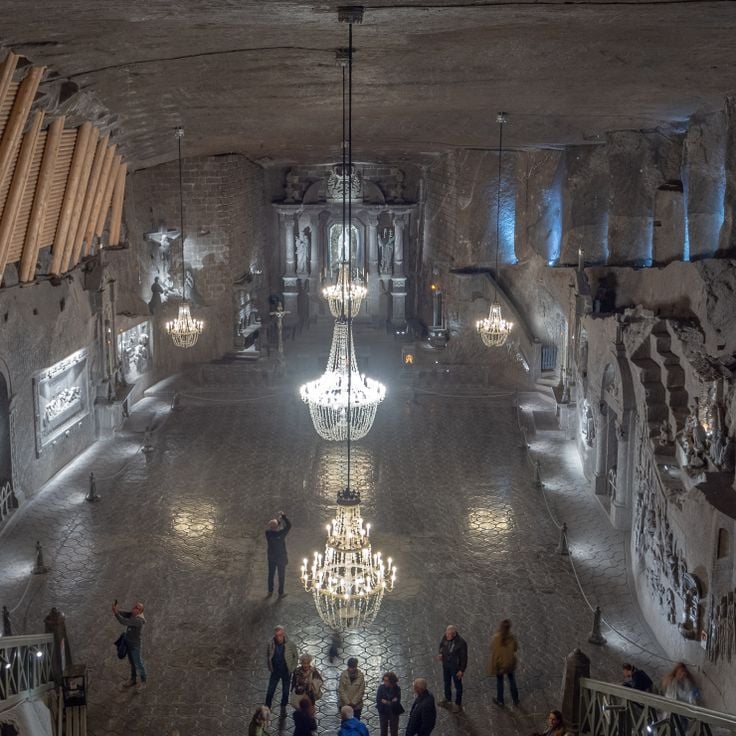
Wieliczka Salt Mine is an underground city carved into salt and mined since the 13th century. Visitors walk through passages where miners worked for centuries, discovering chapels carved directly into the salt walls. Underground lakes reflect light in unexpected ways, creating a surreal landscape beneath the earth. The mine shows how people lived and worked in these depths across generations.
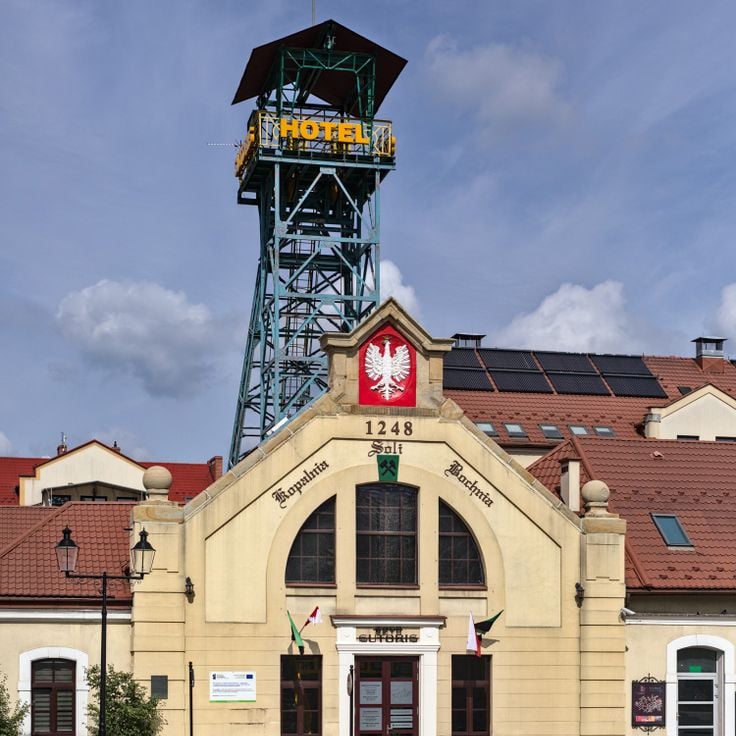
The salt mine of Bochnia is Poland's oldest salt mine and opened in the 13th century. It consists of tunnels dug by hand over centuries. This mine forms an underground city with multiple levels and chambers. Visitors can walk through these passages and explore the history of salt production. Museums on site display tools and information about miners' lives. Some rooms were used as a thermal spa, as the salt-rich air provides health benefits.
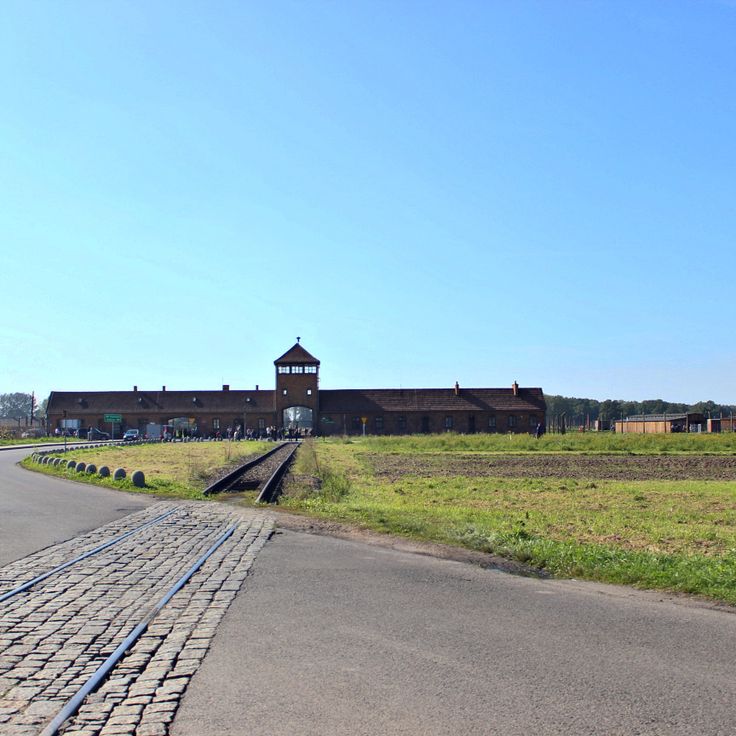
The Auschwitz-Birkenau Memorial and Museum in Oswiecim documents the Holocaust. This site preserves the memory of those who suffered and lost their lives, allowing visitors to confront the reality of this historical tragedy. The museum displays personal belongings, photographs and accounts from survivors. Original barracks and walls remain standing, creating a solemn environment that speaks directly to visitors. People from around the world come here to pay respects and understand one of the darkest chapters in history.
The Ojcow National Park, located south of Krakow in the Polish Jura, displays a landscape with limestone cliffs, deep gorges, and forested valleys. The park contains ruins of several medieval castles perched on rocky outcrops and numerous caves accessible by hiking trails. The Dunajec Gorge, with its steep walls rising above the river, draws visitors for hiking and kayaking. This park combines the geological diversity of the region with its medieval heritage and protects important habitats for the flora and fauna of the Carpathians.
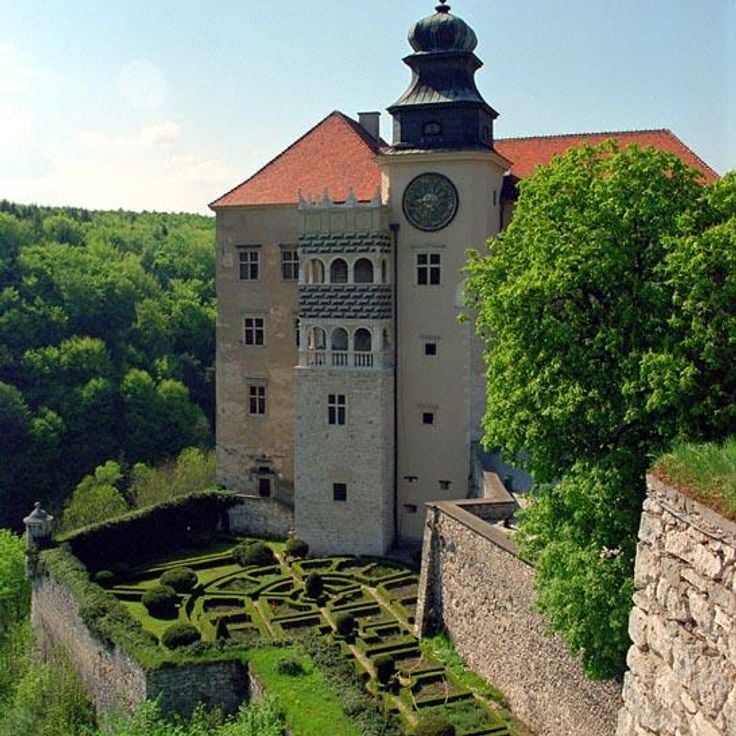
Pieskowa Skala Castle sits atop a rocky cliff overlooking the valley in Renaissance style. Located between Krakow and the Carpathians, it once held a strategic position to monitor trade routes. The castle houses art collections and historical weapons that tell the story of the fortress's importance. This site is part of Little Poland's heritage, where castles shaped the landscape.
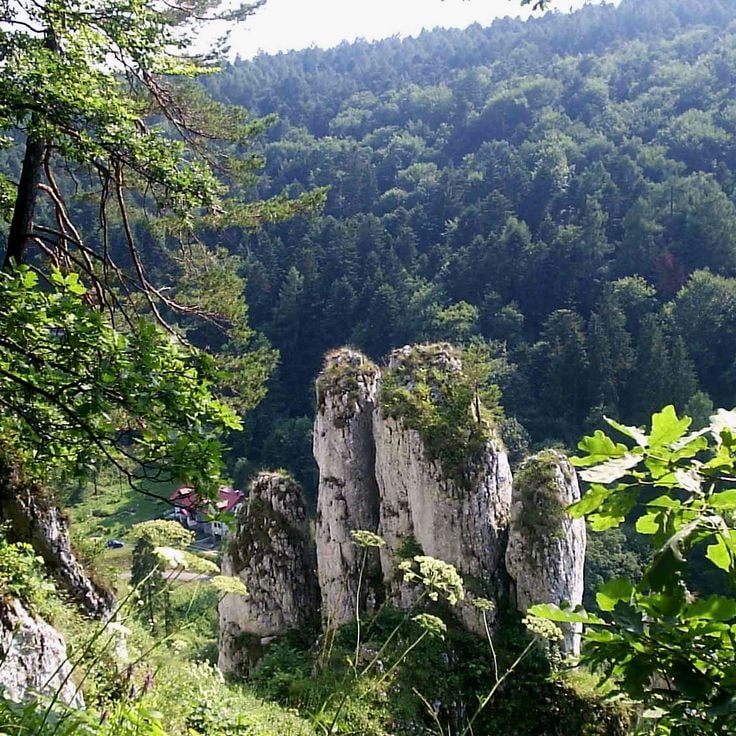
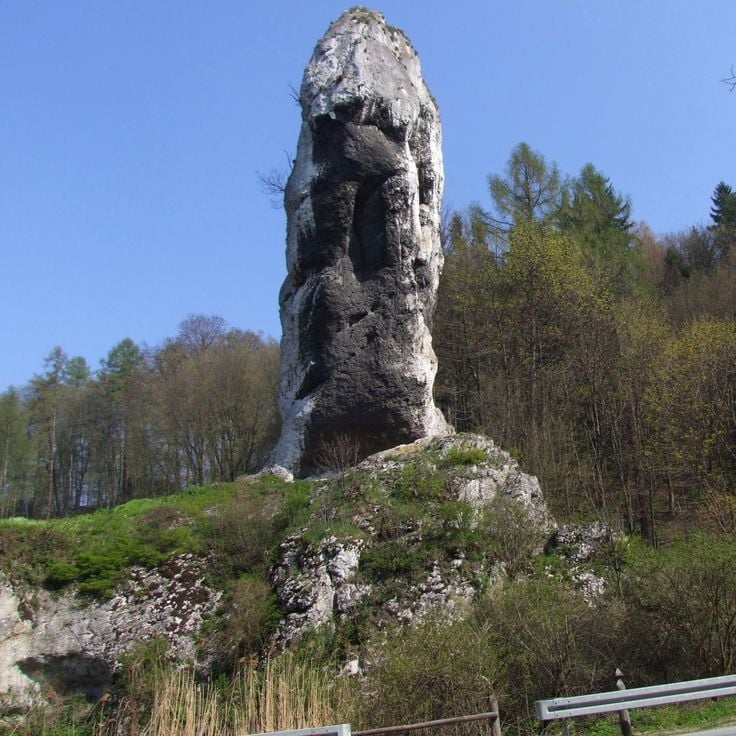
The Maczuga Herkulesa is a rock formation near Pieskowa Skala that rises from the Jura landscape like a giant needle. This rocky peak stands out distinctly from the surrounding terrain and shapes the character of the region. Over time, natural erosion has carved this distinctive form. Water and climate have shaped the limestone that defines this area. The formation serves as a natural landmark visible from far away and attracts visitors who come to explore the Jura landscape.
The Tatra National Park sits in the southern Carpathian Mountains near Zakopane and welcomes hikers of all abilities. Steep mountain slopes, deep valleys, and crystal-clear mountain lakes define the landscape, with water that mirrors the surrounding peaks. Dense coniferous forests cover the lower elevations, while higher ridges become rocky and bare. Summer visitors hike through alpine meadows and mountain gorges on well-marked trails. Winter transforms the park into a skiing destination when snow blankets the higher elevations. Wildlife such as chamois and marmots live throughout the park's varied terrain.
Zakopane is a mountain town in the Tatra range where traditional wooden architecture defines the place. The town serves as a starting point for hikes and skiing in the surrounding mountains. Here you will find local restaurants serving regional cuisine, cable cars leading to higher elevations, and numerous hiking trails. In winter, skiers come to the town; in summer, hikers wanting to explore the mountain landscape.
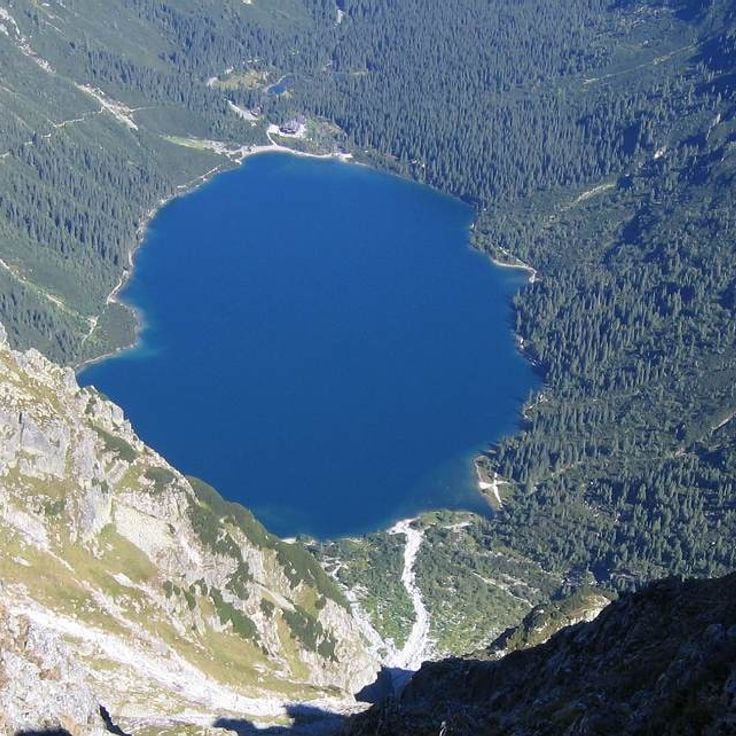
Morskie Oko is a mountain lake in the Tatras fed by underground springs. A hiking trail winds through the mountains to reach this lake. The water is clear and blue, and the lake stretches at the base of steep rock walls. This location draws hikers who come to explore nature and the mountain landscape. The lake is part of the diverse landscapes and historical sites that characterize the region between Krakow and the Carpathians.
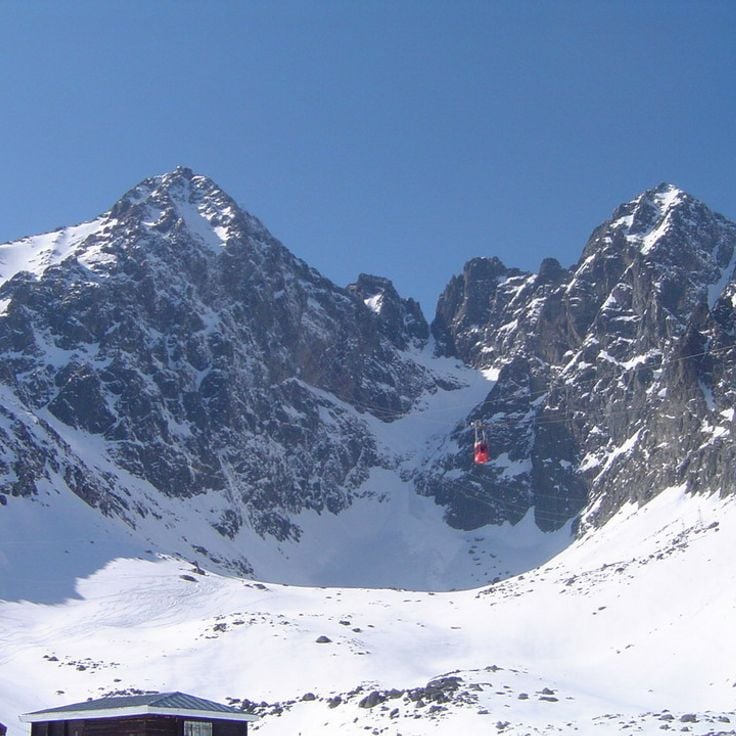
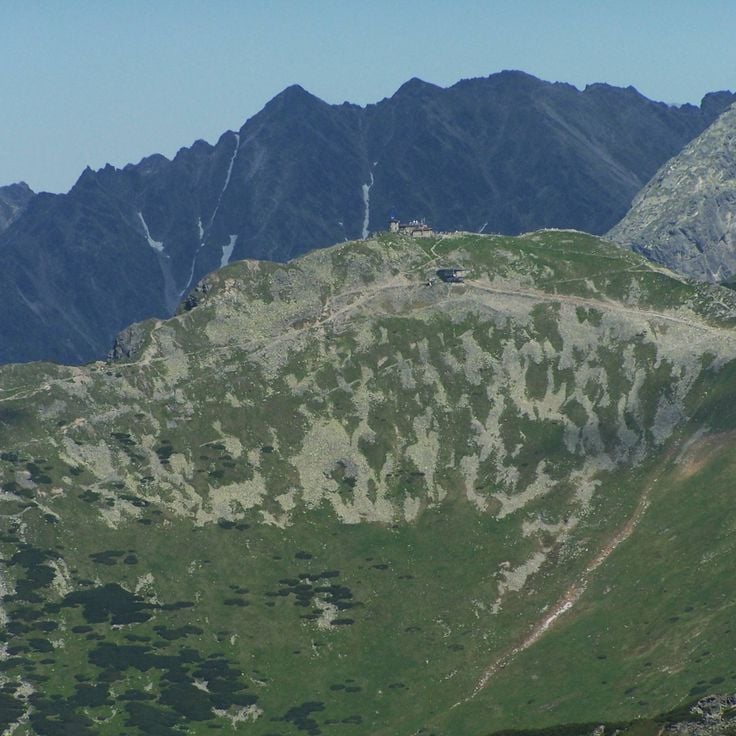
Kasprowy Wierch is a mountain peak in the Tatras that you reach by cable car. From the top, you see mountain chains and the valley below. On clear days, visibility extends far into the distance. The place attracts hikers and visitors year-round, in winter for the snow-covered landscape and in summer for easy access and hiking trails nearby.
Koscieliska Valley is an alpine valley in the Tatras with hiking trails and mountain landscapes typical of the region. Located south of Krakow, this valley offers routes for visitors of all levels. The trails wind through rocky terrain and forests, crossing streams and passing beneath limestone cliffs. The valley displays the characteristic geology of the Tatras, shaped by glacier action over millennia. During summer months, hikers come to explore the paths and discover the mountain landscape.
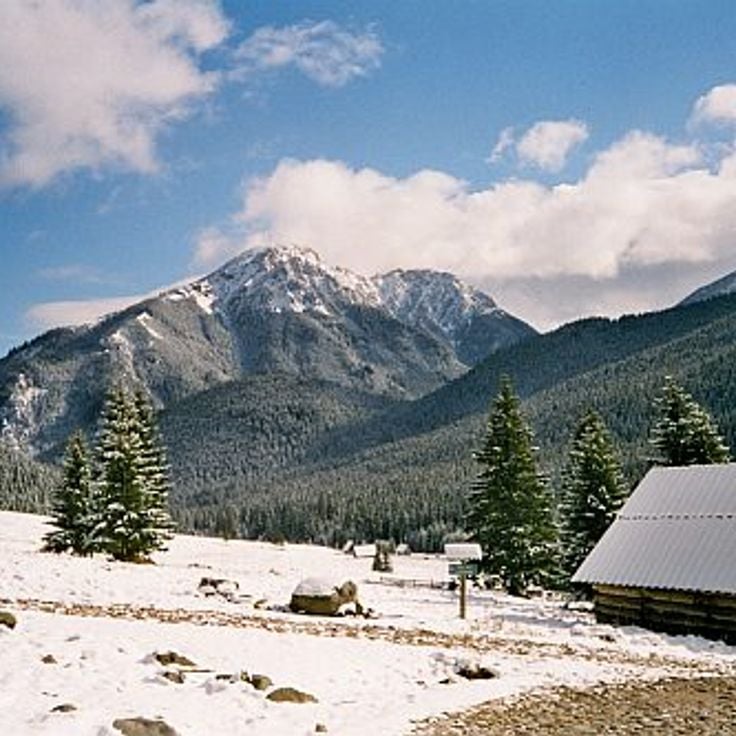
The Chochołowska Valley lies in the Tatras and is part of the diverse landscape of southern Poland between Krakow and the Carpathian mountains. This high valley is covered in larch forests and has hiking trails that lead to mountain huts. In summer, hikers walk these paths and explore the elevated terrain. The valley opens between the peaks and invites visitors to outdoor mountain life.
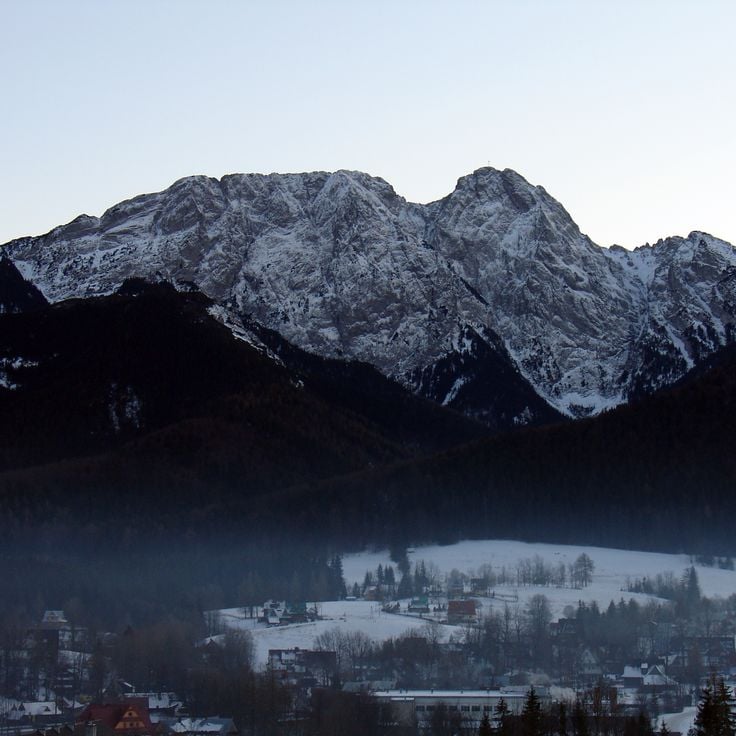
Giewont is the most recognizable peak in the High Tatras and stands out in the mountain landscape with its distinctive shape. An iron cross has crowned the summit since 1901 and has become a symbol for the region. The mountain is accessible via several hiking trails, with the most popular route starting from Kuźnice and requiring about 3 hours of climbing. The path ascends steeply over rocks and stone steps, demanding sure-footedness and good physical fitness. From the summit at 1955 meters (6,413 feet) elevation, on clear days you can see far across the mountain chains and the valleys below.
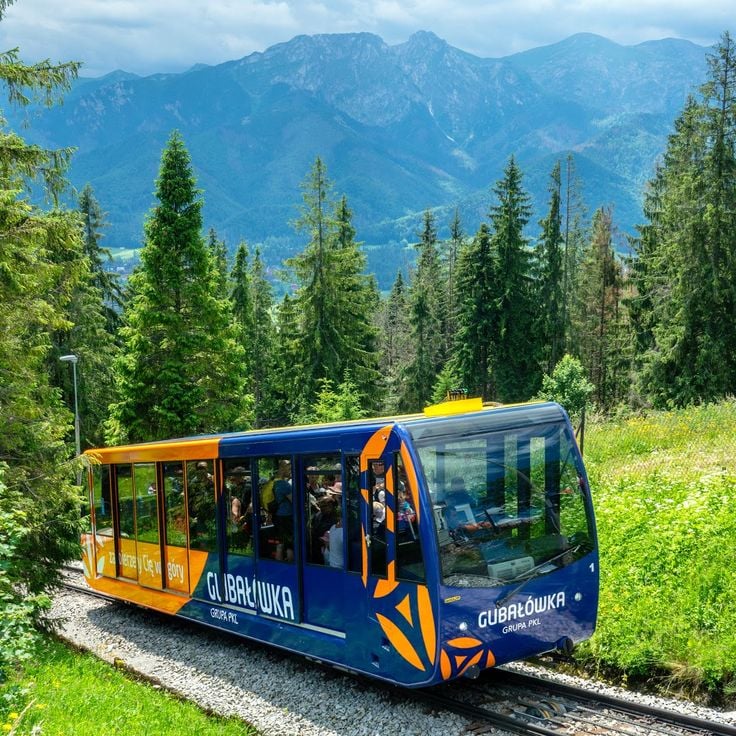
Gubalowka is a hill near Zakopane offering views of the town and the Tatra mountains. You can reach the top by funicular railway or on foot along a hiking trail. From the summit, you see mountain chains stretching into the distance and the colorful buildings of Zakopane below. This place draws locals and visitors who come to enjoy the landscape and breathe the fresh mountain air.
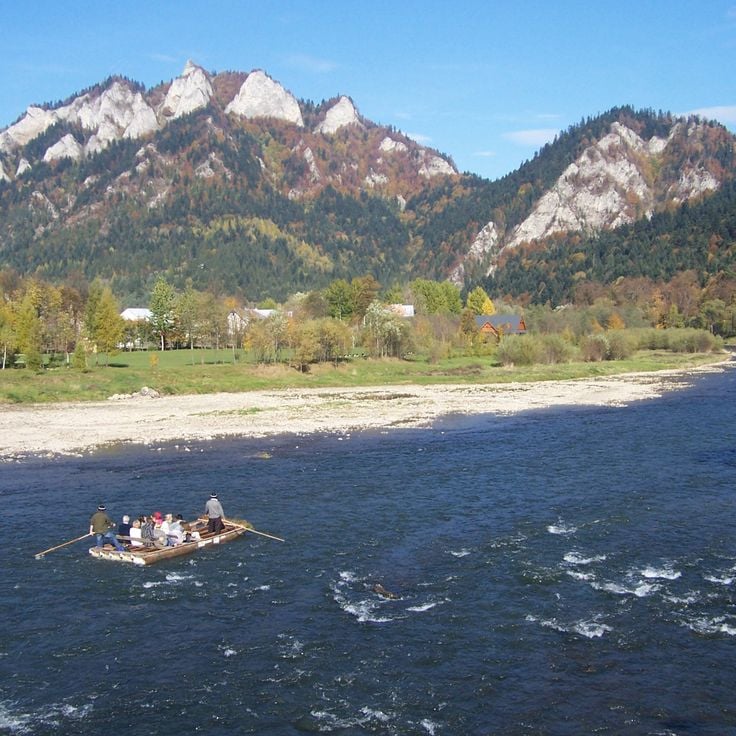
The Dunajec River flows through a narrow gorge between limestone cliffs in the Carpathian Mountains. Visitors travel by raft or canoe, passing directly below tall rock walls. The water moves gently, and from the boat you see vegetation clinging to the rock face. This journey offers a different view of the mountain landscape of the region surrounding Krakow.
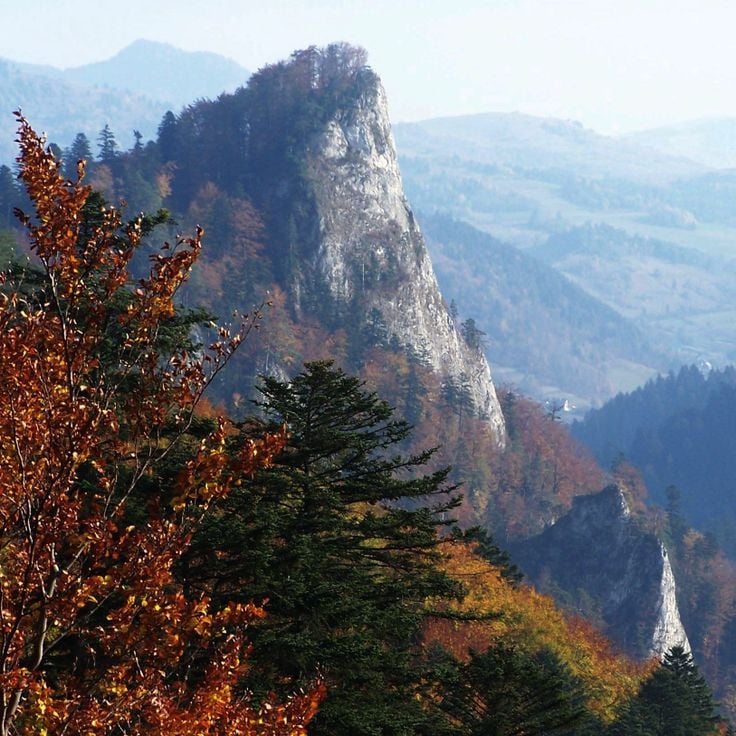
Sokolica is a viewpoint in the Pieniny Mountains that overlooks the Dunajec River gorge. From this location, you see the steep rock walls that form the river valley and the forested slopes surrounding it. On clear days, the view extends across the entire mountain region. The site attracts hikers who explore the surrounding trails and enjoy the views of the canyon.
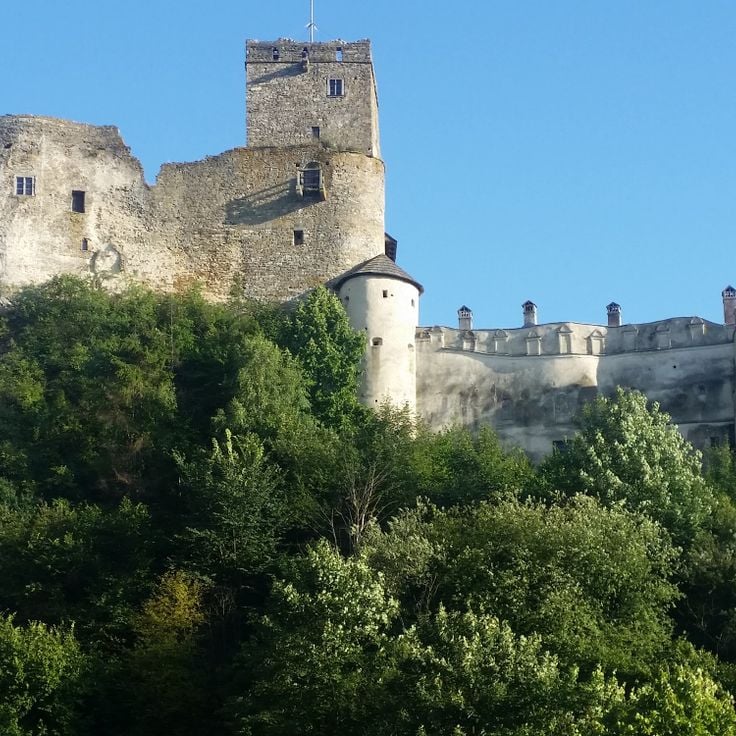
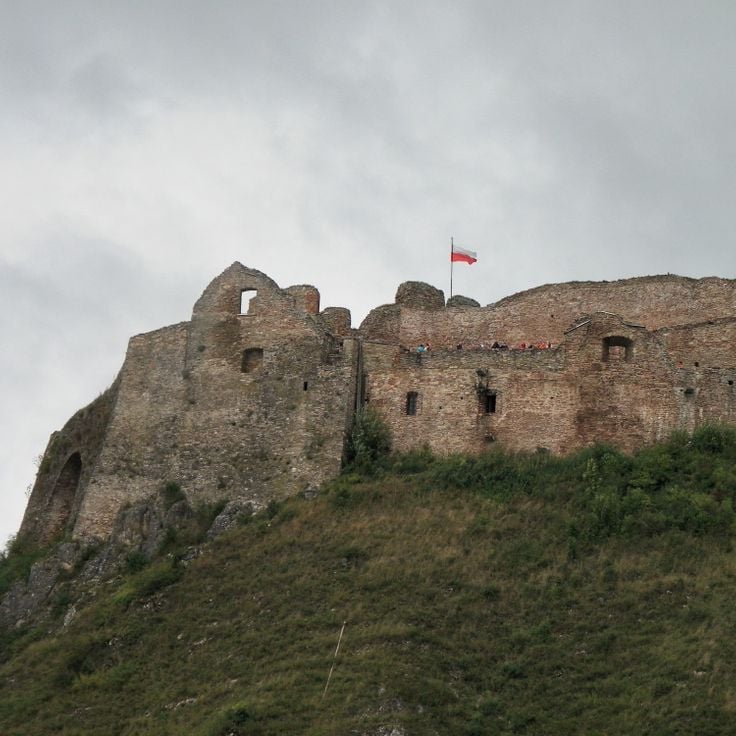
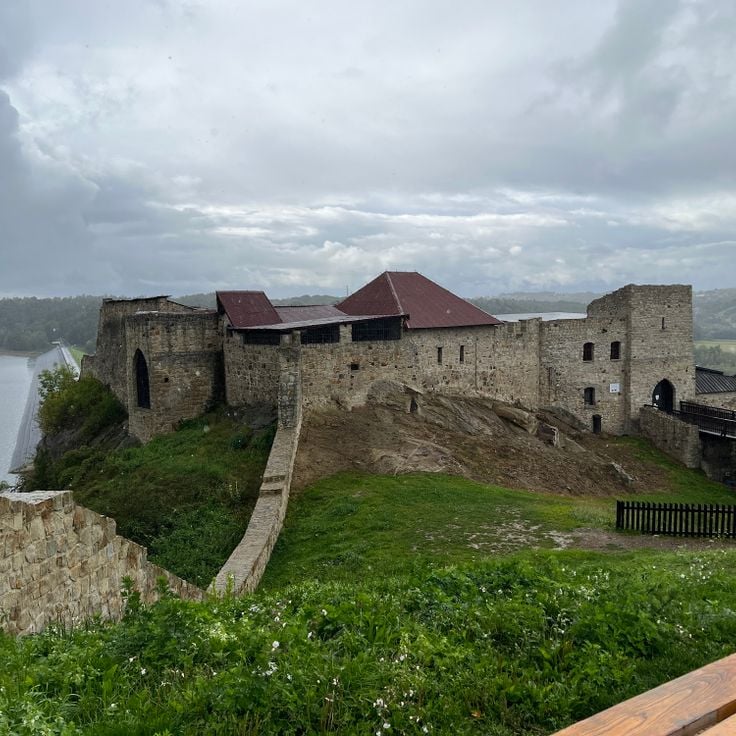
Niedzica Castle rises on a limestone cliff overlooking Lake Czorsztyn in southern Poland. This medieval fortress displays views of the lake and surrounding Carpathian mountains from its walls. Exhibition rooms inside the castle tell the story of the region and the site itself. Niedzica Castle is an important stop when traveling through Little Poland and the Carpathians, a region that concentrates castles, salt mines and historical sites.
The ruins of Czorsztyn Castle rise from a limestone cliff above Czorsztyn Lake in the Carpathians. This medieval fortress once guarded the valley below and served as a key strategic post in the region. Visitors can explore the stone ruins and look out over the lake and surrounding mountains. The castle shows the medieval fortresses that sit on cliffs throughout this landscape.
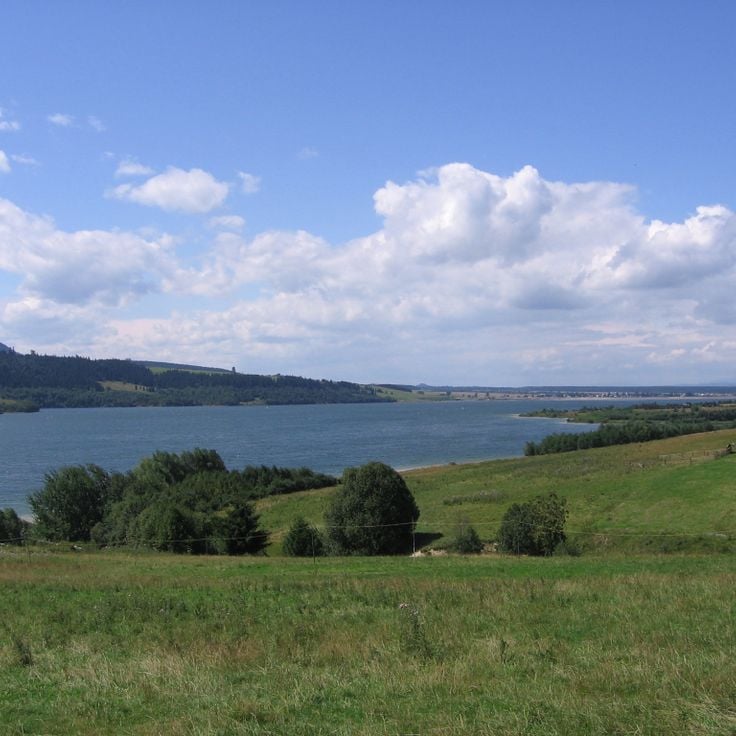
Lake Czorsztynskie sits in the Carpathian Mountains south of Krakow, surrounded by forested hills. Two medieval castles rise on rocky promontories above the water. Created by a dam, this lake draws visitors who walk along its shores, take boat trips, and enjoy views of the mountain landscape. In winter, the water can freeze over. The lake lies on the route between Krakow and the highest peaks of the Carpathians.
The Babia Gora National Park lies in the Beskid Mountains and offers hiking trails through alpine landscapes. The park sits within the broader southern Polish region between Krakow and the Carpathians, where medieval castles perch on limestone cliffs, salt mines have created underground cities since the 13th century, and UNESCO wooden churches display traditional building methods. This mountainous terrain with its deep valleys and beech forests draws hikers and nature lovers and continues the long tradition of mountain activities that has shaped this region for generations.
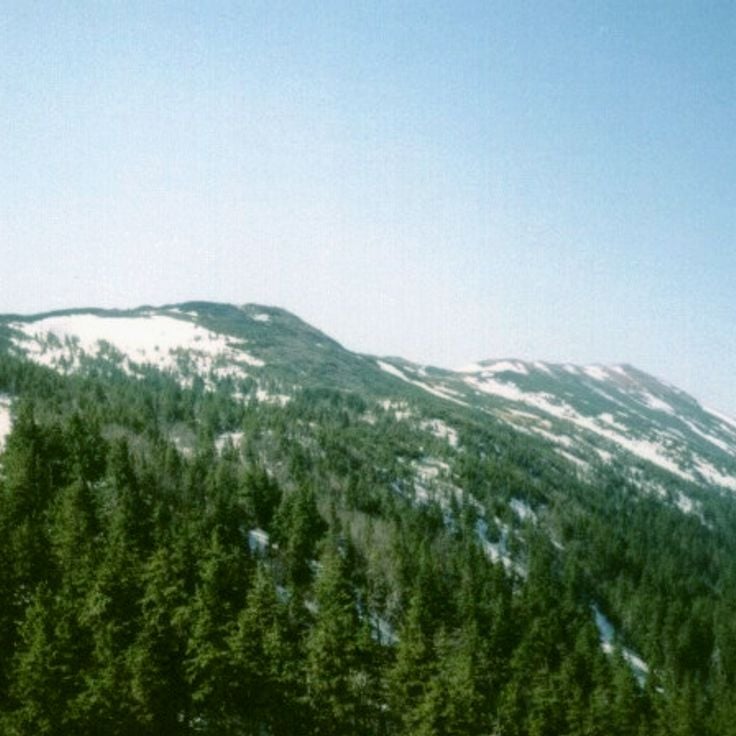
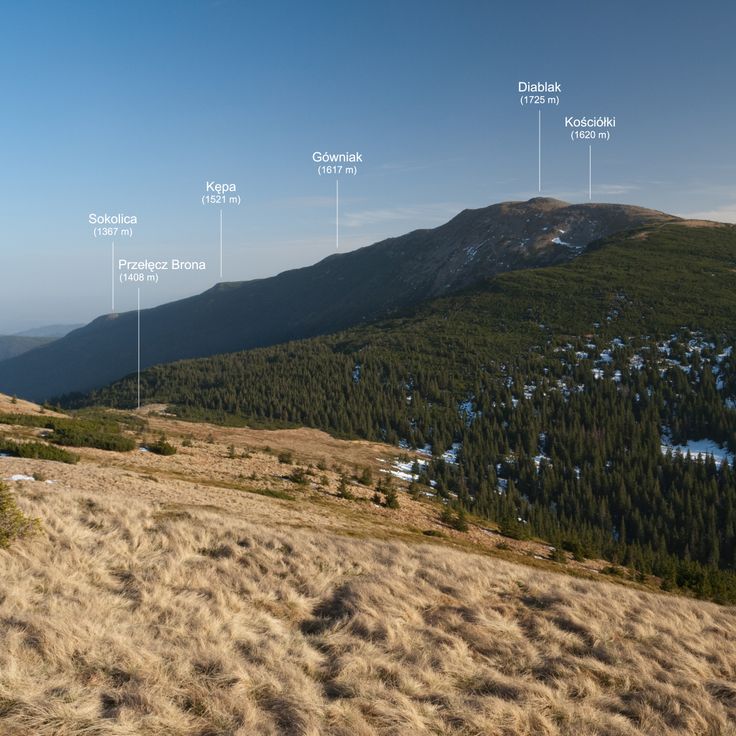
Babia Gora in the Beskides is a major peak of the Carpathian Mountains south of Krakow. From its summit, you can see all the surrounding mountains and valleys. This mountain attracts hikers throughout the year. The path to the summit crosses through forests and alpine meadows. On clear days, the view reaches far across the region. The climb is accessible for those in good physical condition, but it takes time and sturdy footwear.
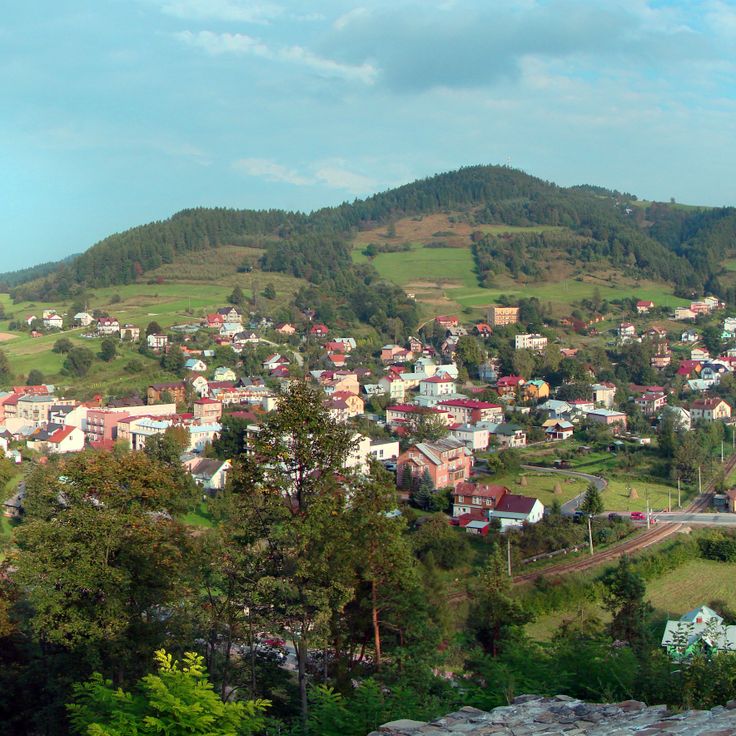
This spa town in the Beskid Sądecki Carpathes has attracted visitors for over a century because of its mineral springs. The town preserves 19th-century architecture with elegant buildings from the Belle-Epoque period. Hiking trails depart from here toward the Beskid Sądecki region, where forests and mountain slopes offer space to explore. The mineral water from the springs has been used for healing purposes for generations.
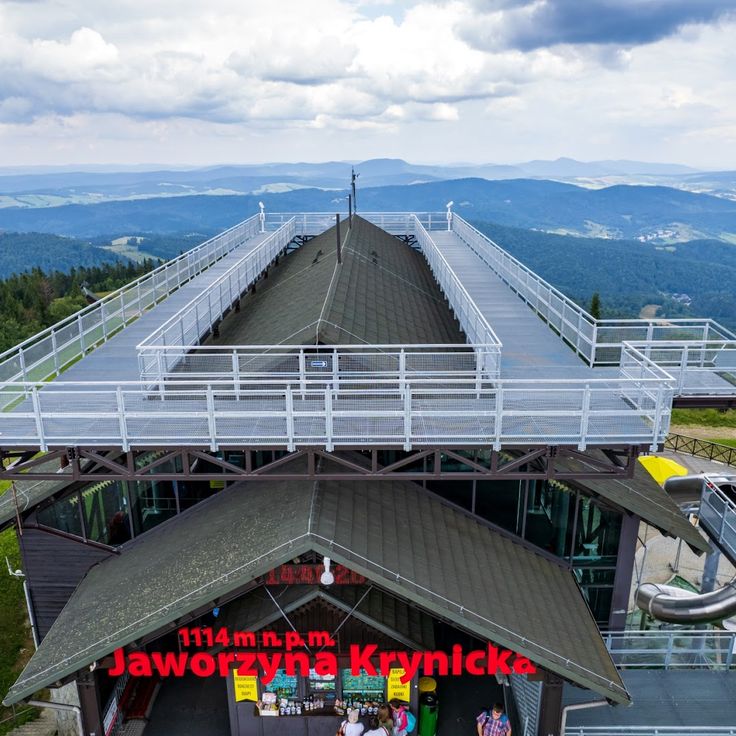
Jaworzyna Krynicka is a hill above the spa town of Krynica-Zdroj, reached by cable car. From the top, you can see the Beskid mountains and the valley below. This area is known for its thermal springs and draws people who love mountain settings. In winter, visitors come to ski; in summer, to hike. From the summit, you see forests and small villages scattered across the landscape.
Muszyna is a spa town in the Beskid Mountains where visitors bathe in hot mineral waters and explore botanical gardens. The town has welcomed guests seeking wellness for more than a century in a forested setting.
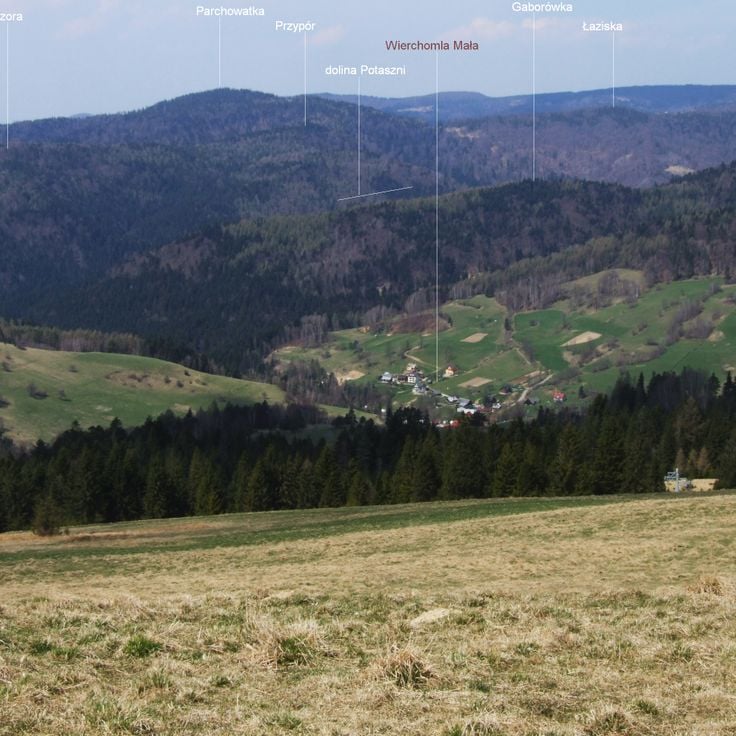
Wierchomla is a mountain station in the Sądecki Beskids, a mountain range of the Carpathians. The place offers hiking trails and mountain biking routes that pass through the forests of the region. Visitors can explore the area on foot or by bike, crossing valleys and slopes. The station serves as a starting point for outdoor activities during the warmer months. The landscape is shaped by dense forests and rolling hills.
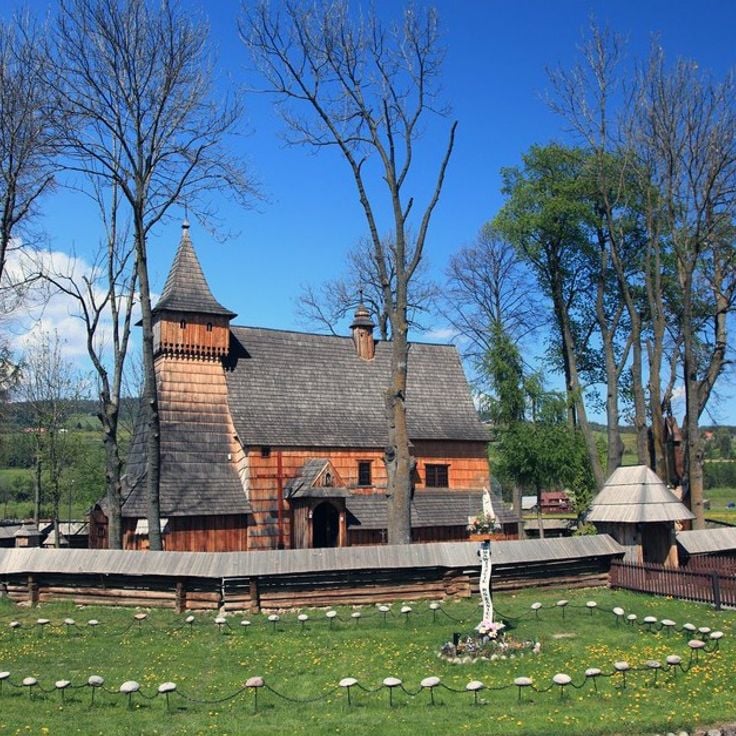
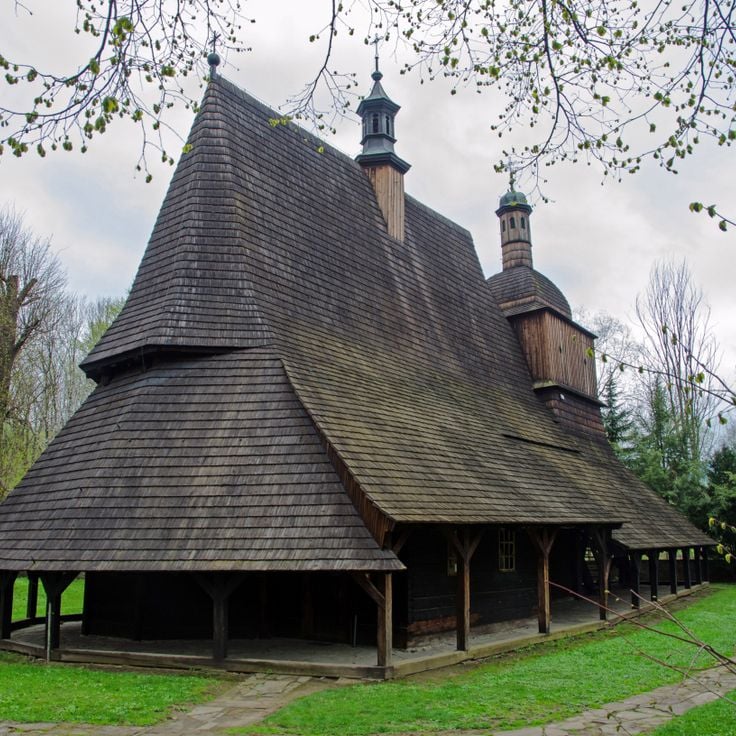
The wooden church of Dębno Podhalanskie stands in a small mountain village and shows how people in this region once built and decorated their sacred spaces. The building was constructed entirely from wood and follows the construction traditions of Podhalania with characteristic carpentry details and a steep, typical roof. Inside are painted decorations and religious objects from several centuries. UNESCO recognized this church as World Heritage because it is a rare example of medieval European wooden architecture.
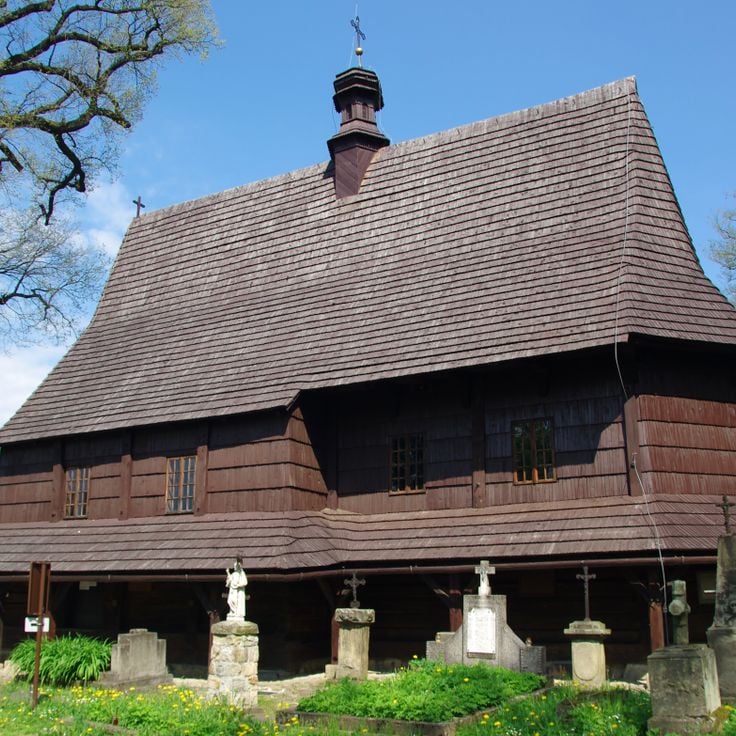
This wooden church in Lipnica Murowana stands in a small mountain village in the Carpathians in southern Poland. It was built using traditional construction methods rooted in this region for centuries. The building is inscribed on the UNESCO World Heritage List and showcases craftsmanship techniques passed down through generations. The church serves the local community as a spiritual center and is part of the wooden heritage that defines this mountain region.
The wooden church of Sękowa stands in a village in Lesser Poland and is inscribed on the UNESCO World Heritage list. This wooden structure demonstrates the craftsmanship passed down through generations in this region. The church preserves the traditional building styles of wooden churches found in the southern Polish Carpathians. Visitors can observe the artisanal techniques and cultural significance of this architecture firsthand.
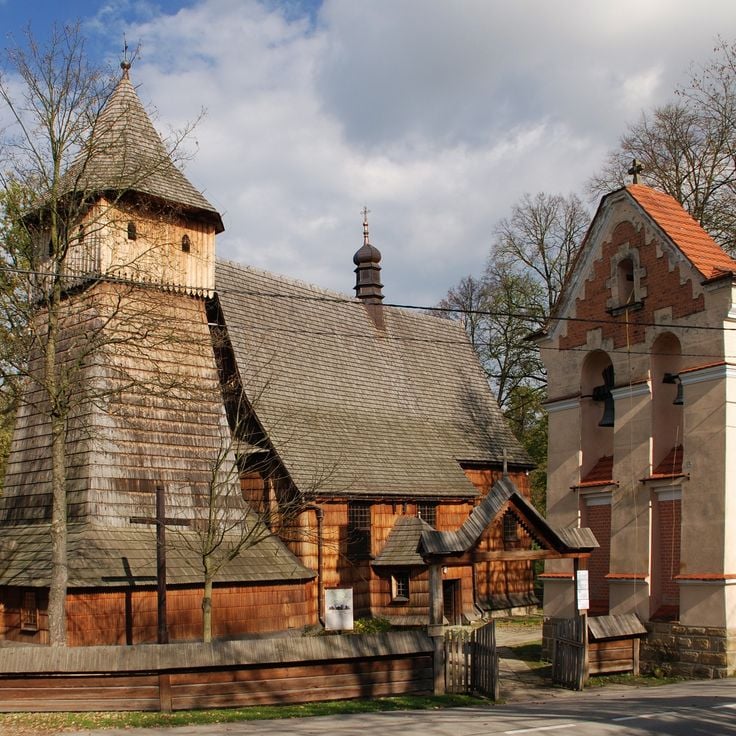
The wooden church of Binarowa is located in a small village near Krakow and is recognized as a UNESCO World Heritage site. It displays the traditional craftsmanship of the region through its wooden structure and regional style. This church is one example among many wooden buildings found in southern Poland. The construction methods used reflect centuries of local traditions passed down from generation to generation.
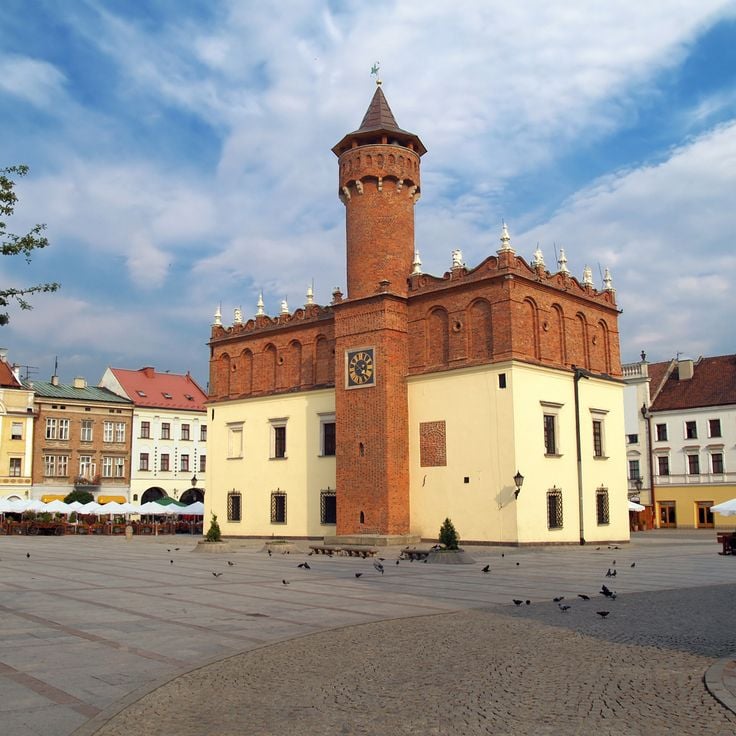
The old town of Tarnow centers on its large market square, surrounded by colorful houses and historic buildings. Palaces and museums tell the story of this region and its inhabitants across the centuries. Walking through its streets, you discover buildings from different periods that shaped the character of the city. Tarnow was an important commercial center in the region of Lesser Poland.
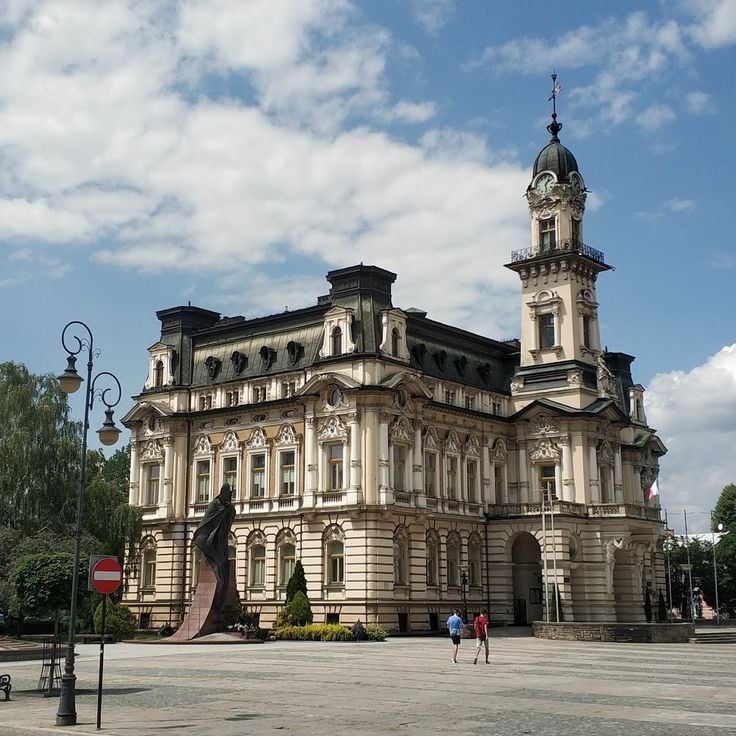
The old center of Nowy Sacz revolves around a central square surrounded by colorful buildings from different periods. These houses reflect the history of the Little Poland region. Walking around the square, you will find arcades, shops, and the everyday rhythm of this mountain town. The regional museum displays the culture and traditions of the local people through collections of daily objects and historical items.
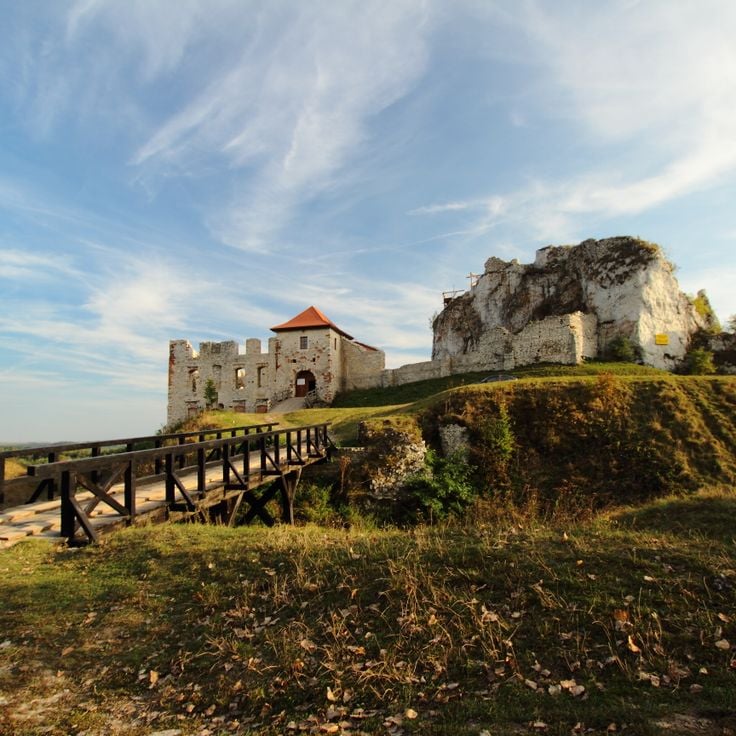
Rabsztyn Castle lies in this region south of Krakow, where fortresses once crowned limestone cliffs. The ruins rise above Olkusz and offer views across the surrounding landscape of forests and villages. This medieval fortress shows how such structures shaped the area and held strategic positions. Visitors can explore the remains and understand the history of castles in Little Poland.
Dobczyce Castle rises on a cliff overlooking a lake near Krakow. This castle is part of the medieval architecture that characterizes the Little Poland region, where fortifications perch on limestone cliffs. The building now houses a museum and offers changing exhibitions for visitors. From its elevated position, Dobczyce Castle provides views over the lake and the surrounding landscape, where limestone cliffs and lakes shape the terrain.
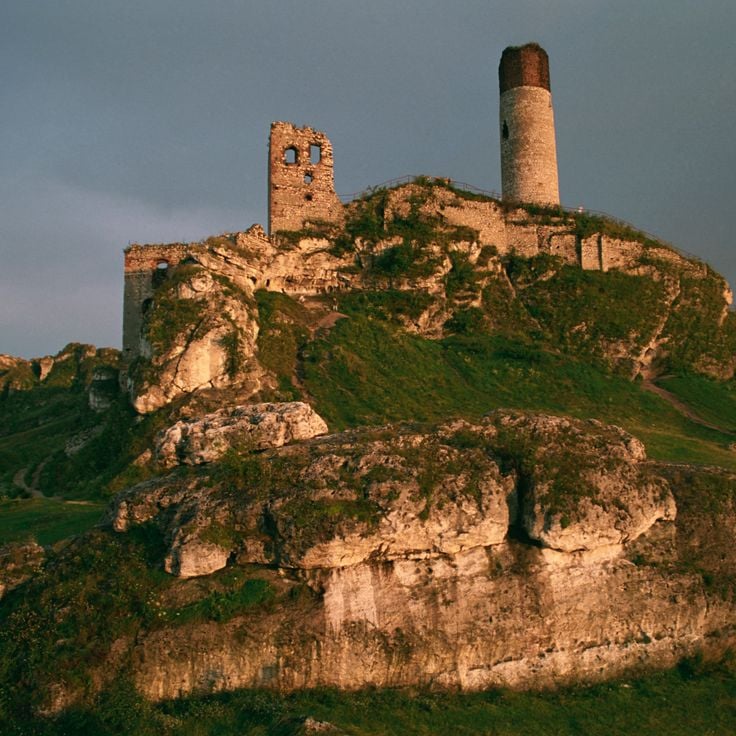
The Eagle Nests Route connects several medieval castles scattered across the limestone cliffs of the Jura in the Krakow-Czestochowa region. The path leads from fortress to fortress through a landscape marked by steep escarpments, deep valleys and beech forests. Castles perch on rocky outcrops that have stood for centuries. Along the route, visitors can explore the history of these defensive structures while enjoying views of the surrounding mountains and gorges.
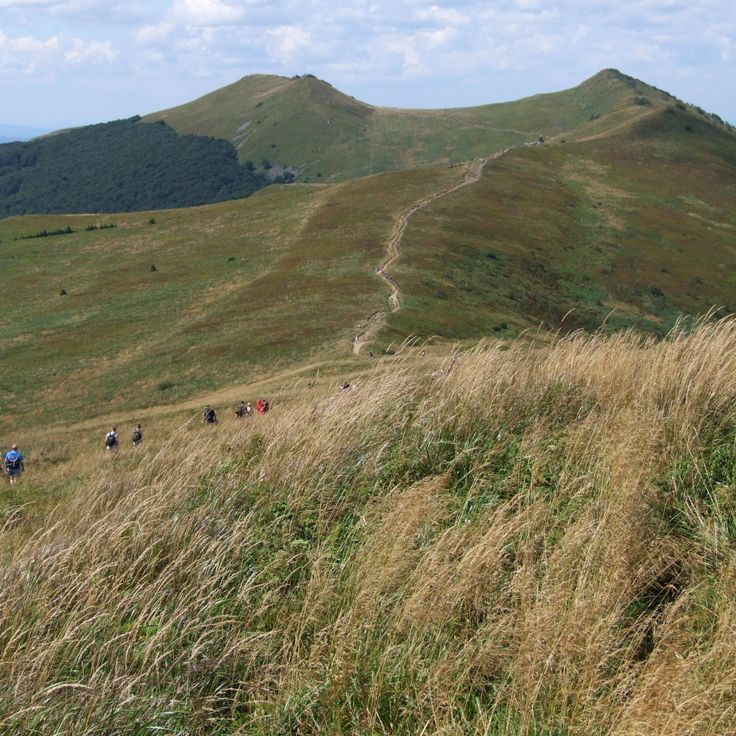
Bieszczady National Park stretches across the Eastern Carpathians and offers hiking trails through wild mountain landscapes. Visitors explore dense forests, open alpine meadows, and deep gorges. The park is home to bears, lynxes, and other animals living freely in nature. The paths lead to summits with far-reaching views of the surrounding mountains. In winter, snow covers the landscape and the park feels even more remote. Small mountain shelters provide refuge for hikers who want to spend several days in nature.
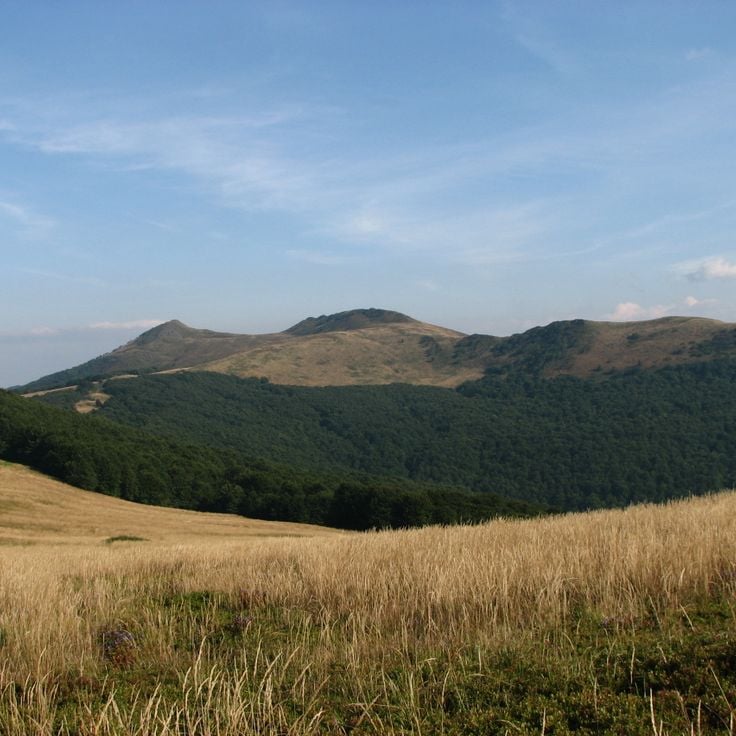
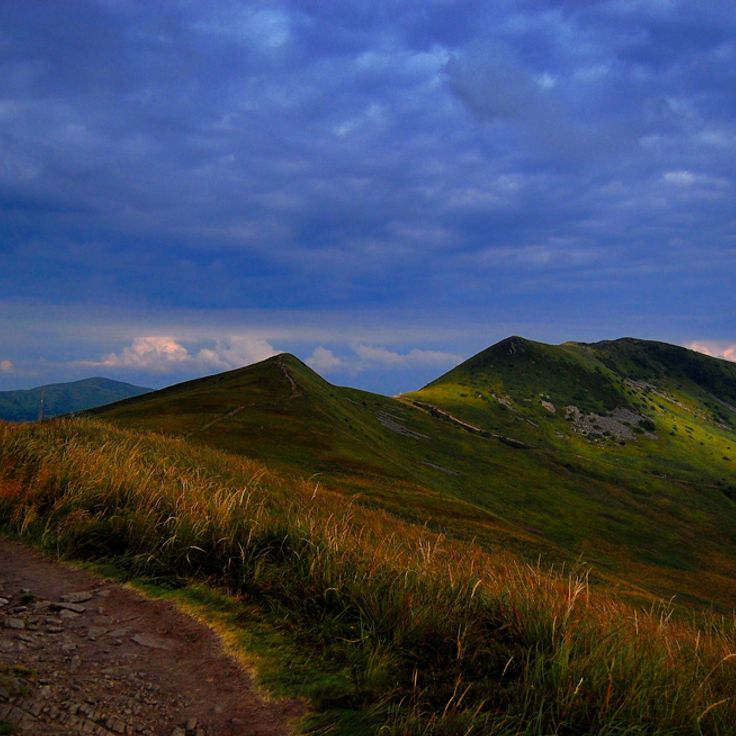
Polonina Wetlinska is a mountain ridge in the Eastern Carpathians, located within the Bieszczady range. From this place, visitors see a broad view of the surrounding mountains and valleys. Hikers reach the ridge by following trails that pass through forests and meadows. In summer, the region is green and filled with wildlife, while in winter snow covers it. The views shift with the seasons and weather, always revealing the mountainous terrain of the area.
Tarnica is the highest peak of the Bieszczady Mountains in the Eastern Carpathians. From this summit, views spread far across the surrounding mountains and valleys. The peak stands at about 1500 meters (4900 ft) elevation and is accessible by several hiking trails. On clear days, the horizon stretches far into the distance. The climb passes through forests and alpine meadows. At the top sits an old stone tower. Hikers come here to enjoy the views and experience the mountains from this height.
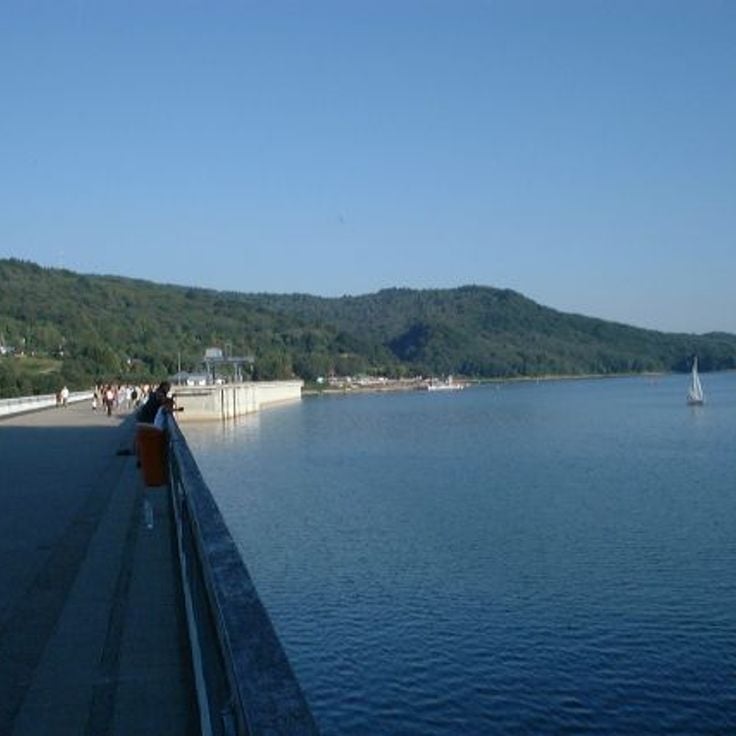
Lake Solina sits in the Eastern Carpathians, created by a dam and surrounded by forested mountains. The water spreads through a deep valley where visitors come to swim, fish, and boat. Trails run along some shorelines and offer views of the landscape. The slopes are sometimes steep, sometimes gentler, with places to rest. In summer, the lake receives many visitors. Small villages nearby offer simple accommodations for those staying in the region.
Krakow's historic center is the living heart of the city. The old town with its large medieval market square is surrounded by ancient buildings that tell centuries of history. Here you find winding streets, traditional guild houses and churches that rise since the Middle Ages. Rynek Glowny, the main square, has always been where the city's life unfolds. Merchants, artists and visitors gather on this vast open plaza. In the corners and alleys of the old town, you discover small shops, cafes and restaurants. History and everyday life mix here in a natural and welcoming way.
Wawel Royal Castle stands above the Vistula River and has dominated Krakow's horizon for centuries. A large courtyard surrounded by arcaded galleries houses exhibitions of royal chambers, art collections, weapons, and armor. This was the residence of the Polish kings and remains a symbol of the nation's power and history. From its terraces, you can view the city and the river flowing below.
The Jewish Quarter of Kazimierz in Krakow is a place where history and contemporary life coexist. Narrow streets are lined with synagogues, some of which still serve as places of worship while others now function as museums or cultural centers. Art galleries and workshops have settled into old buildings, and small restaurants offer traditional and modern cuisine. This district was once the heart of Jewish life in Krakow and today carries the memory of this rich past, while continuing to evolve as a living neighborhood.
The Schindler Factory in Krakow is now a museum that tells the story of the Holocaust and the life of Oskar Schindler. The building was located in the Krakow Ghetto during World War II and became a refuge for Jewish workers. Visitors can see the workshops where people worked under Schindler's protection and learn about his courage that saved many lives. The museum displays personal belongings, photographs, and documents from that era. It is a place that remembers this dark period while preserving the hope that Schindler represented.
Wieliczka Salt Mine is an underground city carved into salt and mined since the 13th century. Visitors walk through passages where miners worked for centuries, discovering chapels carved directly into the salt walls. Underground lakes reflect light in unexpected ways, creating a surreal landscape beneath the earth. The mine shows how people lived and worked in these depths across generations.
The salt mine of Bochnia is Poland's oldest salt mine and opened in the 13th century. It consists of tunnels dug by hand over centuries. This mine forms an underground city with multiple levels and chambers. Visitors can walk through these passages and explore the history of salt production. Museums on site display tools and information about miners' lives. Some rooms were used as a thermal spa, as the salt-rich air provides health benefits.
The Auschwitz-Birkenau Memorial and Museum in Oswiecim documents the Holocaust. This site preserves the memory of those who suffered and lost their lives, allowing visitors to confront the reality of this historical tragedy. The museum displays personal belongings, photographs and accounts from survivors. Original barracks and walls remain standing, creating a solemn environment that speaks directly to visitors. People from around the world come here to pay respects and understand one of the darkest chapters in history.
The Ojcow National Park, located south of Krakow in the Polish Jura, displays a landscape with limestone cliffs, deep gorges, and forested valleys. The park contains ruins of several medieval castles perched on rocky outcrops and numerous caves accessible by hiking trails. The Dunajec Gorge, with its steep walls rising above the river, draws visitors for hiking and kayaking. This park combines the geological diversity of the region with its medieval heritage and protects important habitats for the flora and fauna of the Carpathians.
Pieskowa Skala Castle sits atop a rocky cliff overlooking the valley in Renaissance style. Located between Krakow and the Carpathians, it once held a strategic position to monitor trade routes. The castle houses art collections and historical weapons that tell the story of the fortress's importance. This site is part of Little Poland's heritage, where castles shaped the landscape.
The Maczuga Herkulesa is a rock formation near Pieskowa Skala that rises from the Jura landscape like a giant needle. This rocky peak stands out distinctly from the surrounding terrain and shapes the character of the region. Over time, natural erosion has carved this distinctive form. Water and climate have shaped the limestone that defines this area. The formation serves as a natural landmark visible from far away and attracts visitors who come to explore the Jura landscape.
The Tatra National Park sits in the southern Carpathian Mountains near Zakopane and welcomes hikers of all abilities. Steep mountain slopes, deep valleys, and crystal-clear mountain lakes define the landscape, with water that mirrors the surrounding peaks. Dense coniferous forests cover the lower elevations, while higher ridges become rocky and bare. Summer visitors hike through alpine meadows and mountain gorges on well-marked trails. Winter transforms the park into a skiing destination when snow blankets the higher elevations. Wildlife such as chamois and marmots live throughout the park's varied terrain.
Zakopane is a mountain town in the Tatra range where traditional wooden architecture defines the place. The town serves as a starting point for hikes and skiing in the surrounding mountains. Here you will find local restaurants serving regional cuisine, cable cars leading to higher elevations, and numerous hiking trails. In winter, skiers come to the town; in summer, hikers wanting to explore the mountain landscape.
Morskie Oko is a mountain lake in the Tatras fed by underground springs. A hiking trail winds through the mountains to reach this lake. The water is clear and blue, and the lake stretches at the base of steep rock walls. This location draws hikers who come to explore nature and the mountain landscape. The lake is part of the diverse landscapes and historical sites that characterize the region between Krakow and the Carpathians.
Kasprowy Wierch is a mountain peak in the Tatras that you reach by cable car. From the top, you see mountain chains and the valley below. On clear days, visibility extends far into the distance. The place attracts hikers and visitors year-round, in winter for the snow-covered landscape and in summer for easy access and hiking trails nearby.
Koscieliska Valley is an alpine valley in the Tatras with hiking trails and mountain landscapes typical of the region. Located south of Krakow, this valley offers routes for visitors of all levels. The trails wind through rocky terrain and forests, crossing streams and passing beneath limestone cliffs. The valley displays the characteristic geology of the Tatras, shaped by glacier action over millennia. During summer months, hikers come to explore the paths and discover the mountain landscape.
The Chochołowska Valley lies in the Tatras and is part of the diverse landscape of southern Poland between Krakow and the Carpathian mountains. This high valley is covered in larch forests and has hiking trails that lead to mountain huts. In summer, hikers walk these paths and explore the elevated terrain. The valley opens between the peaks and invites visitors to outdoor mountain life.
Giewont is the most recognizable peak in the High Tatras and stands out in the mountain landscape with its distinctive shape. An iron cross has crowned the summit since 1901 and has become a symbol for the region. The mountain is accessible via several hiking trails, with the most popular route starting from Kuźnice and requiring about 3 hours of climbing. The path ascends steeply over rocks and stone steps, demanding sure-footedness and good physical fitness. From the summit at 1955 meters (6,413 feet) elevation, on clear days you can see far across the mountain chains and the valleys below.
Gubalowka is a hill near Zakopane offering views of the town and the Tatra mountains. You can reach the top by funicular railway or on foot along a hiking trail. From the summit, you see mountain chains stretching into the distance and the colorful buildings of Zakopane below. This place draws locals and visitors who come to enjoy the landscape and breathe the fresh mountain air.
The Dunajec River flows through a narrow gorge between limestone cliffs in the Carpathian Mountains. Visitors travel by raft or canoe, passing directly below tall rock walls. The water moves gently, and from the boat you see vegetation clinging to the rock face. This journey offers a different view of the mountain landscape of the region surrounding Krakow.
Sokolica is a viewpoint in the Pieniny Mountains that overlooks the Dunajec River gorge. From this location, you see the steep rock walls that form the river valley and the forested slopes surrounding it. On clear days, the view extends across the entire mountain region. The site attracts hikers who explore the surrounding trails and enjoy the views of the canyon.
Niedzica Castle rises on a limestone cliff overlooking Lake Czorsztyn in southern Poland. This medieval fortress displays views of the lake and surrounding Carpathian mountains from its walls. Exhibition rooms inside the castle tell the story of the region and the site itself. Niedzica Castle is an important stop when traveling through Little Poland and the Carpathians, a region that concentrates castles, salt mines and historical sites.
The ruins of Czorsztyn Castle rise from a limestone cliff above Czorsztyn Lake in the Carpathians. This medieval fortress once guarded the valley below and served as a key strategic post in the region. Visitors can explore the stone ruins and look out over the lake and surrounding mountains. The castle shows the medieval fortresses that sit on cliffs throughout this landscape.
Lake Czorsztynskie sits in the Carpathian Mountains south of Krakow, surrounded by forested hills. Two medieval castles rise on rocky promontories above the water. Created by a dam, this lake draws visitors who walk along its shores, take boat trips, and enjoy views of the mountain landscape. In winter, the water can freeze over. The lake lies on the route between Krakow and the highest peaks of the Carpathians.
The Babia Gora National Park lies in the Beskid Mountains and offers hiking trails through alpine landscapes. The park sits within the broader southern Polish region between Krakow and the Carpathians, where medieval castles perch on limestone cliffs, salt mines have created underground cities since the 13th century, and UNESCO wooden churches display traditional building methods. This mountainous terrain with its deep valleys and beech forests draws hikers and nature lovers and continues the long tradition of mountain activities that has shaped this region for generations.
Babia Gora in the Beskides is a major peak of the Carpathian Mountains south of Krakow. From its summit, you can see all the surrounding mountains and valleys. This mountain attracts hikers throughout the year. The path to the summit crosses through forests and alpine meadows. On clear days, the view reaches far across the region. The climb is accessible for those in good physical condition, but it takes time and sturdy footwear.
This spa town in the Beskid Sądecki Carpathes has attracted visitors for over a century because of its mineral springs. The town preserves 19th-century architecture with elegant buildings from the Belle-Epoque period. Hiking trails depart from here toward the Beskid Sądecki region, where forests and mountain slopes offer space to explore. The mineral water from the springs has been used for healing purposes for generations.
Jaworzyna Krynicka is a hill above the spa town of Krynica-Zdroj, reached by cable car. From the top, you can see the Beskid mountains and the valley below. This area is known for its thermal springs and draws people who love mountain settings. In winter, visitors come to ski; in summer, to hike. From the summit, you see forests and small villages scattered across the landscape.
Muszyna is a spa town in the Beskid Mountains where visitors bathe in hot mineral waters and explore botanical gardens. The town has welcomed guests seeking wellness for more than a century in a forested setting.
Wierchomla is a mountain station in the Sądecki Beskids, a mountain range of the Carpathians. The place offers hiking trails and mountain biking routes that pass through the forests of the region. Visitors can explore the area on foot or by bike, crossing valleys and slopes. The station serves as a starting point for outdoor activities during the warmer months. The landscape is shaped by dense forests and rolling hills.
The wooden church of Dębno Podhalanskie stands in a small mountain village and shows how people in this region once built and decorated their sacred spaces. The building was constructed entirely from wood and follows the construction traditions of Podhalania with characteristic carpentry details and a steep, typical roof. Inside are painted decorations and religious objects from several centuries. UNESCO recognized this church as World Heritage because it is a rare example of medieval European wooden architecture.
This wooden church in Lipnica Murowana stands in a small mountain village in the Carpathians in southern Poland. It was built using traditional construction methods rooted in this region for centuries. The building is inscribed on the UNESCO World Heritage List and showcases craftsmanship techniques passed down through generations. The church serves the local community as a spiritual center and is part of the wooden heritage that defines this mountain region.
The wooden church of Sękowa stands in a village in Lesser Poland and is inscribed on the UNESCO World Heritage list. This wooden structure demonstrates the craftsmanship passed down through generations in this region. The church preserves the traditional building styles of wooden churches found in the southern Polish Carpathians. Visitors can observe the artisanal techniques and cultural significance of this architecture firsthand.
The wooden church of Binarowa is located in a small village near Krakow and is recognized as a UNESCO World Heritage site. It displays the traditional craftsmanship of the region through its wooden structure and regional style. This church is one example among many wooden buildings found in southern Poland. The construction methods used reflect centuries of local traditions passed down from generation to generation.
The old town of Tarnow centers on its large market square, surrounded by colorful houses and historic buildings. Palaces and museums tell the story of this region and its inhabitants across the centuries. Walking through its streets, you discover buildings from different periods that shaped the character of the city. Tarnow was an important commercial center in the region of Lesser Poland.
The old center of Nowy Sacz revolves around a central square surrounded by colorful buildings from different periods. These houses reflect the history of the Little Poland region. Walking around the square, you will find arcades, shops, and the everyday rhythm of this mountain town. The regional museum displays the culture and traditions of the local people through collections of daily objects and historical items.
Rabsztyn Castle lies in this region south of Krakow, where fortresses once crowned limestone cliffs. The ruins rise above Olkusz and offer views across the surrounding landscape of forests and villages. This medieval fortress shows how such structures shaped the area and held strategic positions. Visitors can explore the remains and understand the history of castles in Little Poland.
Dobczyce Castle rises on a cliff overlooking a lake near Krakow. This castle is part of the medieval architecture that characterizes the Little Poland region, where fortifications perch on limestone cliffs. The building now houses a museum and offers changing exhibitions for visitors. From its elevated position, Dobczyce Castle provides views over the lake and the surrounding landscape, where limestone cliffs and lakes shape the terrain.
The Eagle Nests Route connects several medieval castles scattered across the limestone cliffs of the Jura in the Krakow-Czestochowa region. The path leads from fortress to fortress through a landscape marked by steep escarpments, deep valleys and beech forests. Castles perch on rocky outcrops that have stood for centuries. Along the route, visitors can explore the history of these defensive structures while enjoying views of the surrounding mountains and gorges.
Bieszczady National Park stretches across the Eastern Carpathians and offers hiking trails through wild mountain landscapes. Visitors explore dense forests, open alpine meadows, and deep gorges. The park is home to bears, lynxes, and other animals living freely in nature. The paths lead to summits with far-reaching views of the surrounding mountains. In winter, snow covers the landscape and the park feels even more remote. Small mountain shelters provide refuge for hikers who want to spend several days in nature.
Polonina Wetlinska is a mountain ridge in the Eastern Carpathians, located within the Bieszczady range. From this place, visitors see a broad view of the surrounding mountains and valleys. Hikers reach the ridge by following trails that pass through forests and meadows. In summer, the region is green and filled with wildlife, while in winter snow covers it. The views shift with the seasons and weather, always revealing the mountainous terrain of the area.
Tarnica is the highest peak of the Bieszczady Mountains in the Eastern Carpathians. From this summit, views spread far across the surrounding mountains and valleys. The peak stands at about 1500 meters (4900 ft) elevation and is accessible by several hiking trails. On clear days, the horizon stretches far into the distance. The climb passes through forests and alpine meadows. At the top sits an old stone tower. Hikers come here to enjoy the views and experience the mountains from this height.
Lake Solina sits in the Eastern Carpathians, created by a dam and surrounded by forested mountains. The water spreads through a deep valley where visitors come to swim, fish, and boat. Trails run along some shorelines and offer views of the landscape. The slopes are sometimes steep, sometimes gentler, with places to rest. In summer, the lake receives many visitors. Small villages nearby offer simple accommodations for those staying in the region.
Krakow's historic center is the living heart of the city. The old town with its large medieval market square is surrounded by ancient buildings that tell centuries of history. Here you find winding streets, traditional guild houses and churches that rise since the Middle Ages. Rynek Glowny, the main square, has always been where the city's life unfolds. Merchants, artists and visitors gather on this vast open plaza. In the corners and alleys of the old town, you discover small shops, cafes and restaurants. History and everyday life mix here in a natural and welcoming way.
Wawel Royal Castle stands above the Vistula River and has dominated Krakow's horizon for centuries. A large courtyard surrounded by arcaded galleries houses exhibitions of royal chambers, art collections, weapons, and armor. This was the residence of the Polish kings and remains a symbol of the nation's power and history. From its terraces, you can view the city and the river flowing below.
The Jewish Quarter of Kazimierz in Krakow is a place where history and contemporary life coexist. Narrow streets are lined with synagogues, some of which still serve as places of worship while others now function as museums or cultural centers. Art galleries and workshops have settled into old buildings, and small restaurants offer traditional and modern cuisine. This district was once the heart of Jewish life in Krakow and today carries the memory of this rich past, while continuing to evolve as a living neighborhood.
The Schindler Factory in Krakow is now a museum that tells the story of the Holocaust and the life of Oskar Schindler. The building was located in the Krakow Ghetto during World War II and became a refuge for Jewish workers. Visitors can see the workshops where people worked under Schindler's protection and learn about his courage that saved many lives. The museum displays personal belongings, photographs, and documents from that era. It is a place that remembers this dark period while preserving the hope that Schindler represented.
Wieliczka Salt Mine is an underground city carved into salt and mined since the 13th century. Visitors walk through passages where miners worked for centuries, discovering chapels carved directly into the salt walls. Underground lakes reflect light in unexpected ways, creating a surreal landscape beneath the earth. The mine shows how people lived and worked in these depths across generations.
The salt mine of Bochnia is Poland's oldest salt mine and opened in the 13th century. It consists of tunnels dug by hand over centuries. This mine forms an underground city with multiple levels and chambers. Visitors can walk through these passages and explore the history of salt production. Museums on site display tools and information about miners' lives. Some rooms were used as a thermal spa, as the salt-rich air provides health benefits.
The Auschwitz-Birkenau Memorial and Museum in Oswiecim documents the Holocaust. This site preserves the memory of those who suffered and lost their lives, allowing visitors to confront the reality of this historical tragedy. The museum displays personal belongings, photographs and accounts from survivors. Original barracks and walls remain standing, creating a solemn environment that speaks directly to visitors. People from around the world come here to pay respects and understand one of the darkest chapters in history.
The Ojcow National Park, located south of Krakow in the Polish Jura, displays a landscape with limestone cliffs, deep gorges, and forested valleys. The park contains ruins of several medieval castles perched on rocky outcrops and numerous caves accessible by hiking trails. The Dunajec Gorge, with its steep walls rising above the river, draws visitors for hiking and kayaking. This park combines the geological diversity of the region with its medieval heritage and protects important habitats for the flora and fauna of the Carpathians.
Pieskowa Skala Castle sits atop a rocky cliff overlooking the valley in Renaissance style. Located between Krakow and the Carpathians, it once held a strategic position to monitor trade routes. The castle houses art collections and historical weapons that tell the story of the fortress's importance. This site is part of Little Poland's heritage, where castles shaped the landscape.
The Maczuga Herkulesa is a rock formation near Pieskowa Skala that rises from the Jura landscape like a giant needle. This rocky peak stands out distinctly from the surrounding terrain and shapes the character of the region. Over time, natural erosion has carved this distinctive form. Water and climate have shaped the limestone that defines this area. The formation serves as a natural landmark visible from far away and attracts visitors who come to explore the Jura landscape.
The Tatra National Park sits in the southern Carpathian Mountains near Zakopane and welcomes hikers of all abilities. Steep mountain slopes, deep valleys, and crystal-clear mountain lakes define the landscape, with water that mirrors the surrounding peaks. Dense coniferous forests cover the lower elevations, while higher ridges become rocky and bare. Summer visitors hike through alpine meadows and mountain gorges on well-marked trails. Winter transforms the park into a skiing destination when snow blankets the higher elevations. Wildlife such as chamois and marmots live throughout the park's varied terrain.
Zakopane is a mountain town in the Tatra range where traditional wooden architecture defines the place. The town serves as a starting point for hikes and skiing in the surrounding mountains. Here you will find local restaurants serving regional cuisine, cable cars leading to higher elevations, and numerous hiking trails. In winter, skiers come to the town; in summer, hikers wanting to explore the mountain landscape.
Morskie Oko is a mountain lake in the Tatras fed by underground springs. A hiking trail winds through the mountains to reach this lake. The water is clear and blue, and the lake stretches at the base of steep rock walls. This location draws hikers who come to explore nature and the mountain landscape. The lake is part of the diverse landscapes and historical sites that characterize the region between Krakow and the Carpathians.
Kasprowy Wierch is a mountain peak in the Tatras that you reach by cable car. From the top, you see mountain chains and the valley below. On clear days, visibility extends far into the distance. The place attracts hikers and visitors year-round, in winter for the snow-covered landscape and in summer for easy access and hiking trails nearby.
Koscieliska Valley is an alpine valley in the Tatras with hiking trails and mountain landscapes typical of the region. Located south of Krakow, this valley offers routes for visitors of all levels. The trails wind through rocky terrain and forests, crossing streams and passing beneath limestone cliffs. The valley displays the characteristic geology of the Tatras, shaped by glacier action over millennia. During summer months, hikers come to explore the paths and discover the mountain landscape.
The Chochołowska Valley lies in the Tatras and is part of the diverse landscape of southern Poland between Krakow and the Carpathian mountains. This high valley is covered in larch forests and has hiking trails that lead to mountain huts. In summer, hikers walk these paths and explore the elevated terrain. The valley opens between the peaks and invites visitors to outdoor mountain life.
Giewont is the most recognizable peak in the High Tatras and stands out in the mountain landscape with its distinctive shape. An iron cross has crowned the summit since 1901 and has become a symbol for the region. The mountain is accessible via several hiking trails, with the most popular route starting from Kuźnice and requiring about 3 hours of climbing. The path ascends steeply over rocks and stone steps, demanding sure-footedness and good physical fitness. From the summit at 1955 meters (6,413 feet) elevation, on clear days you can see far across the mountain chains and the valleys below.
Gubalowka is a hill near Zakopane offering views of the town and the Tatra mountains. You can reach the top by funicular railway or on foot along a hiking trail. From the summit, you see mountain chains stretching into the distance and the colorful buildings of Zakopane below. This place draws locals and visitors who come to enjoy the landscape and breathe the fresh mountain air.
The Dunajec River flows through a narrow gorge between limestone cliffs in the Carpathian Mountains. Visitors travel by raft or canoe, passing directly below tall rock walls. The water moves gently, and from the boat you see vegetation clinging to the rock face. This journey offers a different view of the mountain landscape of the region surrounding Krakow.
Sokolica is a viewpoint in the Pieniny Mountains that overlooks the Dunajec River gorge. From this location, you see the steep rock walls that form the river valley and the forested slopes surrounding it. On clear days, the view extends across the entire mountain region. The site attracts hikers who explore the surrounding trails and enjoy the views of the canyon.
Niedzica Castle rises on a limestone cliff overlooking Lake Czorsztyn in southern Poland. This medieval fortress displays views of the lake and surrounding Carpathian mountains from its walls. Exhibition rooms inside the castle tell the story of the region and the site itself. Niedzica Castle is an important stop when traveling through Little Poland and the Carpathians, a region that concentrates castles, salt mines and historical sites.
The ruins of Czorsztyn Castle rise from a limestone cliff above Czorsztyn Lake in the Carpathians. This medieval fortress once guarded the valley below and served as a key strategic post in the region. Visitors can explore the stone ruins and look out over the lake and surrounding mountains. The castle shows the medieval fortresses that sit on cliffs throughout this landscape.
Lake Czorsztynskie sits in the Carpathian Mountains south of Krakow, surrounded by forested hills. Two medieval castles rise on rocky promontories above the water. Created by a dam, this lake draws visitors who walk along its shores, take boat trips, and enjoy views of the mountain landscape. In winter, the water can freeze over. The lake lies on the route between Krakow and the highest peaks of the Carpathians.
The Babia Gora National Park lies in the Beskid Mountains and offers hiking trails through alpine landscapes. The park sits within the broader southern Polish region between Krakow and the Carpathians, where medieval castles perch on limestone cliffs, salt mines have created underground cities since the 13th century, and UNESCO wooden churches display traditional building methods. This mountainous terrain with its deep valleys and beech forests draws hikers and nature lovers and continues the long tradition of mountain activities that has shaped this region for generations.
Babia Gora in the Beskides is a major peak of the Carpathian Mountains south of Krakow. From its summit, you can see all the surrounding mountains and valleys. This mountain attracts hikers throughout the year. The path to the summit crosses through forests and alpine meadows. On clear days, the view reaches far across the region. The climb is accessible for those in good physical condition, but it takes time and sturdy footwear.
This spa town in the Beskid Sądecki Carpathes has attracted visitors for over a century because of its mineral springs. The town preserves 19th-century architecture with elegant buildings from the Belle-Epoque period. Hiking trails depart from here toward the Beskid Sądecki region, where forests and mountain slopes offer space to explore. The mineral water from the springs has been used for healing purposes for generations.
Jaworzyna Krynicka is a hill above the spa town of Krynica-Zdroj, reached by cable car. From the top, you can see the Beskid mountains and the valley below. This area is known for its thermal springs and draws people who love mountain settings. In winter, visitors come to ski; in summer, to hike. From the summit, you see forests and small villages scattered across the landscape.
Muszyna is a spa town in the Beskid Mountains where visitors bathe in hot mineral waters and explore botanical gardens. The town has welcomed guests seeking wellness for more than a century in a forested setting.
Wierchomla is a mountain station in the Sądecki Beskids, a mountain range of the Carpathians. The place offers hiking trails and mountain biking routes that pass through the forests of the region. Visitors can explore the area on foot or by bike, crossing valleys and slopes. The station serves as a starting point for outdoor activities during the warmer months. The landscape is shaped by dense forests and rolling hills.
The wooden church of Dębno Podhalanskie stands in a small mountain village and shows how people in this region once built and decorated their sacred spaces. The building was constructed entirely from wood and follows the construction traditions of Podhalania with characteristic carpentry details and a steep, typical roof. Inside are painted decorations and religious objects from several centuries. UNESCO recognized this church as World Heritage because it is a rare example of medieval European wooden architecture.
This wooden church in Lipnica Murowana stands in a small mountain village in the Carpathians in southern Poland. It was built using traditional construction methods rooted in this region for centuries. The building is inscribed on the UNESCO World Heritage List and showcases craftsmanship techniques passed down through generations. The church serves the local community as a spiritual center and is part of the wooden heritage that defines this mountain region.
The wooden church of Sękowa stands in a village in Lesser Poland and is inscribed on the UNESCO World Heritage list. This wooden structure demonstrates the craftsmanship passed down through generations in this region. The church preserves the traditional building styles of wooden churches found in the southern Polish Carpathians. Visitors can observe the artisanal techniques and cultural significance of this architecture firsthand.
The wooden church of Binarowa is located in a small village near Krakow and is recognized as a UNESCO World Heritage site. It displays the traditional craftsmanship of the region through its wooden structure and regional style. This church is one example among many wooden buildings found in southern Poland. The construction methods used reflect centuries of local traditions passed down from generation to generation.
The old town of Tarnow centers on its large market square, surrounded by colorful houses and historic buildings. Palaces and museums tell the story of this region and its inhabitants across the centuries. Walking through its streets, you discover buildings from different periods that shaped the character of the city. Tarnow was an important commercial center in the region of Lesser Poland.
The old center of Nowy Sacz revolves around a central square surrounded by colorful buildings from different periods. These houses reflect the history of the Little Poland region. Walking around the square, you will find arcades, shops, and the everyday rhythm of this mountain town. The regional museum displays the culture and traditions of the local people through collections of daily objects and historical items.
Rabsztyn Castle lies in this region south of Krakow, where fortresses once crowned limestone cliffs. The ruins rise above Olkusz and offer views across the surrounding landscape of forests and villages. This medieval fortress shows how such structures shaped the area and held strategic positions. Visitors can explore the remains and understand the history of castles in Little Poland.
Dobczyce Castle rises on a cliff overlooking a lake near Krakow. This castle is part of the medieval architecture that characterizes the Little Poland region, where fortifications perch on limestone cliffs. The building now houses a museum and offers changing exhibitions for visitors. From its elevated position, Dobczyce Castle provides views over the lake and the surrounding landscape, where limestone cliffs and lakes shape the terrain.
The Eagle Nests Route connects several medieval castles scattered across the limestone cliffs of the Jura in the Krakow-Czestochowa region. The path leads from fortress to fortress through a landscape marked by steep escarpments, deep valleys and beech forests. Castles perch on rocky outcrops that have stood for centuries. Along the route, visitors can explore the history of these defensive structures while enjoying views of the surrounding mountains and gorges.
Bieszczady National Park stretches across the Eastern Carpathians and offers hiking trails through wild mountain landscapes. Visitors explore dense forests, open alpine meadows, and deep gorges. The park is home to bears, lynxes, and other animals living freely in nature. The paths lead to summits with far-reaching views of the surrounding mountains. In winter, snow covers the landscape and the park feels even more remote. Small mountain shelters provide refuge for hikers who want to spend several days in nature.
Polonina Wetlinska is a mountain ridge in the Eastern Carpathians, located within the Bieszczady range. From this place, visitors see a broad view of the surrounding mountains and valleys. Hikers reach the ridge by following trails that pass through forests and meadows. In summer, the region is green and filled with wildlife, while in winter snow covers it. The views shift with the seasons and weather, always revealing the mountainous terrain of the area.
Tarnica is the highest peak of the Bieszczady Mountains in the Eastern Carpathians. From this summit, views spread far across the surrounding mountains and valleys. The peak stands at about 1500 meters (4900 ft) elevation and is accessible by several hiking trails. On clear days, the horizon stretches far into the distance. The climb passes through forests and alpine meadows. At the top sits an old stone tower. Hikers come here to enjoy the views and experience the mountains from this height.
Lake Solina sits in the Eastern Carpathians, created by a dam and surrounded by forested mountains. The water spreads through a deep valley where visitors come to swim, fish, and boat. Trails run along some shorelines and offer views of the landscape. The slopes are sometimes steep, sometimes gentler, with places to rest. In summer, the lake receives many visitors. Small villages nearby offer simple accommodations for those staying in the region.