Qinhuangdao Port, seaport in Haigang District, Qinhuangdao, China
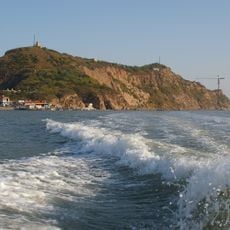
Qinhuangdao Port extends along the Bohai Bay coastline with multiple terminals designed for bulk cargo handling and shipping operations. The facility is divided into different functional areas that manage the daily throughput of large vessel traffic.
Emperor Guangxu ordered the port opened on 26 March 1898, a step that drove the city's modern development. In 1952 the central government took over its administration, and in 1953 the Ministry of Communications assumed formal control. The Datong–Qinhuangdao railway opened on 28 December 1988, making the port China's largest coal export harbour; in 2001 throughput passed 100 million tonnes. Pier 7, in use since 1898, was retired in May 2013.
Qinhuangdao Port handles coal, petroleum and other energy exports, plus general cargo and containers. It is the main hub of China's north-to-south coal transport corridor, and its coal shipping volume is watched as a barometer of the national economy. The port has twinned itself with Tomakomai in Japan and Newcastle in Australia.
The port lies on the west side of Liaodong Bay in the Bohai Sea, east of Qinhuangdao city, at the eastern end of the Datong–Qinhuangdao railway. It is an operating coal and oil terminal, so viewing is from public vantage points rather than the quays. Ice typically forms from late November to mid-March, averaging 108 days, with shore ice 10–30 cm thick.
Pier 7, used since the port opened in 1898, was retired in May 2013 and is to be redeveloped for tourism. The port's coal traffic made it a gauge of the national economy, with at least 50 vessels handled daily in the past.
The community of curious travelers
AroundUs brings together thousands of curated places, local tips, and hidden gems, enriched daily by 94,955 contributors worldwide.