Wuling Mountains, Mountain range in Central China.
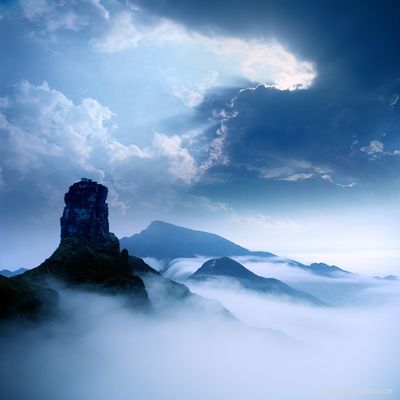
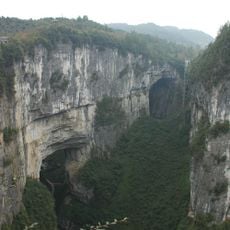
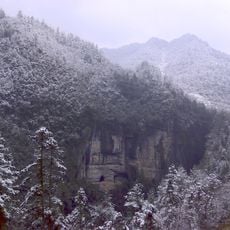
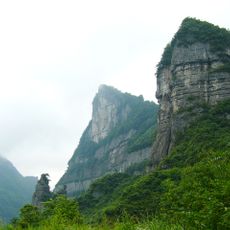
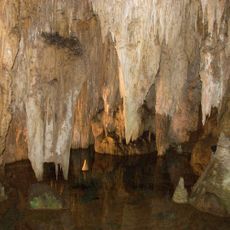
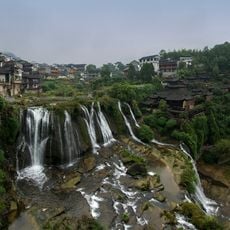
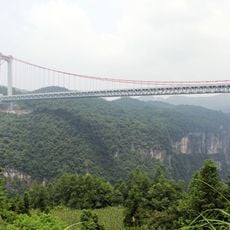
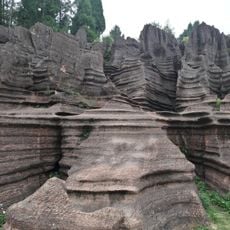
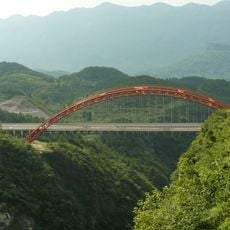
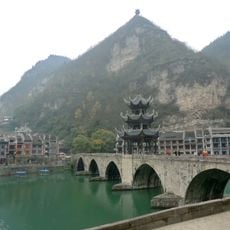
The Wuling Mountains are a mountain range in south-central China, spanning the provinces of Hunan, Guizhou, Hubei, and Chongqing. The range is best known for its sandstone rock pillars rising from forested valleys, alongside rivers, gorges, and a mix of karst and non-karst terrain.
For centuries, these mountains formed a natural boundary between southern China and the interior, and different ethnic groups settled in the isolated valleys as a result. The region's terrain made outside control difficult, which allowed local communities to develop in their own way over a long period.
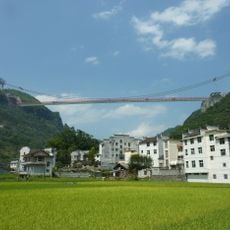
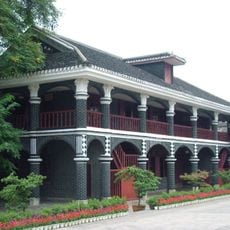
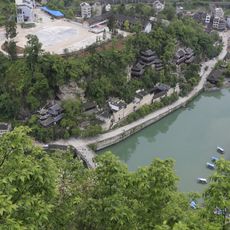
The Tujia and Miao peoples have lived in these mountains for generations, and their wooden stilt houses are still common in many villages today. Local markets often sell handwoven textiles with patterns that carry meaning specific to each community.
The main gateway to the range is the city of Zhangjiajie, which connects to the most visited sections of the mountains and has a range of accommodation nearby. Spring and autumn tend to offer the most comfortable conditions, as summer brings high humidity and winter can make trails slippery.
Fanjingshan, one of the peaks within the range, has two small temples built on a narrow rock summit, separated by a thin gap and connected by a stone bridge carved directly into the cliff. The mountain is also home to the Guizhou snub-nosed monkey, a species found nowhere else on Earth.
The community of curious travelers
AroundUs brings together thousands of curated places, local tips, and hidden gems, enriched daily by 92,530 contributors worldwide.