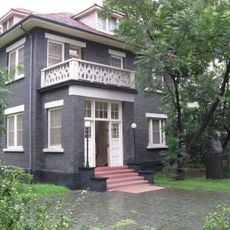
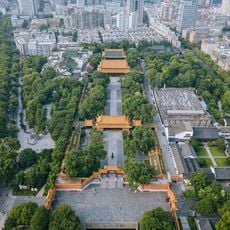
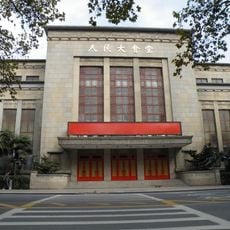
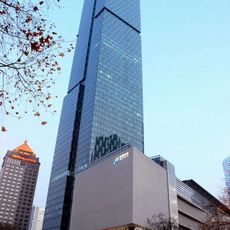
Jinjue Mosque, Ming Dynasty mosque in Qinhuai District, China.
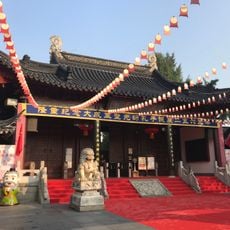
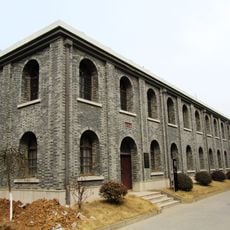
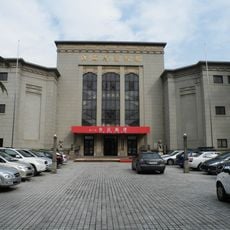
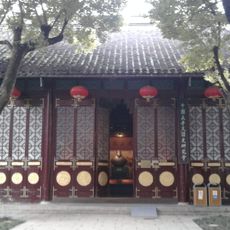
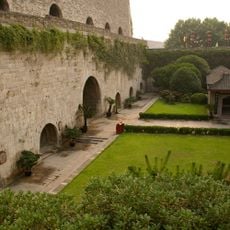
Jinjue Mosque is a walled compound of about 4,000 square metres on Shengzhou Road, built in the late Qing Dynasty on the site of a Ming foundation. Its three-entry gate carries an imitation imperial tablet reading "bestowed by imperial order" above the name Jingjuesi. Inside are several sahns, a reception room, a wudu, an antechamber, guest quarters, a prayer hall and a mihrab at the western end.
Hongwu Emperor ordered the mosque built in 1388 to house Muslims from the western regions; it was completed in 1392. After a fire during the Xuande reign, Zheng He petitioned the throne and funded reconstruction from the treasury in 1430, adding a brick-carved archway. The Jiajing Emperor commissioned further expansion in the mid-16th century, and the complex was rebuilt in 1877 after the Taiping Rebellion.
The mosque is the largest in Nanjing, and its name Jingjuesi means "pure awakening temple". About 500 people attend the Friday jumah prayer, while over 5,000 gather for major festivals. The brick-carved archway was erected by imperial order after Zheng He's appeal.
The mosque is located on Shengzhou Road and is easily accessible from the nearby Sanshanjie Station. Visitors should check in advance whether the site is open for touring, as access may sometimes be restricted.
The imitation imperial tablet above the three-entry gate reads "bestowed by imperial order", with "Jingjuesi" beneath it. The mosque's footprint shrank from 107 hectares to 1,650 square metres by the late 19th century, partly to lower the taxes owed on the land.
The community of curious travelers
AroundUs brings together thousands of curated places, local tips, and hidden gems, enriched daily by 93,093 contributors worldwide.