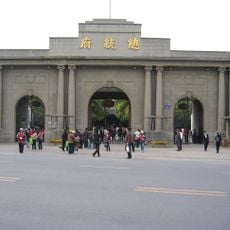
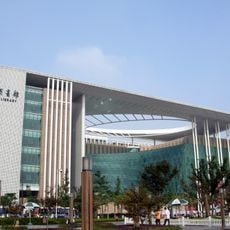
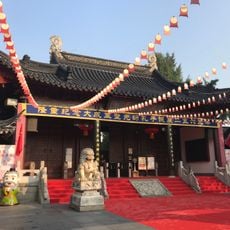
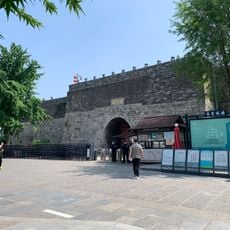
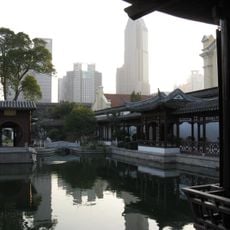
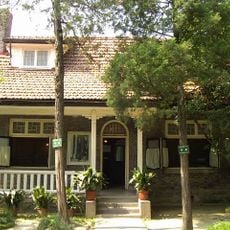
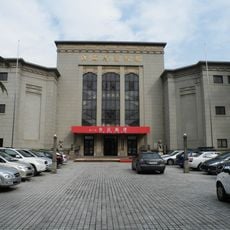
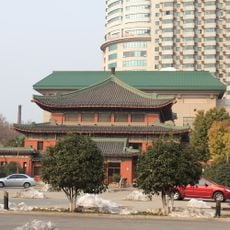
Jiangnan Examination Hall, Imperial examination hall in Qinhuai District, Nanjing, China
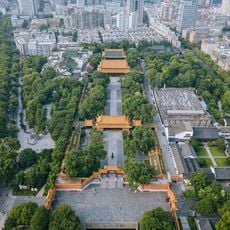
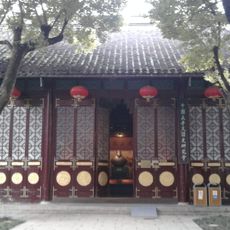
The Jiangnan Examination Hall stands by the Qinhuai River near the Confucius Temple. Its surviving Ming-Qing structure is the Mingyuan Tower, a four-storey tower that was the complex's tallest building, built in 1534. The site now holds the Imperial Examination Museum, with a model of the hall at its peak and 40 reconstructed examination cells.
A Ming-dynasty examination hall was founded on this site in the Jingtai era (1450–1457), after the prefect Ma Liang chose a plot on the south bank of the Qinhuai. The Mingyuan Tower was added in 1534, and by 1873 the hall held 20,644 cells. After the imperial exams were abolished in 1905, the site later housed Nanjing's city government and a hospital before becoming a museum.
The name Jiangnan dates from the early Qing, when the former Southern Metropolitan Region became Jiangnan Province and the hall served both Jiangsu and Anhui, costs shared by the two provinces. Its three gates were called toumen, yimen and longmen, the last carrying a couplet by Li Yu: "a place where fish turn into dragons, where phoenixes fly."
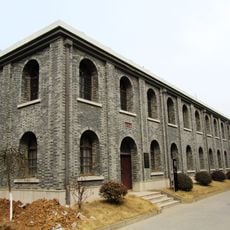
The museum sits at 1 Jinlin Road by the Confucius Temple, a short walk east of Sanshanjie station on Metro Line 1 and Fuzimiao station on Lines 3 and 5; buses 1, 4, 7, 44, 202 and Y1 stop at Jiankang Road–Fuzimiao. It opens both day and evening. The surviving courtyard building and the rebuilt examination cells are compact, so allow time for the underground galleries.
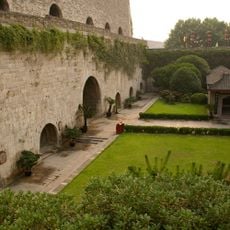
The hall's perimeter was once enclosed by two concentric walls studded with thorns, which earned the complex the nickname "Thorns Wall" (棘围). The barrier was aimed at stopping candidates from smuggling in crib sheets or receiving outside help during the exams.
The community of curious travelers
AroundUs brings together thousands of curated places, local tips, and hidden gems, enriched daily by 93,790 contributors worldwide.