Las Llajas Canyon, Canyon in Simi Valley, US.
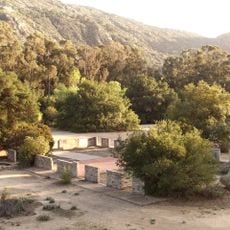
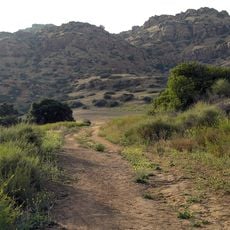
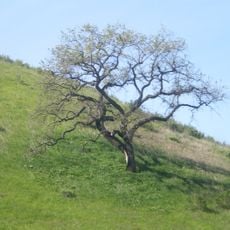
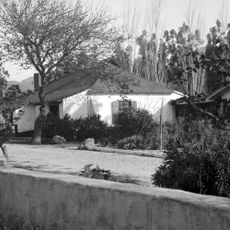
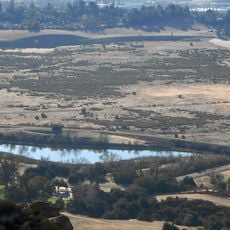
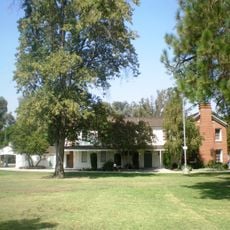
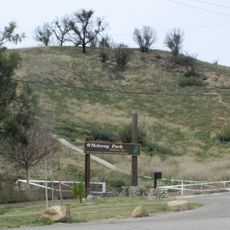
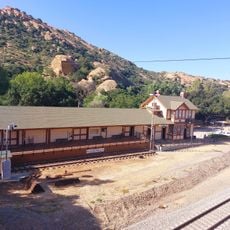
Las Llajas Canyon is an arroyo cut into silty, sandy, salt-rich marine sediment in the Santa Susana Mountains foothills of northeastern Simi Valley. Its trail has smooth footing with many sandy sections and a green creek bed, passing large oak trees, rock formations and barren hillsides. The canyon also holds the 1920s Marrland subdivision and the 46-acre Las Llajas Canyon Debris Basin.
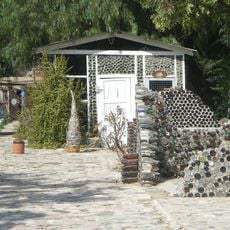
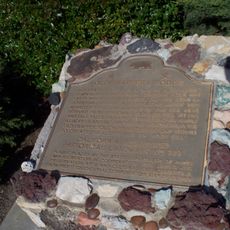
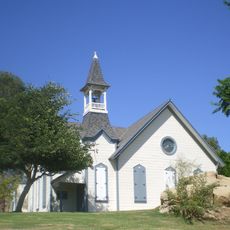
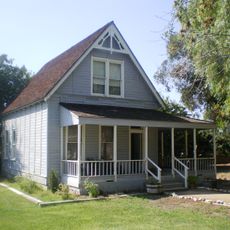
The name Las Llajas was first recorded in 1931, likely a misspelling of the Spanish las llagas, meaning "the wounds" and referring to a Roman Catholic saint's stigmata. The Christian sect Pisgah Grande later established a secluded colony in the canyon, which at its height had thirty buildings and 150 residents. The canyon's rock layers date to the Eocene Epoch, and the term "Llajas" was first applied informally to a series of fine sandstone and sandy siltstone outcropping at the canyon mouth.
The name was first recorded in 1931 and is likely a misspelling of the Spanish las llagas, "the wounds", referring to the stigmata of a Roman Catholic saint. Locals pronounce it "YAH huhs". The canyon also held Pisgah Grande, a Christian sect that built a secluded colony of thirty buildings for 150 residents.
Access the canyon via Highway 118 to Yosemite Avenue, then head north on Evening Sky Drive to reach the main entrance. Wear sturdy shoes since the trails are sandy and conditions change depending on recent weather.
A dam built in the 1970s was later converted into a debris protection structure, now known as Las Llajas Canyon Debris Basin. This 46-acre facility shows how landscapes are managed to prevent flooding and landslide damage.
The community of curious travelers
AroundUs brings together thousands of curated places, local tips, and hidden gems, enriched daily by 94,661 contributors worldwide.