Rancho Camulos, Spanish Colonial ranch in Santa Clara River Valley, California
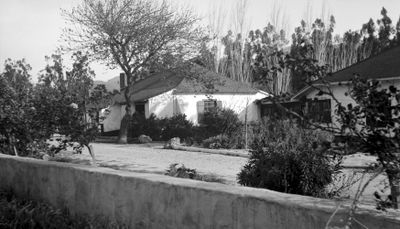
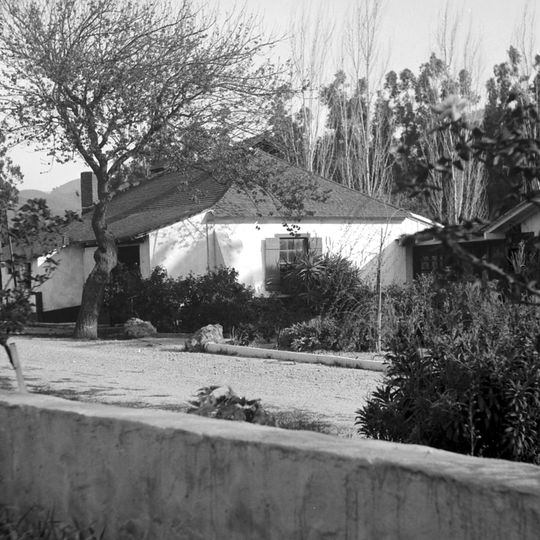
Rancho Camulos is a 1,800-acre (7 km2) working ranch in the Santa Clara River Valley, with its main adobe south of State Route 126. The single-story white adobe has a low-pitched grey shingled roof, a dark chimney at the left roof edge, and a shuttered window beside a shadowed doorway. Ygnacio del Valle expanded the house to twenty rooms by 1880, adding a brick winery, chapel, barn and workers' housing.
The Tataviam village of Kamulus stood here before the area was used by Mission San Fernando from 1804. In 1839, Governor Juan B. Alvarado granted the 48,612-acre Rancho San Francisco to Antonio del Valle. After Antonio's death in 1841, his son Ygnacio inherited it; by 1853 he had built a four-room adobe and corral at Camulos, and by 1857 the land title dispute was settled.
The ranch was widely believed to be the setting of Helen Hunt Jackson's 1884 novel Ramona and became known as the Home of Ramona. The book drew attention to the Californio lifestyle and romanticized the mission and rancho era. The name Camulos comes from the Tataviam village of Kamulus, meaning juniper.
State Route 126 cuts through the property, so most main buildings, including the adobe, sit south of the highway and a few stand north of it. Many buildings and grounds are open to the public as a museum. The site lies 2.2 miles east of Piru, just north of the Santa Clara River.
The ranch continues operating commercial citrus groves while maintaining its original 19th-century structures. This working farm approach keeps the property connected to its agricultural roots rather than operating purely as a museum.
The community of curious travelers
AroundUs brings together thousands of curated places, local tips, and hidden gems, enriched daily by 93,121 contributors worldwide.