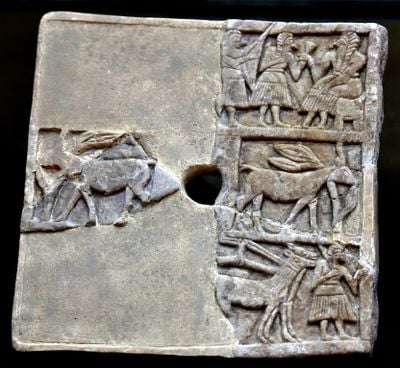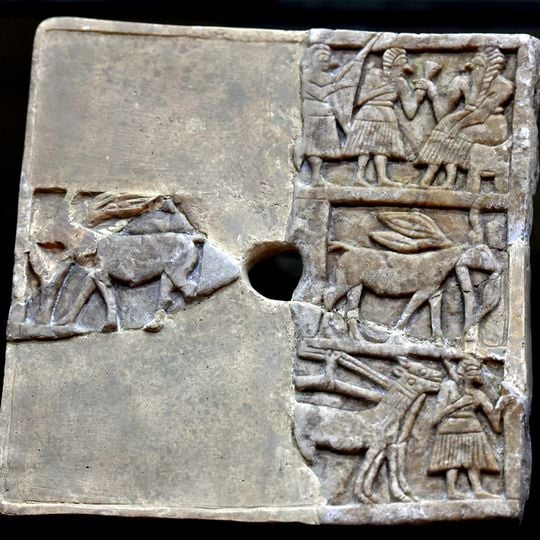
Khafajah, Archaeological site in Diyala Governorate, Iraq.
Khafajah is an archaeological site comprising multiple mounds that contain the remains of temples, administrative buildings, and residential structures from various periods of Mesopotamian history. The buildings span from approximately 3100 to 1750 BC, revealing how societies developed and changed over centuries.
Khafajah, ancient Tutub, was occupied from the Uruk and Jemdet Nasr periods to the end of the Old Babylonian Empire. It fell under the Akkadian Empire and then the Third Dynasty of Ur in the 3rd millennium BC, before becoming part of the kingdom of Eshnunna. The Oriental Institute of Chicago excavated seven seasons between 1930 and 1937 under Henri Frankfort, with Thorkild Jacobsen, Conrad Preusser and Pinhas Delougaz; Delougaz led a joint American Schools of Oriental Research and University of Pennsylvania team in 1937 and 1938.
The temples served as centers for religious worship and economic activity. People came to make offerings and conduct trade, as shown by the numerous clay tablets discovered within.
Khafajah lies on the Diyala River, 11 km east of Baghdad and 19 km northeast of Eshnunna. The four mounds are labelled A to D; Mound A, the main one, rises 4 metres above the plain and holds the Temple Oval, the Sin Temple and the Nintu Temple within about 100 square metres. The lowest layers sit below the water table and cannot be reached.
Among the clay tablets found, some contain administrative records showing how people conducted trade and managed their property. These everyday documents provide a vivid picture of economic life nearly 4000 years ago.
The community of curious travelers
AroundUs brings together thousands of curated places, local tips, and hidden gems, enriched daily by 92,679 contributors worldwide.