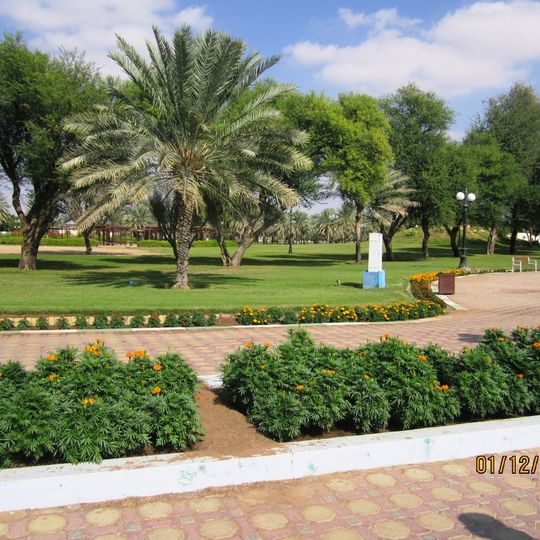
Hili Archaeological Park, Archaeological site in Al Ain, United Arab Emirates.
Hili Archaeological Park is an open-air excavation site in the Hili area near Al Ain, in the United Arab Emirates, containing Bronze Age settlements, tombs, and building foundations. The site covers several distinct sections, each exposing layers of occupation from different periods side by side.
Excavations began in the late 1960s, when a Danish team opened the first trenches and identified the site's Bronze Age remains. Most houses, towers and tombs were built of mud brick during the Umm al-Nar period, roughly 2700–2000 BCE. The Grand Tomb was restored in 2005, and the earliest falaj in the UAE was found here in 1985.
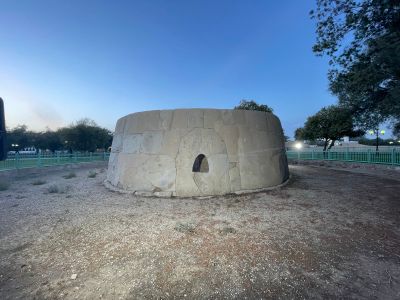
The park's name comes from the Hili oasis, and its finds are displayed in the Al Ain National Museum. The Hili Grand Tomb, a circular structure 8 metres across and 2.5 metres high, was rebuilt in 2005; its two entrances carry reliefs of people and oryx. More than 600 people were buried in nearby excavated graves.
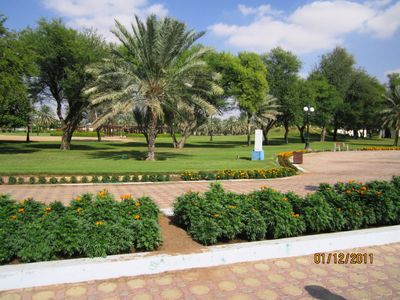
The site lies about 12 km north of Al Ain, with the excavated areas and reconstructed Grand Tomb set within a public park. Excavation and analysis have been carried out by French, British and German teams, and some remains lie outside the park in a protected zone. Finds are displayed at the Al Ain National Museum in central Al Ain.
In May 2019 the Abu Dhabi Department of Culture and Tourism reported fingerprints about 3,000 years old at Hili II, apparently left by the craftsmen who built a wall there. The impressions survive in the mud-brick fabric of the Iron Age village in the northern part of the park.
The community of curious travelers
AroundUs brings together thousands of curated places, local tips, and hidden gems, enriched daily by 92,773 contributors worldwide.