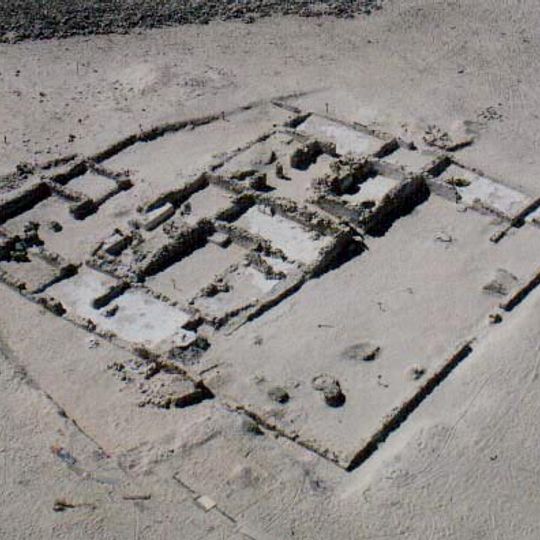
Jumeirah Archaeological Site, Archaeological site in Jumeirah district, Dubai, United Arab Emirates.
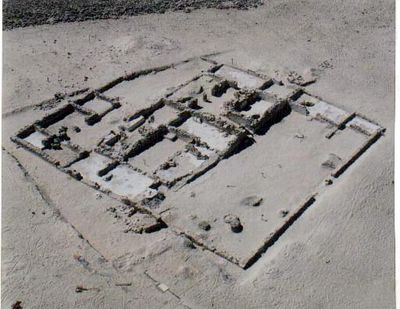
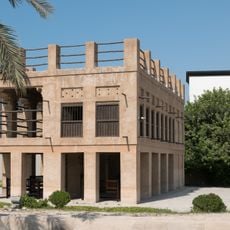
Jumeirah Archaeological Site is an excavated settlement in Dubai containing residential buildings, a trading center, and religious structures from the medieval period. The remains are distributed across a large area where living spaces, courtyards, and storage areas sit side by side.
The site was discovered in 1969 and first excavated by Dimitri Baramki. Finds date its occupation to the Abbasid period, around the 10th century CE; the Arabic source places it in the 9th century. It lay on a caravan route linking India and China with Oman and Iraq, and served as a rest stop for pilgrims.
The site's finds include stucco panels decorated with geometric patterns, Abbasid-era coins, goldwork and jewellery. Eight buildings have been uncovered, among them a mosque of 49 square metres with a courtyard and a prayer room holding a mihrab facing the Kaaba. The souq area has seven adjoining shops modelled on the layout of traditional Emirati markets.
The site covers about 80,000 m² along a former caravan route, so allow time to walk between the excavated buildings. It is owned and managed by Dubai Culture & Arts Authority, which publishes information on visiting; check with them before setting out, as excavated areas can be closed or covered for protection.
Excavations uncovered eight buildings, but parts of the settlement remain buried under sand. The largest is the khan, a 1,000-square-metre structure with 14 rooms around an open courtyard; five houses of 120 square metres each surround central courtyards.
The community of curious travelers
AroundUs brings together thousands of curated places, local tips, and hidden gems, enriched daily by 92,886 contributors worldwide.