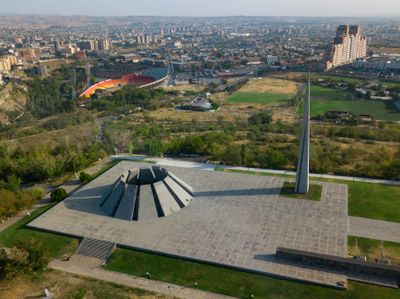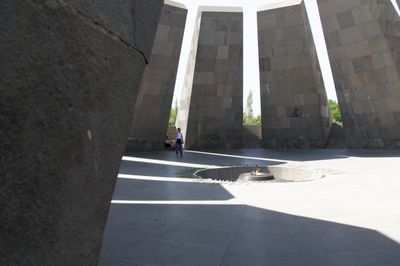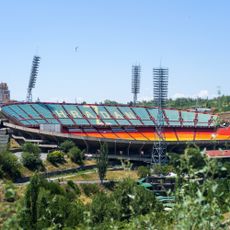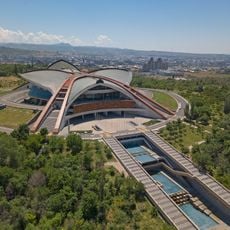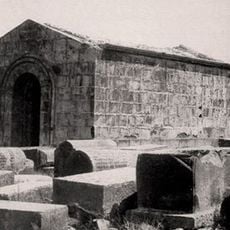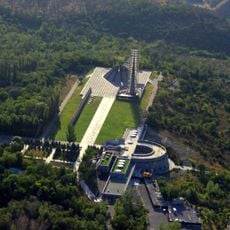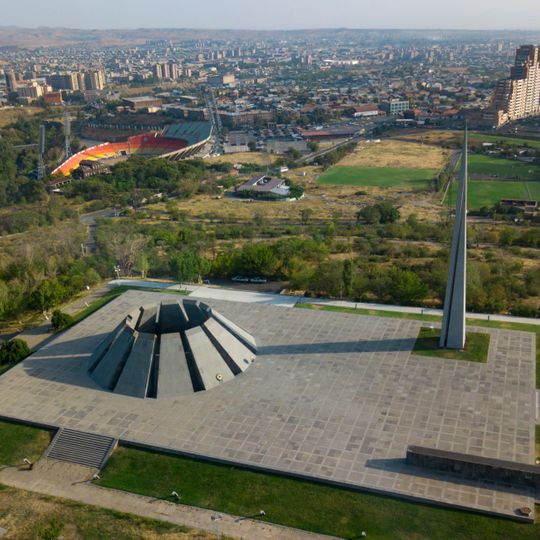
Tsitsernakaberd, Memorial complex in Yerevan, Armenia.
Tsitsernakaberd is a memorial and museum in the Kentron District of Yerevan, Armenia, located on a hill west of the city center. The site includes a commemorative area with tall stone slabs surrounding a flame, as well as a museum with several exhibition rooms.
Construction began following large public gatherings in 1965 and was completed in 1967, when Soviet authorities authorized an official commemoration. Before this time, it was forbidden to speak about the event in the Soviet Union.
The name Tsitsernakaberd means "Swallow's fortress"; legend says swallows on this hill carried messages between the pagan gods Vahagn and Astghik. Every 24 April, Armenian Genocide Remembrance Day, thousands gather here and lay fresh flowers at the flame. Foreign heads of state and religious leaders plant trees in the memorial alley.
Access to the site is free and the grounds are open daily, while the museum is closed on certain weekdays. A visit through the complex takes about an hour if you explore the exhibition rooms and the outdoor area.
The 44-metre stele is split from base to top by a deep cleft, dividing it into a larger and a smaller part: the smaller stands for Armenians living in Armenia, the larger for the diaspora. The twelve slabs were chosen on geometric grounds, though many visitors read them as provinces.
The community of curious travelers
AroundUs brings together thousands of curated places, local tips, and hidden gems, enriched daily by 92,694 contributors worldwide.