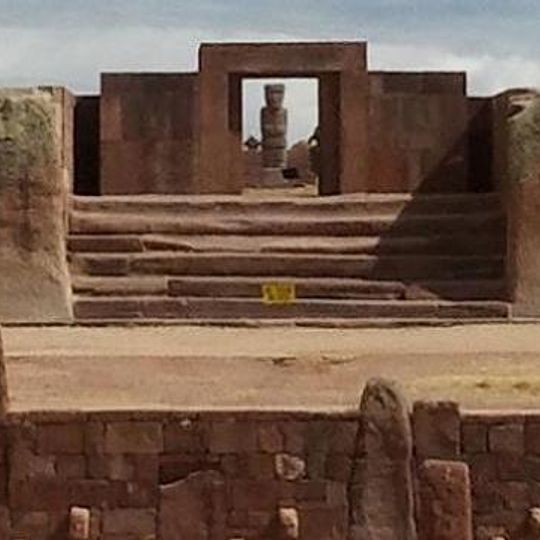
Tiwanaku

Log in to your account

AroundUs is a community-driven map of interesting places, built by curious explorers like you. It grows with every review, story, and photo you share.
Connect to save your favorite spots, contribute locations, and create personalized routes.
By continuing, you accept our Terms and Conditions and our Privacy Policy
Add to collection
Map
Suggest a change
Share

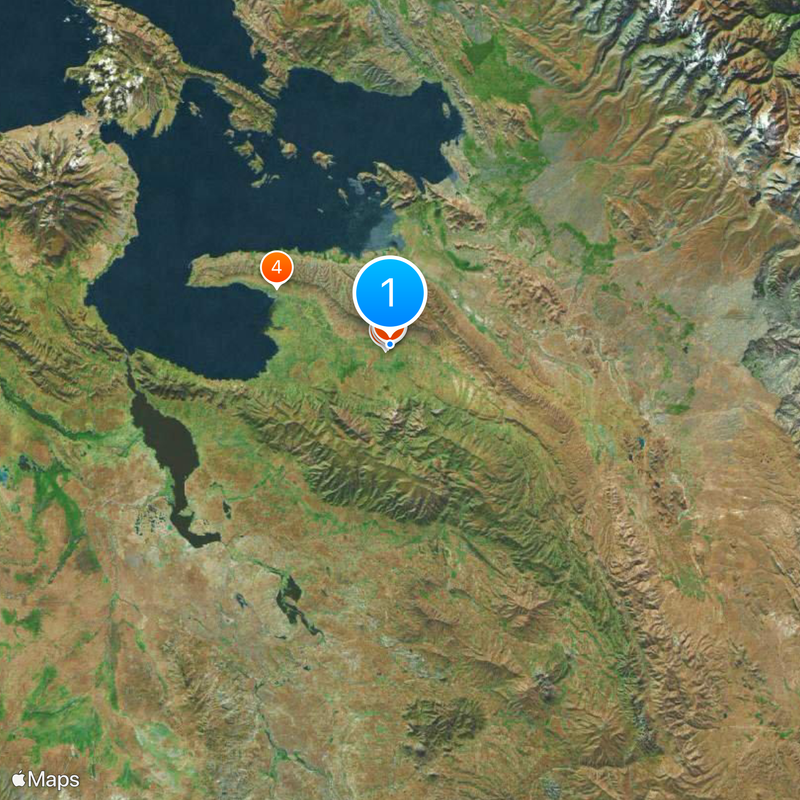
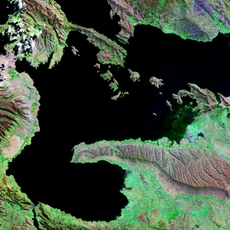
Tiwanaku, Pre-Columbian archaeological site in La Paz Department, Bolivia.

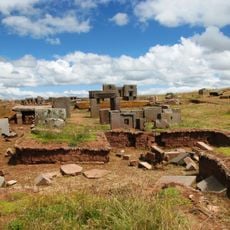
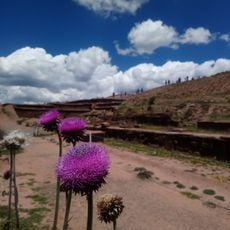
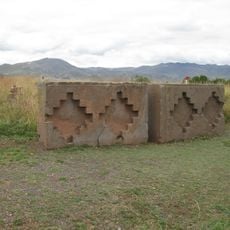
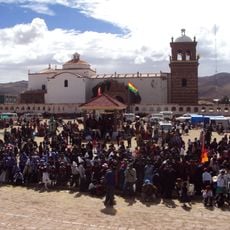
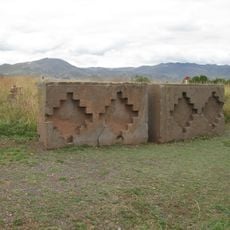
Tiwanaku is an archaeological site in La Paz Department, Bolivia, preserving remains of a pre-Columbian civilization. The ruins contain pyramids, temples, and monoliths spread across a wide area at 3629 meters above sea level.

The civilization of Tiwanaku developed between 300 and 1000 AD, building a powerful empire in the Andes. Its influence extended across western Bolivia, southern Peru, and northern Chile before it declined.

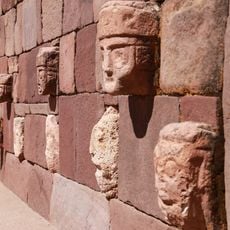
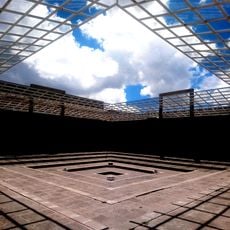
The semi-subterranean temple displays 175 carved stone heads on its interior walls, each with a different face. Visitors stand surrounded by portraits representing all the peoples once part of the empire.

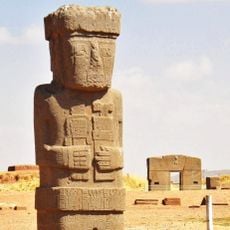
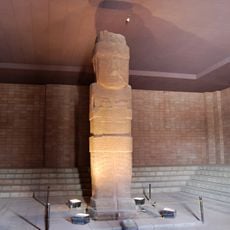
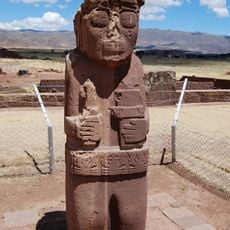
The site sits at an altitude that can make walking more tiring; arriving early in the morning offers a calmer atmosphere and softer light. Two museums on site display collections of ceramics and stone sculptures, including the 7.3-meter-tall Bennett Monolith.

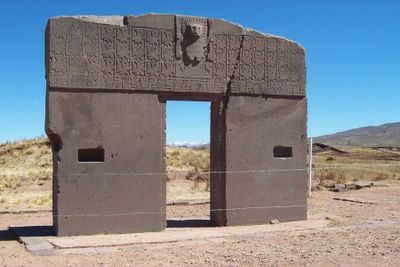
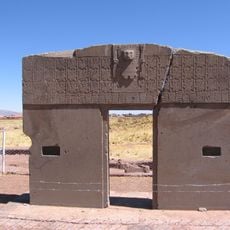
The Gateway of the Sun shows intricate carvings that demonstrate astronomical and mathematical knowledge. Some researchers believe the images also form a calendar, though its exact meaning remains debated.

Location: La Paz Department

GPS coordinates: -16.55472,-68.67333

Latest update: December 3, 2025 09:17

Photos
Sacred landmarks in latin america

Latin America is home to numerous sacred sites known for their spiritual significance. These places play a crucial role in the culture and history of the region. Each of these monuments offers a unique insight into the traditions and beliefs of its people.

Archaeological sites across the world

These archaeological sites document the development of human civilizations across thousands of years. They range from the earliest known temple structures like Göbekli Tepe in Turkey, dated to around 9500 BCE, to the preserved remains of Pompeii, frozen in time by a volcanic eruption in 79 CE. Each location offers insights into the technical abilities, religious beliefs, and social structures of past cultures. The collection includes monuments such as the Great Pyramid of Giza in Egypt, standing for over 4,500 years, and Machu Picchu in the Peruvian Andes, a 15th-century Inca stronghold at 7,970 feet (2,430 meters). In China, the Terracotta Army guards the tomb of the first emperor with thousands of life-size soldiers, while Angkor Wat in Cambodia represents the largest religious complex in the world. European sites like Stonehenge in England and the Acropolis in Athens demonstrate prehistoric engineering and classical Greek architecture. These places connect visitors to the societies that built them centuries or millennia ago.

Visiting Bolivia: natural landscapes, archaeological sites, and colonial heritage

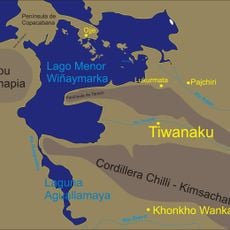
Bolivia sits in the central Andes, linking mountain ranges, high plateau lands, and lowland rainforests in a landlocked country. The changes in altitude create different climate zones and landscapes, from snow-covered peaks to tropical vegetation. Many visitors start in La Paz, a city that clings to a canyon and where a cable car system moves traffic between neighborhoods. The colonial capital of Sucre preserves its white facades and courtyards from the 1600s, while Potosí sits at the foot of Cerro Rico, a mountain that saw centuries of silver mining. The natural sites range from Lake Titicaca on the Peruvian border to the Salar de Uyuni, an expansive salt flat that turns into a shallow mirror during the rainy season. Madidi National Park protects rainforest in the north, while the Eduardo Avaroa Reserve in the south shows colored lagoons and desert formations. The Tiwanaku archaeological site holds evidence of pre-Columbian civilizations, and the Jesuit Missions of Chiquitos are wooden churches that survive in remote towns. The Valley of the Moon near La Paz forms eroded rocks that resemble lunar landscapes, and Torotoro National Park contains fossils and dinosaur tracks. The journey from La Paz to Coroico passes along the Death Road, a narrow mountain route that descends into the Yungas lowlands.

Reviews

Visited this place? Tap the stars to rate it and share your experience / photos with the community! Try now! You can cancel it anytime.

« Tiwanaku - Pre-Columbian archaeological site in La Paz Department, Bolivia » is provided by Around Us (aroundus.com). Images and texts are derived from Wikimedia project under a Creative Commons license. You are allowed to copy, distribute, and modify copies of this page, under the conditions set by the license, as long as this note is clearly visible.

Discover hidden gems everywhere you go!

From secret cafés to breathtaking viewpoints, skip the crowded tourist spots and find places that match your style. Our app makes it easy with voice search, smart filtering, route optimization, and insider tips from travelers worldwide. Download now for the complete mobile experience.

Around Us App Screenshot

A unique approach to discovering new places

Le Figaro

All the places worth exploring

France Info

A tailor-made excursion in just a few clicks

20 Minutes