Monolith of the Frail, Stone monolith in Tiwanaku archaeological site, Bolivia.
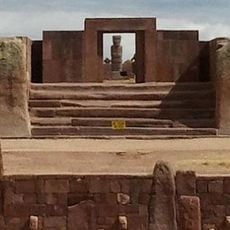
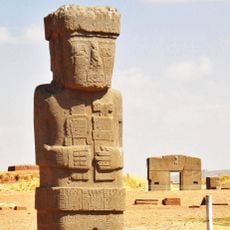
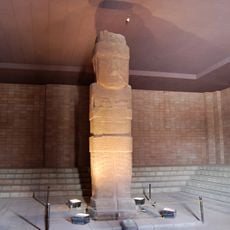
The Monolith of the Frail is a veined sandstone anthropomorphic stele in the Kalasasaya temple at Tiwanaku, Bolivia. It stands 2.5 m tall, or over 3 m with its base, and is heavily eroded. The figure wears a headband and a relief belt carved with sprouting plants, not sea crabs. Its right hand holds a snuff tray with a tube, its left a qiru vessel; the right hand's fingers are reversed.
This monolithic sculpture was created during the height of the Tiwanaku civilization between the eighth and tenth centuries AD, when the city served as a major cultural and political center that influenced large portions of the Andean region.
The name El Fraile ("the monk") was probably given by Spanish conquerors, who saw in the figure a monk clutching his Bible. In the left hand the figure holds a qiru, a Tiwanaku drinking vessel; in the right, an object read as a snuff tray with an inhaling tube. The belt carvings show sprouting plants, not sea crabs as is often claimed.
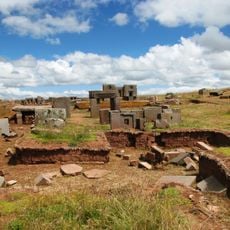
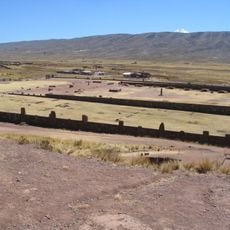
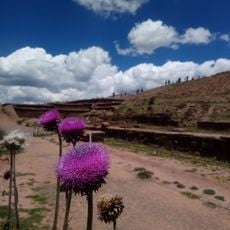
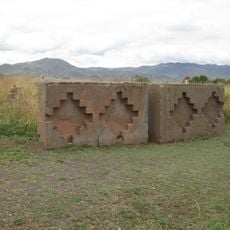
Visitors can access the monolith at the Tiwanaku archaeological site, located approximately 70 kilometers from La Paz in the La Paz Department, with entry fees including access to two on-site museums displaying artifacts and stone sculptures.
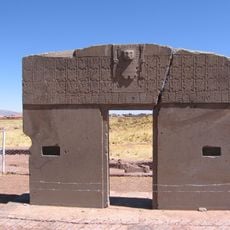
The right hand's fingers are carved reversed, and the belt shows sprouting plants, not the sea crabs often claimed. In February 2021 Christian vandals poured olive oil over this monolith, the Sun Gate and the Ponce Monolith as a "religious act"; a conservator warned the oil could damage the stone of these monuments, over 1500 years old.
The community of curious travelers
AroundUs brings together thousands of curated places, local tips, and hidden gems, enriched daily by 94,267 contributors worldwide.