Olduvai Gorge, Archaeological site in Ngorongoro Conservation Area, Tanzania
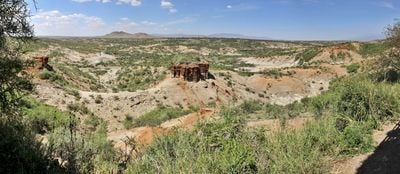
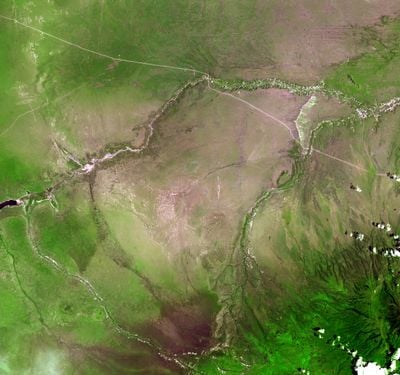
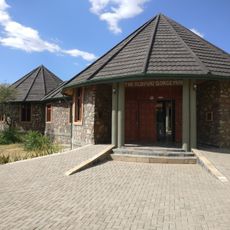
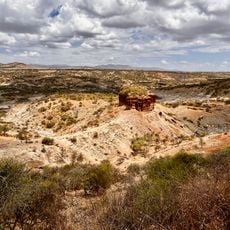
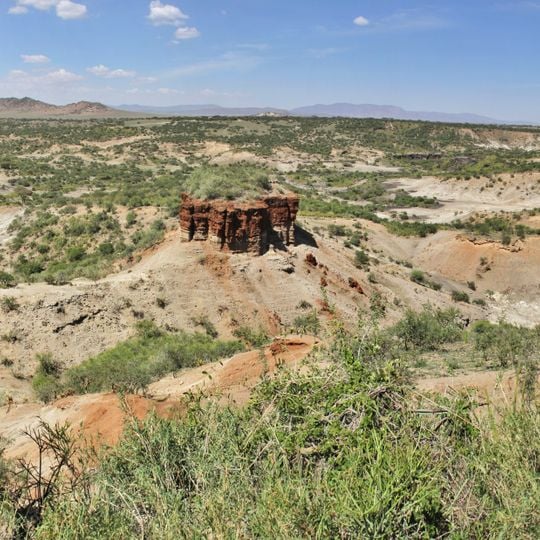
Olduvai Gorge is a steep-sided ravine about 48 km long in the eastern Serengeti Plains, cut up to 90 m into a Pleistocene lake bed. Its walls expose a stratigraphic sequence of lake, alluvial and fluvial deposits interbedded with volcanic tuffs, divided into Beds I–V plus the Masek, Ndutu and Naisiusiu Beds. The Olduvai Gorge Museum, 5 km beyond the monument, holds exhibits on the gorge and its fossils.
German geologist Hans Reck began scientific excavations in 1913, discovering early human remains that sparked global interest in human origins. These discoveries revealed how people lived and developed their technology in this location.
The name comes from the Maasai word oldupai, referring to the East African wild sisal (Dracaena hanningtonii) that grows throughout the gorge. The plant stores water and is chewed by elephants and Maasai when water is scarce. Early 20th-century German explorers transcribed the name incorrectly as Olduvai; the Tanzanian government now prefers Oldupai on road signs.
The site is located in a conservation area and requires preparation such as sturdy footwear and sun protection for uneven terrain. The best time to visit is during drier months when the paths are easier to navigate.
The side gorge that joins the main channel 8 km from its mouth follows the shoreline of a prehistoric lake, and volcanic ash falls from Olmoti and Kerimasi sealed the fossils in place. The Naabi ignimbrite at the base of the sequence has been dated to about 2 million years.
The community of curious travelers
AroundUs brings together thousands of curated places, local tips, and hidden gems, enriched daily by 92,667 contributors worldwide.