Laetoli, Archaeological site in Ngorongoro District, Tanzania
Laetoli is an archaeological site in Ngorongoro District, Tanzania, that preserves fossil footprints in volcanic ash. The tracks show three individuals walking side by side through wet ash before another eruption sealed the surface and preserved the prints for millions of years.
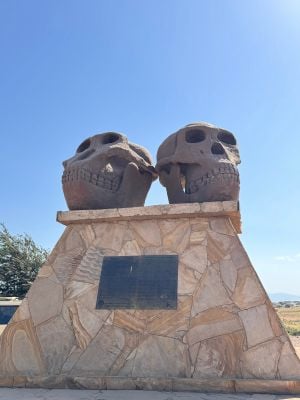
Laetoli was first brought to Western science in 1935, when a man named Sanimu persuaded Louis Leakey to investigate the area; a left lower canine collected then was later identified in 1979 as the site's first hominin fossil. Mary Leakey and her team discovered the footprint trackway at Site G in 1976, and it was fully excavated by 1978. The prints, dated to about 3.7 million years ago, gave strong evidence of bipedalism in Pliocene hominins.
The name comes from the Maasai word for red lily, a plant that grows in this area. Researchers from around the world visit the location to study casts of the tracks and learn more about upright walking.
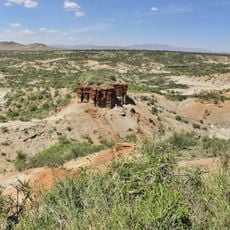
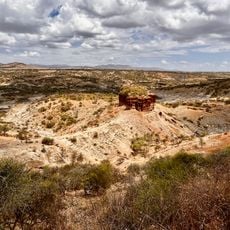
Visitors must book a guided tour through the Ngorongoro Conservation Area, as individual visits are not permitted. The site sits on open grassland, so sun protection and sturdy footwear are important for the walk from the parking area to the excavation zone.
Besides the hominin tracks, the same ash surface at Laetoli preserves footprints of more than twenty animal species, among them hyenas, baboons, giraffes, gazelles, rhinoceroses, buffaloes, hares and birds, as well as Deinotherium elephants. Marks of raindrops and hailstones are also visible. At Site A, five consecutive bipedal prints found from 1975 were long debated as possibly bear-like; 3D photogrammetry and laser scanning from 2019 concluded they are hominin.
The community of curious travelers
AroundUs brings together thousands of curated places, local tips, and hidden gems, enriched daily by 93,126 contributors worldwide.