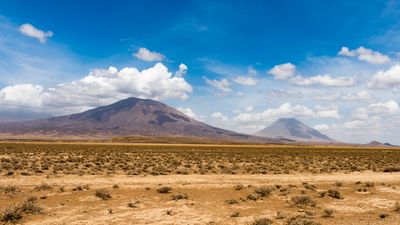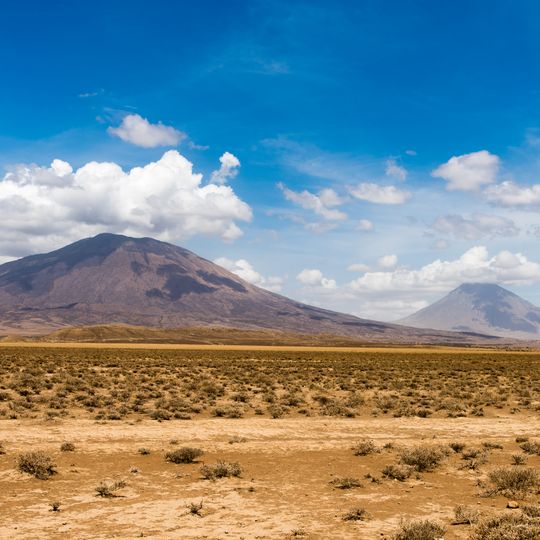
Engaruka, Archaeological site and protected monument in Monduli District, Tanzania
Engaruka is an archaeological site with stone-lined terraces and irrigation channels that spread across the slopes of the Rift Valley escarpment in northern Tanzania. The ruins include cultivation platforms, stone canals, and settlement remnants scattered across a wide area.
An Iron Age farming community built the village on the Rift Valley footslopes in the 15th century, housing several thousand people. Engaruka was abandoned by the mid-18th century, probably between 1700 and 1750, when the flow of the Engaruka River and other streams from the Ngorongoro highlands diminished. Iraqw traditions link the departure to conflicts with the Barbaig sub-group of the Datoga, and the Maasai found the Iraqw already living there when they entered the region in the 18th century.
The site reveals how a farming community shaped their landscape by building waterways and terraces to make the land productive. These physical traces show the knowledge and labor that went into daily survival here.
The ruins lie near the modern village of Engaruka, in Monduli District of Arusha Region. Maasai from the area guide visitors around the stone canals and terraces. The site is a registered National Historic Site of Tanzania; access is by road from the surrounding district, and the ground is dry, open and exposed, so carry water and sun protection.
The inhabitants engineered a clever water system with channels built from cut stones that brought water from the Crater Highlands down to the fields. This technical skill allowed the community to feed thousands of people in a dry landscape.
The community of curious travelers
AroundUs brings together thousands of curated places, local tips, and hidden gems, enriched daily by 94,048 contributors worldwide.