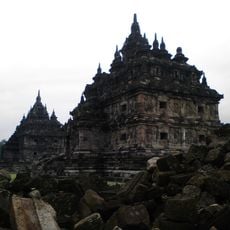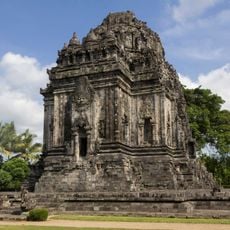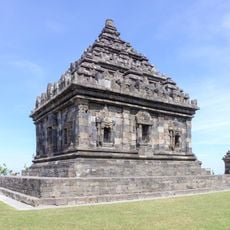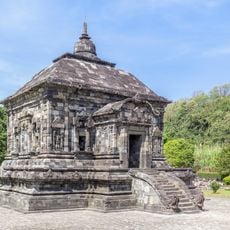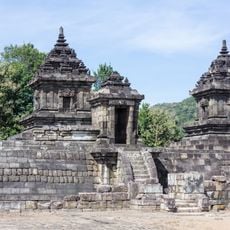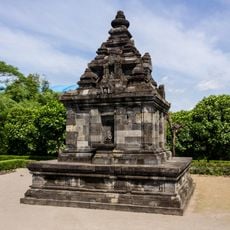
Morangan Temple, Hindu temple in Sindumartani district, Yogyakarta, Indonesia.
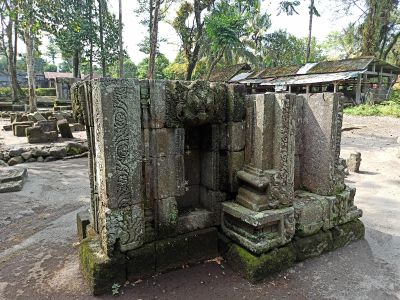
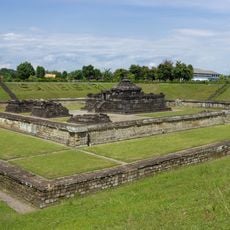
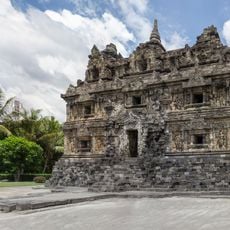
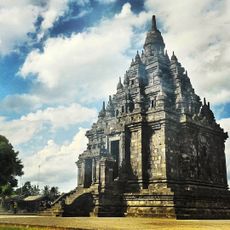
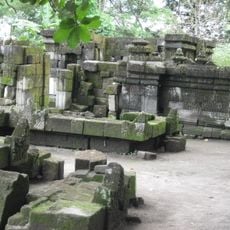
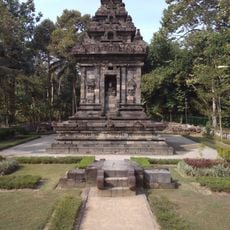
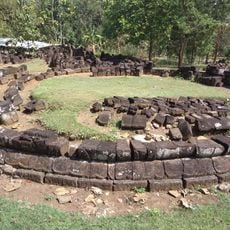
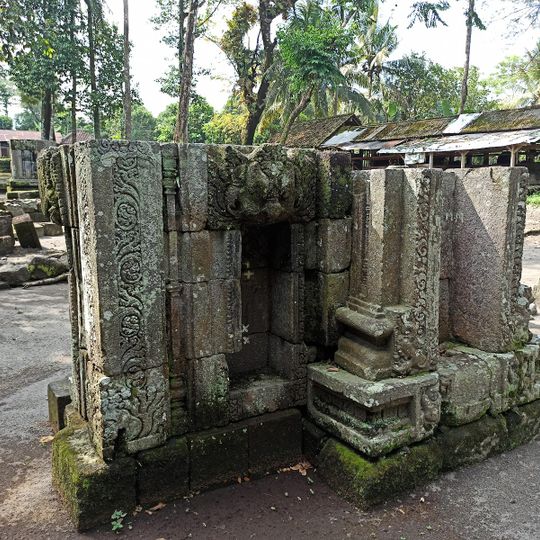
Morangan Temple is a Hindu temple complex in Sindumartani, Sleman, Yogyakarta, with two andesite structures: a main shrine facing west, 7.95 m square with a 90 cm wide walkway, and a smaller perwara shrine facing east, 4 m square. The main shrine has a bell-shaped base, bamboo-shoot mouldings, square frames and double niches, and its body and base carry carved relief panels.
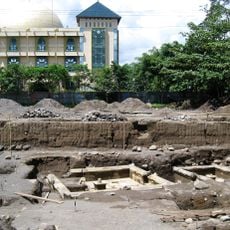
The temple dates to the ancient Mataram Kingdom period between the 9th and 10th centuries. It remained buried underground for centuries before being excavated and rediscovered in 1884.
One carved panel on the main temple's body shows a tiger outwitted by a goat, identified as part of the Tantri Kamandaka story. Such fable reliefs are otherwise known from Buddhist temples, making this panel unusual on a Hindu candi. The tale is the Indian Pancatantra, adapted in Java as Tantri Kamandaka.
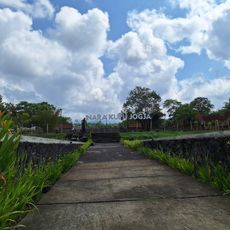
The ruins lie in Morangan hamlet, Sindumartani, Ngemplak, Sleman, about 100 metres east of the Kali Gendol and close to the northern approach to Mount Merapi. The main shrine faces west and the perwara shrine faces east, so walk between the two to read the relief panels on the base and body. Excavation left the complex partly unrestored, and the site is still buried 6.5 metres below the old ground level, so paths and steps are uneven.
The relief panel of a tiger tricked by a goat, thought to depict part of the Tantri Kamandaka, is unusual because such scenes are otherwise found on Buddhist temples. The main shrine's 7.95-metre square plan and its bell, half-round and double-notch mouldings mark it as a Hindu sanctuary of the 9th–10th century.
The community of curious travelers
AroundUs brings together thousands of curated places, local tips, and hidden gems, enriched daily by 93,160 contributors worldwide.