Papahānaumokuākea Marine National Monument, Marine national monument in the Northwestern Hawaiian Islands, United States
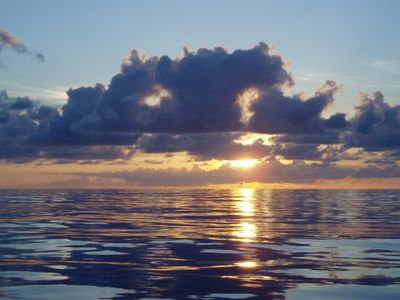
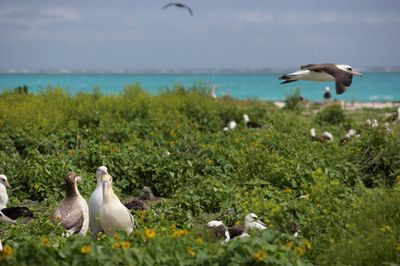
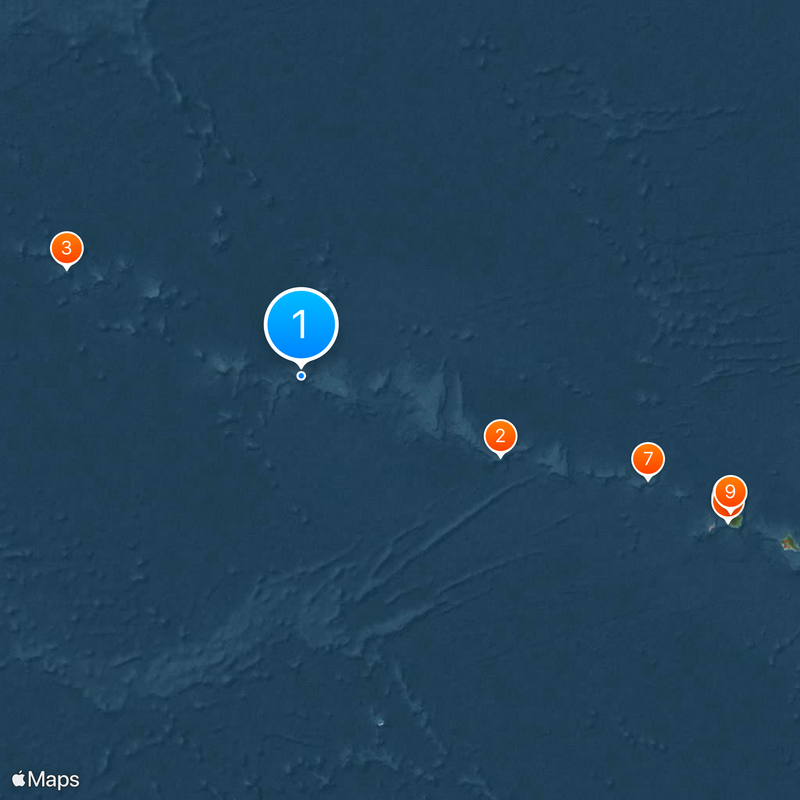
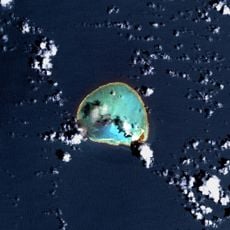
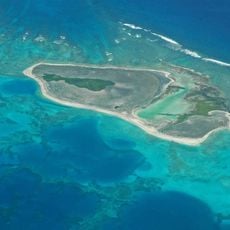
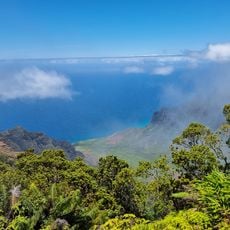
Papahānaumokuākea Marine National Monument protects 582,578 square miles (1.5 million km²) of Pacific Ocean, including ten islands and atolls of the Northwestern Hawaiian Islands, more than 30 submerged banks and seamounts, and coral reefs. Its boundary runs from offshore of Nīhoa 1,200 miles northwest to Kure Atoll and crosses the International Date Line. Only 5.8 square miles (15 km²) of land lies above sea level.
President Theodore Roosevelt began protection efforts in 1909 by establishing the Hawaiian Islands Bird Reservation. The area gained national monument status in 2006 and received World Heritage designation shortly afterward.
Native Hawaiians consider the Northwestern Hawaiian Islands the place where life begins and to which spirits return after death, a kinship between nature and humanity. Archaeological remains on Nihoa and Mokumanamana show settlements from before contact with Europeans. The monument's Hawaiian name was given on 2 March 2007, replacing the earlier Northwestern Hawaiian Islands Marine National Monument.
Access requires special permits because the area remains strictly protected and open only for scientific research and Native Hawaiian traditional practices. The Mokupāpapa Discovery Center in Hilo offers visitors exhibits and educational programs about the reserve and its inhabitants.
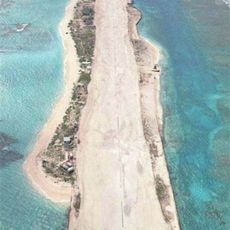
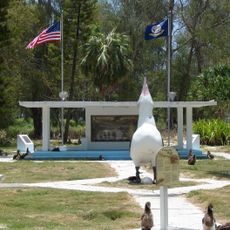
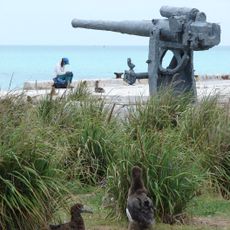
The monument's boundary crosses the International Date Line past Kure Atoll, so its protected waters are continuous across the antimeridian. Midway Atoll, part of the United States Minor Outlying Islands rather than the state of Hawaii, holds Henderson Field, the public airport that provides access to the monument.
The community of curious travelers
AroundUs brings together thousands of curated places, local tips, and hidden gems, enriched daily by 92,580 contributors worldwide.