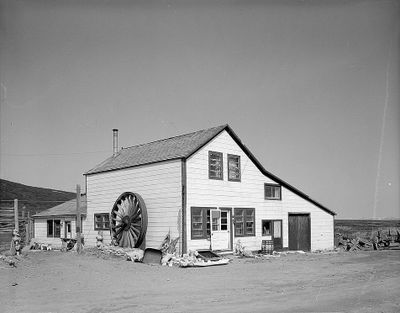
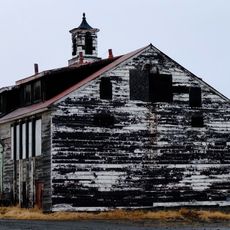
Cape Nome Roadhouse, commercieel gebouw in Nome, Verenigde Staten van Amerika
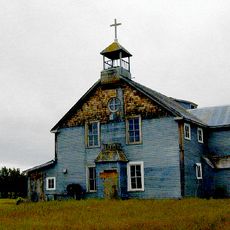
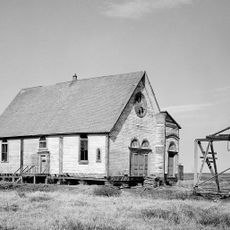
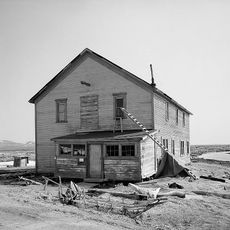
Cape Nome Roadhouse is a log building from 1900, later expanded with lumber framing and covered in clapboard siding. Its profile resembles a New England saltbox house, but the main entrance is on what would normally be the side of such a building. It is the last remaining historical roadhouse on the Iditarod Trail.
The Cape Nome Roadhouse was built in 1900 to accommodate travelers to the Nome area during the Nome Gold Rush, and it was soon expanded. It is the last remaining historical roadhouse on the Iditarod Trail and the only structure surviving from the route of the 1925 relay of dogsled teams that carried diphtheria serum 650 miles (1,050 km). It declined with the arrival of aviation and was listed on the National Register of Historic Places in 1976.
The roadhouse served as a social gathering place where travelers and locals met to share meals and news. It reflects how such stopping points became centers of community life in remote Alaskan areas.
The roadhouse stands on the coastal route out of Nome toward Cape Nome, reached by road from the city. The building is the last surviving roadhouse on the Iditarod Trail, so check access and opening conditions before setting out, and carry your own food, water and weather gear.
The roadhouse is the only surviving structure from the route of the 1925 diphtheria serum relay, in which dogsled teams carried the antitoxin 650 miles (1,050 km) to Nome. Its oldest part is a log structure later expanded with lumber framing and covered in clapboard siding.
The community of curious travelers
AroundUs brings together thousands of curated places, local tips, and hidden gems, enriched daily by 93,321 contributors worldwide.