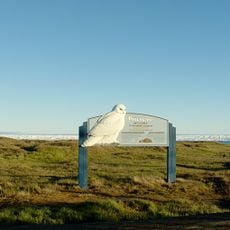
Gallagher Flint Station Archeological Site, Archaeological site in North Slope, Alaska, US.
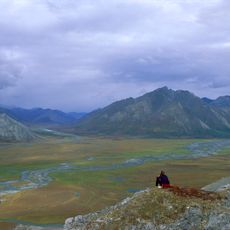
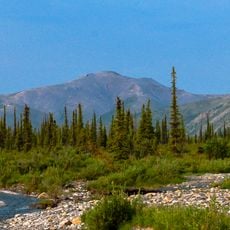
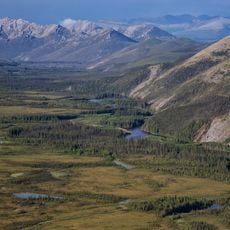
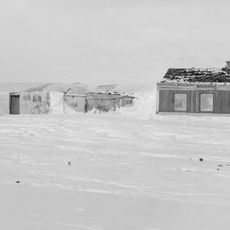
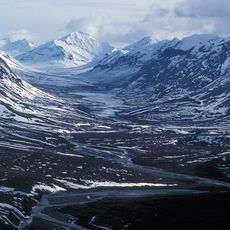
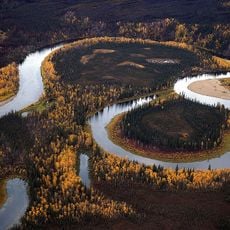
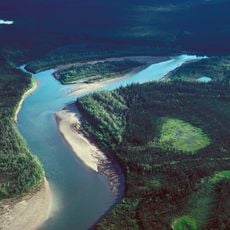
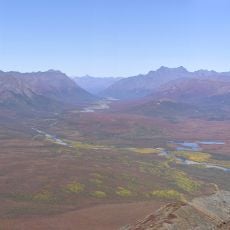
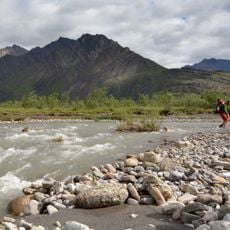
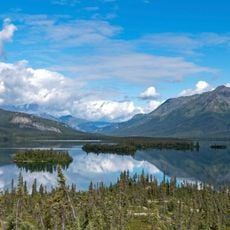
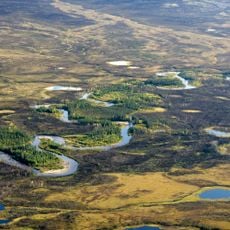
Gallagher Flint Station is an archaeological site in the foothills on the north side of the Brooks Range in far northern Alaska, near the Sagavanirktok River. It holds three separate areas of interest: Localities 1 and 1A, which partially overlap in their vertical stratigraphy, and the isolated Locality 2, two hearths with stone tools and evidence of tool work. Locality 1 has the character of a tool workshop.
The site was discovered in 1970 during Trans-Alaska Pipeline construction and represented the earliest known human activity in Alaska at that time with a date of about 10,540 years ago. Artifacts from later periods were also found at different locations within the site.
The site is read as a quarry where people worked stone while watching the countryside for prey. Locality 1 was a tool workshop, and its tools notably lack bifacial forms; no antler, bone or other animal-based tools were found in any of the three localities. Locality 1A produced fragments of a drill bit made of green chert.
The site is not open to the public and requires special permits from the State of Alaska for research activities. This protection ensures the archaeological materials remain undisturbed for future study.
Different areas of the site yielded distinct artifact types including hearths and a green chert drill bit from a much later time period. This mix of materials from separate time horizons shows that people returned to and reused this location across the centuries.
The community of curious travelers
AroundUs brings together thousands of curated places, local tips, and hidden gems, enriched daily by 94,217 contributors worldwide.