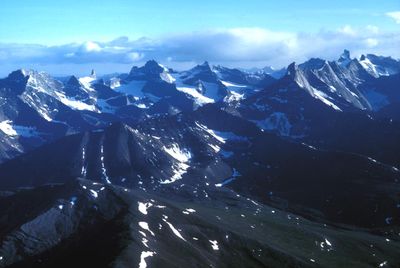
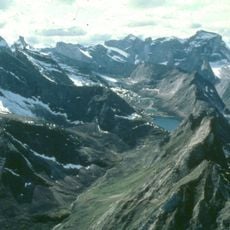
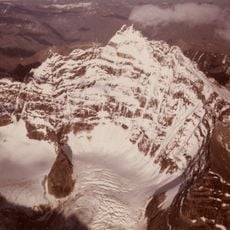
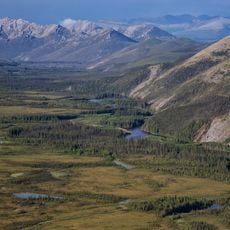
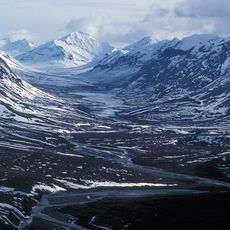
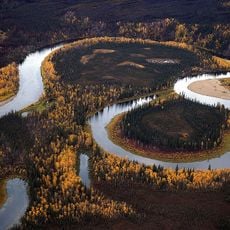
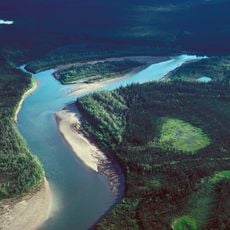
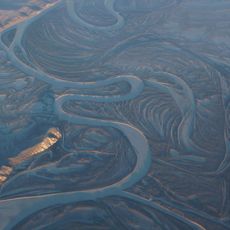
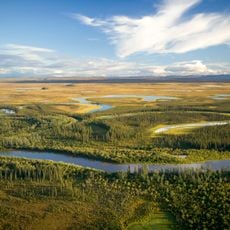
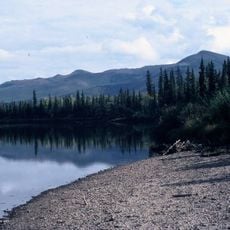
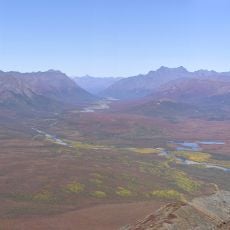
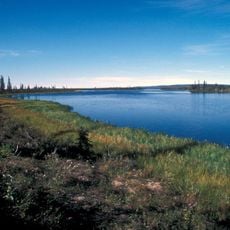
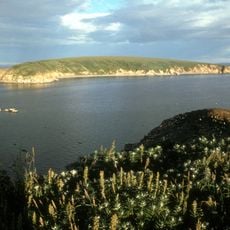
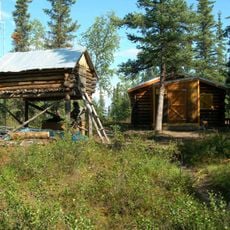
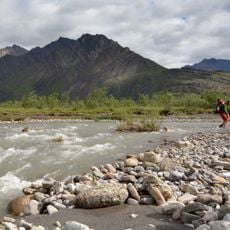
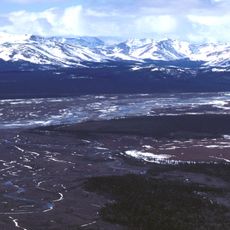
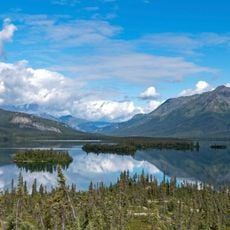
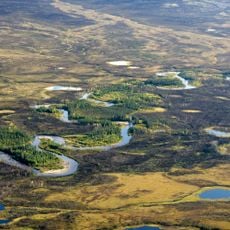
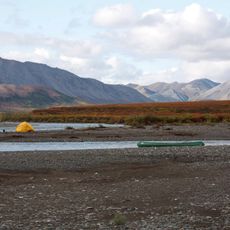
Arrigetch Peaks, Granite peaks in Gates of the Arctic National Park, Alaska, US.
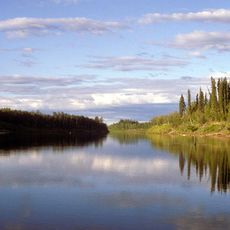
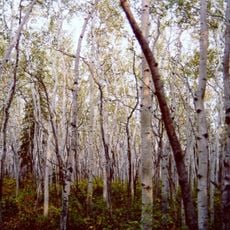
Arrigetch Peaks are a group of granite spires in the Endicott Mountains of the central Brooks Range, in Gates of the Arctic National Park. The summits reach up to 2,189 m and ring glacial cirques at the head of the Kobuk River and of Arrigetch and Aiyagomahala creeks, tributaries of the Alatna. The granite rises abruptly from metamorphic rock above glacier valleys and boreal conifer forest.
The first geological survey of the area was carried out in 1911 by Philip S. Smith and H. M. Eakin. Robert Marshall explored the peaks in the 1930s and described the trips in his 1933 book Arctic Village. In 1964 an American party led by Brownell Bergen completed the first rock-climbing expedition, and in 1968 the area was designated a National Natural Landmark.
The Nunamiut people named these peaks 'fingers of the outstretched hand', a description that reflects how they perceived and navigated the landscape. This traditional name remains connected to how the formation is understood and recognized in the region.
Reaching the peaks requires a small aircraft flight from the nearest town, which lands nearby in the remote region. Hiking happens on unmarked terrain with no established trails, so visitors need good navigation skills and preparation for harsh conditions.
The peaks rise to 2,189 m in the southwest Endicott Mountains, and the range is the source of the Kobuk River plus Arrigetch and Aiyagomahala creeks. The summits ring glacial cirques and mark an abrupt transition from metamorphic rock to granite. The Nunamiut used the peaks as a landmark.
The community of curious travelers
AroundUs brings together thousands of curated places, local tips, and hidden gems, enriched daily by 94,019 contributors worldwide.