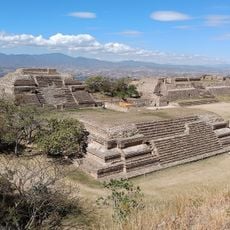
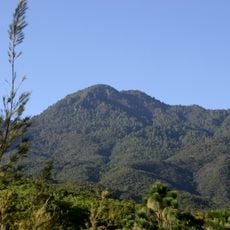
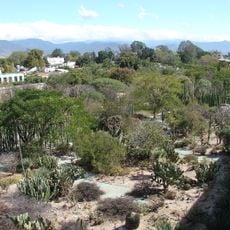
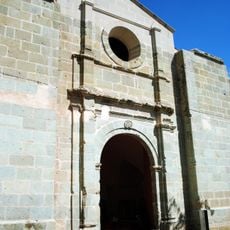
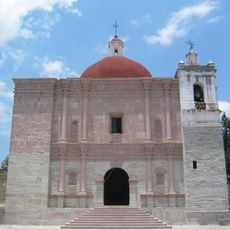
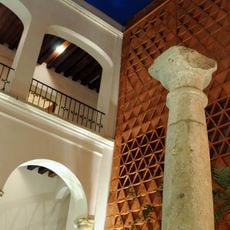
Yucuita, Archaeological site and hill in Nochixtlan Valley, Oaxaca, Mexico.
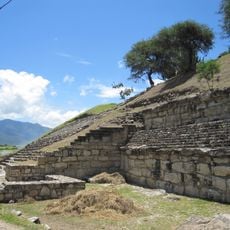
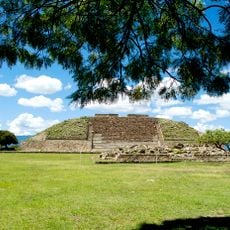
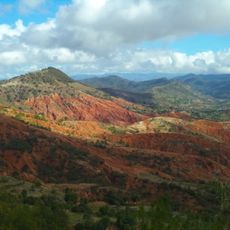
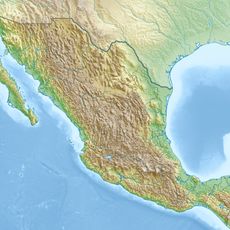
Yucuita is an archaeological site on a small plain of the Sierra Mixteca in Oaxaca, 86 km from the city of Oaxaca. It has two complexes: an elite residential platform on a hillside with rooms around a central patio, and a ceremonial center with two long walls, one 70 m by 4 m and another 52 m. A narrow stairway and a 60 m tunnel for drainage and passage are near the first wall.
Yucuita was founded by the Mixtecs in the Pre-Classic Period as a small village based on agriculture and obsidian trade. Its occupation ran from the 14th century BCE to the 9th century CE, and Esteban Avendaño explored the site in 1933. INAH carried out the most recent excavations between 1976 and 1980.
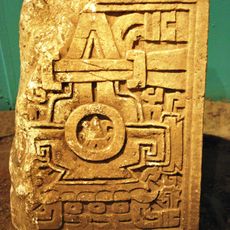
Yucuita means "Hill of Flowers" in Mixtec, from yúcu (hill) and ita (flower). The site's ceramics belong to the Rojo sobre Bayo (red on buff) tradition found at other Preclassic Mixtec centres. The museum in San Juan Yucuita, which held replicas of pieces found here, has closed to the public.
Exploration work at Yucuita was suspended years ago, reportedly for lack of INAH budget, and remains unfinished; the site is neglected and barely explorable, and the San Juan Yucuita museum that displayed replicas of finds has closed. The sources record no visitors to the zone, and it is not promoted among Oaxaca's important archaeological sites, so there are no general services or marked visiting conditions to rely on.
Two parallel stone walls of different lengths intersect at right angles, forming part of the ceremonial platform. This geometric arrangement suggests the builders possessed precise planning and mathematical knowledge.
The community of curious travelers
AroundUs brings together thousands of curated places, local tips, and hidden gems, enriched daily by 94,747 contributors worldwide.