Montreal

Log in to your account

AroundUs is a community-driven map of interesting places, built by curious explorers like you. It grows with every review, story, and photo you share.
Connect to save your favorite spots, contribute locations, and create personalized routes.
By continuing, you accept our Terms and Conditions and our Privacy Policy
Add to collection
Map
Suggest a change
Share

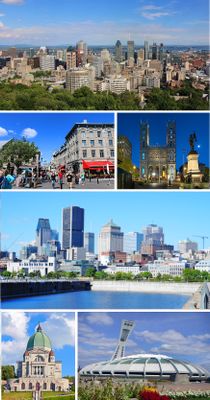
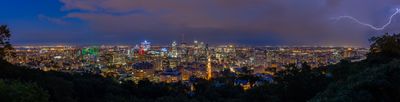
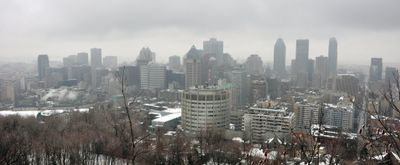
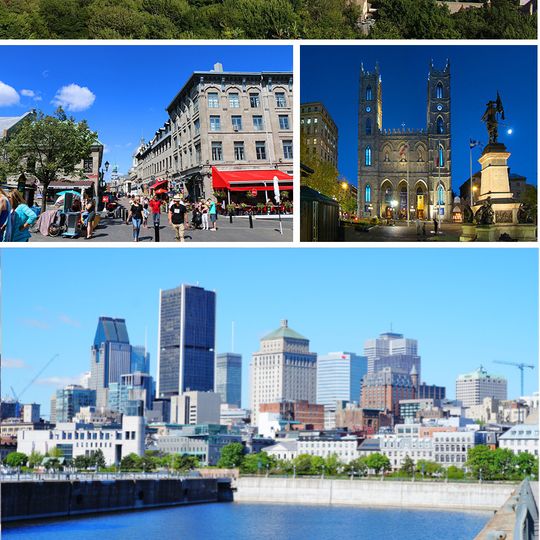
Montreal, Metropolis in Quebec, Canada

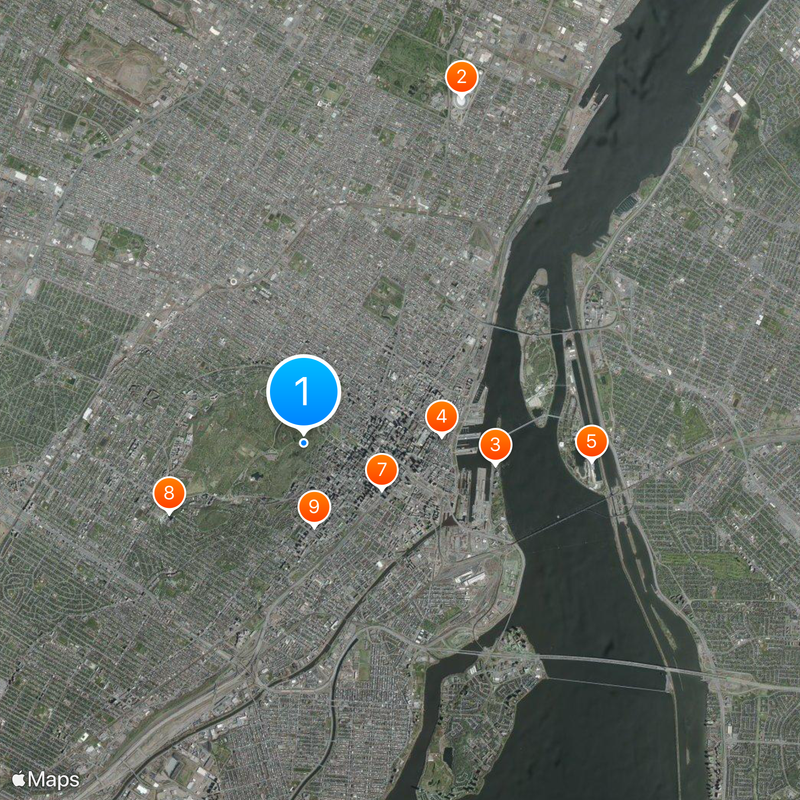
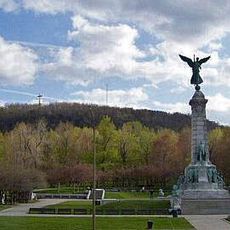
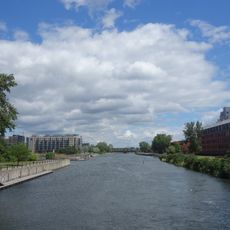
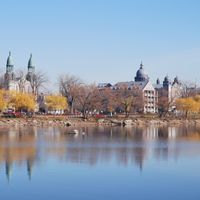
Montreal extends across an island between the Saint Lawrence and Ottawa rivers, with Mount Royal rising 233 meters at its center point.

French colonists Paul de Chomedey and Jeanne Mance established Montreal in 1642 as Ville-Marie, developing it from a missionary post into a major fur trading center.

Montreal maintains its position as North America's French-speaking center, with 85 percent of residents speaking French and numerous theaters presenting performances in both official languages.

The Société de transport de Montréal operates 68 metro stations and 220 bus routes, connecting all districts from Anjou in the east to Saint-Laurent in the west.

The Underground City network contains 32 kilometers of tunnels beneath downtown Montreal, connecting shopping centers, universities, hotels, and metro stations throughout the year.

Location: Urban agglomeration of Montreal

Inception: May 17, 1642

Founders: Paul de Chomedey, Sieur de Maisonneuve, Jeanne Mance

Elevation above the sea: 31 m

Part of: Greater Montreal, Urban agglomeration of Montreal

Shares border with: Longueuil, Saint-Lambert, Westmount, Montréal-Est, Mount Royal, Hampstead, Sainte-Anne-de-Bellevue, Candiac, Sainte-Catherine, Laval, Dorval, Kirkland, Dollard-des-Ormeaux, Côte Saint-Luc, Montreal West, Brossard, La Prairie, Boucherville, Varennes, Kahnawake, Repentigny, Charlemagne, Terrebonne, Deux-Montagnes, Sainte-Marthe-sur-le-Lac, Pointe-Calumet

Address: Montreal, QC, Canada H Montreal

Website: https://montreal.ca/en

GPS coordinates: 45.50334,-73.58684

Latest update: November 1, 2025 18:35

Expo 67 architectural structures in Montreal

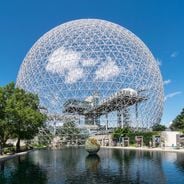
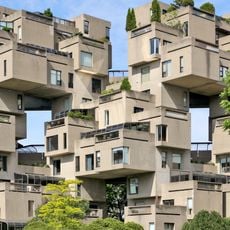
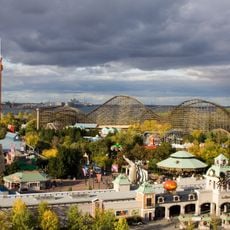
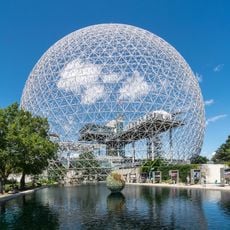
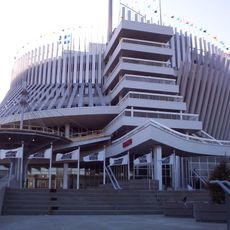
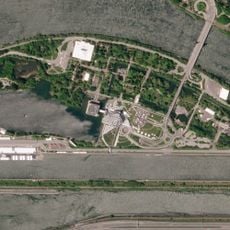
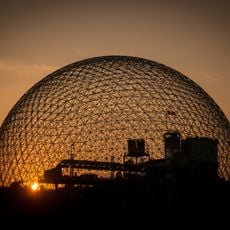
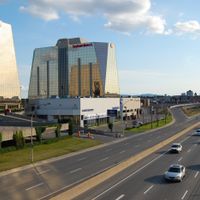
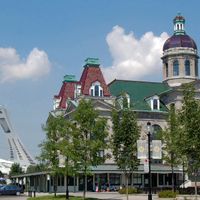
Expo 67 left a lasting mark on Montreal, with several architectural structures still standing decades after the World Fair closed. The exhibition, held on islands in the Saint Lawrence River, attracted more than 50 million visitors and marked a turning point in the city's development. Many of the original pavilions were demolished or repurposed after the event ended, but several structures remain and continue to serve the city in different capacities. This collection includes individual buildings and entire areas that emerged from the World Fair. Among the preserved structures are the geodesic dome of the Biosphere, the experimental Habitat 67 housing complex designed by Moshe Safdie, the former French Pavilion now housing the Montreal Casino, and Alexander Calder's "Three Disks" sculpture. The La Ronde amusement park opened as part of Expo 67 and continues to operate today. The grounds within what is now Parc Jean-Drapeau also include Place des Nations, the Circuit Gilles Villeneuve racing track, and various gardens and bridges built for the World Fair. These sites offer insight into the architectural visions of the 1960s and demonstrate how a World Fair can permanently reshape a city.

Exploring Montreal: attractions, museums, neighborhoods

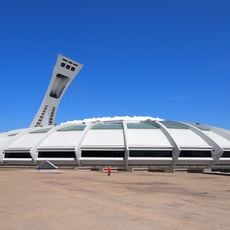
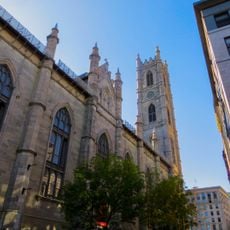
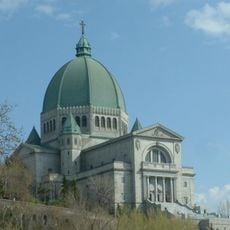
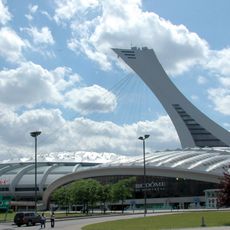
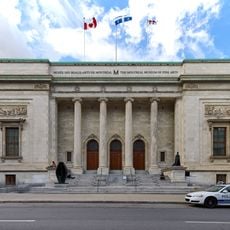
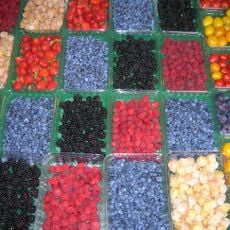
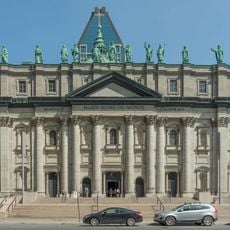
Montreal combines historic sites and cultural institutions along the Saint Lawrence River. The city displays its religious past in structures like Notre-Dame Basilica, whose neo-gothic facade dates to the 1820s, and Saint Joseph's Oratory, a Catholic pilgrimage site on Westmount. Mount Royal rises 764 ft (233 m) above the city center, offering views across downtown and the river. Parc Jean-Drapeau spans two former Expo islands and now houses the Biosphere and the Formula 1 track Circuit Gilles-Villeneuve. Cultural facilities include the Museum of Fine Arts, which presents Canadian and European collections, and Pointe-à-Callière, built on archaeological sites from the 17th century. Old Montreal preserves buildings from the French colonial period along cobblestone streets. The Olympic Stadium and Botanical Garden date from different 20th-century construction phases. Markets such as Jean-Talon and Atwater have sold regional produce for decades. The Quartier des Spectacles concentrates performance venues around Place des Arts, while the Underground City connects pedestrian passages beneath downtown.

Attractions and Monuments in Quebec City & Surroundings

The main monuments and tourist sites of Quebec, including the city's fortifications, historical buildings, public squares, museums, monuments, and natural areas. Sites like the Château Frontenac, Dufferin Terrace, and Montmorency Falls showcase the history and architectural heritage of the city. Walkways, parks, and cultural spaces offer views over the Saint Lawrence River and the surrounding landscapes.

Reviews

Visited this place? Tap the stars to rate it and share your experience / photos with the community! Try now! You can cancel it anytime.

« Montreal: Metropolis in Quebec, Canada » is provided by Around Us (aroundus.com). Images and texts are derived from Wikimedia project under a Creative Commons license. You are allowed to copy, distribute, and modify copies of this page, under the conditions set by the license, as long as this note is clearly visible.

Discover hidden gems everywhere you go!

From secret cafés to breathtaking viewpoints, skip the crowded tourist spots and find places that match your style. Our app makes it easy with voice search, smart filtering, route optimization, and insider tips from travelers worldwide. Download now for the complete mobile experience.

Around Us App Screenshot

A unique approach to discovering new places

Le Figaro

All the places worth exploring

France Info

A tailor-made excursion in just a few clicks

20 Minutes