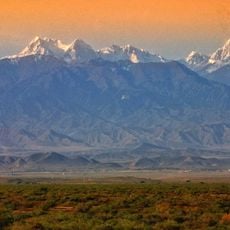
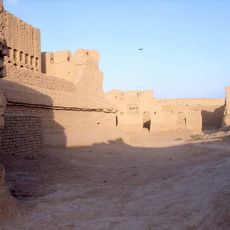
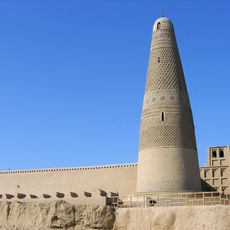
Ayding Lake, Salt lake in Turpan Depression, China.
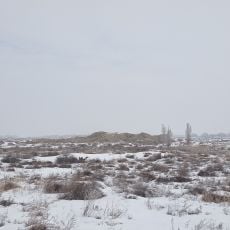
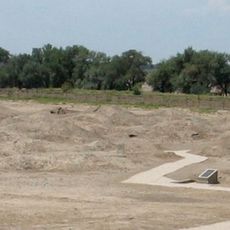
Ayding Lake is a salt lake in the Turpan Depression, stretching across a wide expanse with white salt flats and muddy basins in its central zone. The water is extremely saline, and the landscape appears barren and monochromatic with minimal vegetation.
The water body formed roughly 250 million years ago during the Himalayan uplift, when the region was covered by a vast inland sea. As this ancient sea receded over time, salt-rich deposits accumulated and shaped the present-day basin.
The name Aydingköl comes from the Uyghur words for 'moon' and 'lake', referring to the white salt crust along the shore that looks like moonlight. In ancient times the lake was known in Chinese as Jueluowan. Today a salt mill on the shore processes alum salt crystals and saltpeter into chemical products.
The best time to visit is during the drier months when pathways are more accessible and salt conditions remain stable. Visitors should bring water, sun protection, and sturdy footwear, as salt creates rough surfaces and the sun is intense in this region.
On 24 July 2015 an automatic weather station near the lake bed logged 50.3 °C, then a national high-temperature record; Xinjiang meteorologists noted it was a regional station, so the figure is kept as a reference only. The lake bed lies 154.31 m below sea level, making it the lowest land point in China and the third-lowest depression on Earth after the Dead Sea and Lake Assal.
The community of curious travelers
AroundUs brings together thousands of curated places, local tips, and hidden gems, enriched daily by 92,842 contributors worldwide.