Erlitou, Archaeological site in Yanshi, China
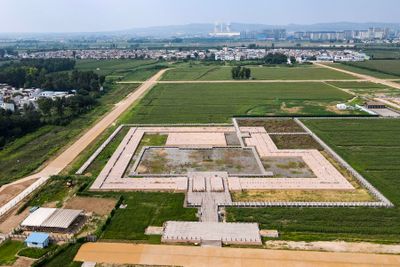
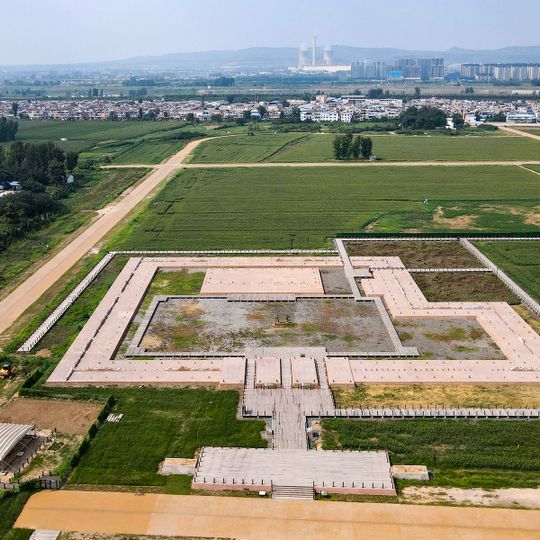
Erlitou is an early Bronze Age site near Erlitou village in Yanshi District, Henan, covering about 3 square kilometres. Its centre holds the rammed-earth foundations of palace complexes, including the 108 by 100 metre No. 1 palace with its L-shaped gallery, plus craft workshops and tombs. A museum on the grounds displays bronzes, jades and pottery.
The site developed during the Bronze Age between roughly 1800 and 1600 BCE, when the largest settlement in East Asia at that time was built here. This period marks a crucial moment in early state formation and the rise of centralized authority in China.
The site's name comes from Erlitou village, where Xu Xusheng's team first found relics on 16 May 1959. Excavations uncovered a bronze-casting workshop covering 15,000–20,000 square metres, with moulds bearing animal-mask designs, and a turquoise workshop whose pit H290 held thousands of pieces of raw material and waste. Bone workshops made arrowheads and hairpins.
Visitors should allow enough time to explore both the excavated foundations and the museum displays, as the grounds cover a large area. The best time to visit is during mild seasons when the weather is comfortable and pathways are easy to navigate.
The grounds contain some of the earliest known palaces in China with planned roads and drainage channels, showing how organized the settlement was. This layout was unusual for its time and suggests a highly developed administrative structure.
The community of curious travelers
AroundUs brings together thousands of curated places, local tips, and hidden gems, enriched daily by 92,795 contributors worldwide.