Palatinate Forest, Forest and low mountain range in Rhineland-Palatinate, Germany
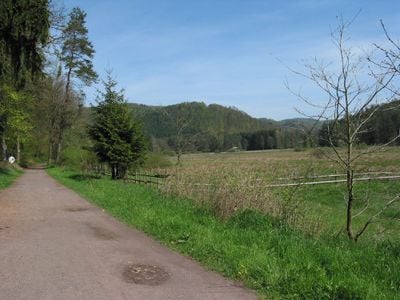
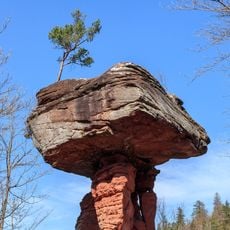
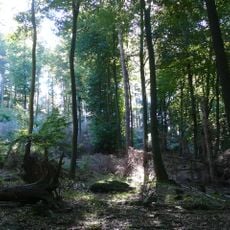
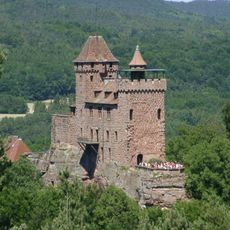
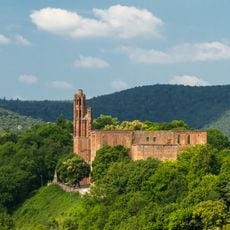
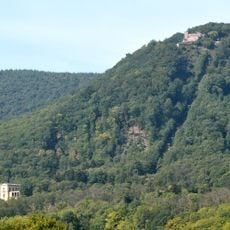
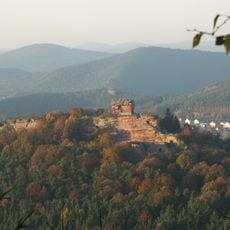
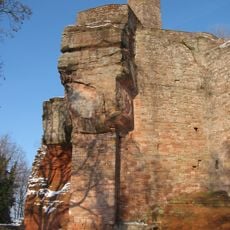
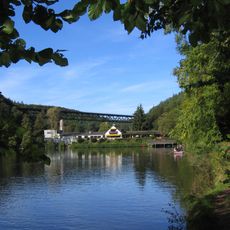
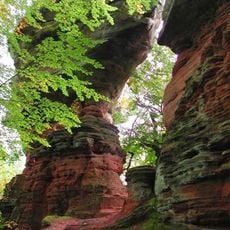
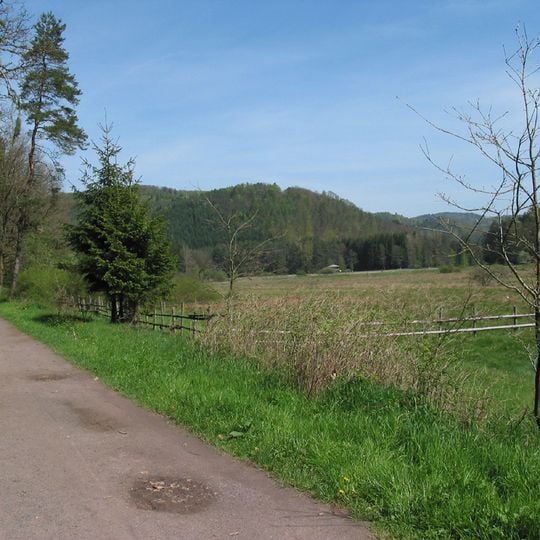
Palatinate Forest is a wooded upland in southern Rhineland-Palatinate, made largely of red sandstone layers that give the rocks and exposed cliffs a warm, reddish tone. The landscape rolls through gentle ridges, narrow valleys, and rocky outcrops that rise between the trees, creating a terrain of soft contours and occasional steep slopes.
Before the 19th century, the region belonged to several small principalities, and the forests provided timber and grazing land under different local rulers. After becoming part of Bavaria, foresters began to manage the woods more systematically, and later conservation efforts led to the establishment of protected areas that now form part of a cross-border reserve.
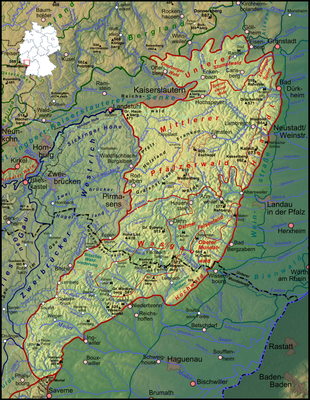
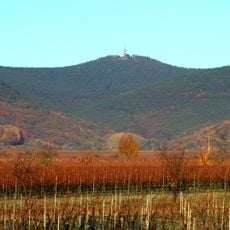
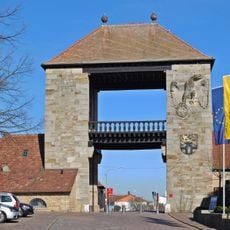
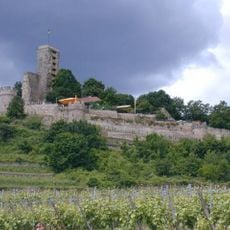
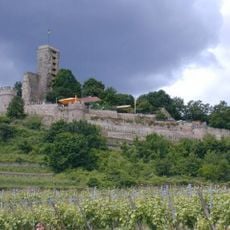
The name Pfälzerwald derives from the Palatinate (Pfalz), the region it dominates; the forest covers about a third of it. The southern continuation in France is called Vosges du Nord, and since 1998 the cross-border Palatinate Forest-North Vosges Biosphere Reserve has been UNESCO-designated. The German nature park also takes in the wine-growing strip along the German Wine Route.
Walkers find marked paths of different lengths and difficulty levels, from short loops to multi-day routes, with signposts at most junctions. Many starting points lie along smaller roads with basic parking areas, making it easy to begin a walk without much planning or special equipment.
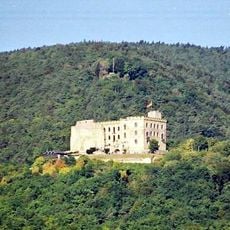
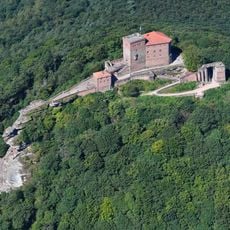
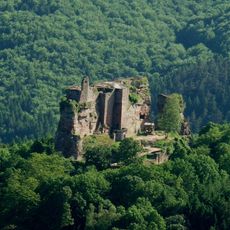
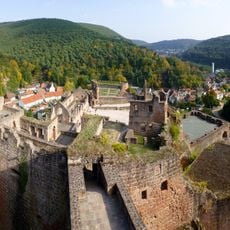
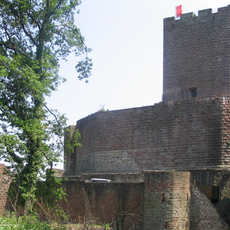
Some rock formations carry names of old castles or settlements that once stood nearby and have long since disappeared. Walkers occasionally come across small quarries hidden among the trees, where sandstone was cut centuries ago for building houses and churches in the surrounding towns.
The community of curious travelers
AroundUs brings together thousands of curated places, local tips, and hidden gems, enriched daily by 94,056 contributors worldwide.