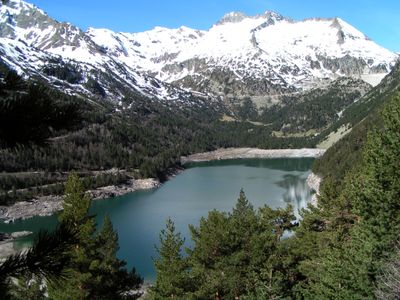
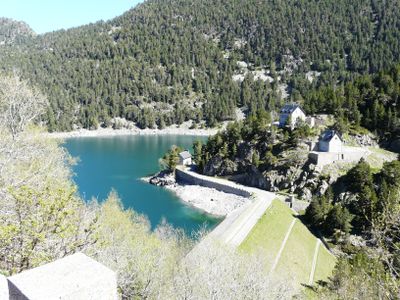
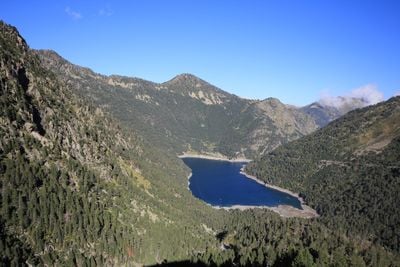
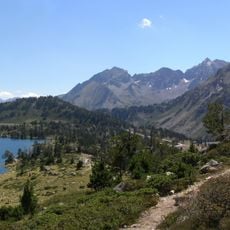
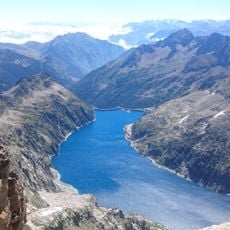
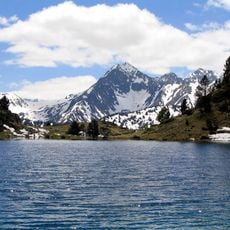
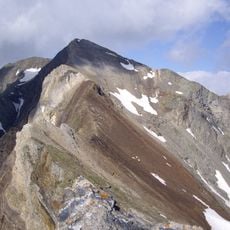
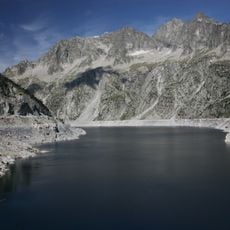
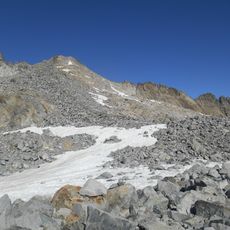
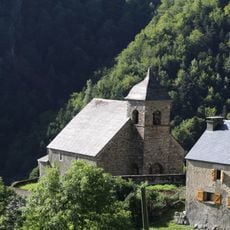
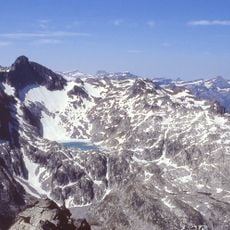
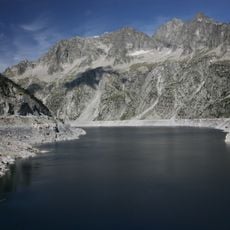
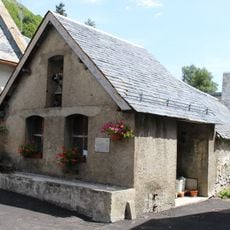
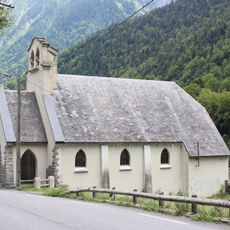
Lac d'Orédon, Artificial reservoir in Hautes-Pyrénées, France
Lac d'Orédon is an artificial lake in the Hautes-Pyrénées situated at about 1849 meters elevation with a water surface covering roughly 0.46 square kilometers. The reservoir supplies water for hydroelectric generation, irrigation of farms, and drinking water needs of nearby communities.
Construction of the Orédon dam began after the lake was expropriated for public utility in June 1869, and the dam and reservoir were completed in 1884, making it the oldest Pyrenean dam. It was built to feed the Gers department via the Neste canal. In 1917 an underground channel linked its reservoir to that of the Oule, increasing the power of the Éget-Cité hydroelectric plant in the Aure valley.
The biological station of Lac d'Orédon was set up on the shore in 1922, after the Toulouse professor Léon Jammes drew attention to the scientific value of the Néouvielle site. Scientists and students there study the lake, its catchment, the surrounding ponds and wetlands, and other nearby glacial lakes.
The lakeshore is easily accessible on foot, and the area works well for hiking during summer when the weather is most favorable. The location can turn quite cold, so warmer layers are recommended even during the warmer months.
Water flows into this lake from the higher Lac de Cap-de-Long and drains into the Neste River, connecting a series of reservoirs through an underground hydraulic network. This system shows how engineers used the mountain streams to move water across long distances.
The community of curious travelers
AroundUs brings together thousands of curated places, local tips, and hidden gems, enriched daily by 92,695 contributors worldwide.