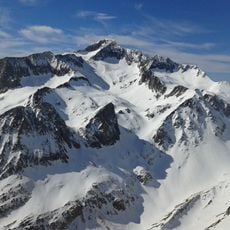
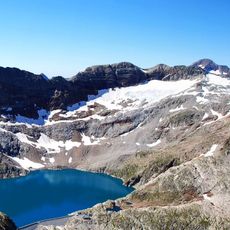
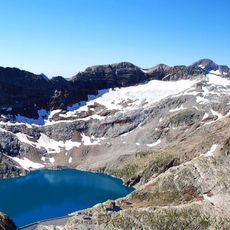
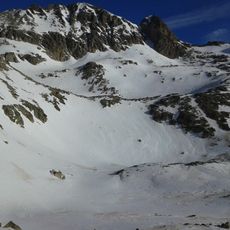
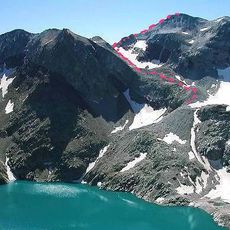
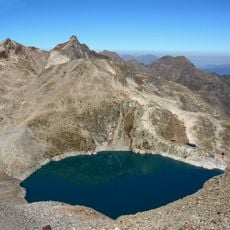
Seil Dera Baquo, Mountain peak on the France–Spain border, Benasque, Aragon, Spain and Hautes-Pyrénées, France
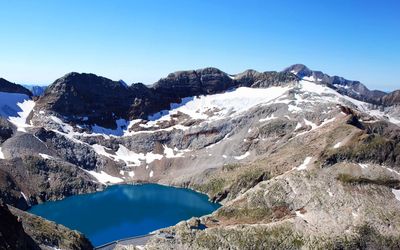
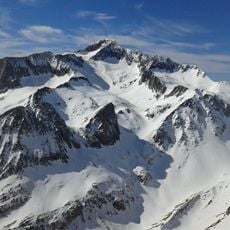
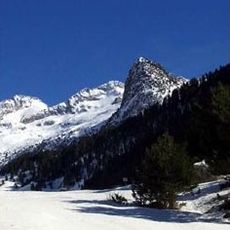
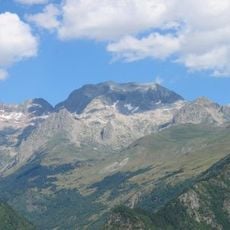
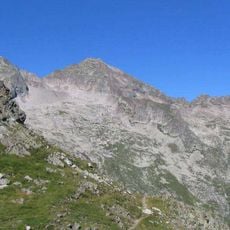
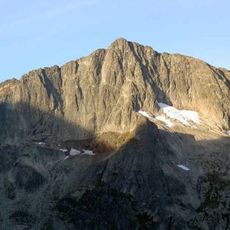
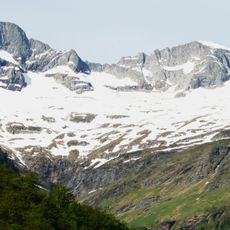
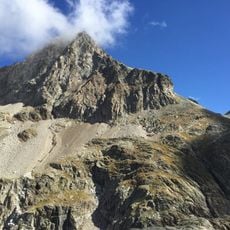
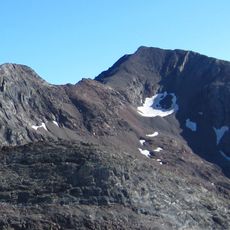
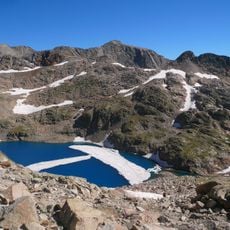
Seil Dera Baquo is a 3,110 m Pyrenean summit on the Franco-Spanish border, between the province of Huesca in Aragon and the department of Haute-Garonne. It rises in the Perdiguero massif and has a prominence of 197 m. Its western end forms the Cabo de la Vaca peaks, whose shape gave the mountain its name.
The name El Sellant de la Vaca is documented in Benasque Aragonese, with equivalents Eth Selh dera Vaca in Gascon Occitan and Sellam de la Baca in Spanish. The western end of the massif, formed by the Cabo de la Vaca Oriental peaks, was identified with the animal's head, the Occitan word cap meaning head, while the eastern part was its body. The Benasque term sellant translates into standard Aragonese as cinglo, a crag.
The name El Sellant de la Vaca, Benasque Aragonese for "the rock ledge of the cow", describes the mountain's outline: the western end is read as the animal's head, formed by the Cabo de la Vaca Oriental peaks, and the eastern part as its body. The Gascon name Eth Selh dera Vaca carries the same image, and sellant corresponds to the standard Aragonese cinglo, a rock ledge.
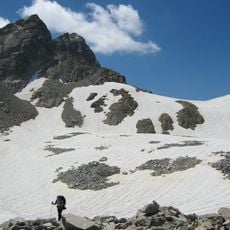
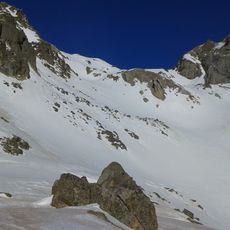
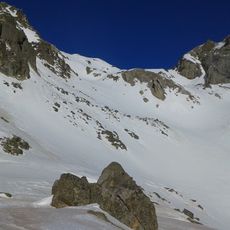
The ascent requires mountaineering gear such as crampons and ice axes, with most routes starting from the Portillon refuge. Visitors should be experienced with alpine terrain and comfortable with rope work when crossing glaciers.
The name comes from the Benasque and Gascon toponyms: the western end, formed by the Cabo de la Vaca Oriental peaks, is read as the animal's head, while the eastern part is its body. The Benasque word sellant translates into standard Aragonese as cinglo, a crag.
The community of curious travelers
AroundUs brings together thousands of curated places, local tips, and hidden gems, enriched daily by 93,680 contributors worldwide.