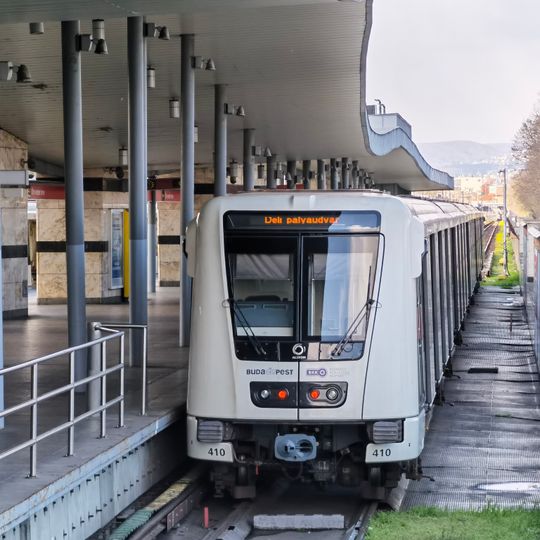
Budapest Metro, Rapid transit network in Budapest, Hungary
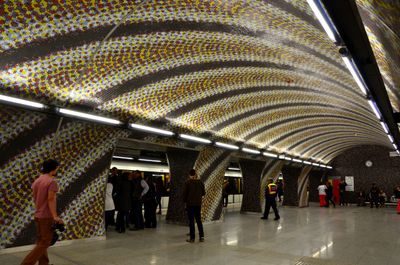
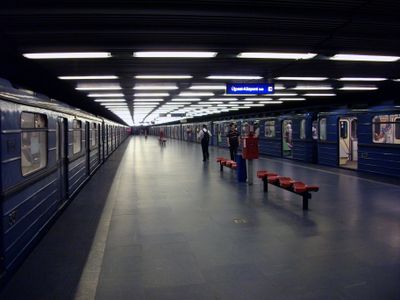
This system links the main districts of the Hungarian capital through four lines with 52 stations covering roughly 40 kilometers (25 miles) of track. The lines, labeled M1 through M4, cross the Danube at several points and connect historic neighborhoods with newer residential areas.
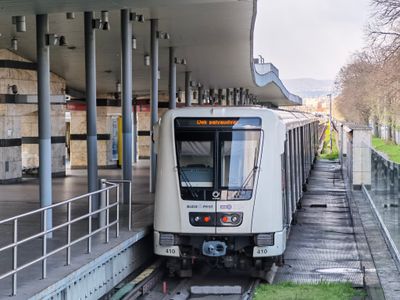
The first line opened in 1896 for the millennial celebration of Hungarian statehood and became the second electric underground railway in Europe after London. The most recent expansion with the fully automated M4 line came only in 2014.
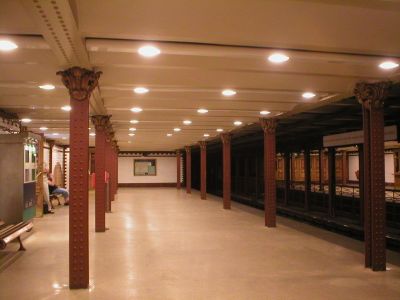
Line M1 carries the nickname Földalatti, meaning underground railway, reflecting its original shallow construction below street level. At many stations along this line, passengers still see historic tilework and wrought iron details that recall the early years of urban transport.
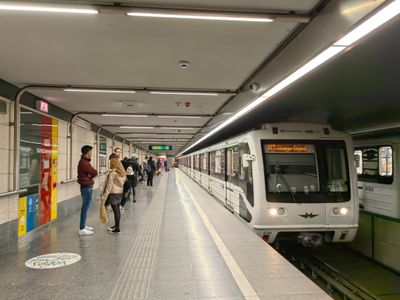
Trains run daily from around half past four in the morning until 11 PM, with intervals ranging from a few minutes to a quarter of an hour depending on the line and time of day. Most stations offer ticket machines and digital displays with real-time information about upcoming trains.
The M4 line uses fully automated trains without drivers and features glass walls at all platforms that open only when the train stops. This technology not only reduces accident risk but also allows for more precise control of train frequency.
The community of curious travelers
AroundUs brings together thousands of curated places, local tips, and hidden gems, enriched daily by 60,000 contributors worldwide.