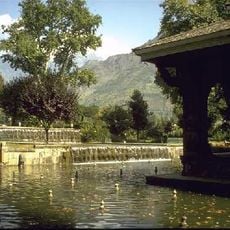
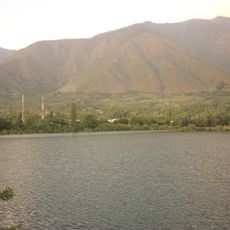
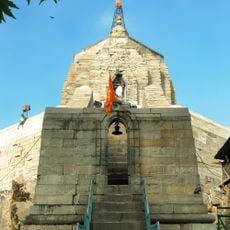
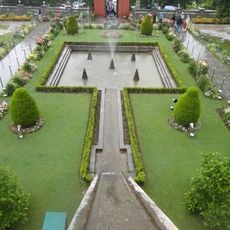
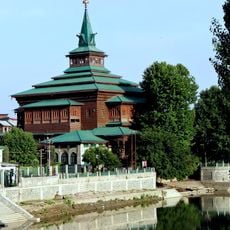
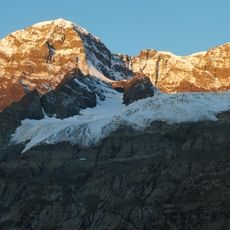
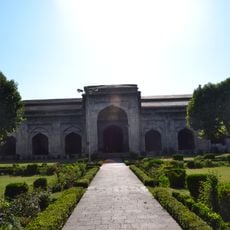
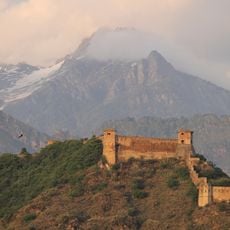
Gangabal Lake, Alpine lake at Mount Haramukh, Jammu and Kashmir, India.
Gangabal Lake is a glacial lake at the foot of Mount Harmukh in the Himalayas of Jammu and Kashmir, India. It measures up to 2.5 km long and 1 km wide, is fed by precipitation, glaciers and springs, and is oligotrophic. Its water flows into nearby Nundkol Lake and then via Wangath Nallah into the Sind River.
Gangabal appears in Sanskrit texts as Uttaramanasa and Uttara Ganga, including the Mahabharata, Vishnu Smriti, Nilamata Purana and Rajatarangini, as a pilgrimage site for śrāddha rites. In 1519 about 10,000 Kashmiri Brahmins died near Mahlish Meadow, possibly from landslides and early snowstorms, while carrying ashes to the lake. The Harmukh-Gangabal Yatra was revived in 2009 after a 200-year interruption.
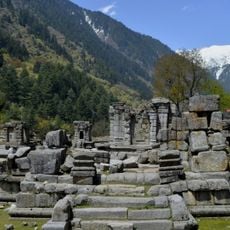
Kashmiri Hindus call the lake Haramukh Ganga and treat it as equal to the Ganga and Haridwar for ancestral rites, immersing the ashes of their dead here after cremation. The three-day Harmukh-Gangabal Yatra sets out from the 8th-century Wangath temple complex at Naranag, and the lake is invoked in the Kaaw Punim festival.
From Srinagar, a 45 km road trip via Ganderbal reaches Naranag, followed by a 15 km uphill trek that can also be done on horseback. A longer 25 km route starts at Sonamarg via Vishansar Lake and crosses the Nichnai, Gadsar and Zajibal passes, averaging 4,100 m in elevation. Treks also approach from Arin near Bandipore and from Tilel in Gurez.
Gangabal is traditionally regarded as the source of the Sind River: its outflow passes into Nundkol Lake and then runs down the Wangath Nallah. The lake is oligotrophic and holds brown trout. In 1943 Vikram Sarabhai measured cosmic rays beside its water.
The community of curious travelers
AroundUs brings together thousands of curated places, local tips, and hidden gems, enriched daily by 92,750 contributors worldwide.