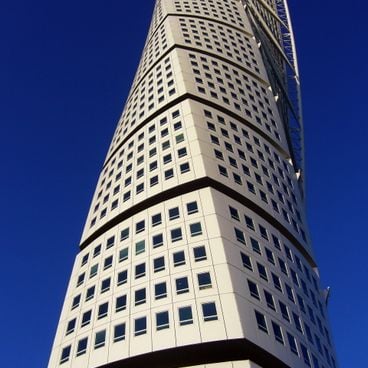
This collection brings together some of the most technically ambitious structures ever built, from record-breaking skyscrapers and suspension bridges to high-speed roller coasters that push the boundaries of what steel and concrete can achieve. These sites span continents and represent decades of engineering progress, offering visitors a chance to experience human innovation at heights and speeds that were once impossible. Whether you're standing on the observation deck of the Burj Khalifa in Dubai, walking across the glass floor panels of the CN Tower in Toronto, or racing through the launch sequence of Kingda Ka in New Jersey, each structure tells a story of technical ambition and problem-solving. The collection includes landmarks like the 324-meter Eiffel Tower in Paris, completed for the 1889 World Exhibition, and modern marvels such as Tokyo Skytree, which rises 634 meters above the city. You'll find the Millau Viaduct spanning the Tarn River valley in France at a height of 336 meters (1,100 feet), the tilted medieval bell tower in Pisa leaning at a 3.97-degree angle, and Russia's SkyBridge suspended between mountain peaks at 2,320 meters (7,600 feet) elevation. These places attract millions of visitors each year, offering not just views and thrills but a firsthand understanding of what modern engineering can accomplish when designers set out to build something exceptional.
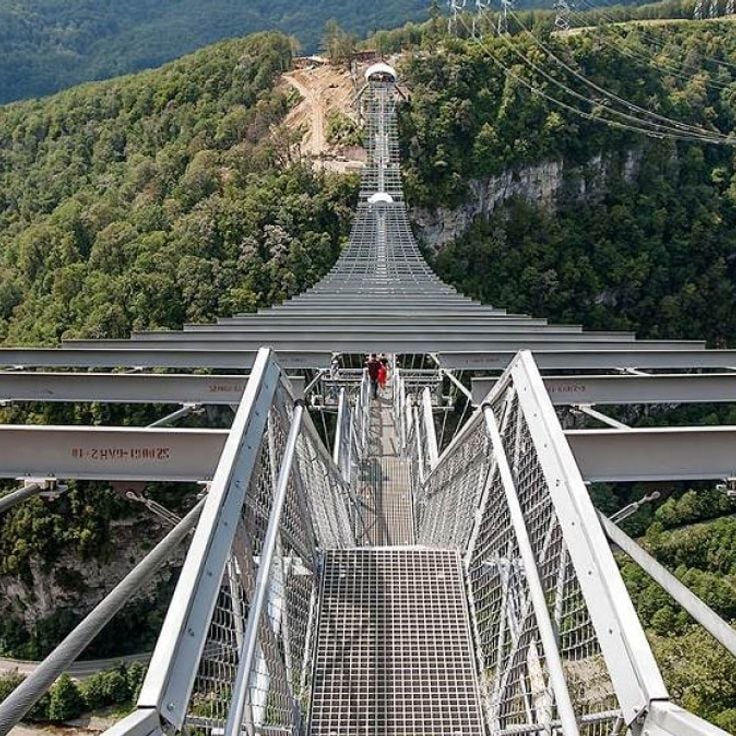
Sochi, Russia
This pedestrian suspension bridge spans 439 meters (1,440 feet) between two mountain peaks at 2,320 meters (7,600 feet) elevation near the Rosa Khutor ski resort, and was among the longest structures of its type in the world when it opened in 2014. The design links two summits across a gorge, with glass floor sections along the span providing views straight down to the valley below. Visitors cross the swaying structure as part of a mountain adventure park that includes zip lines and other high-altitude attractions, often combined with cable car rides to reach the departure point.
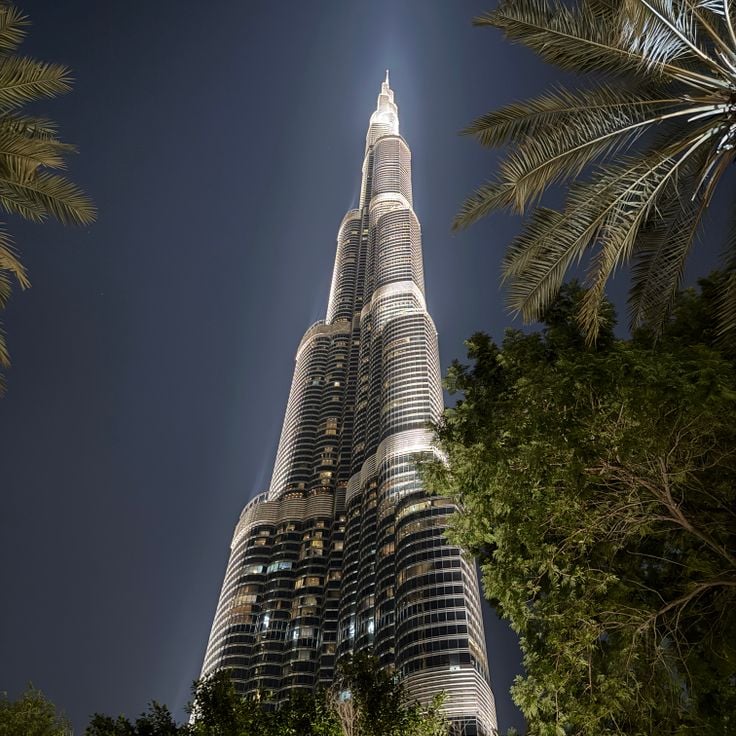
Dubai, United Arab Emirates
This 828-meter (2,717-foot) skyscraper with 163 floors has held the record as the world's tallest building since its completion in 2010. The observation deck on the 148th floor offers wraparound views across Dubai, the desert and the Persian Gulf. The tower combines Arabic architectural elements with modern engineering and houses residential apartments, offices, restaurants and a hotel. Visitors reach the upper levels via high-speed elevators that rank among the fastest in the world.
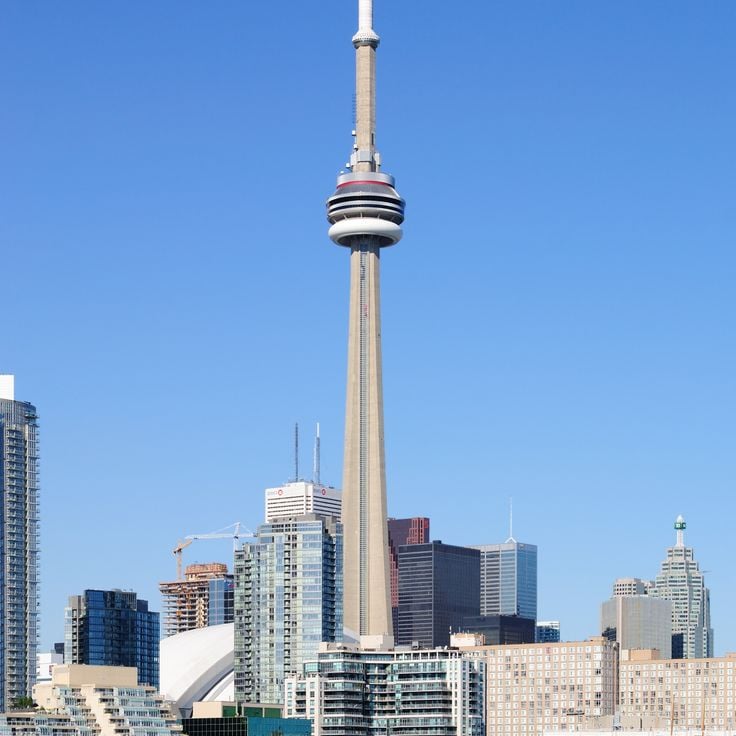
Toronto, Canada
This 553-meter television tower was the world's tallest freestanding structure when completed in 1976 and held that distinction for more than three decades. The reinforced concrete design rises above Toronto's skyline in a tapered form engineered to withstand wind loads at speeds up to 260 mph. Visitors reach the revolving restaurant at 351 meters and the observation platform fitted with glass floor panels that allow direct views straight down to ground level. A second platform at 447 meters provides outdoor access and sight lines across Lake Ontario and the metropolitan area. The tower originally served broadcast functions for radio and television stations and demonstrates the technical capabilities of 1970s engineering in constructing extremely tall structures within urban environments.
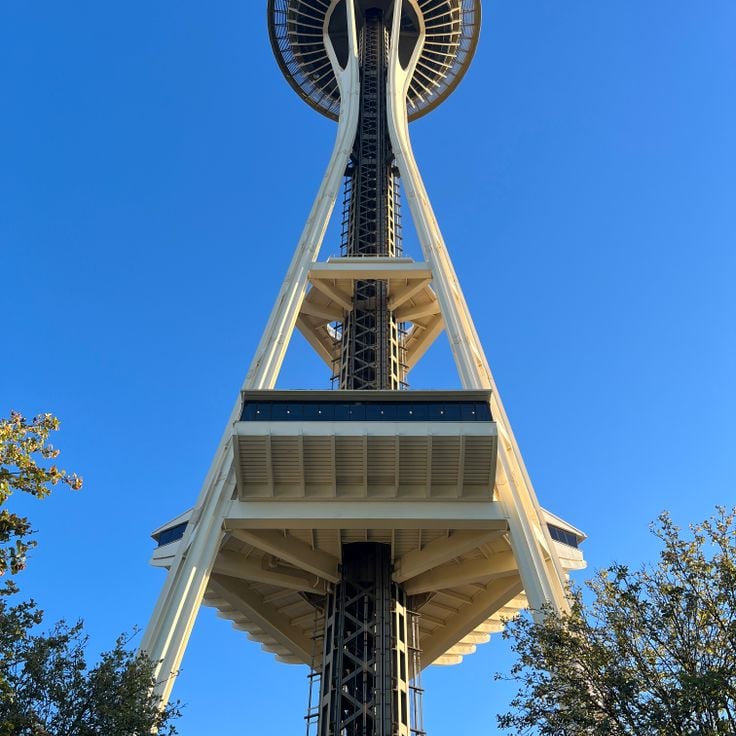
Seattle, United States
This 184-meter observation tower was built for the 1962 World's Fair and remains one of Seattle's most recognizable structures. The Space Needle features a restaurant that completes a full rotation in about an hour, along with an observation deck equipped with glass floor panels that provide views of the city, Puget Sound, and the Olympic and Cascade mountain ranges. The structure rests on a foundation that extends 30 feet (9 meters) into the ground and was designed to withstand earthquakes up to magnitude 9.0 and winds reaching 200 miles per hour (320 kilometers per hour). A major renovation between 2017 and 2018 replaced the walls of the observation level with floor to ceiling glass, offering visitors unobstructed sightlines in all directions. The tower receives over one million visitors annually and serves as an example of how mid century engineering combined technical ambition with public access.
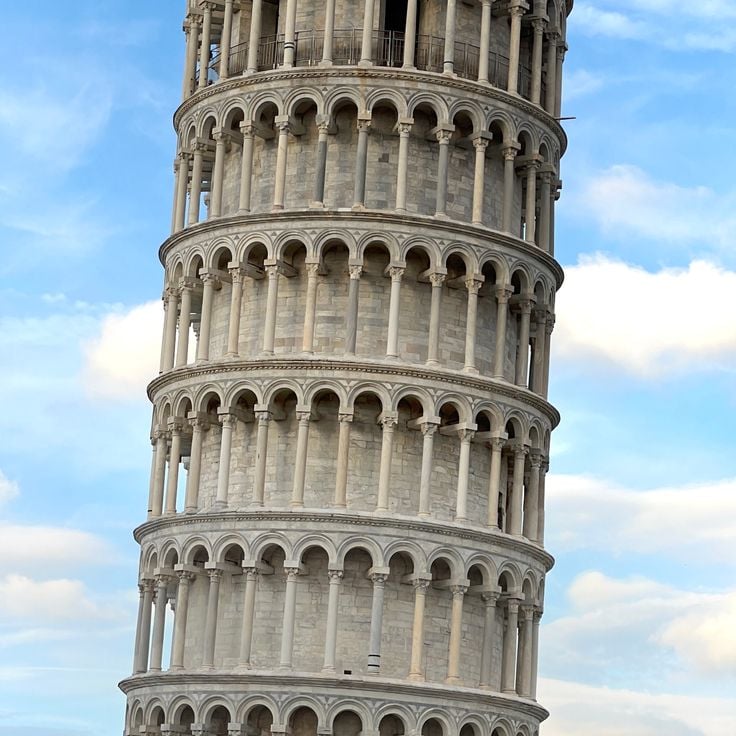
Pisa, Italy
This eight-story marble tower was begun in 1173 as a freestanding bell tower for the adjacent cathedral and started tilting south during construction. The lean developed because soft clay and sand beneath the foundation could not support the 14,500-ton structure evenly. The tower reaches 56 meters (184 feet) on its lower side and now stands at a 3.97-degree angle. Visitors can climb the 251 steps to the uppermost gallery and take in views across the Piazza dei Miracoli while experiencing firsthand the structural challenge that has occupied engineers and architects for centuries.
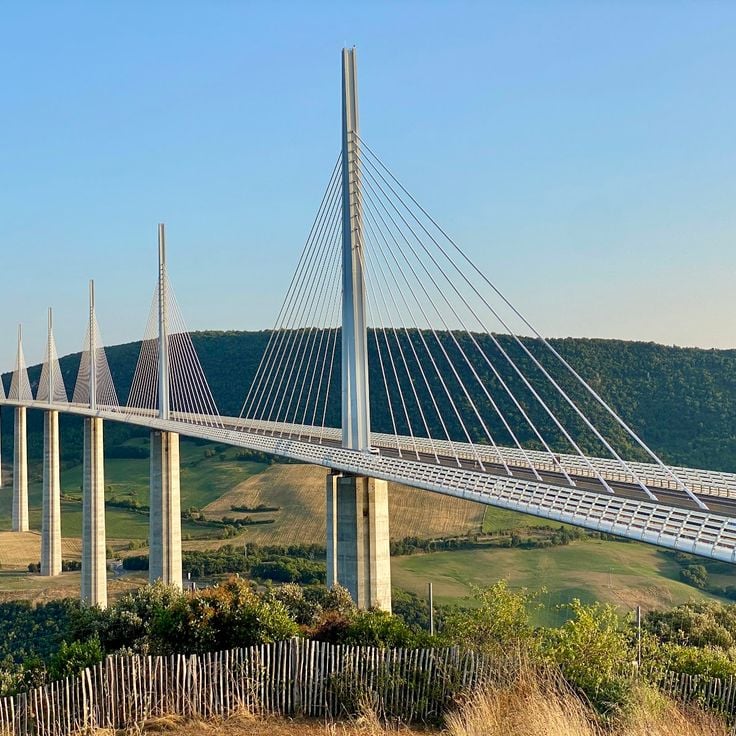
Millau, France
This cable-stayed bridge spans the Tarn River valley at a height of 1,100 feet (336 meters), making it one of the tallest bridge structures in the world. Seven pylons support the 1.6-mile (2.5-kilometer) roadway between Paris and Béziers, with the tallest mast reaching 1,125 feet (343 meters). Opened in 2004, the structure was designed by Norman Foster and combines technical performance with slender form. Visitors can cross by vehicle or stop at a visitor center on the north end that offers insight into the project's planning and construction. On clear days, views extend from the valley floor to the plateaus of the Massif Central.
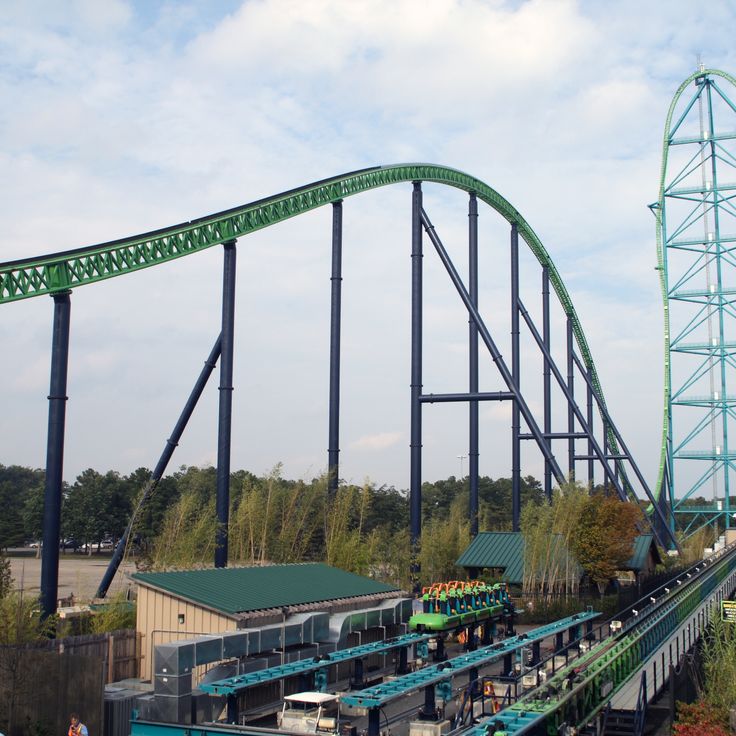
Jackson, New Jersey, USA
This steel roller coaster in Jackson reaches a height of 456 feet (139 meters) and accelerates to 128 miles per hour (206 kilometers per hour) in 3.5 seconds. Kingda Ka uses a hydraulic launch system that propels trains horizontally before they shoot up a vertical tower and then drop into a 270-degree spiral. The ride opened in 2005 and held the record for several years as the tallest and fastest roller coaster in the world. The entire experience lasts about 28 seconds and offers visitors a direct encounter with the extreme acceleration forces that modern amusement park engineering can generate.
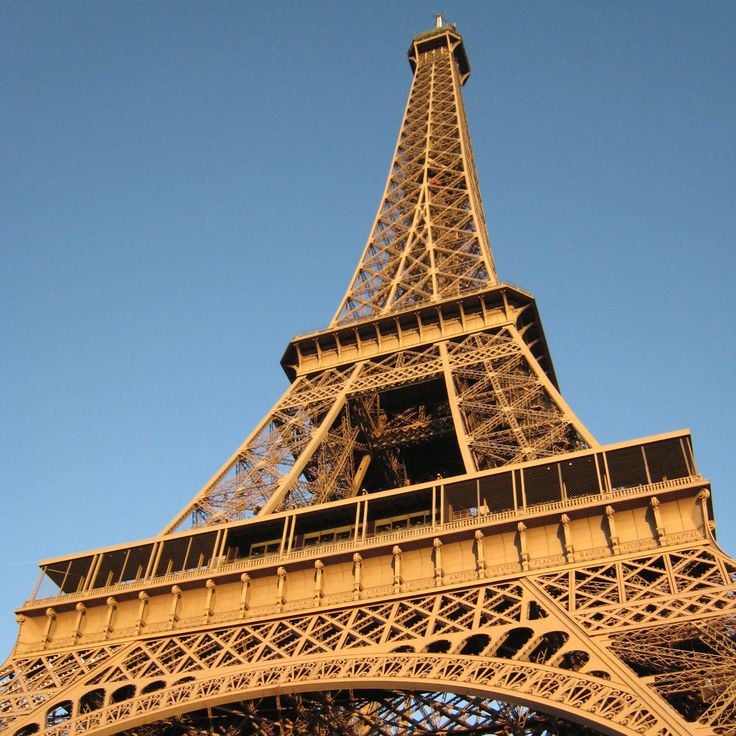
Paris, France
This 324-meter iron tower was built in 1889 for the World Exhibition and demonstrates the technical capabilities of French engineers in the late 19th century. The structure stands in the Champ de Mars and offers views across Paris and the surrounding region from three observation platforms. The steel framework weighs approximately 10,000 tons and was the tallest human-made structure in the world when completed. The tower receives several million visitors annually who can access the platforms by elevators or stairs.
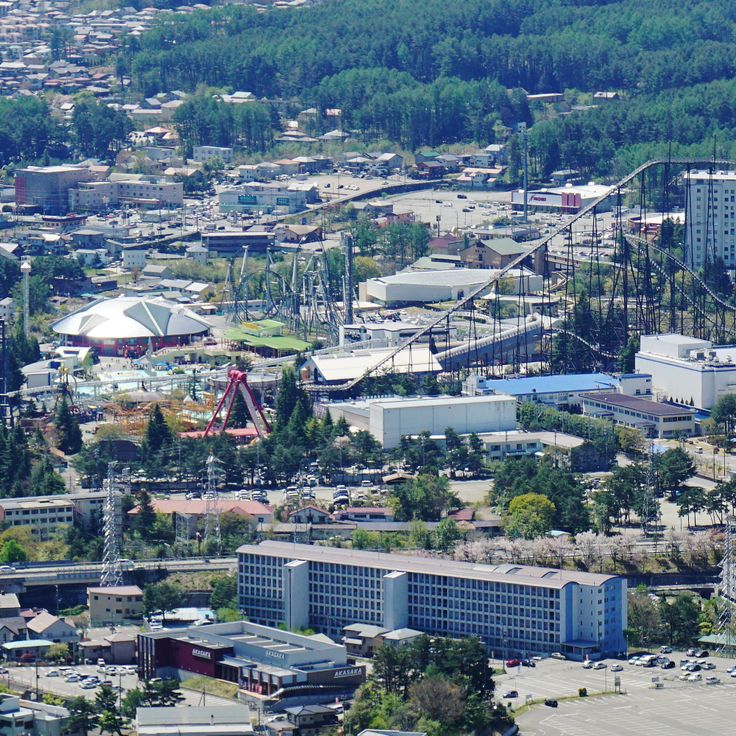
Fujiyoshida, Japan
This amusement park in Fujiyoshida sits at the northern base of Mount Fuji and operates four roller coasters engineered for extreme drops and acceleration. The facility includes rides that held records for tallest drop and fastest launch at the time of their opening, including one with a 79-degree descent and another reaching speeds of 107 miles per hour (172 kilometers per hour). The attractions use hydraulic launch systems and advanced restraint technology to generate intense gravitational forces. The park draws roughly two million visitors annually who come for the high-speed rides as well as themed attractions and shows, with the 12,388-foot (3,776-meter) peak of Mount Fuji forming a backdrop to the installations.
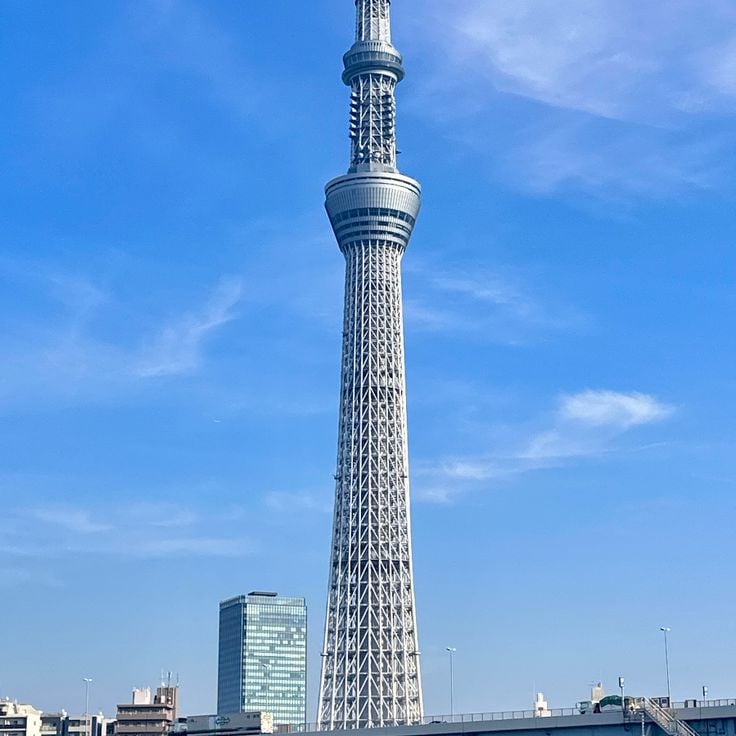
Tokyo, Japan
This tower reaches 634 meters in height and serves as a broadcasting facility with two observation decks and a shopping center at its base. The structure was completed in 2012 and replaced the older Tokyo Tower as the primary transmission site for digital television signals across the Kanto region. The lower observation deck sits at 350 meters, the upper at 450 meters, and both offer views across the entire metropolitan area and on clear days as far as Mount Fuji. The steel and reinforced concrete structure uses a vibration control system that absorbs earthquake motion, a necessary adaptation to Japan's seismic activity. Around the tower spreads a commercial district with restaurants, shops and an aquarium.
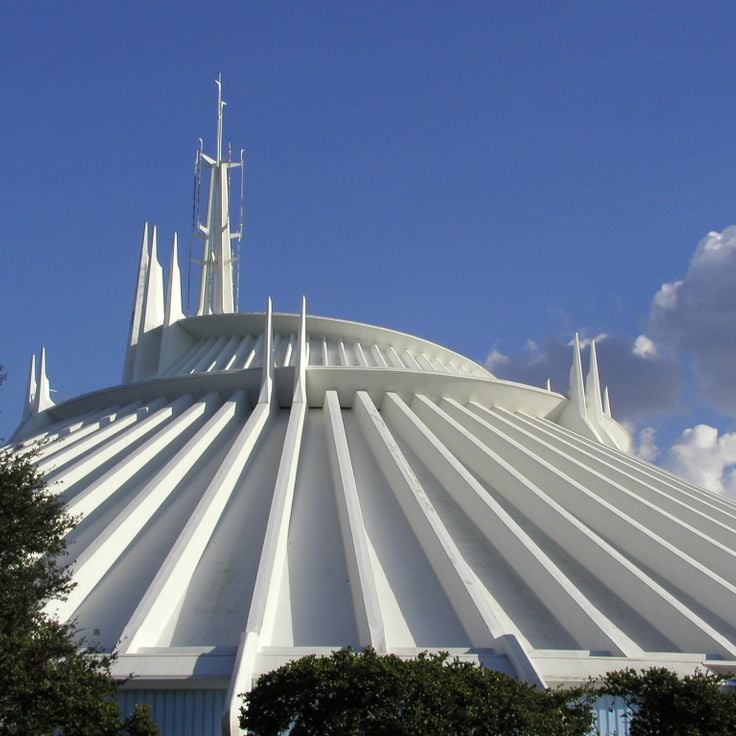
Santa Clarita, California, USA
This theme park in northern Los Angeles County operates 19 roller coasters across 260 acres of mountain terrain north of Santa Clarita. The collection includes steel constructions with vertical drops, multiple inversions, and launch acceleration systems reaching speeds above 100 mph. Full Throttle propels riders through a 160-foot looping structure, while Twisted Colossus uses a wood-steel hybrid design with dual racing tracks. X2 rotates seats 360 degrees during the ride, and Goliath reaches a height of 255 feet. The park sits roughly 35 miles northwest of downtown Los Angeles and draws several million visitors annually who come to experience technical developments in coaster engineering.
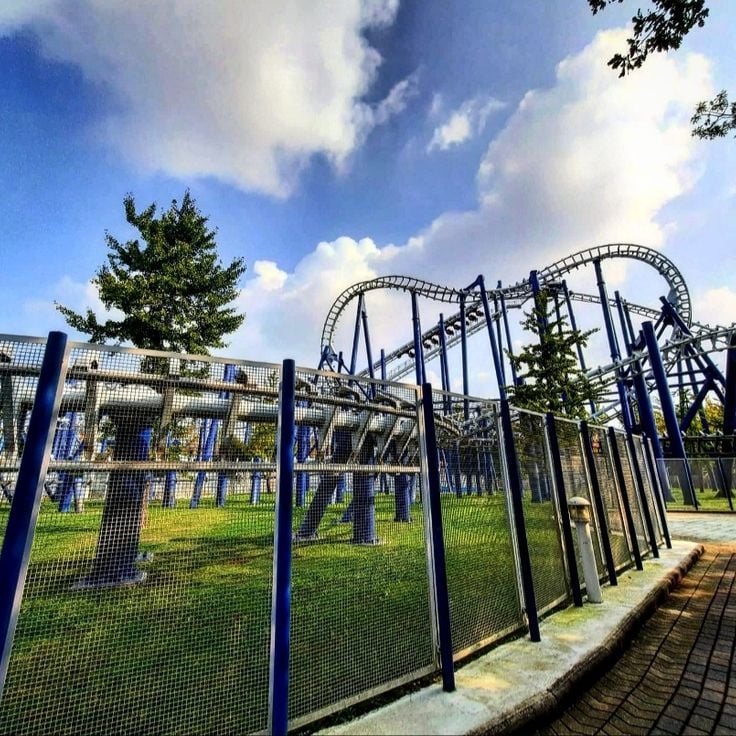
Castelnuovo del Garda, Verona, Italy
This amusement park in the hills south of Lake Garda draws 2.9 million visitors annually and ranks among Italy's most visited theme parks, spreading across 110 acres (45 hectares) with more than 30 rides. The grounds include seven themed areas featuring roller coasters such as Blue Tornado and Raptor, a water carousel, and the 130-foot (40-meter) Space Vertigo drop tower. The property is part of the Merlin Entertainments Group and combines classic carousel attractions with modern thrill rides. Since opening in 1975, the park has expanded continuously and now includes an aquarium with sharks and tropical fish, multiple stage shows, and dining facilities.
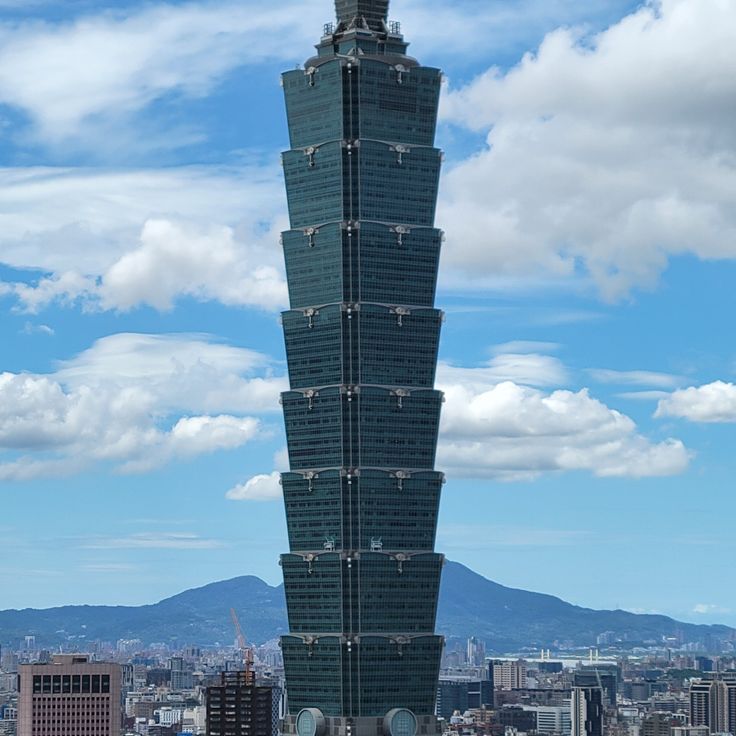
Taipei, Taiwan
This 508-meter skyscraper with 101 floors uses a tuned mass damper system to manage earthquake and typhoon loads. Taipei 101 held the title of world's tallest building from its opening in 2004 until 2010 and remains an example of structural engineering in seismically active regions. The central damper weighs 660 metric tons (728 tons) and swings freely between the 87th and 92nd floors, reducing the tower's movement during high winds and tectonic shaking by up to 40 percent. Visitors can view this engineering system up close before reaching the observation platforms on the 89th and 91st floors, which provide views across Taipei and the surrounding mountains.
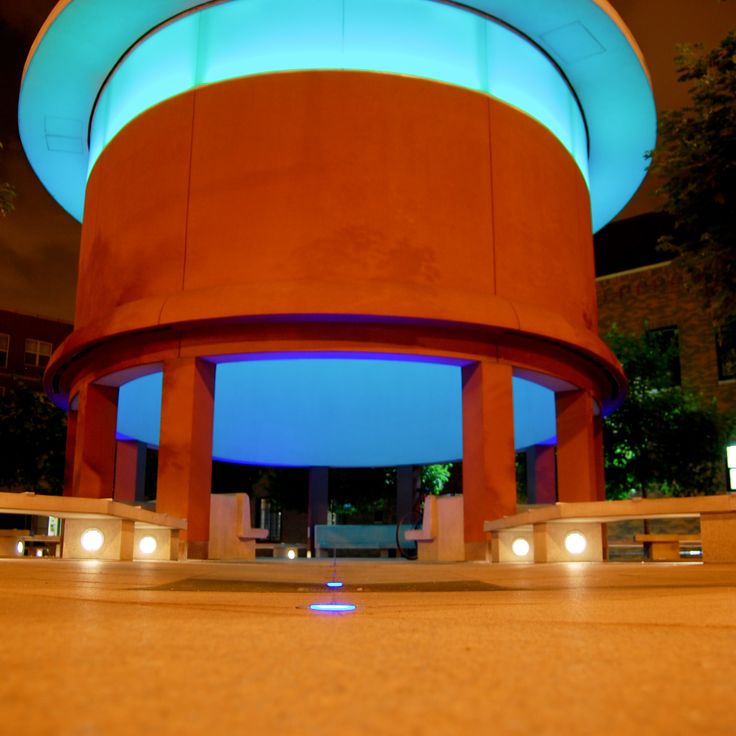
Canberra, Australia
This light installation in Canberra uses a precisely calculated roof aperture to frame the Australian sky in a new way. James Turrell designed the structure to sharpen perception of natural light—visitors lie on stone benches and observe how color and intensity shift with the hours. The circular opening acts as a frame for cloud movement, dusk transitions and nocturnal light conditions. The project combines exact engineering with the intention of making the physical properties of light and sky perceptible without distraction, and it extends this collection as a structure that applies technical skill to contemplative purposes.
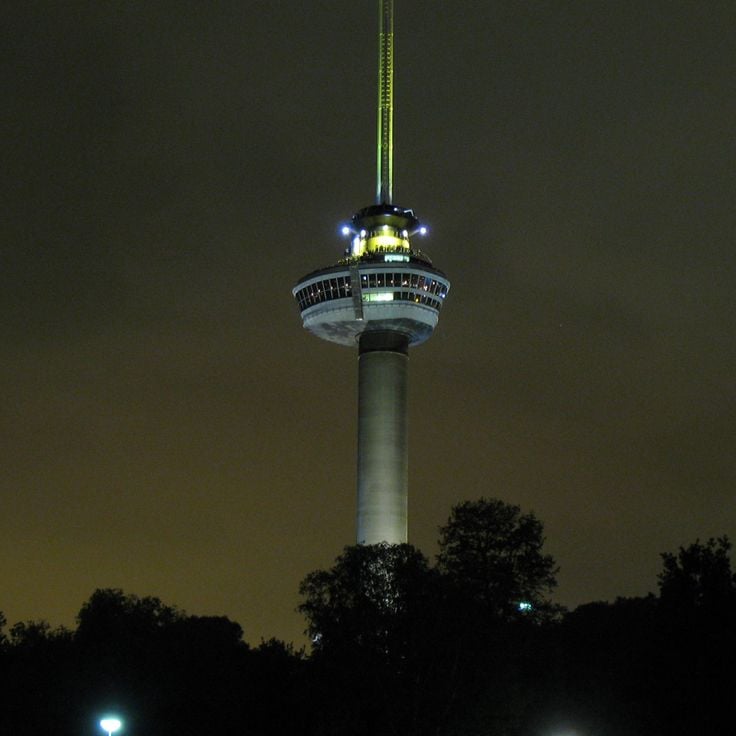
Rotterdam, Netherlands
This observation tower in Rotterdam rises 185 meters (607 feet) above the city and provides access to a rotating viewing platform from which visitors can survey the harbor, urban architecture, and surrounding region. The Euromast was completed in 1960 and originally served as an exhibition tower for the International Floriade garden exhibition before being extended with an additional section in 1970. The structure includes multiple levels with restaurants and observation areas, with the highest platform accessible via a rotating gondola that carries visitors to the summit. The engineering achievement reflects postwar development in the Netherlands, when Rotterdam was reestablishing itself as a modern port city. The tower remains one of the most visible landmarks in the city and attracts tens of thousands of visitors each year who want to experience technical innovation combined with practical observation architecture.
Zhangjiajie, China
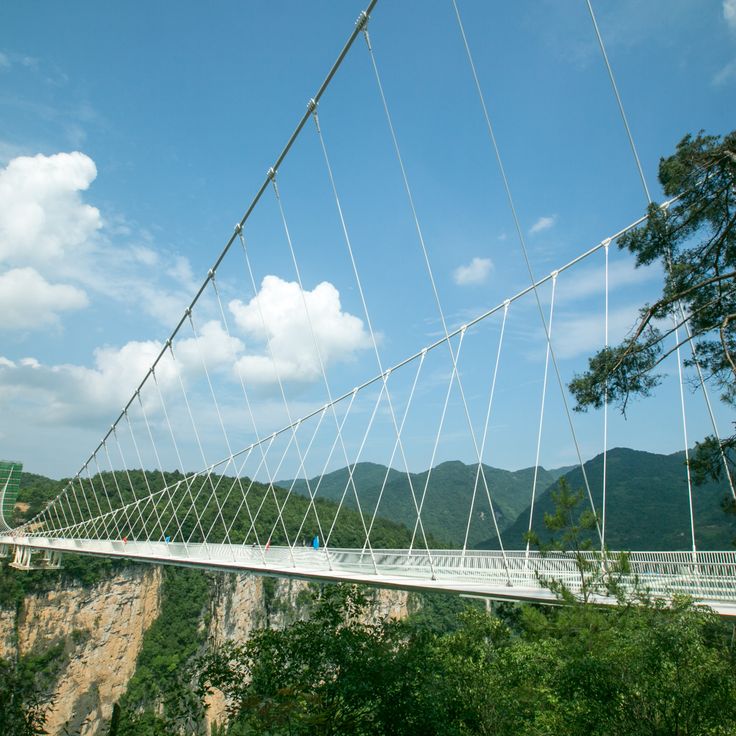
This glass-bottomed bridge in Zhangjiajie National Forest Park spans a 1,410-foot (430-meter) canyon at approximately 980 feet (300 meters) above the ground, allowing visitors to look straight down through the transparent deck made of layered composite glass while walking across a structure supported by around 120 steel cables, forming one of the longest and highest pedestrian suspension bridges with a transparent floor.
Galveston, Texas, United States
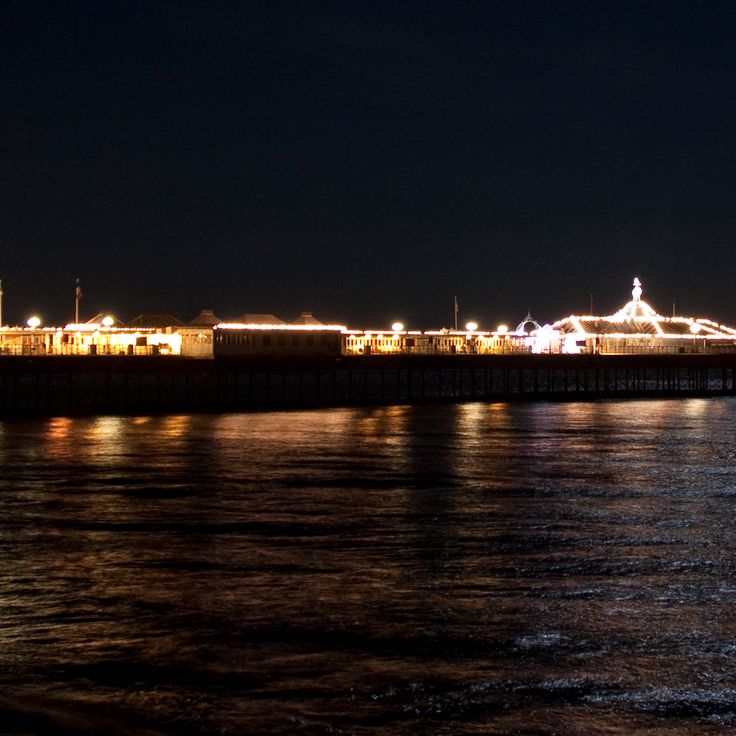
This entertainment pier extends 340 meters (1,115 feet) over the Gulf of Mexico, featuring 16 mechanical rides and attractions positioned above the water. The structure stands on the foundation of a historic pier dating to 1943, destroyed by Hurricane Ike in 2008 and reopened in 2012 with modern steel construction. Visitors encounter roller coasters, swing rides, and a Ferris wheel offering views across the Texas coast. The pier serves as a technical example of how engineers anchor recreational facilities in coastal waters and design them to withstand storm surge. Construction rests on steel pilings driven deep into the seabed and meets hurricane zone building codes. Drawing approximately 400,000 visitors annually, the facility ranks among the most visited coastal structures in Texas and demonstrates how historic pier sites can be reimagined for contemporary use while maintaining engineering standards for extreme weather conditions.
New York, USA
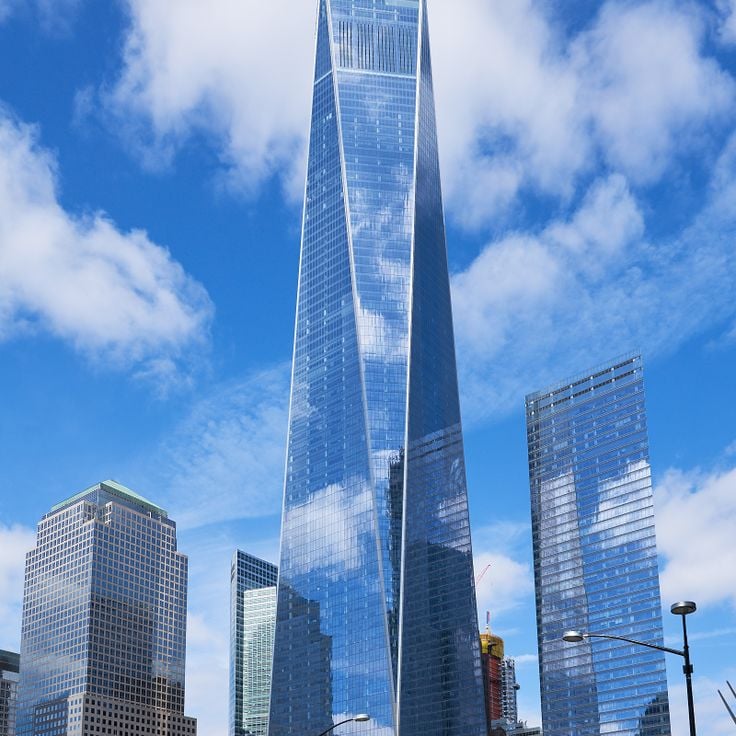
This 541-meter skyscraper with 94 floors stands on the site of the former World Trade Center and has served as the centerpiece of the rebuilt complex in Lower Manhattan since 2014. One World Trade Center reaches its symbolic height of 1,776 feet (541 meters) as a reference to the year of the Declaration of Independence, making it among the tallest towers in the Western Hemisphere. The observation deck on the 100th through 102nd floors provides views across New York, New Jersey and beyond, while the building itself demonstrates modern construction techniques through its reinforced foundation and prismatic glass facade.
Moscow, Russia
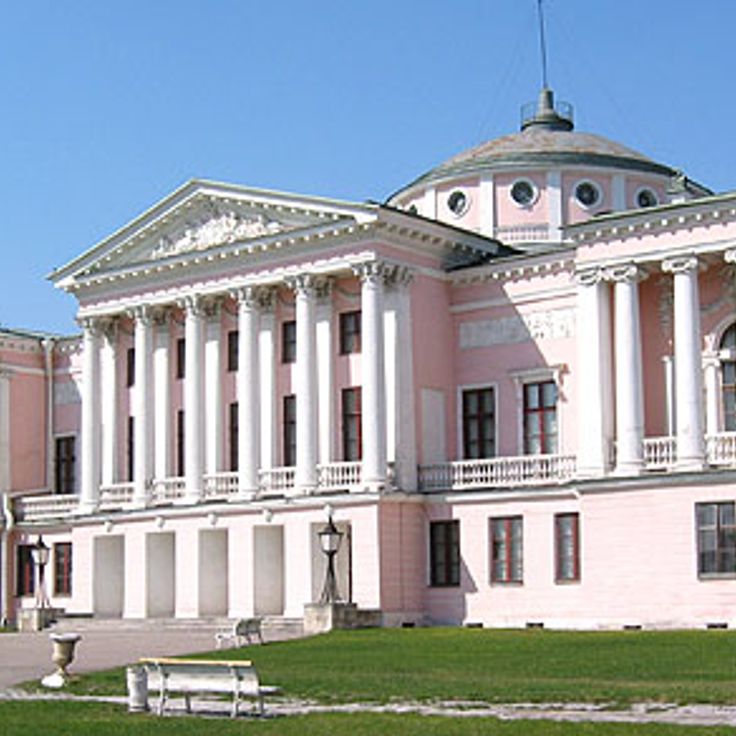
This 540-meter television tower was completed in 1967 and remains the tallest freestanding structure in Europe. Ostankino Tower was built during the Soviet era as a combined broadcasting and transmission facility, and it has dominated the Moscow skyline for more than five decades. With its observation deck at 337 meters (1,100 feet) and a revolving restaurant, the structure offers visitors insight into the technical challenges of high-rise construction in the 1960s. The design uses a central reinforced concrete shaft with tensioned steel cables to withstand wind and ice loads common in continental climates. The tower continues to serve its original function as a transmission site and ranks among the most technically significant structures in this collection of engineering landmarks.
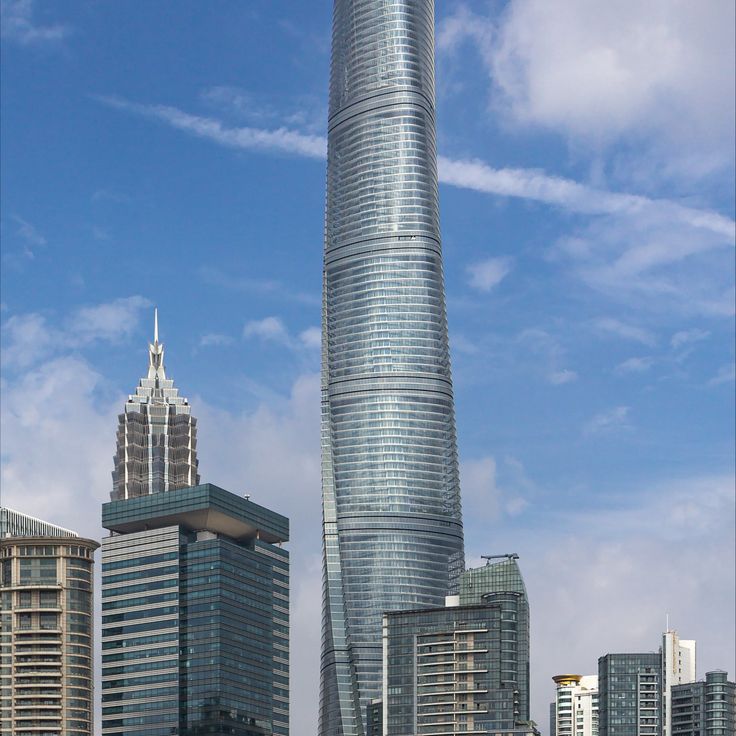
Shanghai, China
This 632-meter tower stands in the Pudong financial district and ranks as the second-tallest building in the world with 128 floors. The spiraling glass facade wraps around offices, retail space and a hotel, forming a double-skin structure that reduces energy consumption and wind loads. The rotation of the outer skin around the inner core makes the Shanghai Tower a case study in skyscraper engineering innovation. An observation deck at 546 meters (1,790 feet) offers views across Shanghai and the Huangpu River. Together with the Jin Mao Tower and the Shanghai World Financial Center, this structure forms one of the most recognizable skylines in Asia.
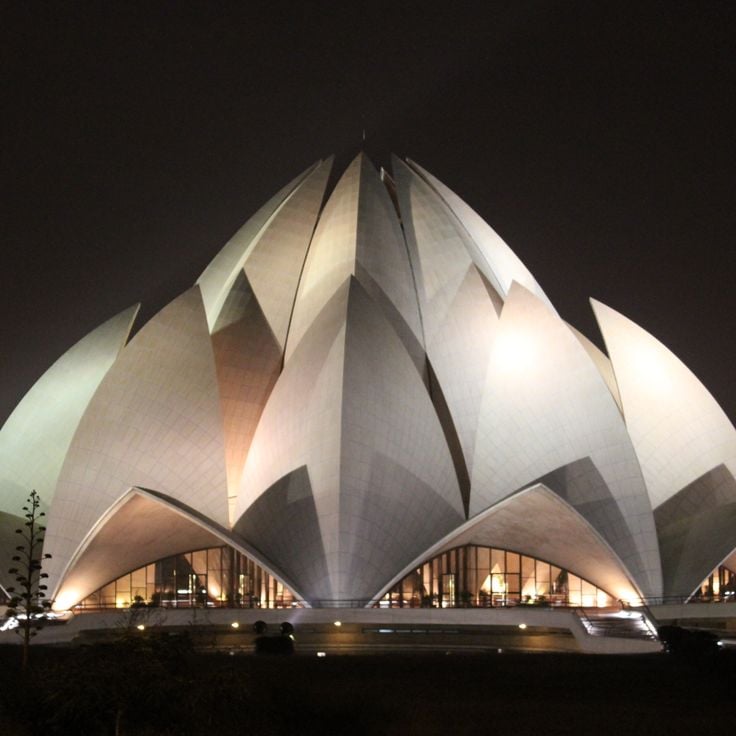
New Delhi, India
This Bahai temple brings together 27 white marble petals arranged to form nine sides, symbolizing the unity of all religions. Completed in 1986, the structure employs a shell design that requires no interior supports, reaching a height of 112 feet (34 meters) and accommodating up to 2,500 visitors at once. The exterior is clad in Greek Pentelic marble, the same material used in the Parthenon, while nine surrounding pools reflect the marble petals. The ventilation system relies on natural air circulation without mechanical cooling. Iranian architect Fariborz Sahba designed the building, demonstrating how traditional symbolism can merge with modern engineering. The temple receives approximately 4 million visitors annually and stands as one of the most technically ambitious religious structures built in the late 20th century.
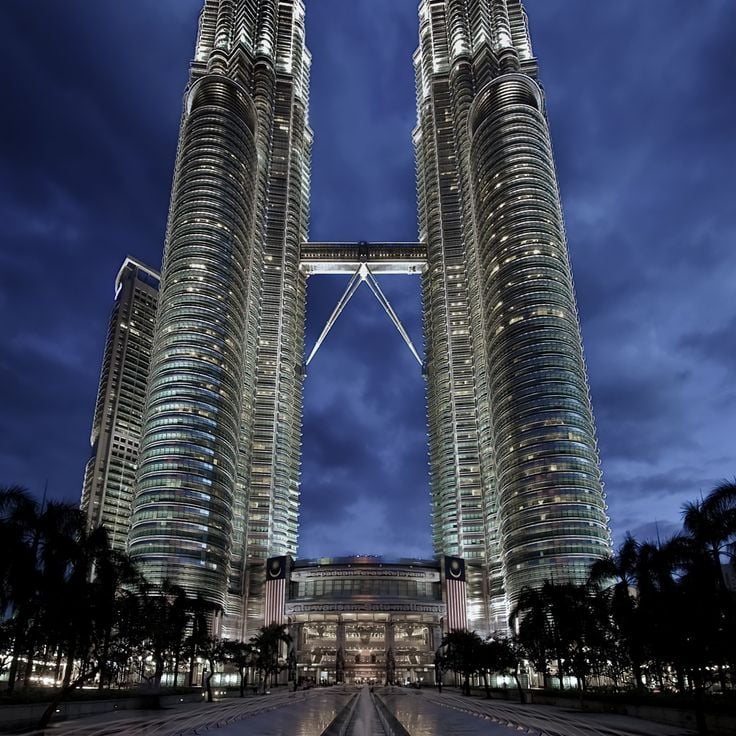
Kuala Lumpur, Malaysia
These steel and glass towers in Kuala Lumpur reach a height of 452 meters (1,483 feet) and rank among the most technically demanding skyscrapers built in Asia. Completed in 1998, the Petronas Twin Towers combine Islamic geometry with modern engineering: their floor plan follows an eight-pointed star derived from traditional Malaysian patterns. A sky bridge connects both towers at a height of 170 meters (558 feet) on the 41st floor and serves as an observation deck. The construction used high-strength concrete and a steel frame system that ensures earthquake resistance and wind stability. With 88 floors, the Petronas Twin Towers demonstrate the technical possibilities of late 20th-century high-rise construction and stand among the most visited engineering landmarks in Southeast Asia.
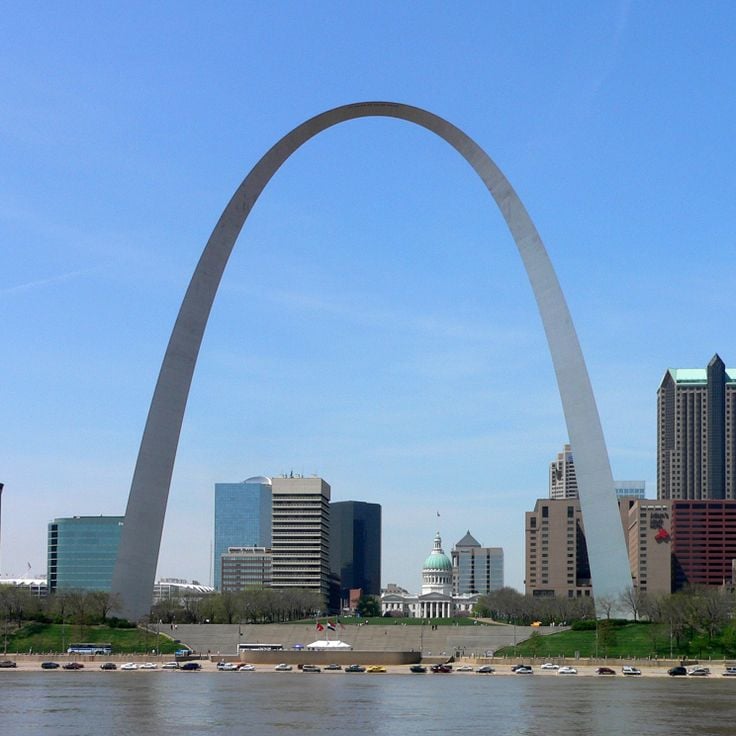
St. Louis, United States
This stainless steel arch rises 192 meters (630 feet) and spans 192 meters at its base, forming a perfect symmetrical parabola that symbolizes westward expansion in United States history. The Gateway Arch was constructed between 1963 and 1965 to a design by architect Eero Saarinen and stands as the tallest human-made monument in the country. A tram system inside transports visitors to the observation platform at the top, where views extend across the Mississippi River and downtown St. Louis. This engineering achievement combines precision fabrication with symbolic meaning, drawing millions of visitors each year who come to appreciate both its architectural form and historical significance.
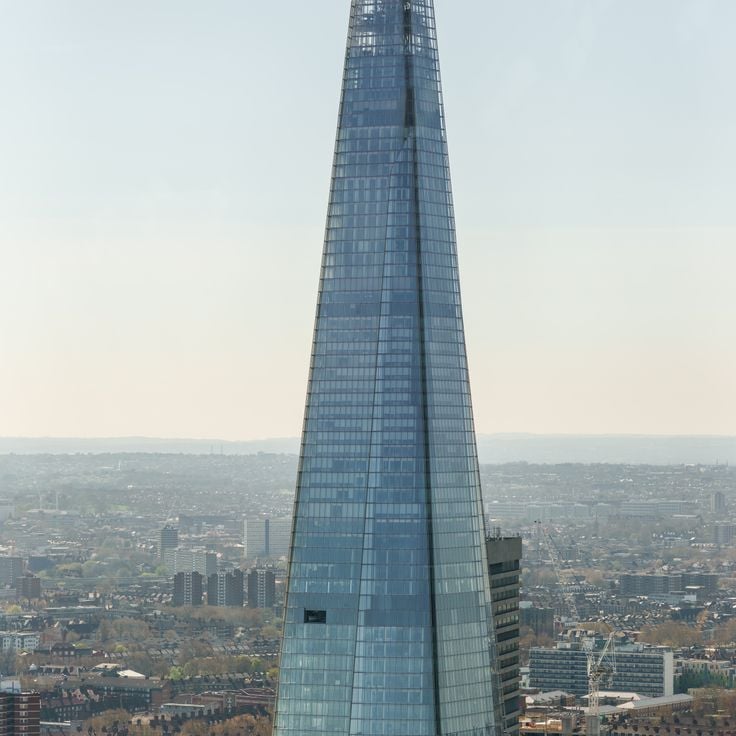
London, United Kingdom
This 310-meter glass tower rises 72 floors above London, offering observation galleries with city views that extend across the Thames and surrounding districts. The Shard was completed in 2012 and houses offices, restaurants, apartments, and public viewing areas spread across multiple levels. Its distinctive tapered glass form was designed by Italian architect Renzo Piano and represents one of the tallest structures in Western Europe. Visitors reach the upper floor observation decks via high-speed elevators, where panoramic perspectives take in landmarks throughout the capital. The tower stands in Southwark on the south bank of the Thames, immediately adjacent to London Bridge Station, and serves as a prominent vertical marker in the city skyline.
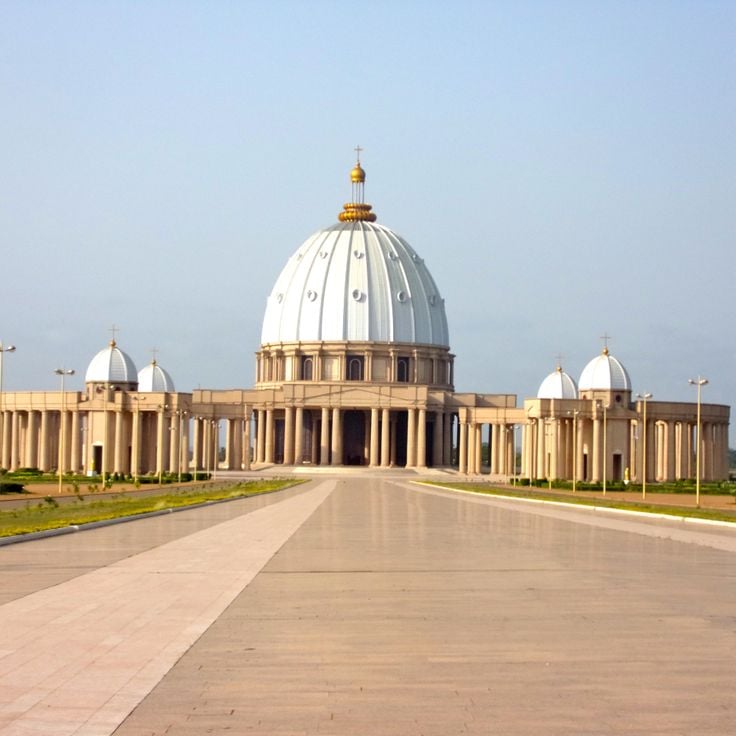
Yamoussoukro, Ivory Coast
This basilica in the administrative capital of Ivory Coast was built between 1985 and 1989 to designs by Lebanese-French architect Pierre Fakhoury, commissioned by President Félix Houphouët-Boigny. The dome reaches 158 meters (518 feet) in height, surpassing St. Peter's Basilica in Rome, and forms the centerpiece of a complex covering 30,000 square meters (323,000 square feet). The construction employs air-conditioned concrete elements and imported stained glass from France spanning 7,400 square meters (80,000 square feet). The interior accommodates approximately 18,000 people across seating and standing areas. As a feat of large-scale construction, this church represents the application of modern building techniques in a tropical climate and stands as an example of postcolonial architectural ambition in West Africa.
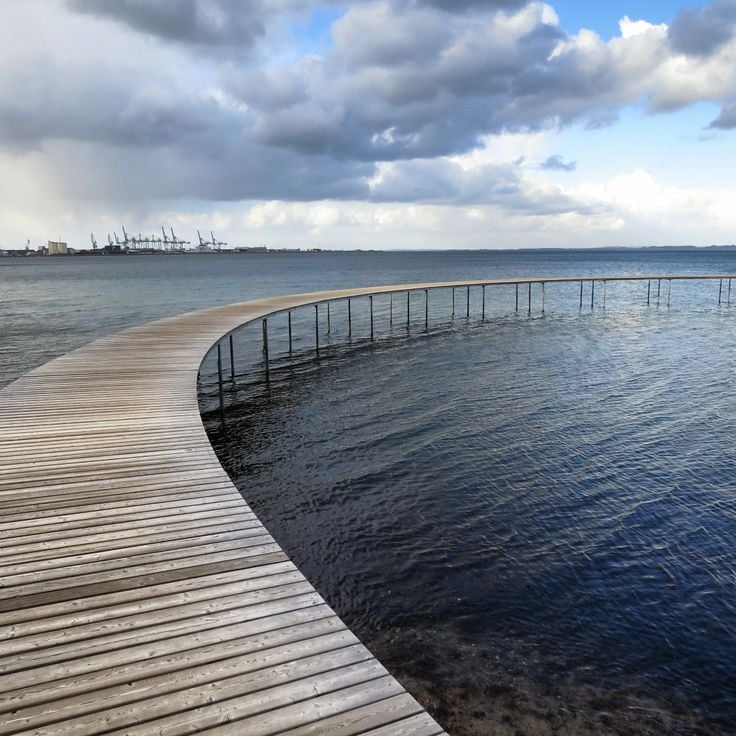
Aarhus, Denmark
This wooden circular structure extends 60 meters (197 feet) into the water and was created as a temporary art installation that has since become a permanent fixture on the Aarhus Ø peninsula. The walkway forms a complete circle with a diameter of 40 meters (131 feet), leading visitors over the surface of Aarhus Bay while continuously shifting perspective and revealing the shoreline from changing angles. The bridge demonstrates how technical precision and architectural design can combine to create a functional structure that also serves as a walkable sculpture, carrying visitors directly above the water surface.
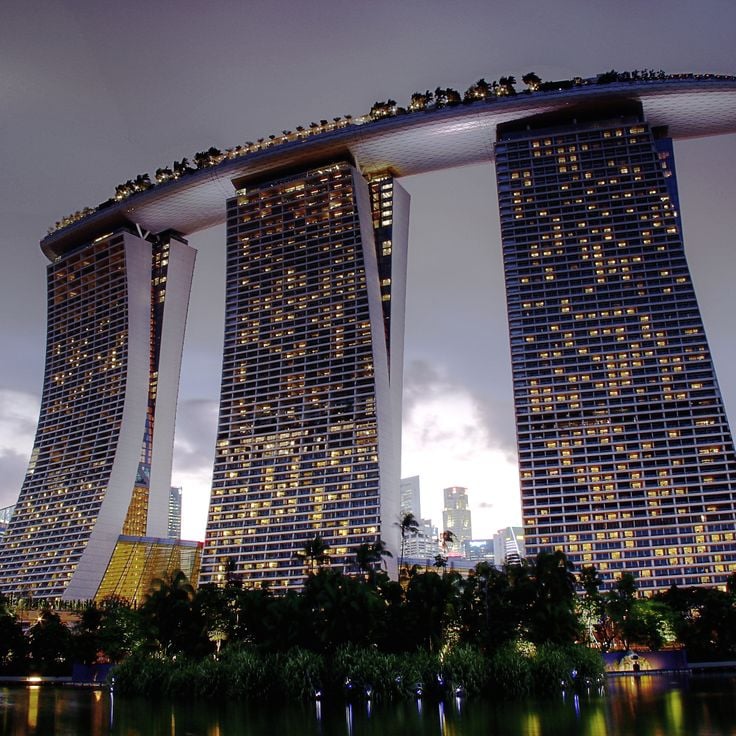
Singapore
This hotel complex consists of three 55-story towers connected by a 340-meter platform at a height of 200 meters (656 feet). The rooftop supports a 150-meter (492-foot) swimming pool that extends across all three buildings, offering views over Singapore's waterfront district. The structure was completed in 2010 and represents one of Southeast Asia's largest construction projects, with a foundation system resting on thousands of concrete piles. Visitors can access the observation deck adjacent to the pool, which overlooks the Marina Bay waterfront park and the city skyline. The complex combines hotel operations with conference space and a casino across multiple floors.
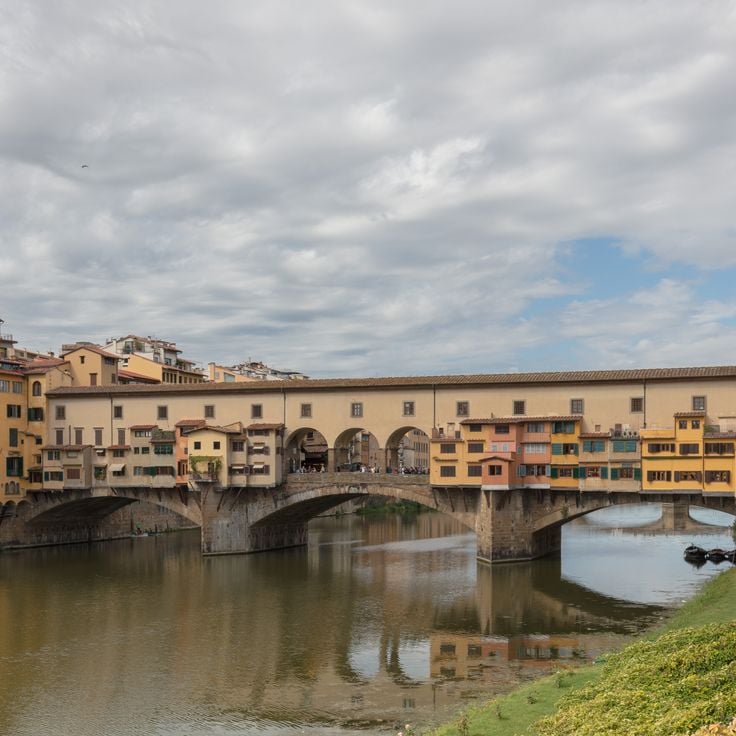
Florence, Italy
This medieval stone bridge spans the Arno and has been known for its two-story buildings for more than four centuries. Since 1593, jewelry stores have occupied the ground floor, a tradition initiated by Duke Ferdinando I when he replaced the previous butchers and tanners with goldsmiths. Ponte Vecchio was originally rebuilt in 1345 after a flood disaster and is among the few bridges in Florence to survive the Second World War without destruction. The upper part of the bridge carries the Vasari Corridor, an enclosed passageway that connects Palazzo Vecchio with Palazzo Pitti.
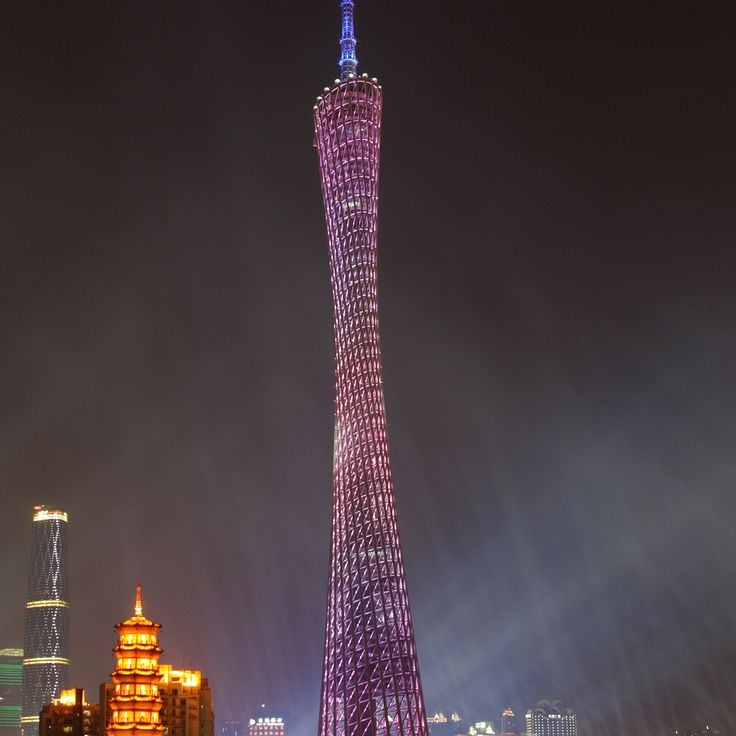
Guangzhou, China
This 600-meter transmission tower in Guangzhou stands on an island in the Pearl River and ranks among the tallest broadcasting towers in the world. The spiral steel structure supports a glass exterior fitted with 16 million LED lights that display programmed sequences after dark. An open-air observation deck at 450 meters offers views across the Pearl River Delta. Built between 2005 and 2009, the Canton Tower represents one of the most technically demanding structures in this collection and was designed as a television and radio transmission facility for the 2010 Asian Games. The twisted hyperboloid structure uses 45,000 tons of steel and achieves its form through 24 column-like supports that spiral around the central axis.
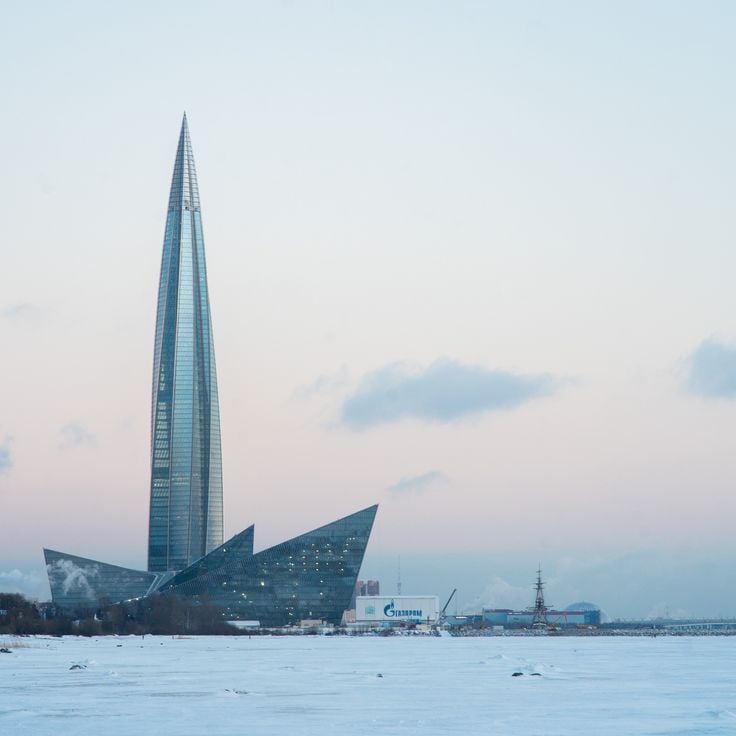
Saint Petersburg, Russia
This 462-meter skyscraper with 87 floors uses a spiral structural design that reduces wind loads, making it one of the most distinctive examples of modern engineering in the collection. The foundation extends 82 meters (269 feet) deep, a technical necessity due to the soft ground near the Gulf of Finland. Completed in 2019, the Lakhta Center is the tallest building in Europe. The spiral design distributes structural loads throughout the tower's height while allowing for large, column-free interior spaces.
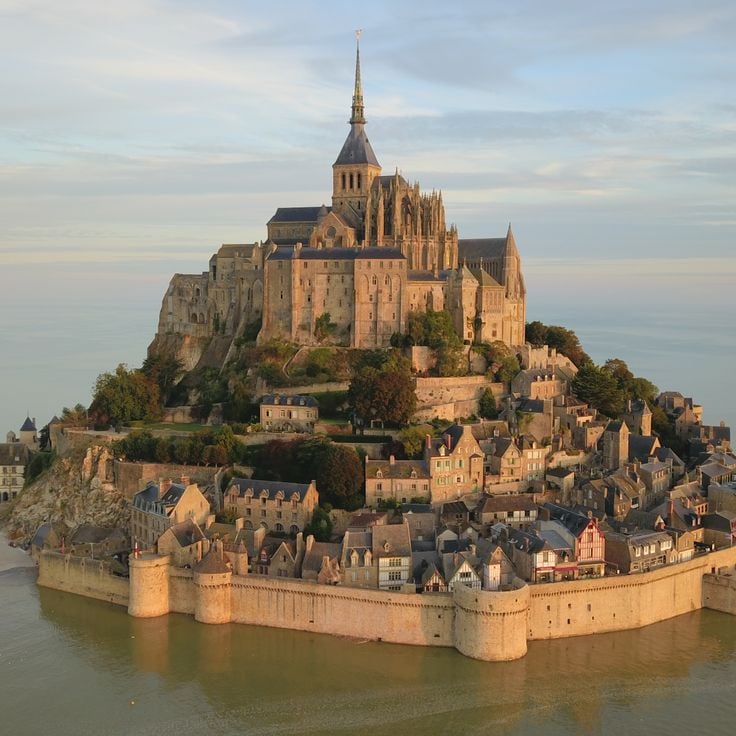
Normandy, France
This island monastery rises 80 meters (260 feet) above sea level off the Normandy coast and becomes cut off from the mainland at high tide. The Mont Saint-Michel abbey stands on a granite outcrop, its fortified walls and religious buildings dating from 708, when Bishop Aubert of Avranches established the first sanctuary here. The medieval monastery complex developed over centuries into an architectural challenge, requiring builders to devise solutions for constructing on steep, uneven rock. Visitors reach the island via a raised causeway designed to accommodate tidal flows, and can explore the Romanesque and Gothic building phases of the abbey, which remains one of the most complex medieval constructions in Europe.
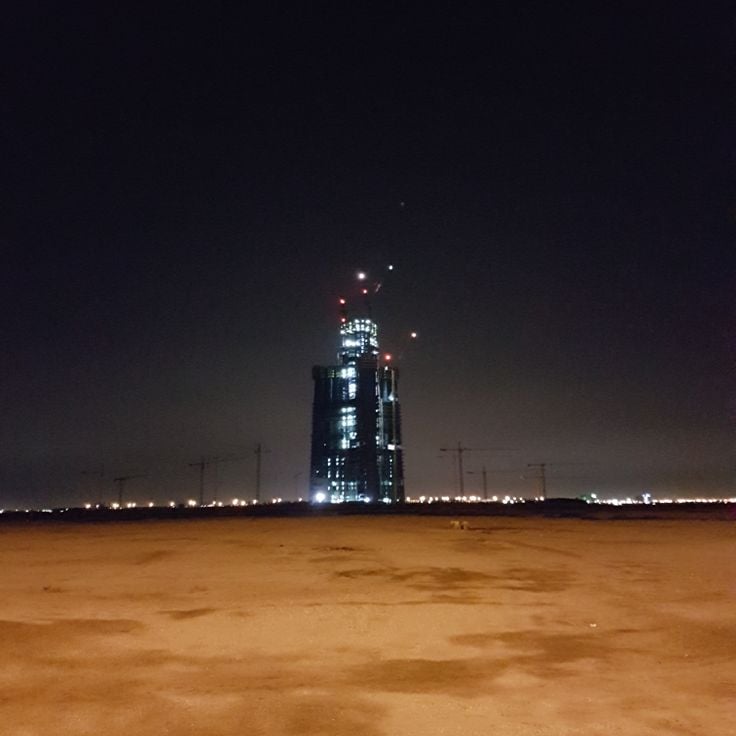
Jeddah, Saudi Arabia
This skyscraper under construction aims for a height of 1,000 meters (3,281 feet) with 167 floors, which would make it the tallest building in the world. The triangular footprint and sloped exterior walls of the Jeddah Tower reduce wind forces, a critical requirement for structures at this elevation. The project began in 2013 and is part of a larger urban development. Though construction has been interrupted multiple times, the structure remains a notable example of technical ambition in high-rise engineering, extending the boundaries of what steel and concrete can achieve in vertical construction.
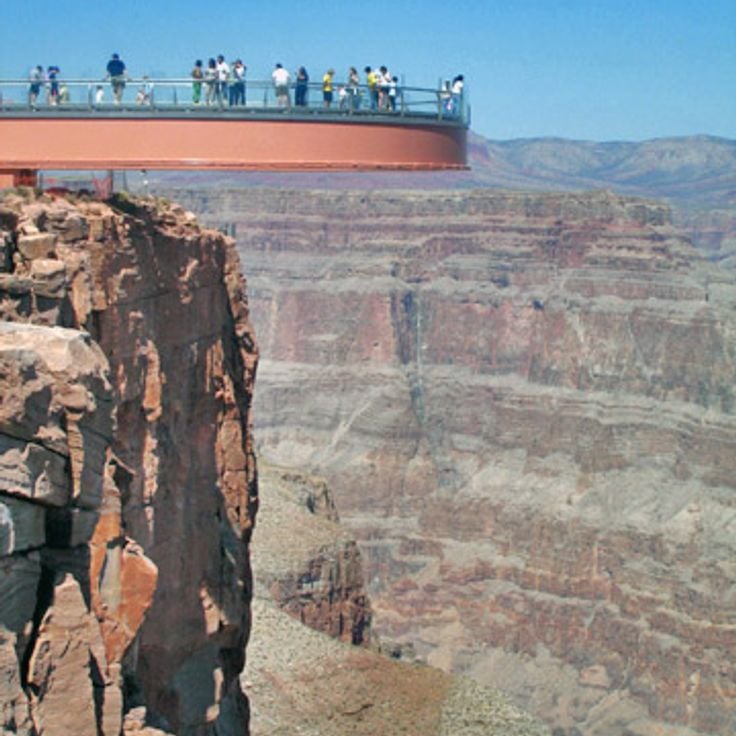
Arizona, United States
This glass observation platform extends 70 feet (21 meters) beyond the rim of the Grand Canyon, allowing visitors to look directly down through a transparent floor into the gorge 4,000 feet (1,200 meters) below. Completed in 2007 by the Hualapai Nation on their tribal land at the western edge of the canyon, the Skywalk uses a steel frame structure clad in laminated composite glass panels. The platform can support up to 120 people at once and is engineered to withstand wind speeds exceeding 100 miles per hour (160 kilometers per hour). Access is through the Hualapai reservation; visitors must store personal items including cameras in lockers before stepping onto the glass surface.
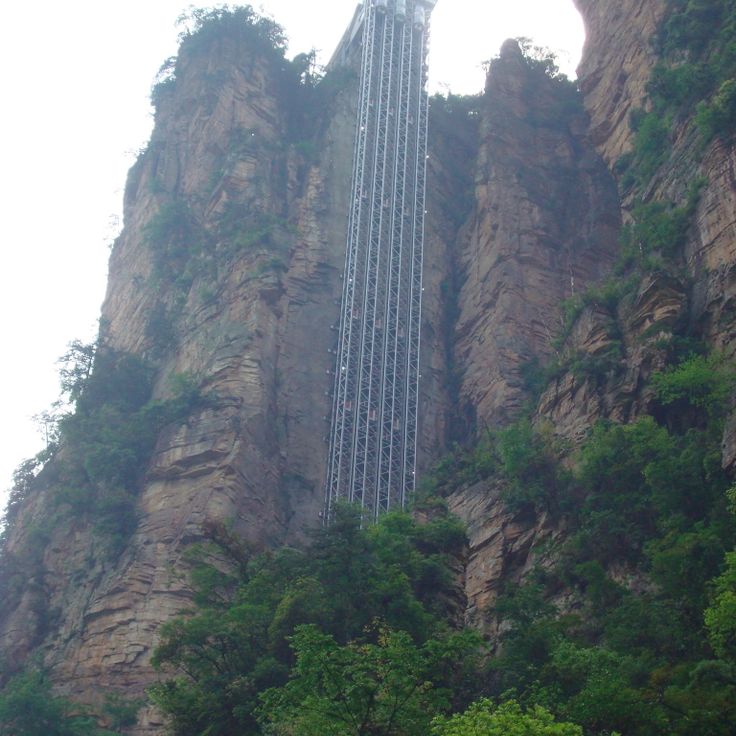
China
This glass elevator in the Wulingyuan Scenic Area carries visitors 1,070 feet (326 meters) up a sandstone cliff face in Zhangjiajie National Forest Park. Completed in 1999, the installation consists of three double-deck cars that each accommodate up to 50 passengers and complete the ascent in under two minutes. The structure combines reinforced concrete with glass walls, providing views of the surrounding quartzite sandstone formations and forested valleys during the ride.
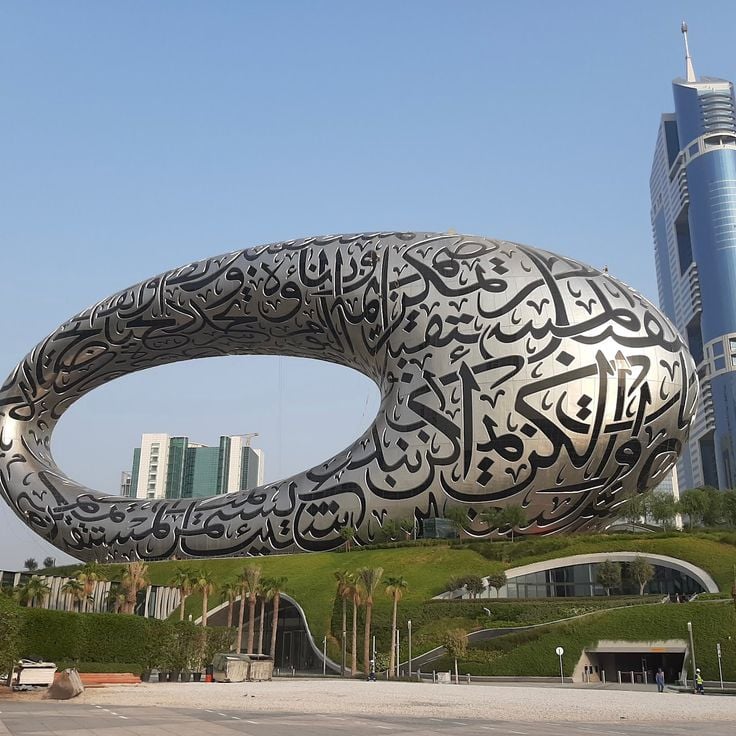
Dubai, United Arab Emirates
This museum in Dubai's Financial District houses rotating exhibitions on future technology, sustainability and artificial intelligence inside a cantilevered steel and glass structure that rises seven stories. The facade displays Arabic calligraphy quoting the ruler of Dubai, while inside visitors explore interactive displays and prototypes addressing climate change, space colonization and biotechnology developments. The building was constructed without supporting columns and uses parametric design, with the structure serving as both museum and laboratory for emerging technologies.
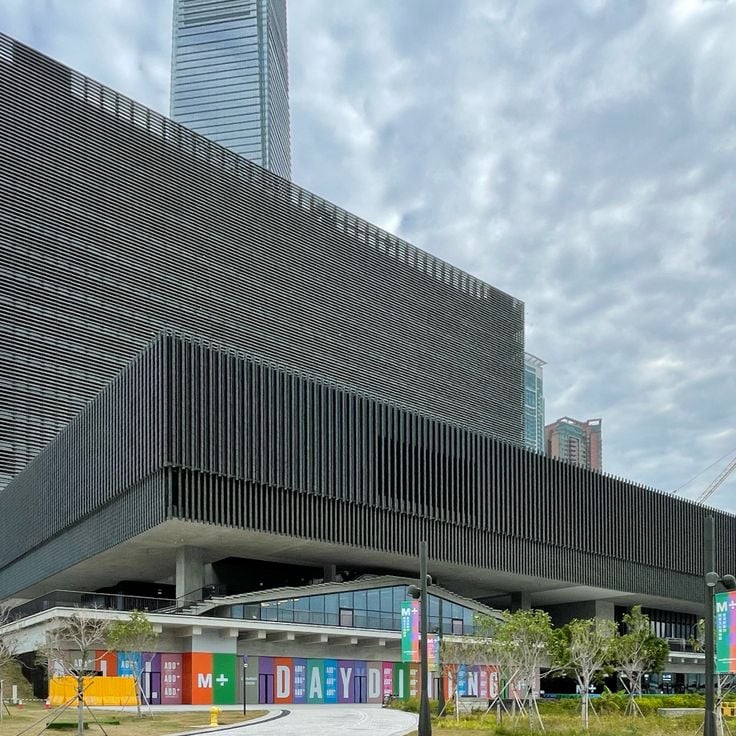
West Kowloon, China
This museum is Asia's largest institution for contemporary visual culture, occupying a 700,000 square foot (65,000 square meter) building in the West Kowloon Cultural District designed by Herzog & de Meuron. The extensive collection includes over 8,000 objects spanning design, architecture, photography and moving image with a focus on 20th and 21st century work from Hong Kong, China and the broader Asian region.
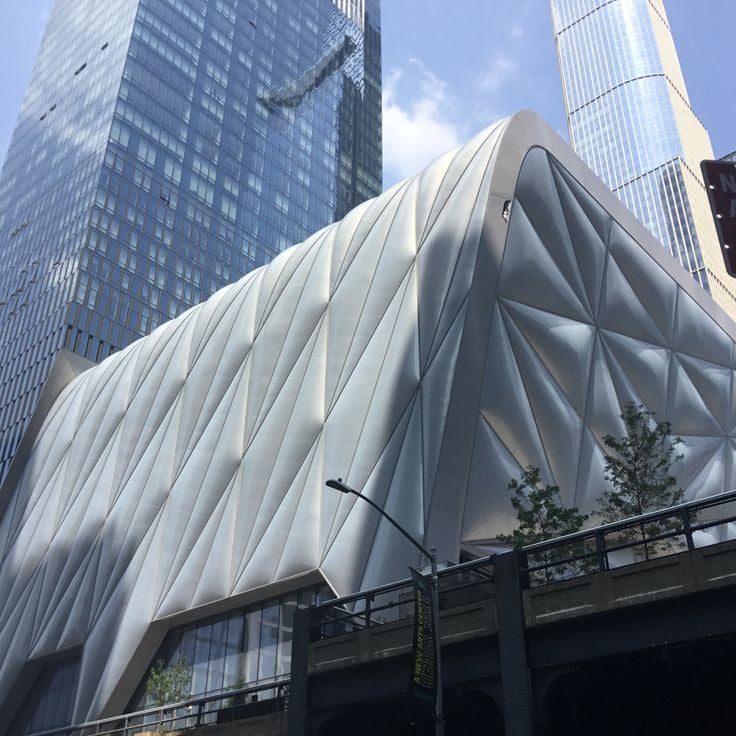
New York City, United States
The Shed at Hudson Yards features a movable outer shell that extends and retracts on rails to create flexible space for exhibitions, performances and public gatherings. Opened in 2019, the center was designed by Diller Scofidio + Renfro and Rockwell Group and uses a 120-foot (37 m) tall telescoping steel framework that can double the main hall, known as the McCourt, when needed. The building houses eight levels of galleries, rehearsal spaces and event areas and hosts multidisciplinary programming from visual art to music and theater.
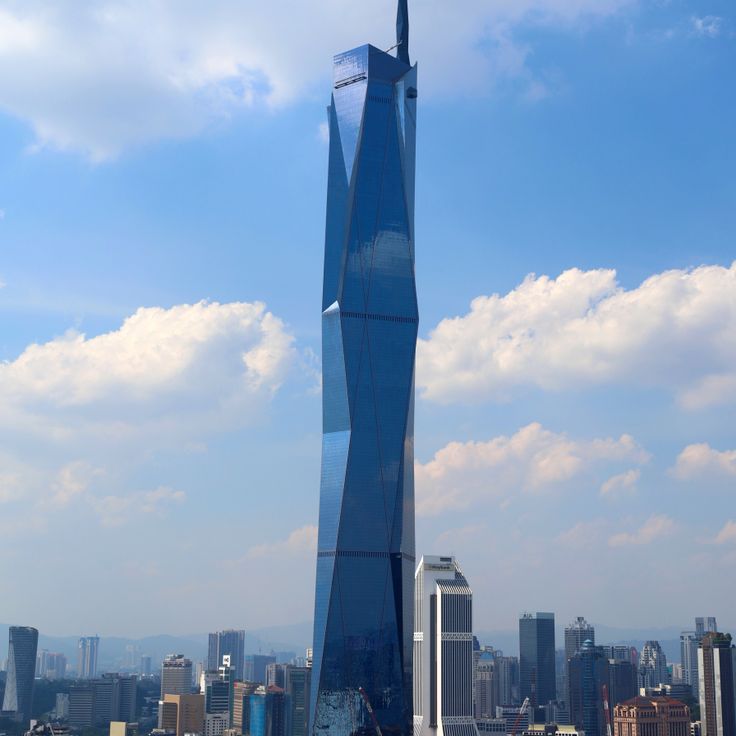
Kuala Lumpur, Malaysia
This mixed-use skyscraper reaches 2,227 feet (678.9 meters) and stands as the world's second tallest building as of 2023. The 118 floors include office space, a hotel and residential units, while the observation deck on the 118th floor provides views across the Malaysian capital and surrounding mountains. The building was designed by Fender Katsalidis Architects, featuring a triangular glass facade that references tropical vegetation. Construction began in 2014 and was completed a decade later, with the spire echoing the same number as Malaysia's national monument. Visitors can use elevators that rank among the fastest in the world, ascending to the observation deck in less than a minute. The tower stands in the center of the Tun Razak Exchange district, a new financial zone attracting international firms.
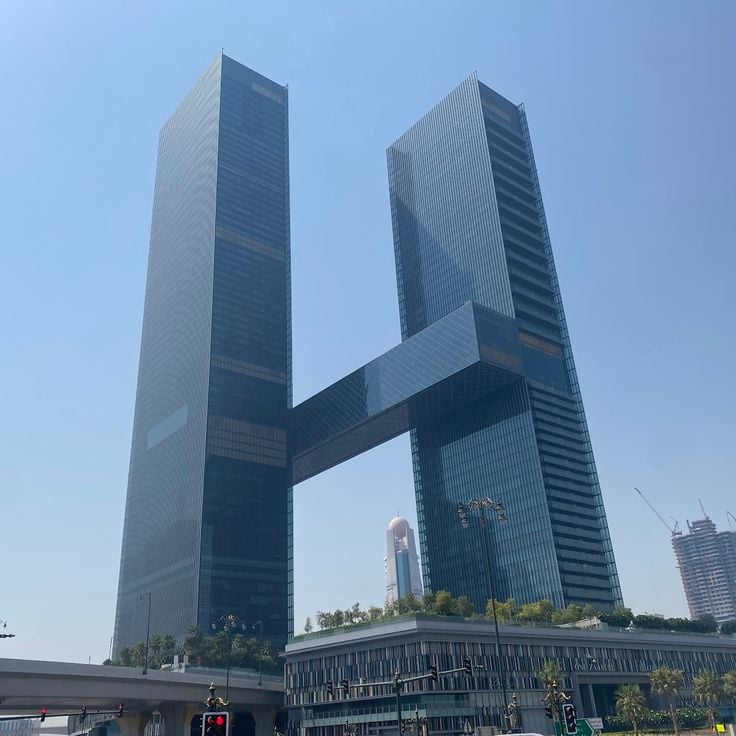
Dubai, United Arab Emirates
The world's tallest horizontal building connects two towers at 330 feet (100 meters) through a 740-foot (226-meter) cantilevered bridge that houses offices, residences and a luxury hotel. Completed in 2024, One Za'abeel reaches an overall height of 1,000 feet (304 meters) and demonstrates new approaches to high-rise construction through its suspended link structure, which operates without central supports and weighs over 13,000 tons.
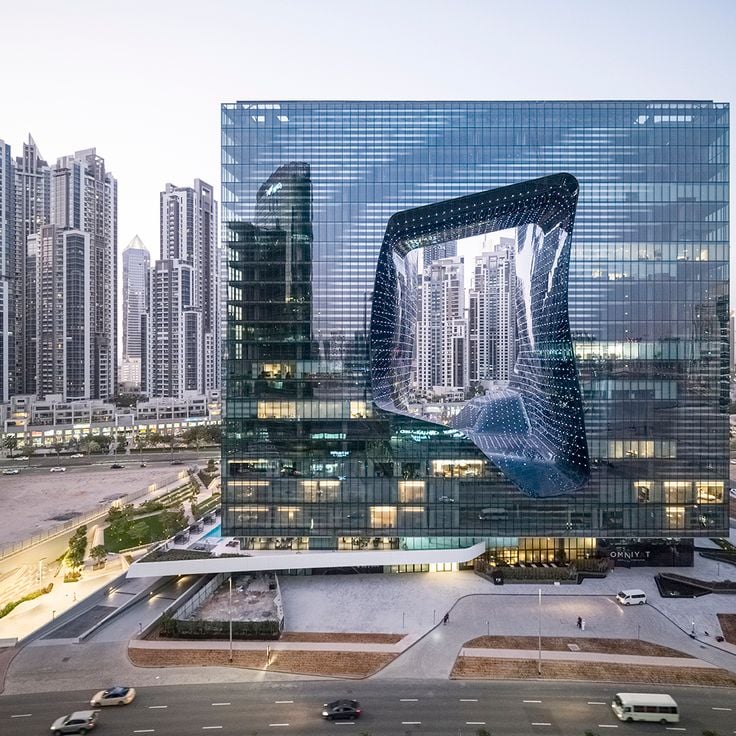
Dubai, United Arab Emirates
This 21-story office and hotel building in Dubai's Business Bay district features a distinctive cube shape with a void carved through its center. The facade consists of over 4,000 glass panels that connect the outer square envelope to the interior cavity, creating an illusion of fluidity in the building structure. The construction required advanced parametric design software and custom-fabricated facade elements, as no two panels are identical. The building houses a boutique hotel and premium office space, accessible from Business Bay Metro station.
Similar collections
World's tallest skyscrapers: the map of the tallest towers
Unforgettable skyscrapers of the world
Modern 21st-century architecture: skyscrapers, museums, and landmark buildings
Industrial constructions: global technical and architectural innovations