See the monuments around you in AROpen chests in the app
Around Us is built for your phone — point your camera at the streets and discover the monuments and places around you in augmented reality.Around Us is built for your phone — chests unlock when you walk, explore and capture nearby places.
Postmodern architecture worldwide: 50 buildings you should see
Postmodern architecture emerged in the 1970s as a response to the rigid principles of modernism, reintroducing color, ornament, and historical references into contemporary building design. The movement evolved over decades, producing structures that challenge conventional forms and experiment with different materials and surfaces. These buildings demonstrate varied approaches to design, from playful facades to complex geometric constructions, showing how architects employ new technologies while engaging with historical stylistic elements.
The collection includes cultural institutions such as the Guggenheim Museum Bilbao and Casa da Música in Porto, public buildings like Seattle Central Library and Almere City Hall, and religious structures such as the Jubilee Church in Rome. Other examples include the SIS Building in London, Dancing House in Prague, and Niterói Contemporary Art Museum in Rio de Janeiro. The Louvre Pyramid in Paris and the Wexner Center for the Arts in Columbus show different interpretations of postmodern principles. The Piazza d'Italia in New Orleans with its colored colonnades and the Portland Building with its decorated facade represent early postmodern works in the United States.
Postmodern architecture worldwide: 50 buildings you should see
Postmodern architecture emerged in the 1970s as a response to the rigid principles of modernism, reintroducing color, ornament, and historical references into contemporary building design. The movement evolved over decades, producing structures that challenge conventional forms and experiment with different materials and surfaces. These buildings demonstrate varied approaches to design, from playful facades to complex geometric constructions, showing how architects employ new technologies while engaging with historical stylistic elements.
The collection includes cultural institutions such as the Guggenheim Museum Bilbao and Casa da Música in Porto, public buildings like Seattle Central Library and Almere City Hall, and religious structures such as the Jubilee Church in Rome. Other examples include the SIS Building in London, Dancing House in Prague, and Niterói Contemporary Art Museum in Rio de Janeiro. The Louvre Pyramid in Paris and the Wexner Center for the Arts in Columbus show different interpretations of postmodern principles. The Piazza d'Italia in New Orleans with its colored colonnades and the Portland Building with its decorated facade represent early postmodern works in the United States.
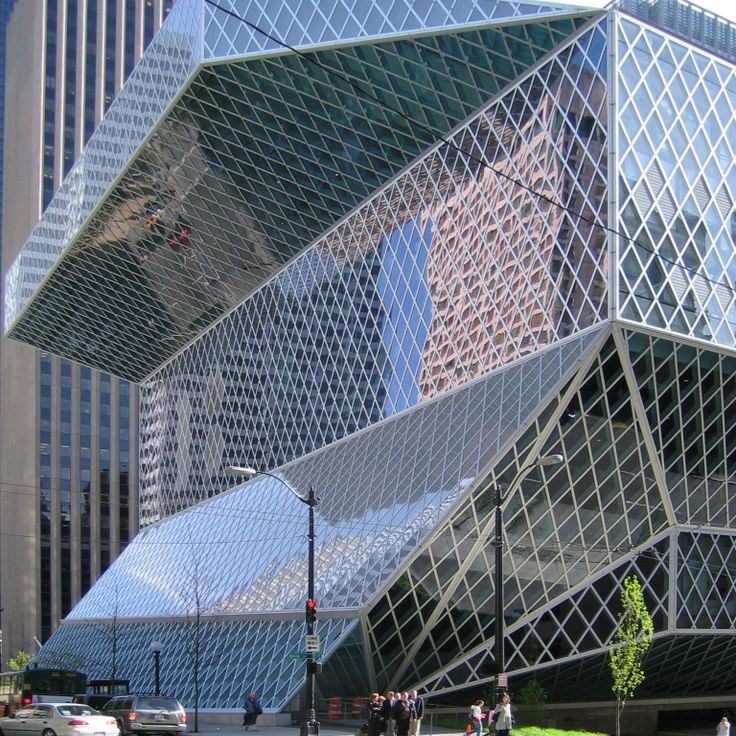
This library spans eleven floors and was constructed from steel and glass, with its geometric outer structure representing a distinct example of postmodern architecture. Opened in 2004, the building was designed by Rem Koolhaas and Joshua Prince-Ramus and combines the functional requirements of a modern library with sculptural forms. The Seattle Central Library houses more than 1.4 million media items and serves as an important cultural center in the heart of the city. Its transparent facade and the unconventional angles of the construction reflect the innovative approach of contemporary building design since the 1970s.
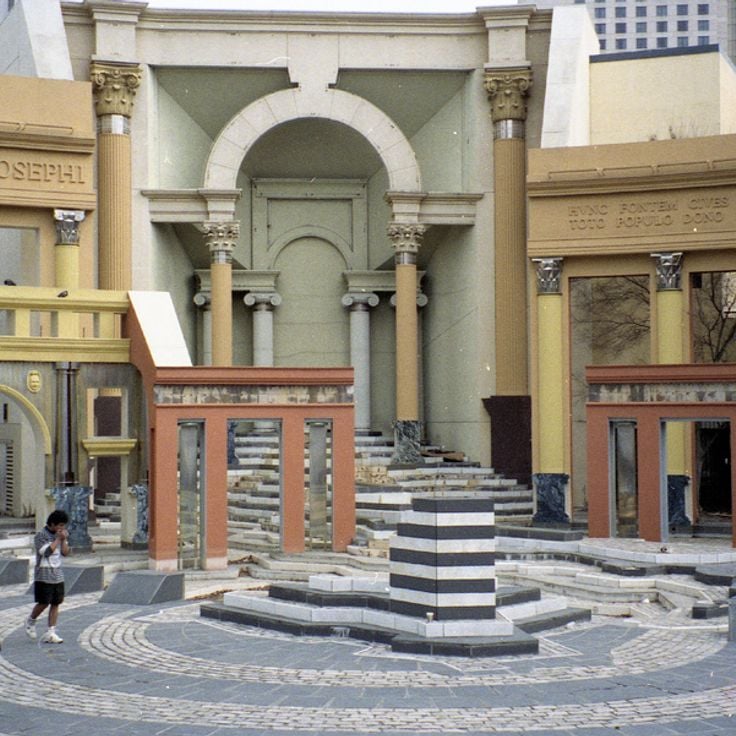
This 1978 public square combines classical architectural elements with contemporary postmodern approaches. Piazza d'Italia presents columns, arches and fountains that blend traditional Italian piazza design with new materials and color schemes. The design by Charles Moore demonstrates characteristic features of postmodern architecture through its playful interpretation of historical forms and integration of neon lighting into classical structures. The square serves as an urban gathering space and represents the cultural contribution of the Italian-American community in New Orleans.
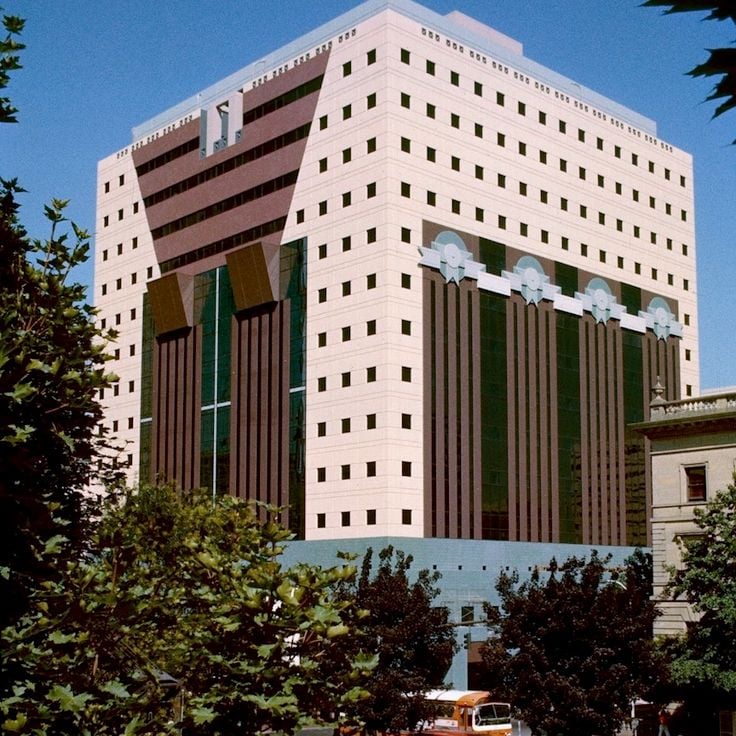
This 1982 administrative building was among the first major postmodern structures in the United States and sparked debate about architectural expression. Michael Graves designed the Portland Building with bold geometric forms and a facade in green, blue and red that departed from the prevailing modernist style of the time. The colored elements and symmetrical composition reflect the postmodern approach to reintroducing decorative features and historical references into contemporary structures. The building continues to house city offices and stands as an example of the architectural shift that occurred during the 1980s.
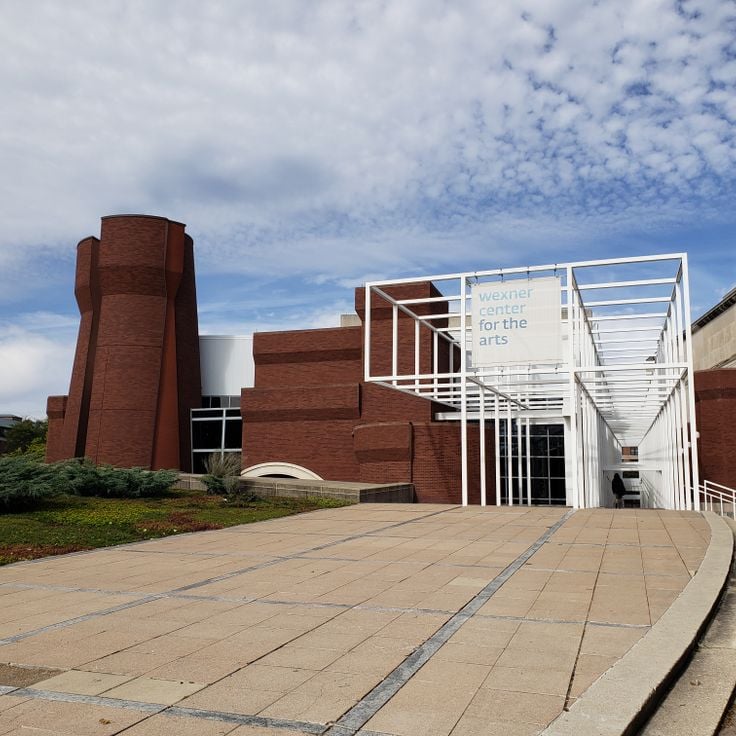
The Wexner Center for the Arts opened in 1989 as an early example of postmodern architecture in the United States. This cultural facility combines white steel scaffolding structures with red brick walls, creating an unconventional spatial composition that merges functional areas with artistic elements. The building demonstrates the experimental approach of postmodernism through its dissolution of traditional building boundaries and integration of exterior and interior spaces. The center serves as an exhibition venue for contemporary art and illustrates the technological and aesthetic developments of this architectural movement.
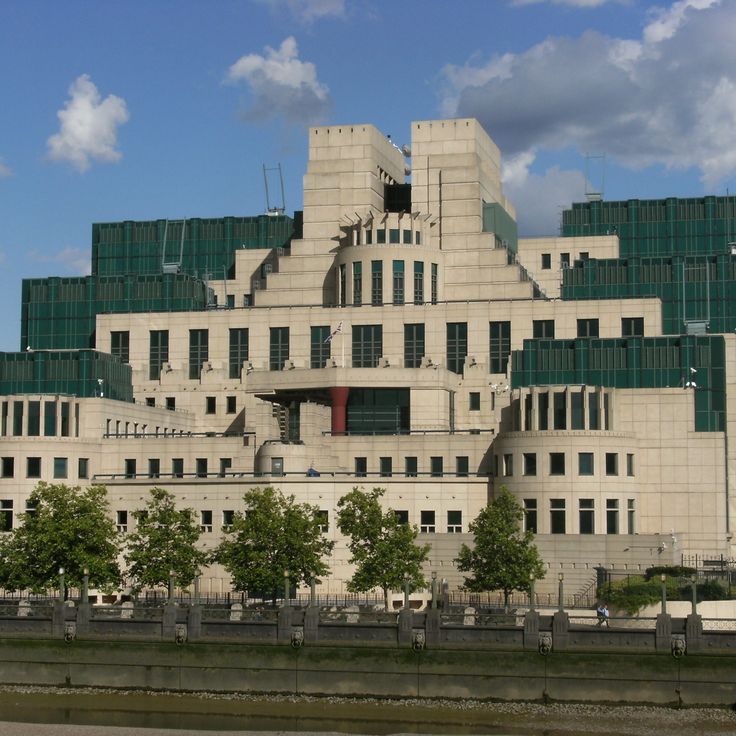
This intelligence service headquarters was completed in 1994 on the south bank of the Thames in Vauxhall. Architect Terry Farrell designed a stepped structure with green and cream elements that balances functional security requirements with representational aspects. The distinctive green windows and pyramid shaped rooftop structures give the SIS Building an unmistakable silhouette in the London skyline. The building demonstrates how postmodern architecture represents government institutions through a combination of technical precision and expressive forms. Its Thames riverside location and fortress design have made it a recognizable landmark in contemporary British architecture.
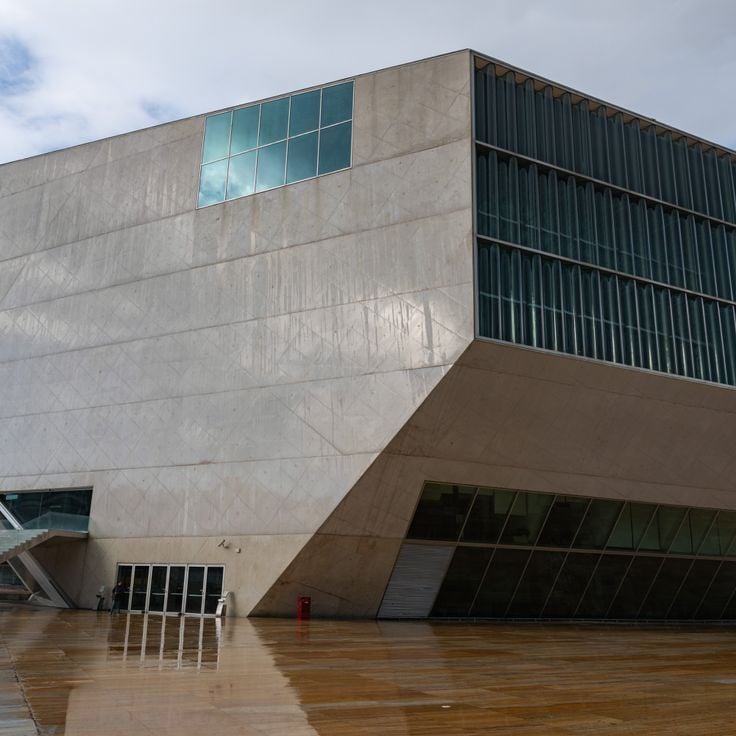
This concert hall displays geometric shapes in white concrete designed by architect Rem Koolhaas. The Casa da Música was completed in 2005 and contains two main auditoriums seating 1,238 and 350 people. The outward-leaning facade consists of folded concrete slabs, while the interior features walls of corrugated aluminum and colored glass. The building serves as Porto's principal concert venue and houses the Porto National Orchestra and the Remix Ensemble for contemporary music.
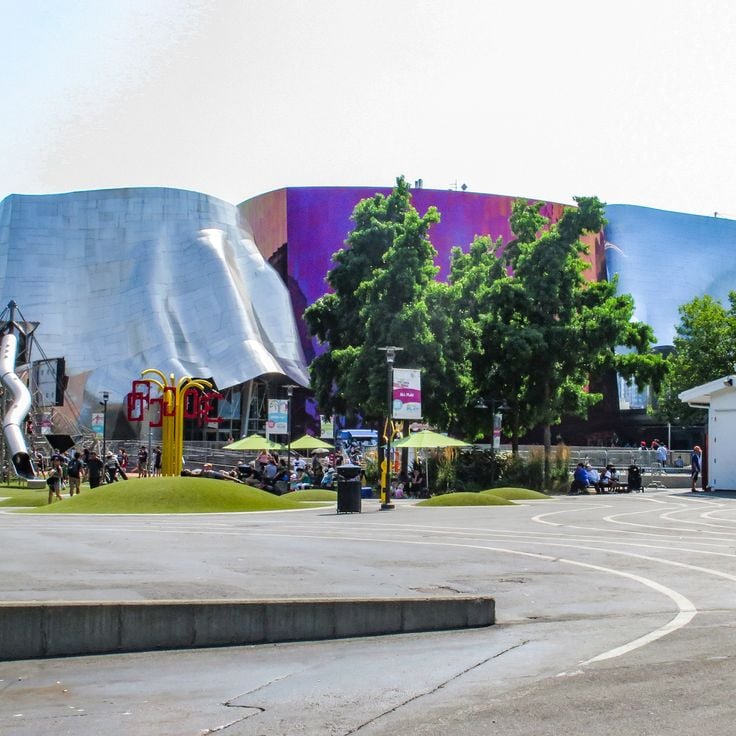
This museum building features metallic exterior cladding in various colors and was designed by Frank Gehry. The Experience Music Project Museum opened in 2000 and represents postmodern architecture through its organic forms and use of technology to create complex surfaces. The structure houses exhibits on popular culture and music, demonstrating the postmodern approach of combining functional buildings with sculptural elements. The colored metal skin reflects light in different ways, creating a dynamic appearance that changes throughout the day.
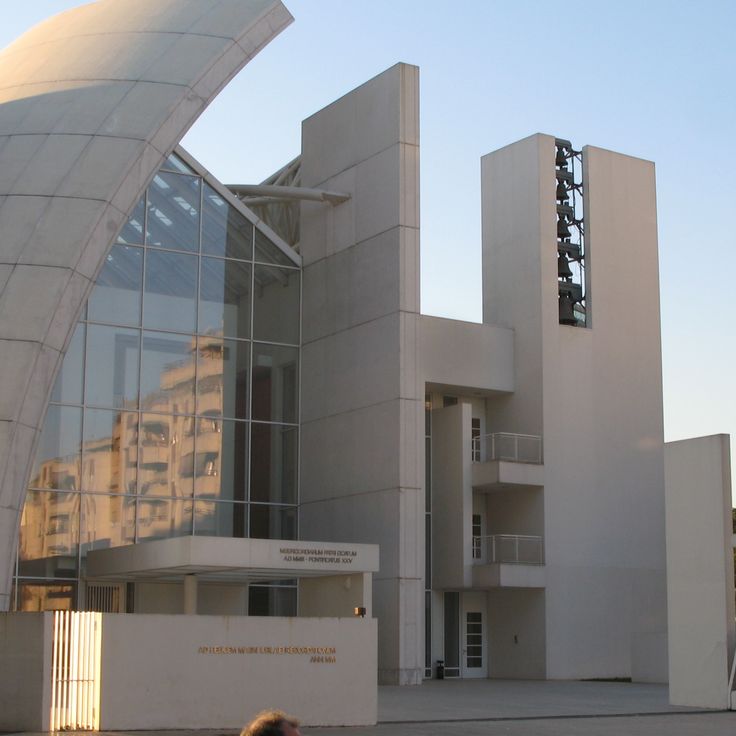
This Catholic church in Rome was designed by Richard Meier and consecrated in 2003. The three large white concrete shells that form its main feature rise between 49 and 85 feet (15 and 26 meters) and create a sharp contrast with traditional Roman architecture. The church serves a congregation in the Tor Tre Teste district and demonstrates Meier's characteristic use of white surfaces and geometric forms that modulate natural light in the interior space, representing a contemporary interpretation of sacred architecture.
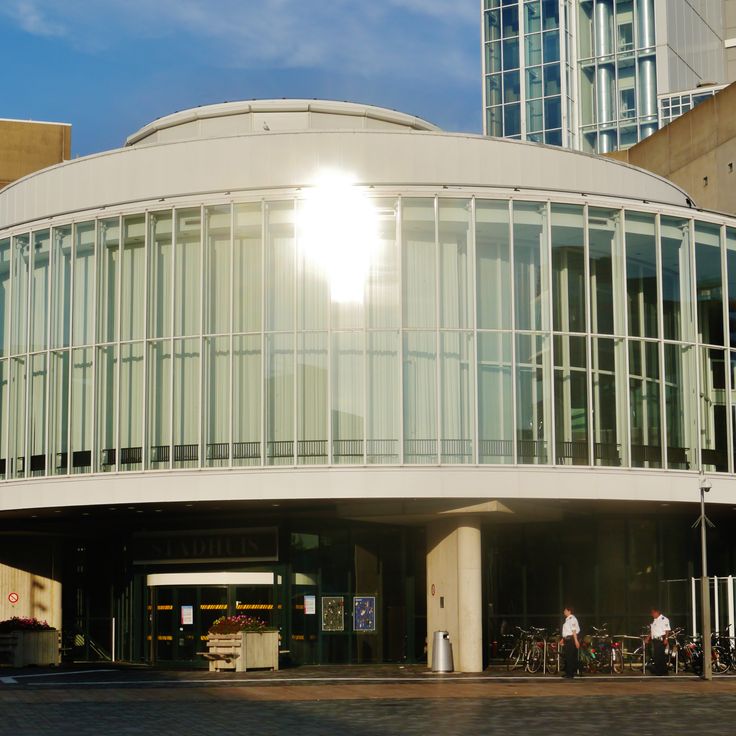
This administrative building has served as Almere's city hall since 1986, combining postmodern elements with Dutch architectural traditions. The blue glass facade forms the structure's most recognizable feature, while traditional building forms were integrated into the contemporary design. The building represents the architectural development of one of the Netherlands' youngest cities and demonstrates how postmodern architects approached functional government buildings with cultural references. The structure stands in Almere's center and houses the municipal government offices.
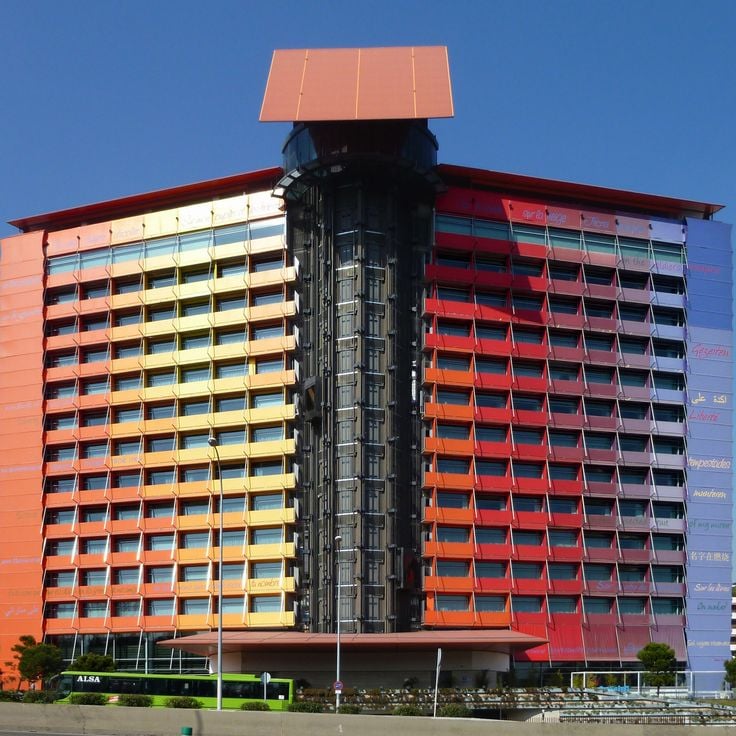
Hotel Puerta America in Madrid opened in 2005 and presents the work of 19 internationally recognized architects and designers across 13 floors, including Norman Foster, Zaha Hadid and Jean Nouvel. Each floor displays a distinct design approach with different materials, color schemes and spatial solutions. The building combines contemporary architecture with hotel operations and offers 315 rooms. The facade by Teresa Sapey employs red, orange and yellow tones. This hotel demonstrates the diversity of postmodern design approaches through the collaboration of multiple creative perspectives within a functional structure.
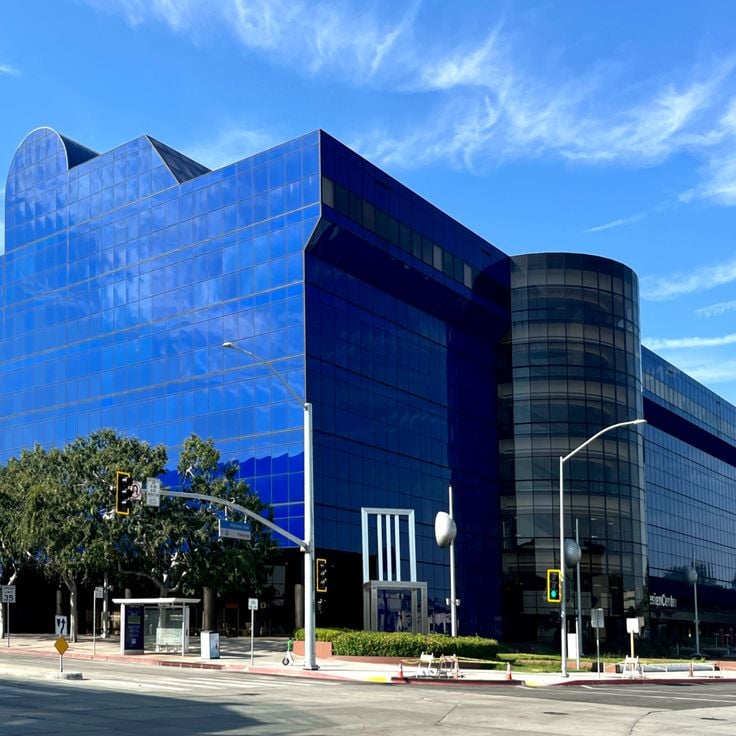
The Pacific Design Center is a complex of three buildings covering 1.3 million square feet (120,000 square meters) dedicated to design and the arts. The structure opened in 1975 and expanded over several decades with additional buildings. Designed by Cesar Pelli, the buildings are distinguished by their colored glass facades: the blue main building, the green second structure, and the red third building. This postmodern architecture combines large exhibition spaces, offices, and event venues under a unified concept. The center serves as a hub for professionals in interior design, furniture, and decorative arts.
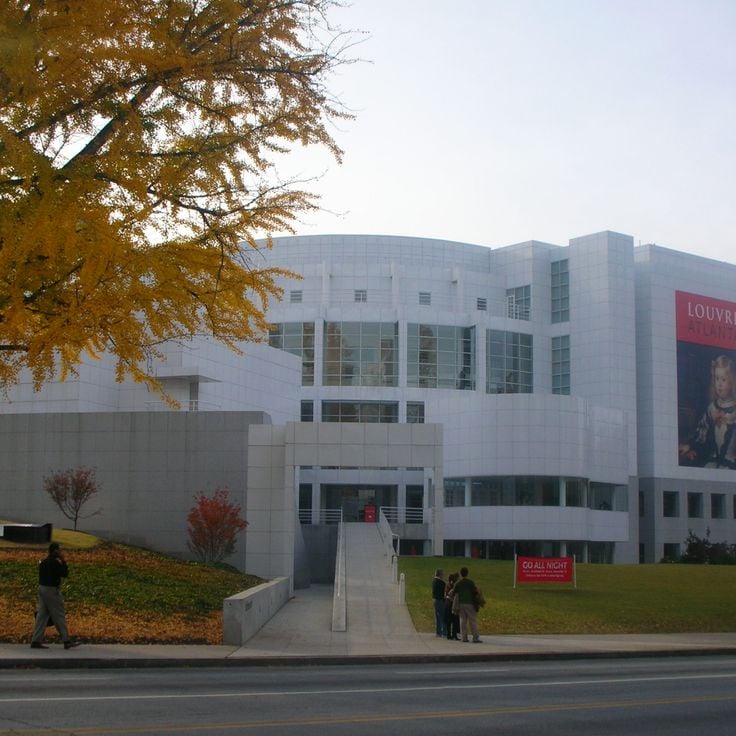
This museum in Atlanta spans four levels and houses more than 15,000 artworks. Richard Meier designed the building, characterized by its white facade and natural lighting. The collection ranges from classical to contemporary art. The High Museum of Art demonstrates how postmodern architecture connects museum and urban space. The galleries are arranged around a central atrium that receives daylight through skylights and links the exhibition spaces with a ramp.
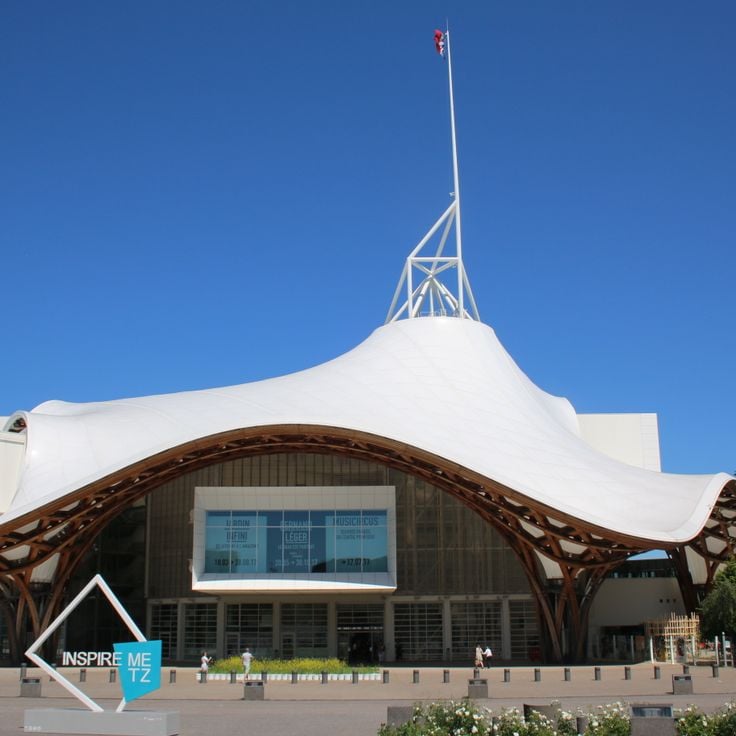
The Centre Pompidou-Metz was designed by architect Shigeru Ban and opened in 2010. Its white steel roof spans 86,000 square feet (8,000 square meters) and covers three rectangular exhibition galleries plus an auditorium. The facades combine glass surfaces with steel beam structures. The museum presents rotating exhibitions of modern and contemporary art drawn from the Centre Pompidou Paris collection. This branch extended the reach of the Paris institution into eastern France.
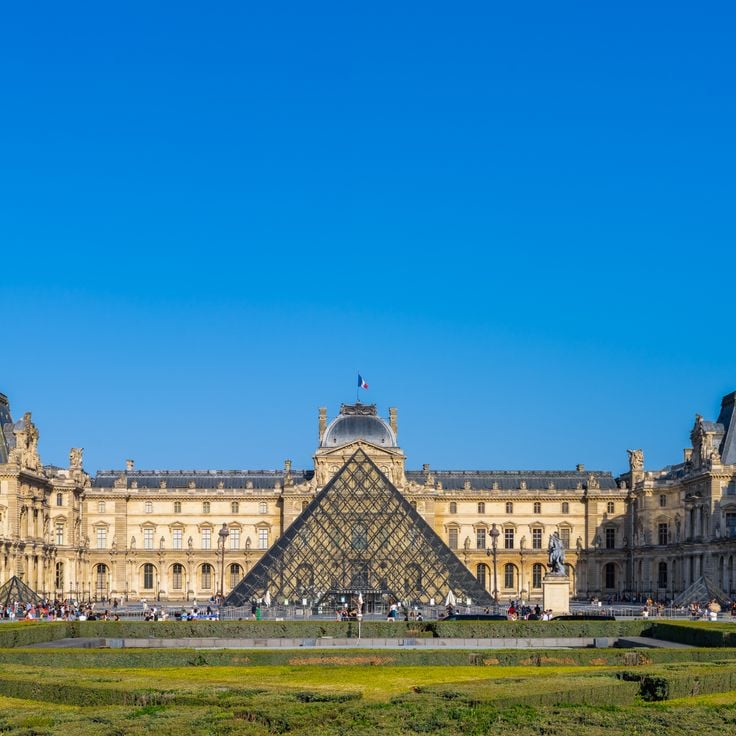
This glass pyramid from 1989 serves as the main entrance to the Louvre and connects the historic palace with underground exhibition spaces. Chinese-American architect I. M. Pei designed the 69-foot (21-meter) structure with 603 rhombus-shaped and 70 triangular glass panes supported by a steel framework. The transparent structure allows daylight into the reception hall below and creates a modern link between the museum wings. Three smaller pyramids surround the central structure in the Cour Napoléon courtyard. The building illustrates the postmodern approach of combining contemporary materials and forms with historic architecture.
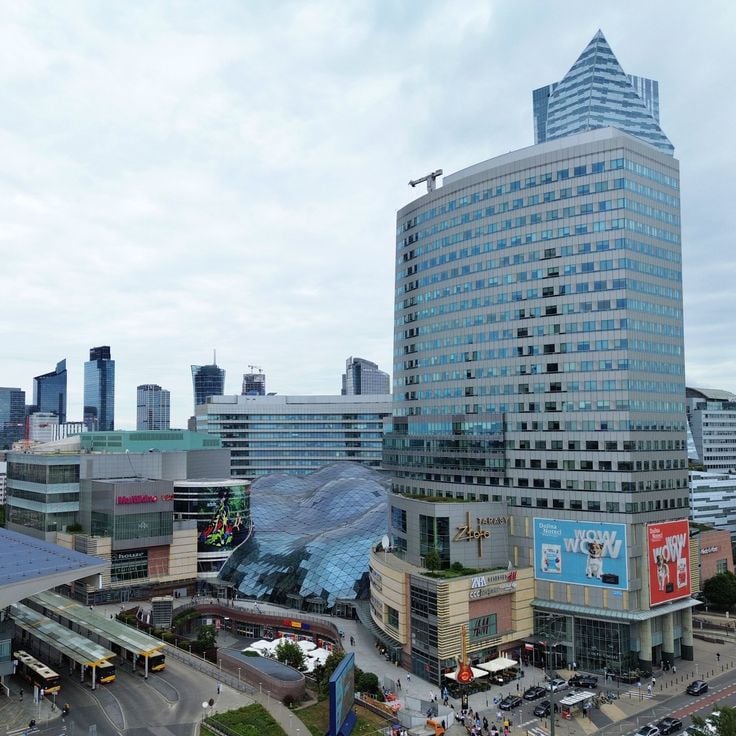
This shopping center in Warsaw displays characteristic features of postmodern architecture through its undulating glass roof that extends across multiple floors. Zlote Tarasy combines retail spaces with contemporary construction techniques, fitting into the urban landscape of Poland's capital. The curved structure demonstrates the use of modern building materials and architectural approaches developed in recent decades. The building serves as an example of commercial structures that merge functional requirements with pronounced design elements.
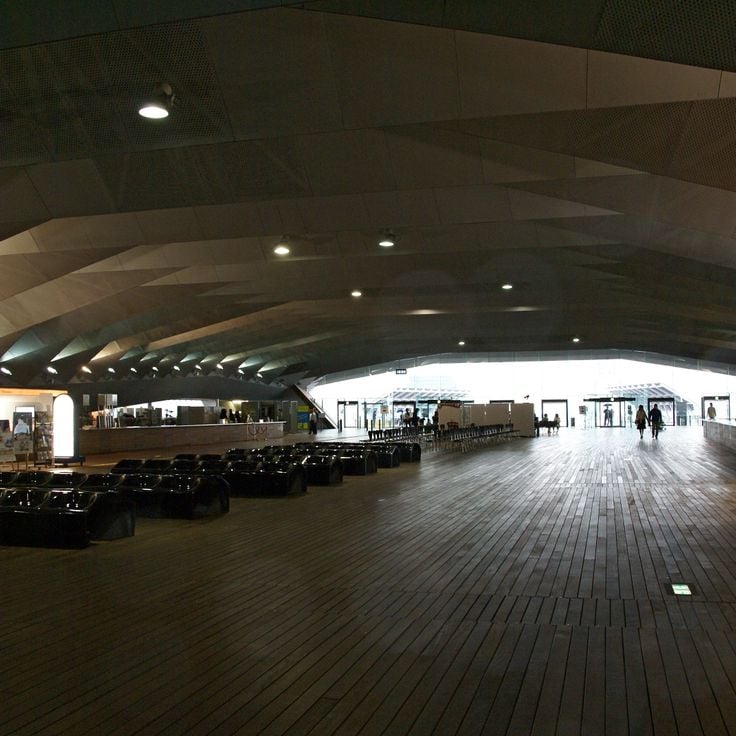
This port terminal features a curved roof landscape extending across multiple levels that connect interior and exterior spaces. The Yokohama International Passenger Terminal serves as a functional transportation hub for cruise ships while providing public areas. The walkable rooftop landscape allows visitors access to viewing areas over the bay. The building combines technical requirements of a modern seaport with accessible urban spaces. As an example of postmodern architecture, it demonstrates an approach that merges transport infrastructure with public use. The continuous ramps and levels create flowing transitions between different sections of the terminal.
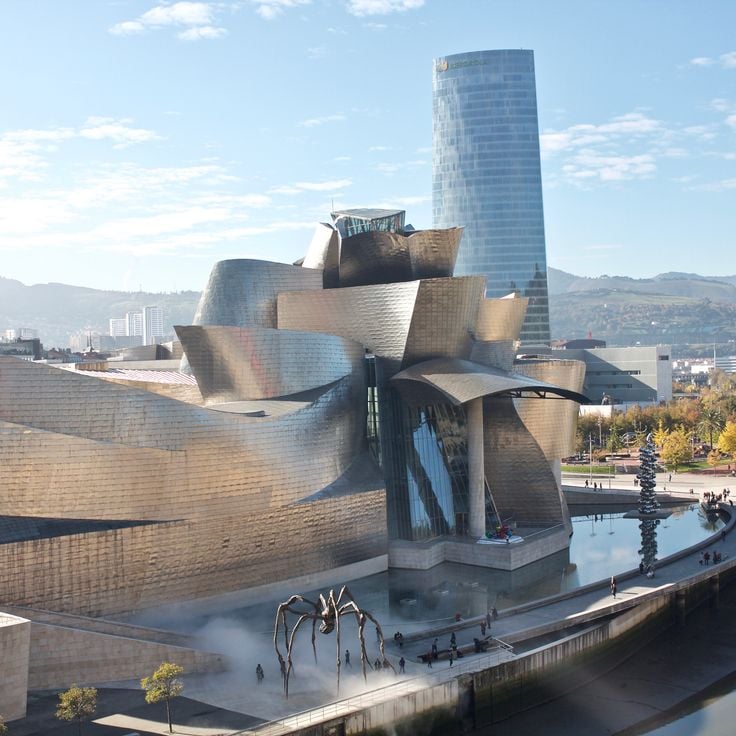
The Guggenheim Museum Bilbao presents international art from the 20th and 21st centuries within a titanium-clad building featuring curved forms. This postmodern structure employs advanced materials and architectural technologies to create a sculptural design along the Nervión River. The museum opened in 1997 and combines exhibition spaces with an architectural form that became a work of art in its own right. The titanium panels reflect light and alter the building's appearance according to weather conditions and time of day.
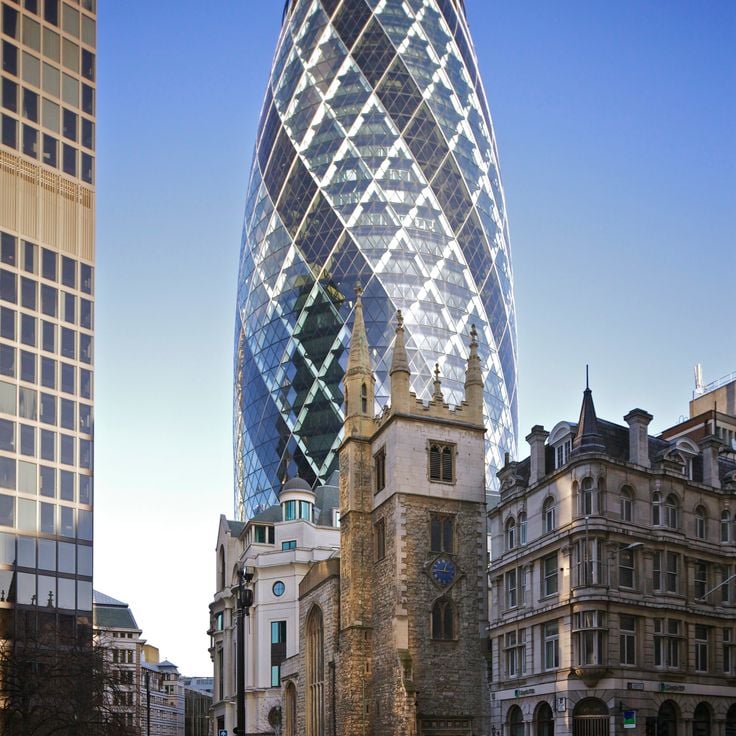
This 180-meter office building in London features a spiraling glass facade with a steel frame and 41 floors. Completed in 2004, the tower uses natural ventilation and a climate system that reduces energy consumption. Its aerodynamic form minimizes wind loads and creates publicly accessible areas at ground level. The Swiss Re Building demonstrates postmodern architecture's integration of innovative design and technical efficiency, incorporating environmental considerations into a commercial high-rise structure.
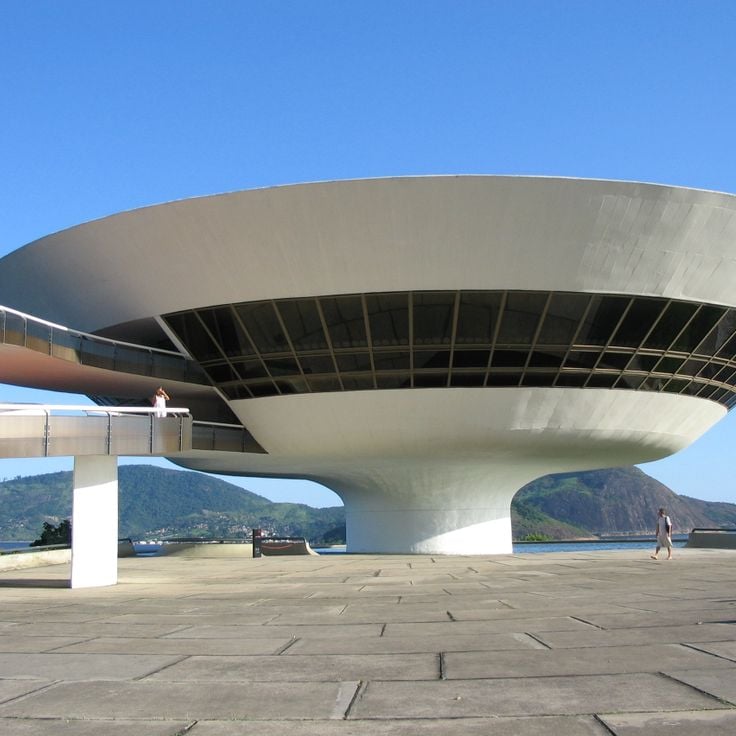
This museum was designed by Oscar Niemeyer and opened in 1996 on the shores of Guanabara Bay. The circular concrete structure stands on a single support pillar, rising 52 feet (16 meters) above the water. The continuous window front provides views across Rio de Janeiro and the bay. The building features a winding ramp that leads to the entrance and a reflecting pool at its base. The exhibition space covers approximately 8,600 square feet (800 square meters) and displays contemporary Brazilian art.
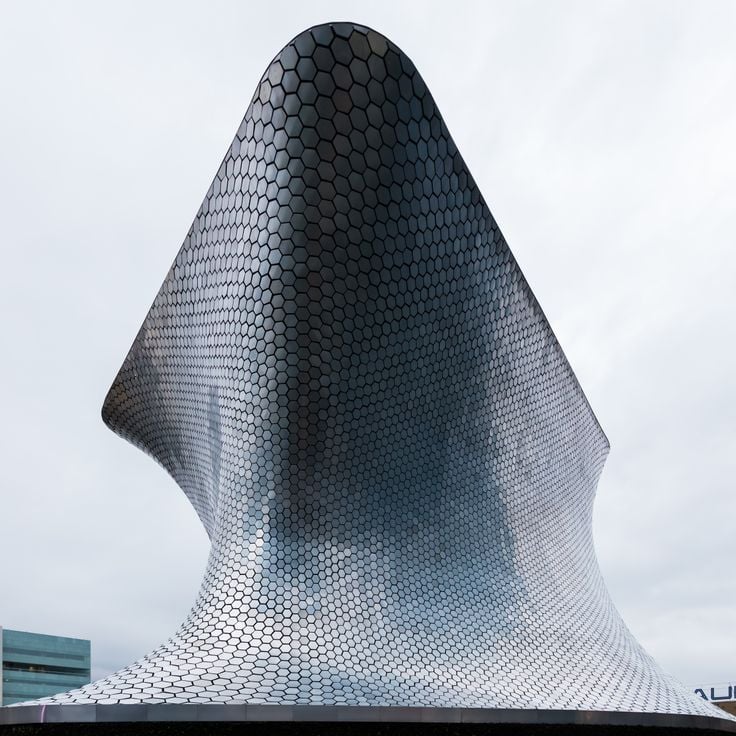
This museum in Mexico City represents a notable example of postmodern architecture in Latin America. The asymmetrical building is covered with 16,000 hexagonal aluminum plates and contains six exhibition levels. The curved form and reflective facade distinguish Museo Soumaya from traditional museum structures in the region. The structure combines contemporary building materials with sculptural design, demonstrating the experimental approach of the postmodern movement.
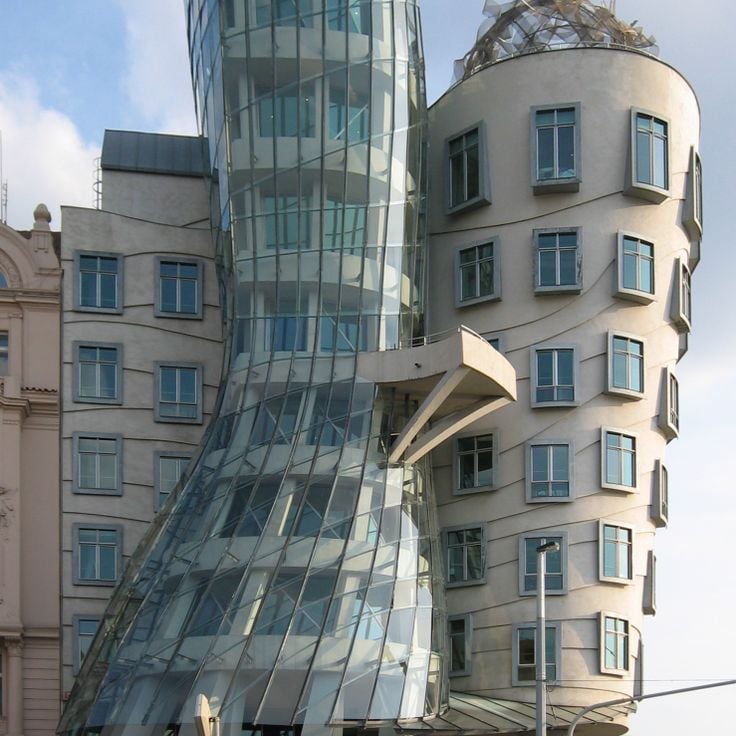
This building erected between 1992 and 1996 along the Vltava River exemplifies the deconstructivist architecture of the postmodern era. The Dancing House combines curved forms with asymmetrical windows, breaking from the traditional rectangular structures of Prague's old town. The two towers were designed by Vlado Milunić and Frank Gehry, with one made of glass and the other of concrete. The seven-story structure houses a restaurant, offices and a gallery today, standing as a symbol of Czech architectural renewal following the fall of communism.
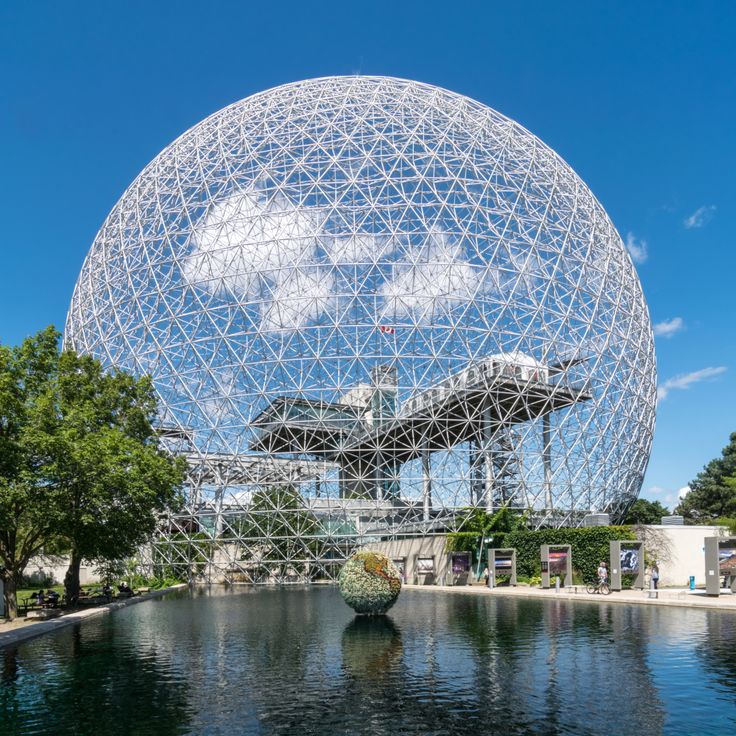
This museum occupies a geodesic dome that demonstrates postmodern principles through the adaptive reuse of a 1967 World's Fair structure. The Biosphère consists of a steel framework rising 203 feet (62 meters) and now functions as an environmental museum. The transparent construction combines technical innovation with educational purpose, showing how industrial building forms can be adapted for new uses. The structure stands as an example of postmodern practice in transforming existing frameworks into contemporary cultural facilities.
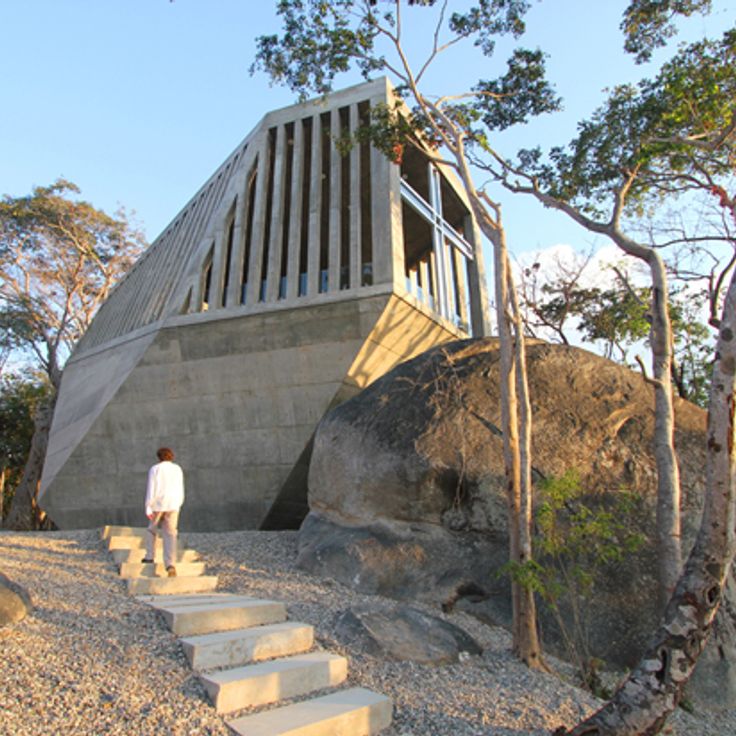
This chapel in Acapulco completed in 2011 demonstrates postmodern architectural principles through its polygonal concrete construction. The Sunset Chapel employs strategically positioned openings in the walls to channel natural light into the interior, creating geometric patterns of illumination. The design combines structural clarity with deliberate manipulation of shadow and brightness, emphasizing the functional nature of the religious space while incorporating artistic elements characteristic of the postmodern movement.
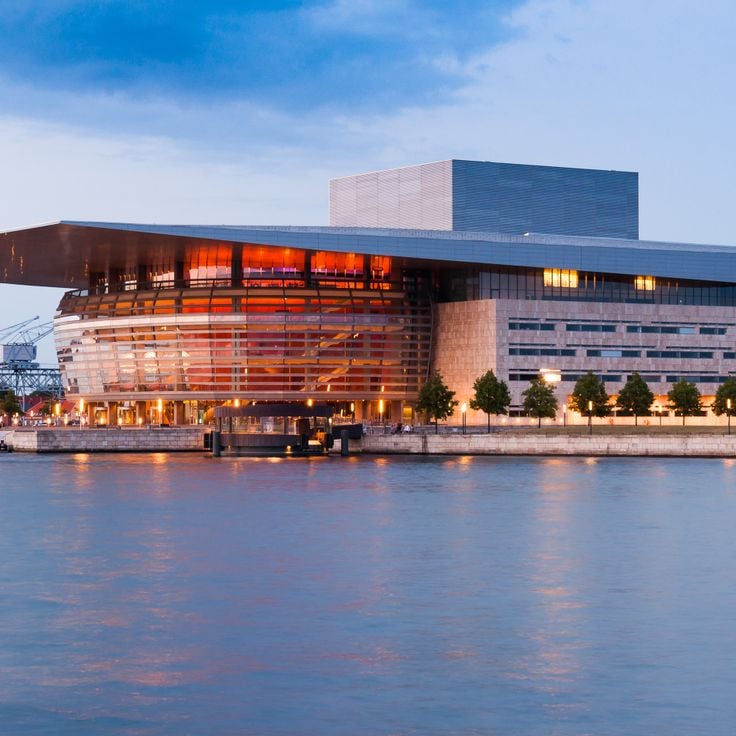
This Copenhagen opera house opened in 2004 and demonstrates postmodern architectural principles through its 105-foot (32-meter) glass facade. The building spans 14 floors and contains modern stage technology supporting contemporary productions. The structure combines functionality with design elements characteristic of public cultural buildings from this era, adding to the architectural development of the Danish capital along the waterfront.
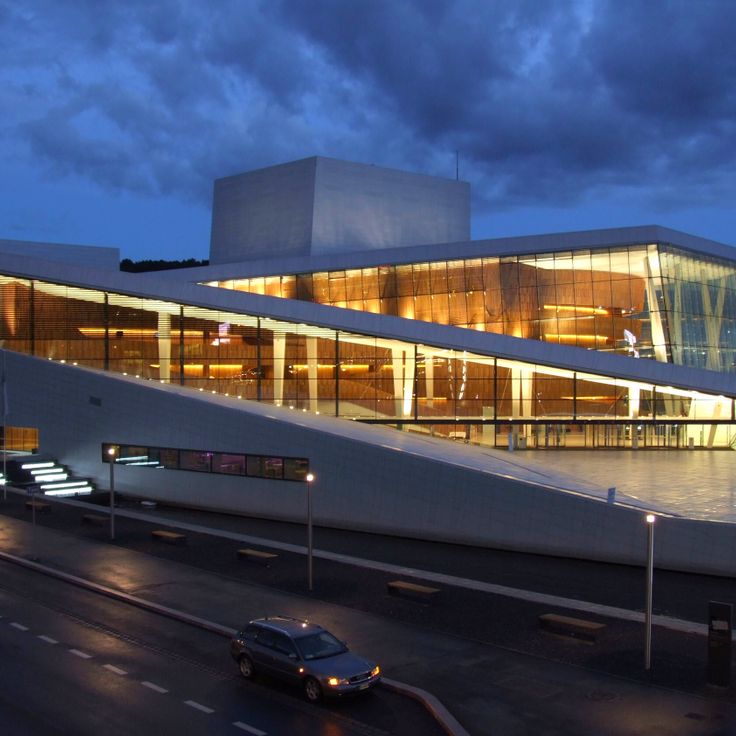
The Oslo Opera House embodies postmodern architecture through its distinct engagement with urban space. The white marble structure rises directly from the Oslo Fjord and incorporates public roof surfaces that allow visitors to walk across its sloping planes. This facility, opened in 2008, combines technical innovation with an accessible design approach that dissolves boundaries between building and public realm. Designed by Snøhetta, the opera house serves as home to the Norwegian National Opera and Ballet while functioning as a waterfront civic plaza.
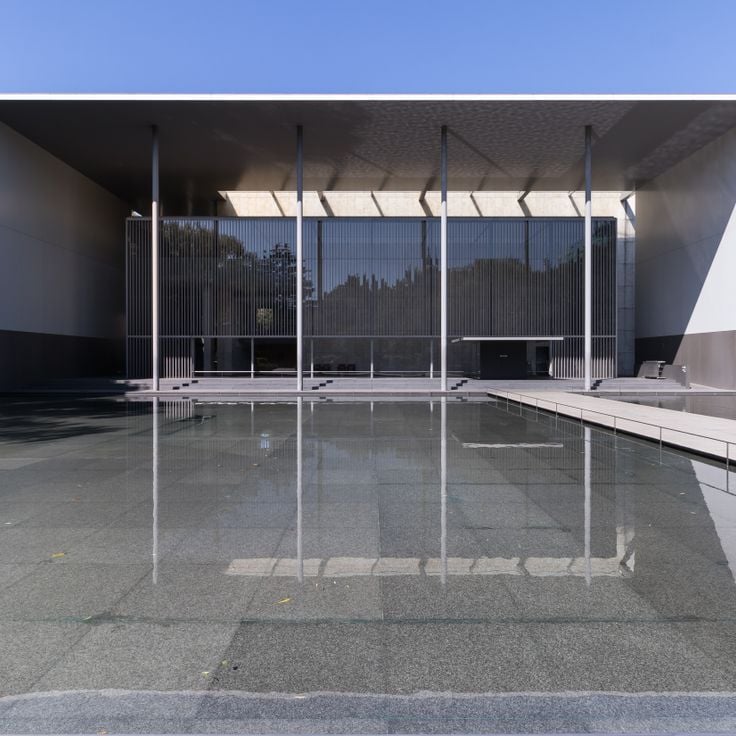
This gallery within the Horyuji temple complex displays religious artworks from the 7th century inside a modern concrete structure. The 1999 building by Yoshio Taniguchi employs precise light control to protect fragile treasures while presenting Buddhist sculptures, paintings, and ceremonial objects from the Asuka and Nara periods. The minimalist architecture combines traditional Japanese aesthetics with contemporary construction techniques, creating contemplative spaces for historical artifacts. This structure demonstrates postmodern architecture's fusion of function and form in museum design.
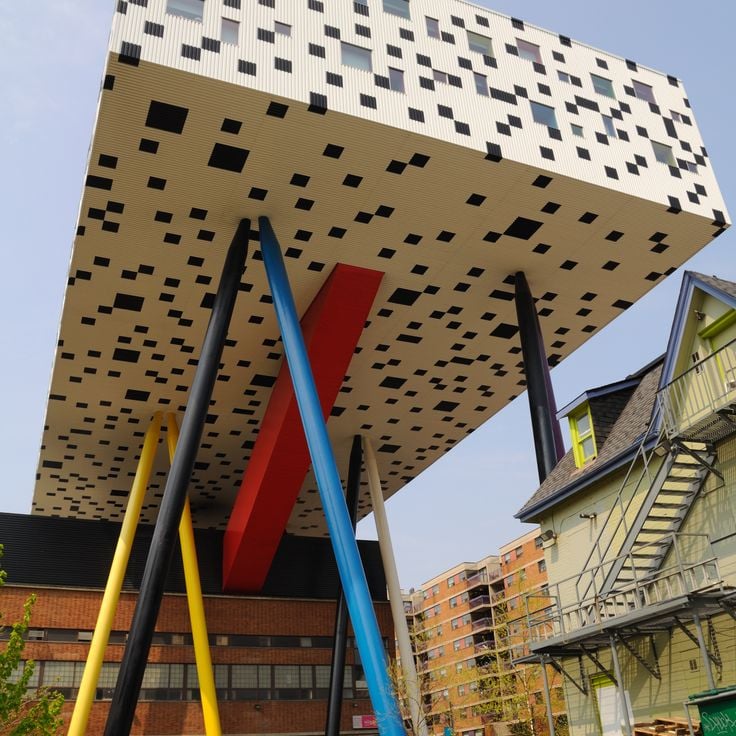
The Sharp Centre for Design stands as a distinct example of postmodern architecture. This rectangular volume appears to float on colored steel columns twelve stories (approximately 40 meters) above the art college ground level. The structure demonstrates the characteristic blend of technical innovation and artistic design that defines postmodern buildings since the 1970s. The colored columns support the volume while creating visual contrast within Toronto's urban setting.
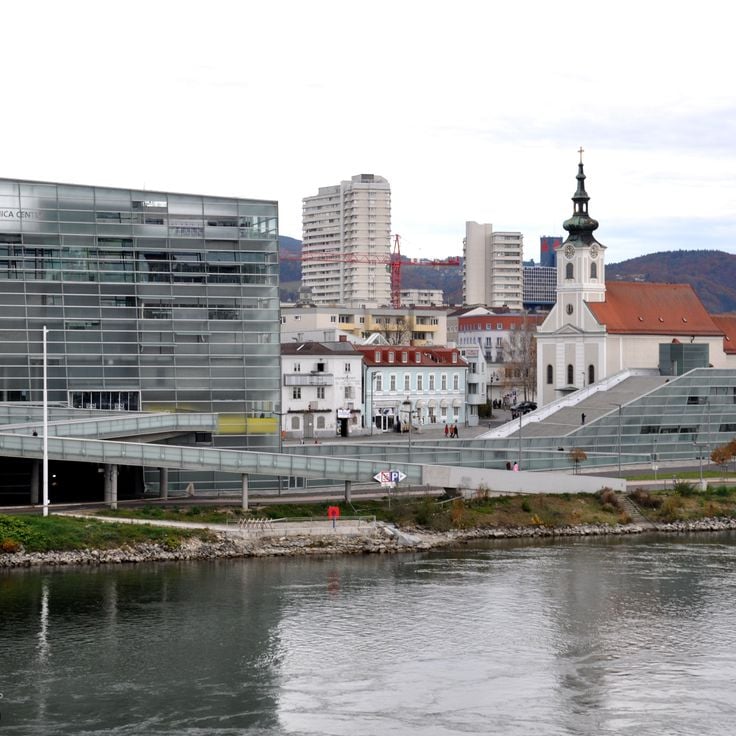
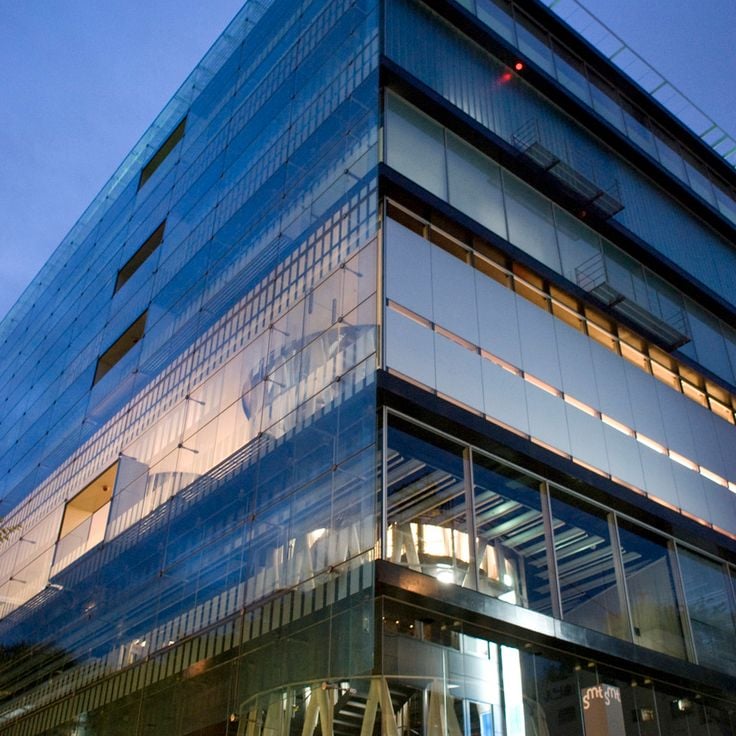
The Ars Electronica Center is a glass structure with an LED facade in Linz that displays interactive media art and technological innovations across multiple exhibition spaces. The architecture combines contemporary materials with artistic elements and serves as an international forum for digital culture. The transparent building envelope allows views between the city and exhibition areas. The museum presents rotating exhibitions on topics including artificial intelligence, virtual reality and digital creativity. Programmable light installations on the exterior facade make the center a visible presence of modern architecture and technology after dark.
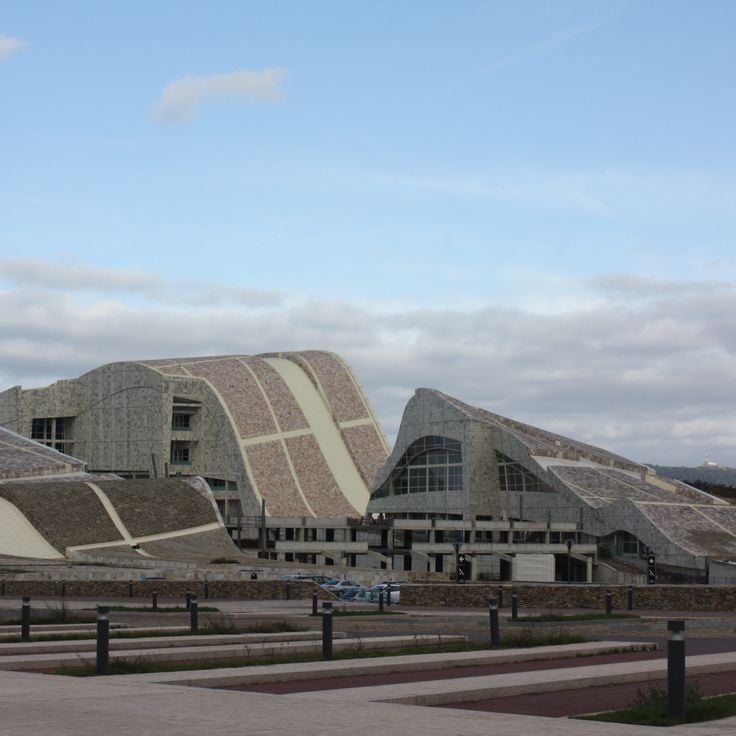
The City of Culture of Galicia consists of six buildings with white stone panels, glass and geometric forms on a hill outside the city. Peter Eisenman designed the complex, which includes libraries, archives, theaters and exhibition spaces. The undulating roofs follow the topography of the surrounding landscape. Construction began in 1999 and individual buildings opened between 2011 and 2021. The site ranks among Europe's largest cultural centers and houses galleries, event spaces and research facilities. The design combines technical innovation with regional references to Galician culture and the historic pilgrimage routes.
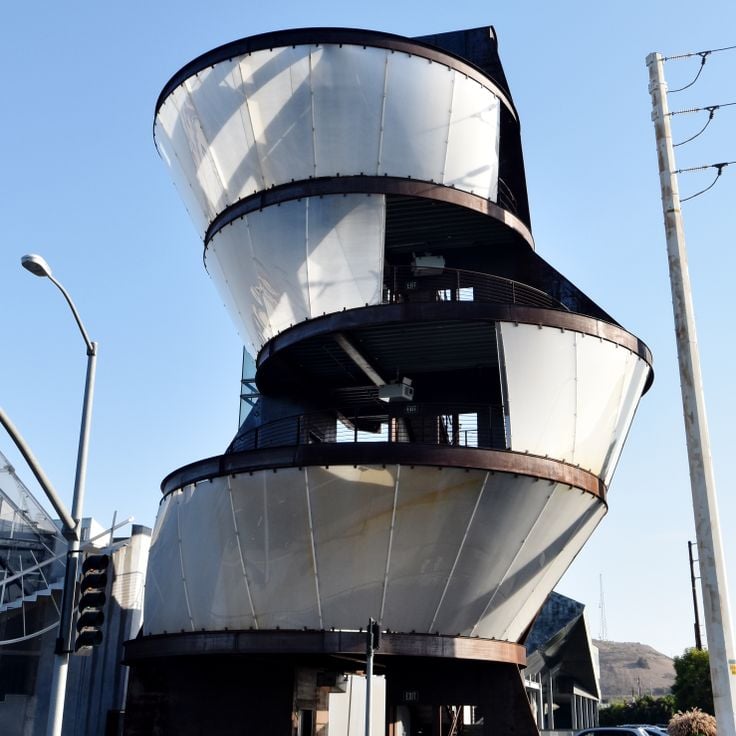
This office building combines steel construction with digital projection surfaces integrated into its exterior walls. Designed as part of the postmodern architectural movement in Los Angeles, the structure enables the integration of electronic media into the building envelope. The complex serves both as workspace and as an urban media surface, linking contemporary technology with functional architecture. The Samitaur Tower exemplifies the experimental approach of this period, incorporating innovative materials and new forms of communication into its design.
This transparent seven-story structure in Sendai demonstrates postmodern architectural principles through its visible tubes that serve both as load-bearing elements and light shafts. The building embodies the technological innovation of the postmodern movement, integrating functional requirements with artistic design while housing one of the city's most distinctive cultural institutions.
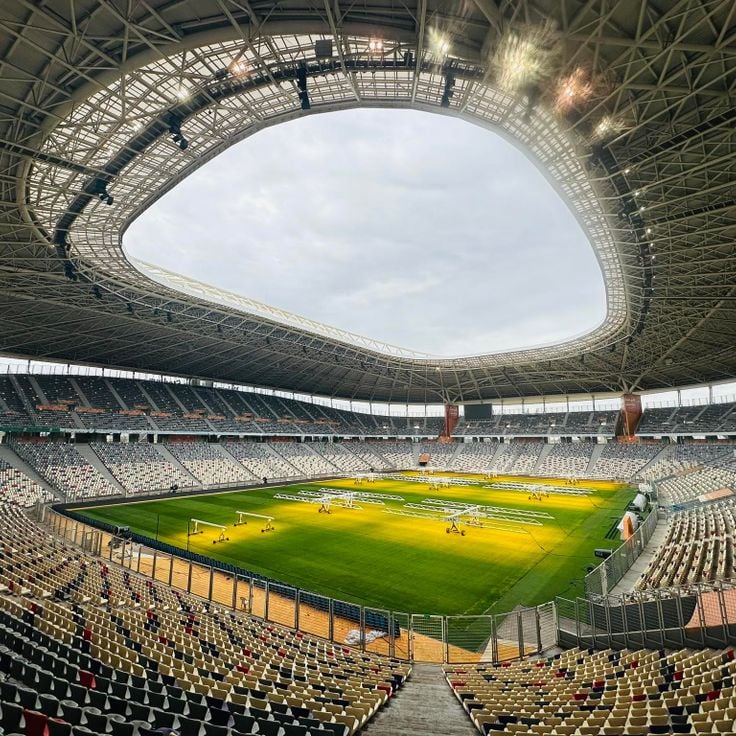
This stadium was built for the 2010 FIFA World Cup and holds 46,000 spectators. Nelson Mandela Stadium displays its postmodern architecture through a distinctive roof structure of white elements that reference the South African bird of paradise flower. The facility primarily hosts soccer and rugby matches and was named after the country's first democratically elected president. The construction combines functional requirements with symbolic references to local flora.
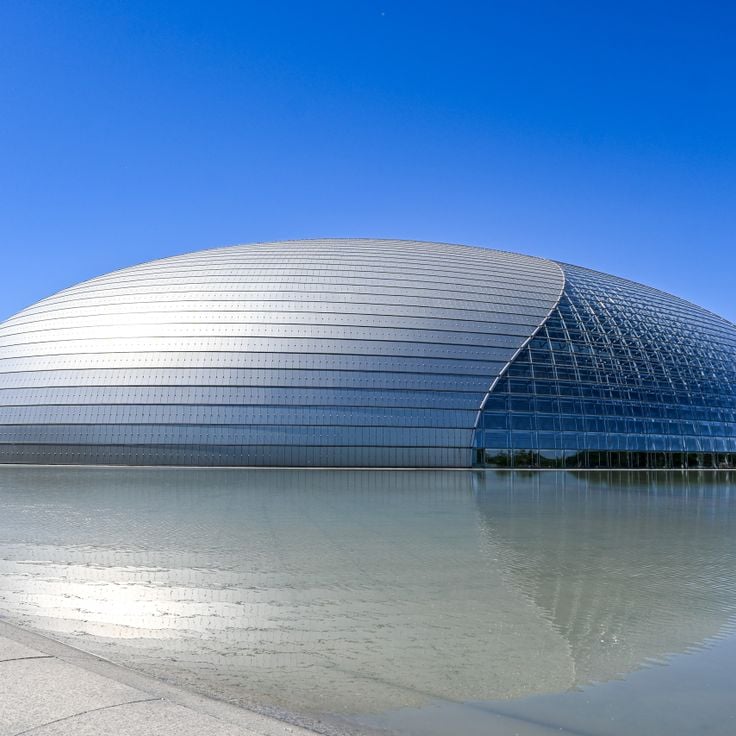
The National Centre for the Performing Arts was completed between 2001 and 2007 to a design by French architect Paul Andreu and sits adjacent to the Forbidden City in Beijing. The ellipsoid structure of titanium and glass rises from an artificial lake and reaches a height of 151 feet (46 meters) with a length of 696 feet (212 meters). The center contains three main halls with approximately 5,500 total seats: an opera house, a concert hall, and a theater for traditional Chinese performances. Visitors enter through an underground passage that runs beneath the surrounding water. This postmodern structure combines contemporary building materials with a form that contrasts sharply with its historical surroundings and demonstrates the application of complex engineering techniques in a major cultural project.
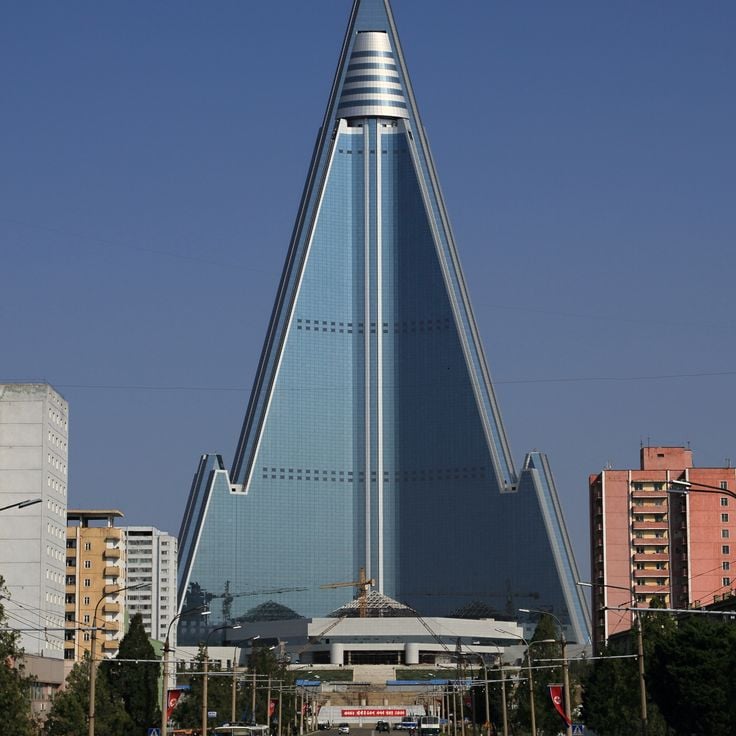
The Ryugyong Hotel is a 330-meter (1,080-foot) pyramidal structure in central Pyongyang, construction of which began in 1987 and remained incomplete after multiple interruptions. The design consists of three wing-shaped concrete sections converging along a central axis that terminates in a point. Glass cladding was installed starting in 2008, though interior finishing remains unfinished. This structure demonstrates North Korean architects' pursuit of international attention through monumental geometry and technical scale, while the decades-long construction history reflects the country's economic challenges.
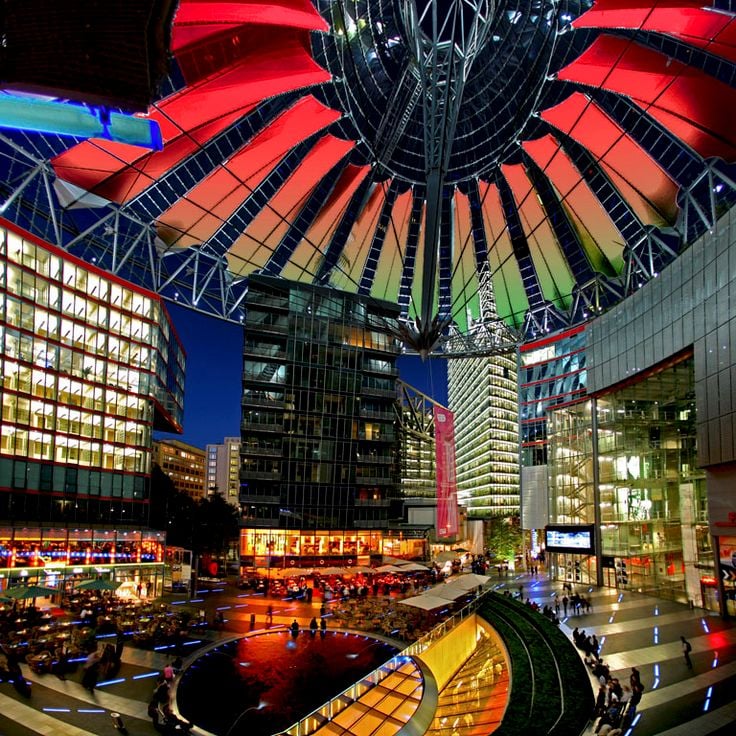
This entertainment and commercial complex in Berlin's Tiergarten district was built between 1996 and 2000 to designs by Helmut Jahn on the historic site of Potsdamer Platz. The Sony Center combines offices, cinemas, shops and restaurants beneath an elliptical glass roof spanning approximately 43,000 square feet (4,000 square meters) that is illuminated at night. The construction incorporates remnants of the historic Hotel Esplanade into the new development. With its angled glass facades and open plaza design, the complex demonstrates technical approaches of the late 20th century and forms part of the postmodern redevelopment of this central Berlin district.
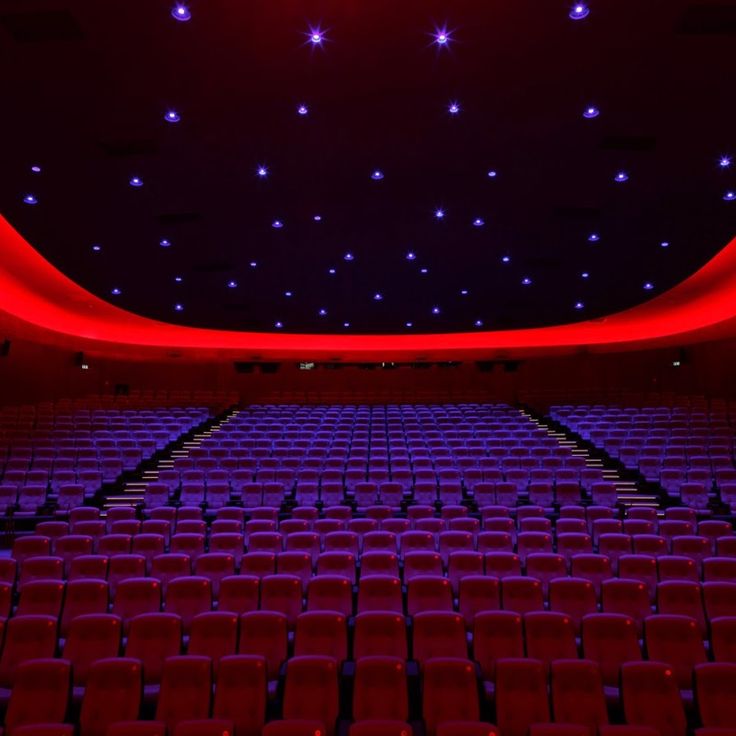
This cinema in the Charlottenburg district opened in 1957 and reopened in 2013 following extensive renovation. The facade of Zoo Palast combines postwar modernist elements with contemporary design approaches, including large glass surfaces and geometric forms. The building demonstrates typical features of postmodern architecture through its use of different materials and reinterpretation of classical cinema architecture. The structure serves as a venue for the Berlin International Film Festival and contains several screening rooms equipped with modern projection technology. The design connects the functional requirements of a multiplex cinema with architectural references to postwar Berlin architecture.
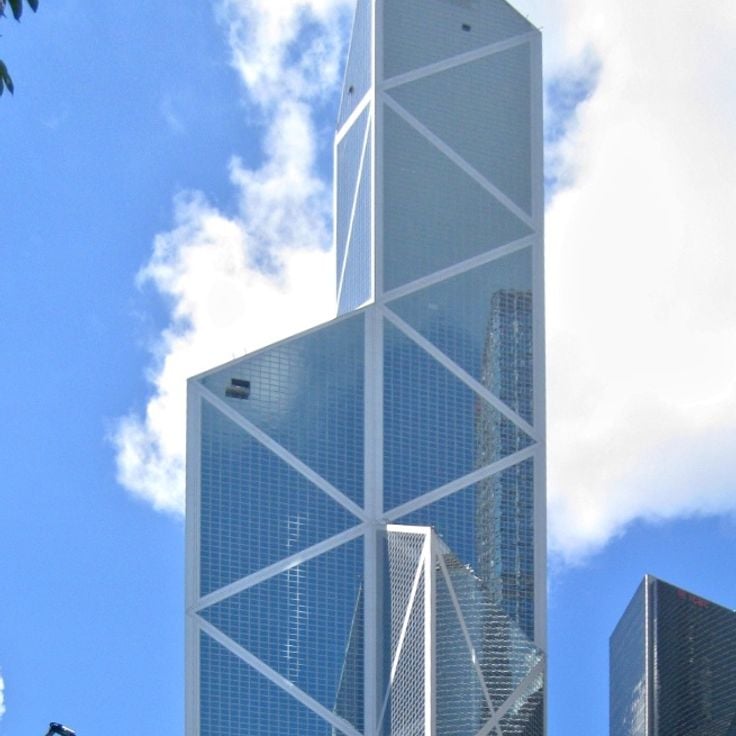
This skyscraper was completed in 1990 in the Central district, reaching a height of 1,205 feet (367 meters). Chinese-American architect I. M. Pei designed the building with a steel frame structure inspired by bamboo growth and articulated through diagonal bracing. The triangular glass facades reflect daylight and create changing light effects throughout the day. The building was the tallest in Hong Kong at the time of its opening and became the first building outside the United States to exceed 1,000 feet in height. A public observation deck on the 43rd floor provides views across Victoria Harbour and the surrounding districts. This structure demonstrates how postmodern architects combined geometric forms and modern building materials to create functional bank buildings with symbolic meaning.
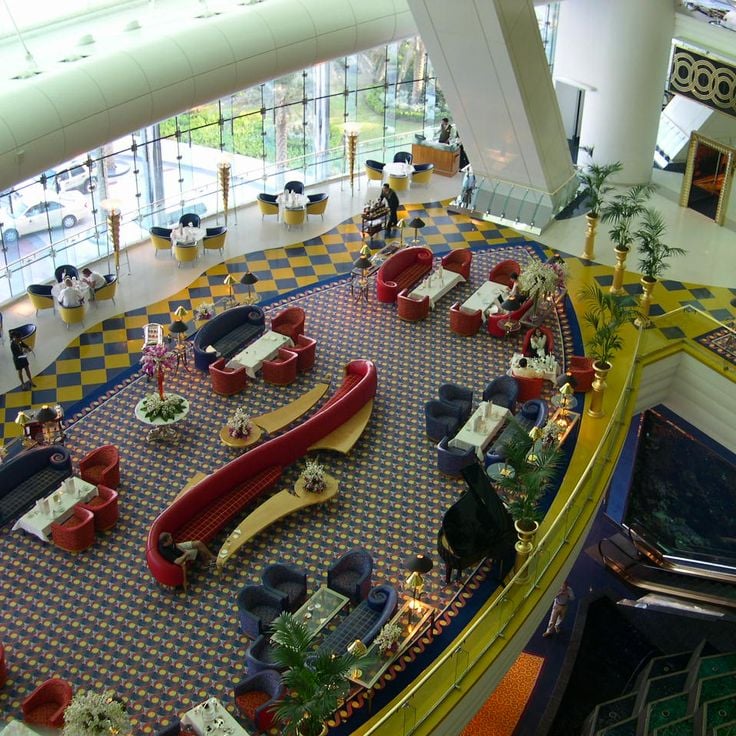
This hotel completed in 1999 on a purpose-built island off Dubai represents postmodern architecture combining traditional Arabian design elements with contemporary engineering. The 321-foot (98-meter) tall tower features a sail-shaped silhouette visible from nearby Jumeirah Beach. Its white Teflon-coated fiberglass facade reflects light and creates a dynamic surface, while the interior atrium employs colored columns, gilded surfaces and patterned floors. The Burj al-Arab demonstrates the postmodern approach through its theatrical form, use of ornamental details and rejection of minimalist principles in favor of visually complex design.
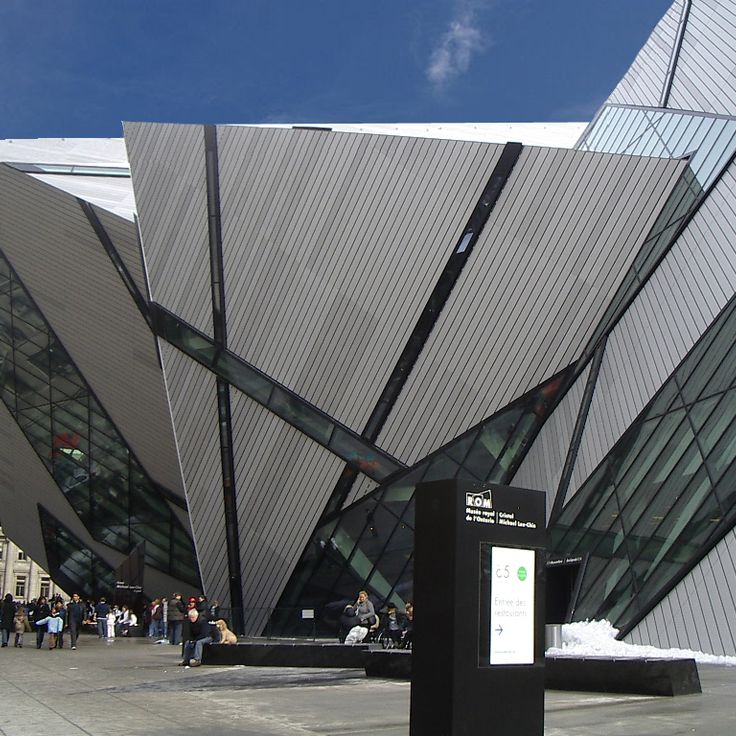
This museum in Toronto originated through the merger of two collections in 1912 and has developed into a major institution for natural and cultural history in North America. The original Edwardian-era building received a postmodern crystalline addition in 2007, known as the Michael Lee-Chin Crystal. Five interlocking prismatic structures of steel, aluminum and glass project over the older section, creating sharp angles and asymmetric forms. The glass facade reflects the surrounding cityscape while the crystalline geometry provides a deliberate contrast to the historic stone walls, serving as an example of postmodern integration of contemporary forms with existing architecture.
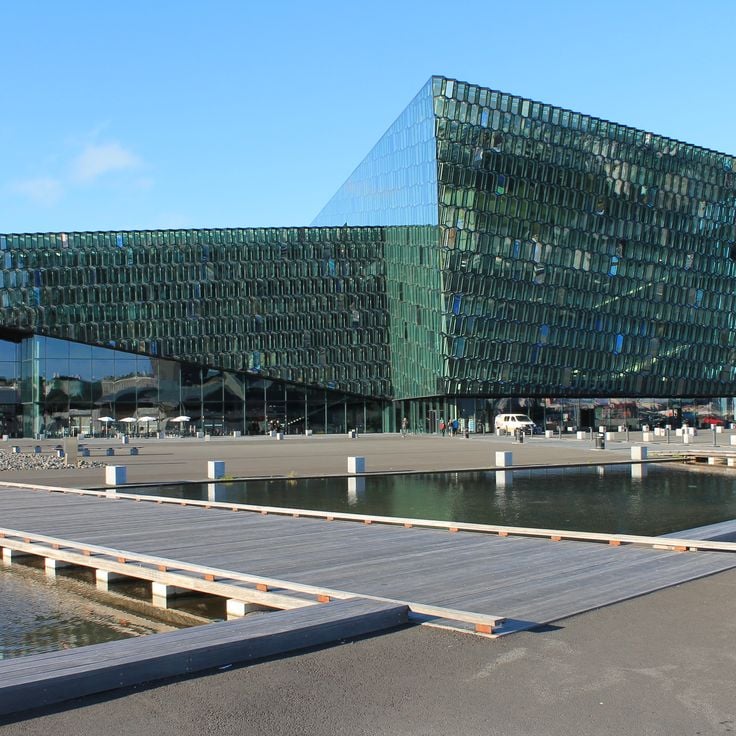
This concert hall in Reykjavík combines crystalline glass facades with a steel frame, demonstrating a geometric approach to postmodern architecture. The outer shell consists of multicolored glass panels designed by artist Olafur Eliasson that create different light effects depending on time of day and weather conditions. The building houses four halls for various performances and serves as home to the Iceland Symphony Orchestra. Construction was completed in 2011 and the structure stands at Reykjavík's harbor, where the facade reflects in the water.
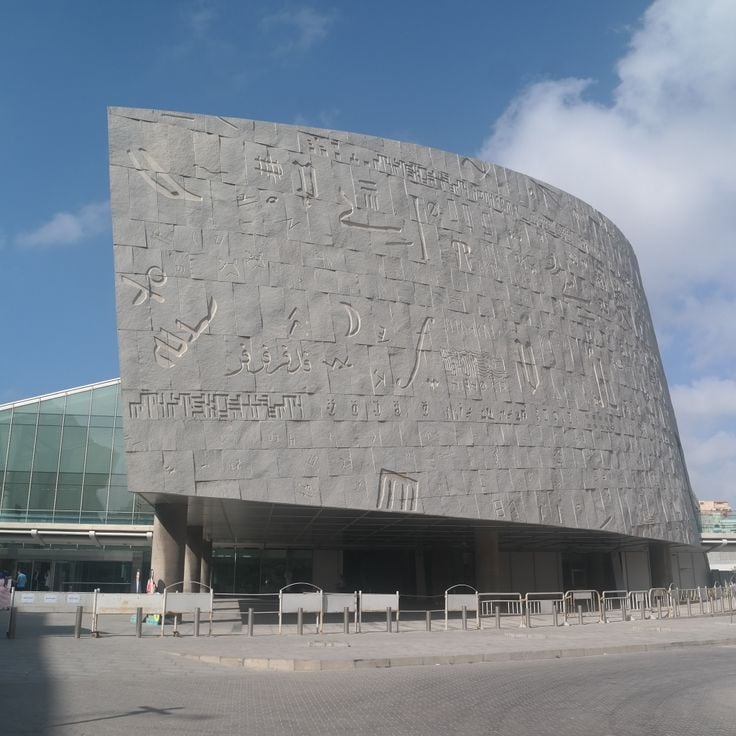
This modern library opened in Alexandria in 2002 and references the legacy of the ancient Library of Alexandria. The building features a tilted cylindrical form with a granite and glass facade that combines contemporary architecture with allusions to the historical significance of the site. The Bibliotheca Alexandrina functions as a cultural and educational center, housing an extensive collection of books, several museums and research facilities under one roof. As a postmodern structure, it demonstrates the use of technological innovation and symbolism in designing public institutions.
The Heydar Aliyev Cultural Center is a performing arts venue in Baku that demonstrates postmodern architectural principles through its flowing, undulating design. Designed by Zaha Hadid, the building eliminates sharp angles in favor of continuous curves that connect walls, roof and exterior spaces into a cohesive structure. The white fiberglass-reinforced concrete facade reflects light and emphasizes the organic forms of the construction, while interior spaces house exhibition galleries, a museum and event halls. This facility shows how postmodern architects employ digital design technologies and new construction materials to create buildings that depart from traditional geometric patterns.
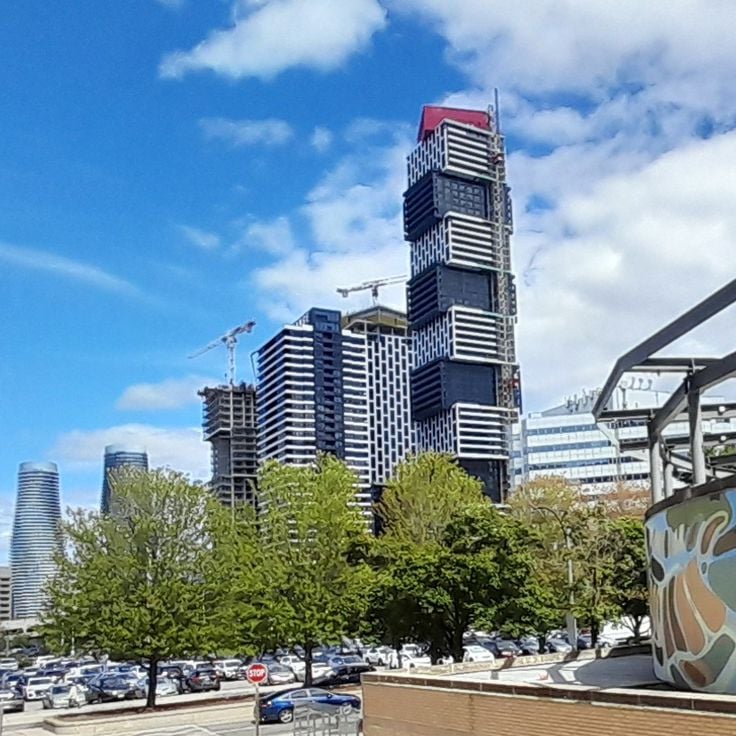
This residential complex in Mississauga consists of two curving towers completed in 2012 that create a distinctive skyline profile with their rotating balconies. The two high-rises reach heights of 56 and 50 stories and demonstrate how postmodern architecture combines organic forms with advanced construction techniques to reinterpret conventional residential development. The continuously rotating floor plans of the towers show the movement's experimental approach to designing living spaces.
This palace in Buenos Aires was completed in the 1980s and demonstrates postmodern architectural principles through its combination of historical references with contemporary building forms. The structure serves as a cultural center in San Nicolás and presents a facade that merges ornamental elements with modern materials. Libertad Palace illustrates the postmodern movement's approach to reintroducing decorative details into architecture while creating functional spaces for cultural programming. The building contributes to the collection of postmodern structures worldwide through its particular interpretation of architectural traditions within a South American context.
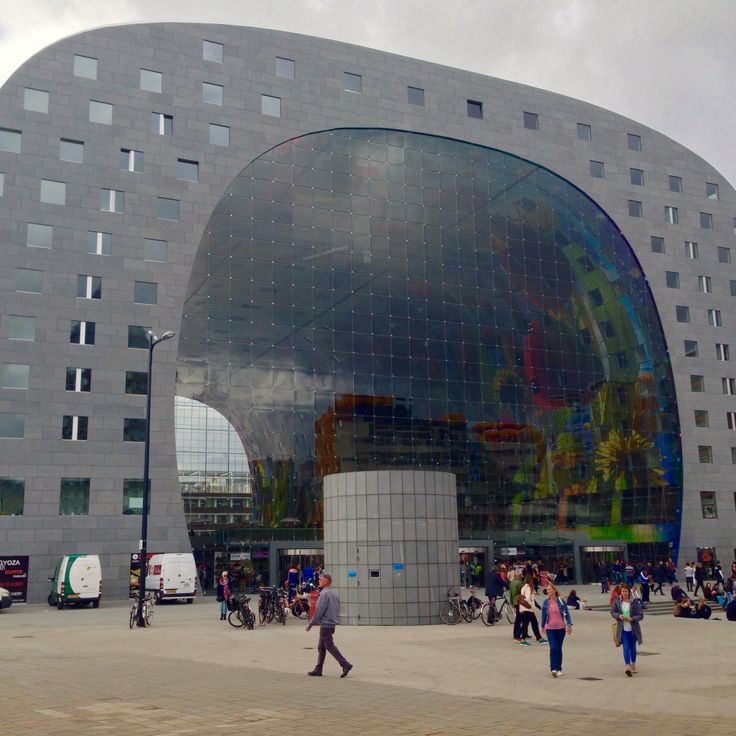
This indoor market hall in Rotterdam combines commercial functions with residential units within a parabolic building completed in 2014. The interior surface displays large-format digital prints depicting fruits, vegetables and flowers. The building houses over one hundred market stalls and restaurants beneath the vaulted roof, while the exterior consists of glass facades and apartments. The Market Hall demonstrates contemporary approaches to mixed-use urban developments, where public market spaces integrate with private residential areas in a single architectural structure.
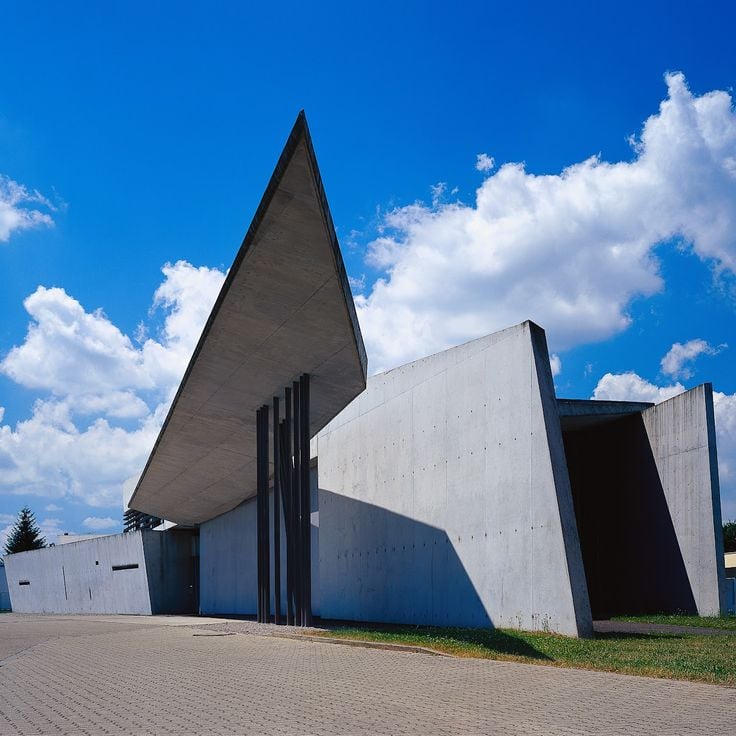
This fire station on the Vitra Campus in Weil am Rhein demonstrates deconstructivist architecture through sharp angles and dynamic concrete forms. Completed in 1993, the building now functions as an events space and shows the experimental approach of postmodernism through fragmented geometry and spatial tension. The angular concrete structure contrasts with surrounding industrial buildings and marks a turning point in contemporary building design.
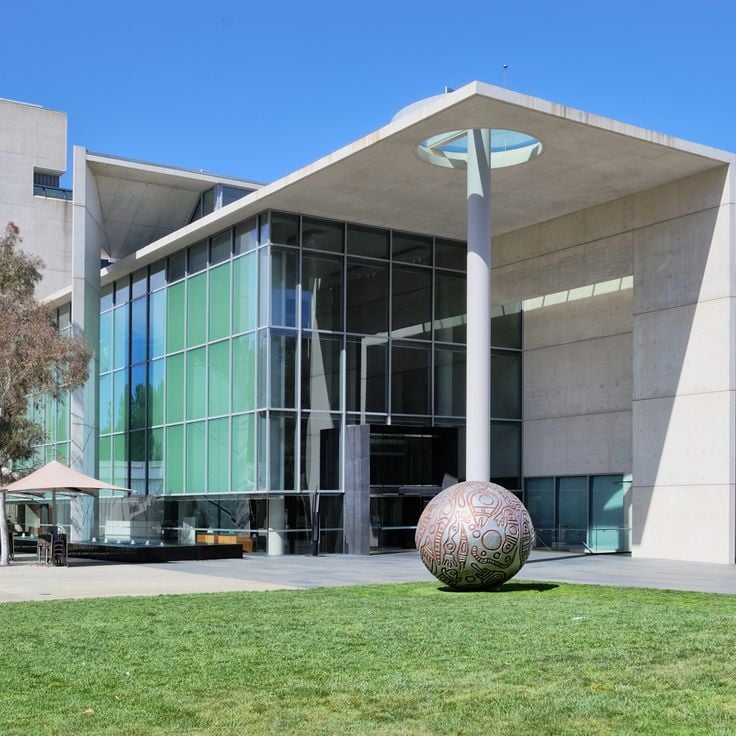
This art museum at Lake Burley Griffin opened in 1982 and demonstrates postmodern architectural principles through its use of varied geometric forms and materials. Designed by Colin Madigan, the building combines concrete, glass and steel elements with a pronounced triangular motif running throughout the structure. The facade merges austere modernist elements with playful postmodern details, while the interior employs natural light through large skylights. The museum houses over 166,000 artworks from Australia and around the world, showing how postmodern design can integrate functional exhibition spaces with architectural innovation.
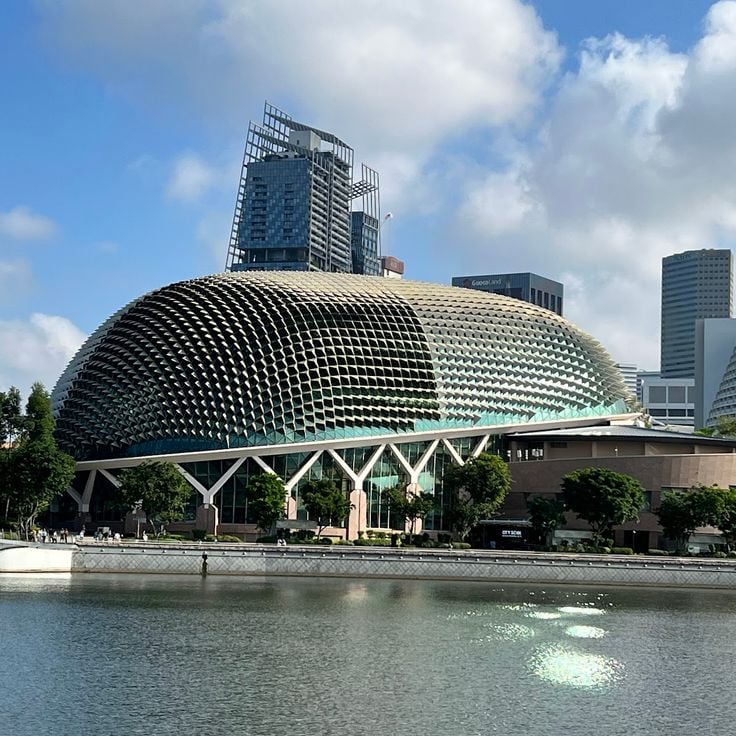
The Esplanade – Theatres on the Bay is a waterfront performing arts center in Singapore's Marina Centre, completed in 2002. Its two main buildings feature distinctive aluminum sunshades composed of triangular screening modules that form a characteristic roof structure over a 1,600-seat concert hall and a 2,000-seat theater. The structure integrates climate requirements with an expressive architectural language and includes additional performance spaces, a shopping mall, and a library. Designed by DP Architects and Michael Wilford & Partners, the complex demonstrates the postmodern approach of incorporating technical solutions into form-making design elements.
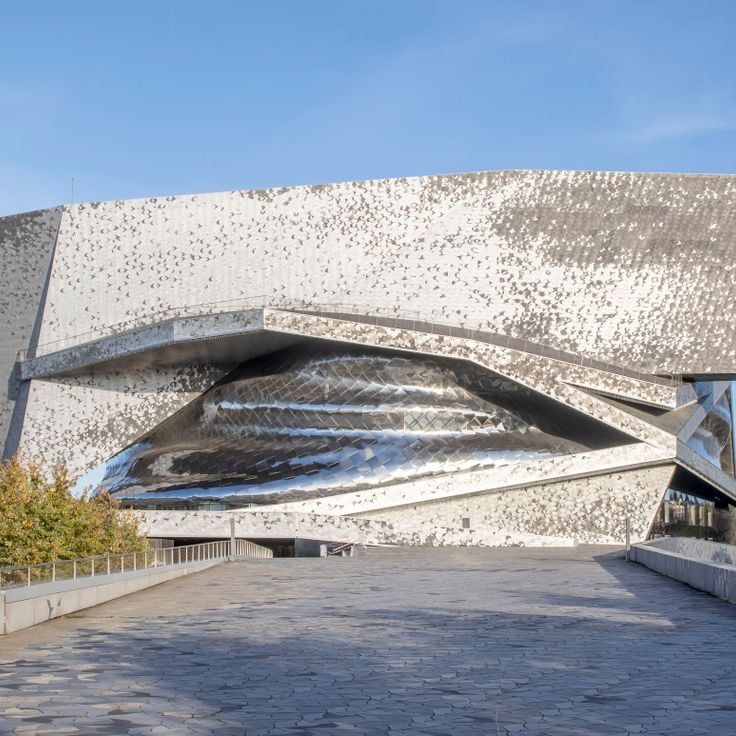
This concert hall in Parc de la Villette demonstrates the evolution of postmodern architecture through its asymmetric design and layered geometric forms. Jean Nouvel designed the Philharmonie de Paris as part of a larger cultural complex, with the reflective aluminum exterior experimenting with historical principles of ornament and surface treatment. The main auditorium seats 2,400 in a wraparound configuration, while the outer shell consists of hundreds of folded metal panels that capture daylight and create varying visual effects.
The Kunsthaus Graz stands as a clear example of postmodern architecture in the historic old town, its biomorphic shell of blue acrylic glass creating a deliberate contrast with the surrounding Baroque buildings. Completed in 2003 by architects Peter Cook and Colin Fournier, the structure employs a self-supporting steel framework with 1,288 circular skylights that can be programmed at night as a media facade. The museum's organic form and technical equipment demonstrate how postmodern design combines digital technologies with sculptural concepts while deliberately foregoing historical references.
This library spans eleven floors and was constructed from steel and glass, with its geometric outer structure representing a distinct example of postmodern architecture. Opened in 2004, the building was designed by Rem Koolhaas and Joshua Prince-Ramus and combines the functional requirements of a modern library with sculptural forms. The Seattle Central Library houses more than 1.4 million media items and serves as an important cultural center in the heart of the city. Its transparent facade and the unconventional angles of the construction reflect the innovative approach of contemporary building design since the 1970s.
This 1978 public square combines classical architectural elements with contemporary postmodern approaches. Piazza d'Italia presents columns, arches and fountains that blend traditional Italian piazza design with new materials and color schemes. The design by Charles Moore demonstrates characteristic features of postmodern architecture through its playful interpretation of historical forms and integration of neon lighting into classical structures. The square serves as an urban gathering space and represents the cultural contribution of the Italian-American community in New Orleans.
This 1982 administrative building was among the first major postmodern structures in the United States and sparked debate about architectural expression. Michael Graves designed the Portland Building with bold geometric forms and a facade in green, blue and red that departed from the prevailing modernist style of the time. The colored elements and symmetrical composition reflect the postmodern approach to reintroducing decorative features and historical references into contemporary structures. The building continues to house city offices and stands as an example of the architectural shift that occurred during the 1980s.
The Wexner Center for the Arts opened in 1989 as an early example of postmodern architecture in the United States. This cultural facility combines white steel scaffolding structures with red brick walls, creating an unconventional spatial composition that merges functional areas with artistic elements. The building demonstrates the experimental approach of postmodernism through its dissolution of traditional building boundaries and integration of exterior and interior spaces. The center serves as an exhibition venue for contemporary art and illustrates the technological and aesthetic developments of this architectural movement.
This intelligence service headquarters was completed in 1994 on the south bank of the Thames in Vauxhall. Architect Terry Farrell designed a stepped structure with green and cream elements that balances functional security requirements with representational aspects. The distinctive green windows and pyramid shaped rooftop structures give the SIS Building an unmistakable silhouette in the London skyline. The building demonstrates how postmodern architecture represents government institutions through a combination of technical precision and expressive forms. Its Thames riverside location and fortress design have made it a recognizable landmark in contemporary British architecture.
This concert hall displays geometric shapes in white concrete designed by architect Rem Koolhaas. The Casa da Música was completed in 2005 and contains two main auditoriums seating 1,238 and 350 people. The outward-leaning facade consists of folded concrete slabs, while the interior features walls of corrugated aluminum and colored glass. The building serves as Porto's principal concert venue and houses the Porto National Orchestra and the Remix Ensemble for contemporary music.
This museum building features metallic exterior cladding in various colors and was designed by Frank Gehry. The Experience Music Project Museum opened in 2000 and represents postmodern architecture through its organic forms and use of technology to create complex surfaces. The structure houses exhibits on popular culture and music, demonstrating the postmodern approach of combining functional buildings with sculptural elements. The colored metal skin reflects light in different ways, creating a dynamic appearance that changes throughout the day.
This Catholic church in Rome was designed by Richard Meier and consecrated in 2003. The three large white concrete shells that form its main feature rise between 49 and 85 feet (15 and 26 meters) and create a sharp contrast with traditional Roman architecture. The church serves a congregation in the Tor Tre Teste district and demonstrates Meier's characteristic use of white surfaces and geometric forms that modulate natural light in the interior space, representing a contemporary interpretation of sacred architecture.
This administrative building has served as Almere's city hall since 1986, combining postmodern elements with Dutch architectural traditions. The blue glass facade forms the structure's most recognizable feature, while traditional building forms were integrated into the contemporary design. The building represents the architectural development of one of the Netherlands' youngest cities and demonstrates how postmodern architects approached functional government buildings with cultural references. The structure stands in Almere's center and houses the municipal government offices.
Hotel Puerta America in Madrid opened in 2005 and presents the work of 19 internationally recognized architects and designers across 13 floors, including Norman Foster, Zaha Hadid and Jean Nouvel. Each floor displays a distinct design approach with different materials, color schemes and spatial solutions. The building combines contemporary architecture with hotel operations and offers 315 rooms. The facade by Teresa Sapey employs red, orange and yellow tones. This hotel demonstrates the diversity of postmodern design approaches through the collaboration of multiple creative perspectives within a functional structure.
The Pacific Design Center is a complex of three buildings covering 1.3 million square feet (120,000 square meters) dedicated to design and the arts. The structure opened in 1975 and expanded over several decades with additional buildings. Designed by Cesar Pelli, the buildings are distinguished by their colored glass facades: the blue main building, the green second structure, and the red third building. This postmodern architecture combines large exhibition spaces, offices, and event venues under a unified concept. The center serves as a hub for professionals in interior design, furniture, and decorative arts.
This museum in Atlanta spans four levels and houses more than 15,000 artworks. Richard Meier designed the building, characterized by its white facade and natural lighting. The collection ranges from classical to contemporary art. The High Museum of Art demonstrates how postmodern architecture connects museum and urban space. The galleries are arranged around a central atrium that receives daylight through skylights and links the exhibition spaces with a ramp.
The Centre Pompidou-Metz was designed by architect Shigeru Ban and opened in 2010. Its white steel roof spans 86,000 square feet (8,000 square meters) and covers three rectangular exhibition galleries plus an auditorium. The facades combine glass surfaces with steel beam structures. The museum presents rotating exhibitions of modern and contemporary art drawn from the Centre Pompidou Paris collection. This branch extended the reach of the Paris institution into eastern France.
This glass pyramid from 1989 serves as the main entrance to the Louvre and connects the historic palace with underground exhibition spaces. Chinese-American architect I. M. Pei designed the 69-foot (21-meter) structure with 603 rhombus-shaped and 70 triangular glass panes supported by a steel framework. The transparent structure allows daylight into the reception hall below and creates a modern link between the museum wings. Three smaller pyramids surround the central structure in the Cour Napoléon courtyard. The building illustrates the postmodern approach of combining contemporary materials and forms with historic architecture.
This shopping center in Warsaw displays characteristic features of postmodern architecture through its undulating glass roof that extends across multiple floors. Zlote Tarasy combines retail spaces with contemporary construction techniques, fitting into the urban landscape of Poland's capital. The curved structure demonstrates the use of modern building materials and architectural approaches developed in recent decades. The building serves as an example of commercial structures that merge functional requirements with pronounced design elements.
This port terminal features a curved roof landscape extending across multiple levels that connect interior and exterior spaces. The Yokohama International Passenger Terminal serves as a functional transportation hub for cruise ships while providing public areas. The walkable rooftop landscape allows visitors access to viewing areas over the bay. The building combines technical requirements of a modern seaport with accessible urban spaces. As an example of postmodern architecture, it demonstrates an approach that merges transport infrastructure with public use. The continuous ramps and levels create flowing transitions between different sections of the terminal.
The Guggenheim Museum Bilbao presents international art from the 20th and 21st centuries within a titanium-clad building featuring curved forms. This postmodern structure employs advanced materials and architectural technologies to create a sculptural design along the Nervión River. The museum opened in 1997 and combines exhibition spaces with an architectural form that became a work of art in its own right. The titanium panels reflect light and alter the building's appearance according to weather conditions and time of day.
This 180-meter office building in London features a spiraling glass facade with a steel frame and 41 floors. Completed in 2004, the tower uses natural ventilation and a climate system that reduces energy consumption. Its aerodynamic form minimizes wind loads and creates publicly accessible areas at ground level. The Swiss Re Building demonstrates postmodern architecture's integration of innovative design and technical efficiency, incorporating environmental considerations into a commercial high-rise structure.
This museum was designed by Oscar Niemeyer and opened in 1996 on the shores of Guanabara Bay. The circular concrete structure stands on a single support pillar, rising 52 feet (16 meters) above the water. The continuous window front provides views across Rio de Janeiro and the bay. The building features a winding ramp that leads to the entrance and a reflecting pool at its base. The exhibition space covers approximately 8,600 square feet (800 square meters) and displays contemporary Brazilian art.
This museum in Mexico City represents a notable example of postmodern architecture in Latin America. The asymmetrical building is covered with 16,000 hexagonal aluminum plates and contains six exhibition levels. The curved form and reflective facade distinguish Museo Soumaya from traditional museum structures in the region. The structure combines contemporary building materials with sculptural design, demonstrating the experimental approach of the postmodern movement.
This building erected between 1992 and 1996 along the Vltava River exemplifies the deconstructivist architecture of the postmodern era. The Dancing House combines curved forms with asymmetrical windows, breaking from the traditional rectangular structures of Prague's old town. The two towers were designed by Vlado Milunić and Frank Gehry, with one made of glass and the other of concrete. The seven-story structure houses a restaurant, offices and a gallery today, standing as a symbol of Czech architectural renewal following the fall of communism.
This museum occupies a geodesic dome that demonstrates postmodern principles through the adaptive reuse of a 1967 World's Fair structure. The Biosphère consists of a steel framework rising 203 feet (62 meters) and now functions as an environmental museum. The transparent construction combines technical innovation with educational purpose, showing how industrial building forms can be adapted for new uses. The structure stands as an example of postmodern practice in transforming existing frameworks into contemporary cultural facilities.
This chapel in Acapulco completed in 2011 demonstrates postmodern architectural principles through its polygonal concrete construction. The Sunset Chapel employs strategically positioned openings in the walls to channel natural light into the interior, creating geometric patterns of illumination. The design combines structural clarity with deliberate manipulation of shadow and brightness, emphasizing the functional nature of the religious space while incorporating artistic elements characteristic of the postmodern movement.
This Copenhagen opera house opened in 2004 and demonstrates postmodern architectural principles through its 105-foot (32-meter) glass facade. The building spans 14 floors and contains modern stage technology supporting contemporary productions. The structure combines functionality with design elements characteristic of public cultural buildings from this era, adding to the architectural development of the Danish capital along the waterfront.
The Oslo Opera House embodies postmodern architecture through its distinct engagement with urban space. The white marble structure rises directly from the Oslo Fjord and incorporates public roof surfaces that allow visitors to walk across its sloping planes. This facility, opened in 2008, combines technical innovation with an accessible design approach that dissolves boundaries between building and public realm. Designed by Snøhetta, the opera house serves as home to the Norwegian National Opera and Ballet while functioning as a waterfront civic plaza.
This gallery within the Horyuji temple complex displays religious artworks from the 7th century inside a modern concrete structure. The 1999 building by Yoshio Taniguchi employs precise light control to protect fragile treasures while presenting Buddhist sculptures, paintings, and ceremonial objects from the Asuka and Nara periods. The minimalist architecture combines traditional Japanese aesthetics with contemporary construction techniques, creating contemplative spaces for historical artifacts. This structure demonstrates postmodern architecture's fusion of function and form in museum design.
The Sharp Centre for Design stands as a distinct example of postmodern architecture. This rectangular volume appears to float on colored steel columns twelve stories (approximately 40 meters) above the art college ground level. The structure demonstrates the characteristic blend of technical innovation and artistic design that defines postmodern buildings since the 1970s. The colored columns support the volume while creating visual contrast within Toronto's urban setting.
The Ars Electronica Center is a glass structure with an LED facade in Linz that displays interactive media art and technological innovations across multiple exhibition spaces. The architecture combines contemporary materials with artistic elements and serves as an international forum for digital culture. The transparent building envelope allows views between the city and exhibition areas. The museum presents rotating exhibitions on topics including artificial intelligence, virtual reality and digital creativity. Programmable light installations on the exterior facade make the center a visible presence of modern architecture and technology after dark.
The City of Culture of Galicia consists of six buildings with white stone panels, glass and geometric forms on a hill outside the city. Peter Eisenman designed the complex, which includes libraries, archives, theaters and exhibition spaces. The undulating roofs follow the topography of the surrounding landscape. Construction began in 1999 and individual buildings opened between 2011 and 2021. The site ranks among Europe's largest cultural centers and houses galleries, event spaces and research facilities. The design combines technical innovation with regional references to Galician culture and the historic pilgrimage routes.
This office building combines steel construction with digital projection surfaces integrated into its exterior walls. Designed as part of the postmodern architectural movement in Los Angeles, the structure enables the integration of electronic media into the building envelope. The complex serves both as workspace and as an urban media surface, linking contemporary technology with functional architecture. The Samitaur Tower exemplifies the experimental approach of this period, incorporating innovative materials and new forms of communication into its design.
This transparent seven-story structure in Sendai demonstrates postmodern architectural principles through its visible tubes that serve both as load-bearing elements and light shafts. The building embodies the technological innovation of the postmodern movement, integrating functional requirements with artistic design while housing one of the city's most distinctive cultural institutions.
This stadium was built for the 2010 FIFA World Cup and holds 46,000 spectators. Nelson Mandela Stadium displays its postmodern architecture through a distinctive roof structure of white elements that reference the South African bird of paradise flower. The facility primarily hosts soccer and rugby matches and was named after the country's first democratically elected president. The construction combines functional requirements with symbolic references to local flora.
The National Centre for the Performing Arts was completed between 2001 and 2007 to a design by French architect Paul Andreu and sits adjacent to the Forbidden City in Beijing. The ellipsoid structure of titanium and glass rises from an artificial lake and reaches a height of 151 feet (46 meters) with a length of 696 feet (212 meters). The center contains three main halls with approximately 5,500 total seats: an opera house, a concert hall, and a theater for traditional Chinese performances. Visitors enter through an underground passage that runs beneath the surrounding water. This postmodern structure combines contemporary building materials with a form that contrasts sharply with its historical surroundings and demonstrates the application of complex engineering techniques in a major cultural project.
The Ryugyong Hotel is a 330-meter (1,080-foot) pyramidal structure in central Pyongyang, construction of which began in 1987 and remained incomplete after multiple interruptions. The design consists of three wing-shaped concrete sections converging along a central axis that terminates in a point. Glass cladding was installed starting in 2008, though interior finishing remains unfinished. This structure demonstrates North Korean architects' pursuit of international attention through monumental geometry and technical scale, while the decades-long construction history reflects the country's economic challenges.
This entertainment and commercial complex in Berlin's Tiergarten district was built between 1996 and 2000 to designs by Helmut Jahn on the historic site of Potsdamer Platz. The Sony Center combines offices, cinemas, shops and restaurants beneath an elliptical glass roof spanning approximately 43,000 square feet (4,000 square meters) that is illuminated at night. The construction incorporates remnants of the historic Hotel Esplanade into the new development. With its angled glass facades and open plaza design, the complex demonstrates technical approaches of the late 20th century and forms part of the postmodern redevelopment of this central Berlin district.
This cinema in the Charlottenburg district opened in 1957 and reopened in 2013 following extensive renovation. The facade of Zoo Palast combines postwar modernist elements with contemporary design approaches, including large glass surfaces and geometric forms. The building demonstrates typical features of postmodern architecture through its use of different materials and reinterpretation of classical cinema architecture. The structure serves as a venue for the Berlin International Film Festival and contains several screening rooms equipped with modern projection technology. The design connects the functional requirements of a multiplex cinema with architectural references to postwar Berlin architecture.
This skyscraper was completed in 1990 in the Central district, reaching a height of 1,205 feet (367 meters). Chinese-American architect I. M. Pei designed the building with a steel frame structure inspired by bamboo growth and articulated through diagonal bracing. The triangular glass facades reflect daylight and create changing light effects throughout the day. The building was the tallest in Hong Kong at the time of its opening and became the first building outside the United States to exceed 1,000 feet in height. A public observation deck on the 43rd floor provides views across Victoria Harbour and the surrounding districts. This structure demonstrates how postmodern architects combined geometric forms and modern building materials to create functional bank buildings with symbolic meaning.
This hotel completed in 1999 on a purpose-built island off Dubai represents postmodern architecture combining traditional Arabian design elements with contemporary engineering. The 321-foot (98-meter) tall tower features a sail-shaped silhouette visible from nearby Jumeirah Beach. Its white Teflon-coated fiberglass facade reflects light and creates a dynamic surface, while the interior atrium employs colored columns, gilded surfaces and patterned floors. The Burj al-Arab demonstrates the postmodern approach through its theatrical form, use of ornamental details and rejection of minimalist principles in favor of visually complex design.
This museum in Toronto originated through the merger of two collections in 1912 and has developed into a major institution for natural and cultural history in North America. The original Edwardian-era building received a postmodern crystalline addition in 2007, known as the Michael Lee-Chin Crystal. Five interlocking prismatic structures of steel, aluminum and glass project over the older section, creating sharp angles and asymmetric forms. The glass facade reflects the surrounding cityscape while the crystalline geometry provides a deliberate contrast to the historic stone walls, serving as an example of postmodern integration of contemporary forms with existing architecture.
This concert hall in Reykjavík combines crystalline glass facades with a steel frame, demonstrating a geometric approach to postmodern architecture. The outer shell consists of multicolored glass panels designed by artist Olafur Eliasson that create different light effects depending on time of day and weather conditions. The building houses four halls for various performances and serves as home to the Iceland Symphony Orchestra. Construction was completed in 2011 and the structure stands at Reykjavík's harbor, where the facade reflects in the water.
This modern library opened in Alexandria in 2002 and references the legacy of the ancient Library of Alexandria. The building features a tilted cylindrical form with a granite and glass facade that combines contemporary architecture with allusions to the historical significance of the site. The Bibliotheca Alexandrina functions as a cultural and educational center, housing an extensive collection of books, several museums and research facilities under one roof. As a postmodern structure, it demonstrates the use of technological innovation and symbolism in designing public institutions.
The Heydar Aliyev Cultural Center is a performing arts venue in Baku that demonstrates postmodern architectural principles through its flowing, undulating design. Designed by Zaha Hadid, the building eliminates sharp angles in favor of continuous curves that connect walls, roof and exterior spaces into a cohesive structure. The white fiberglass-reinforced concrete facade reflects light and emphasizes the organic forms of the construction, while interior spaces house exhibition galleries, a museum and event halls. This facility shows how postmodern architects employ digital design technologies and new construction materials to create buildings that depart from traditional geometric patterns.
This residential complex in Mississauga consists of two curving towers completed in 2012 that create a distinctive skyline profile with their rotating balconies. The two high-rises reach heights of 56 and 50 stories and demonstrate how postmodern architecture combines organic forms with advanced construction techniques to reinterpret conventional residential development. The continuously rotating floor plans of the towers show the movement's experimental approach to designing living spaces.
This palace in Buenos Aires was completed in the 1980s and demonstrates postmodern architectural principles through its combination of historical references with contemporary building forms. The structure serves as a cultural center in San Nicolás and presents a facade that merges ornamental elements with modern materials. Libertad Palace illustrates the postmodern movement's approach to reintroducing decorative details into architecture while creating functional spaces for cultural programming. The building contributes to the collection of postmodern structures worldwide through its particular interpretation of architectural traditions within a South American context.
This indoor market hall in Rotterdam combines commercial functions with residential units within a parabolic building completed in 2014. The interior surface displays large-format digital prints depicting fruits, vegetables and flowers. The building houses over one hundred market stalls and restaurants beneath the vaulted roof, while the exterior consists of glass facades and apartments. The Market Hall demonstrates contemporary approaches to mixed-use urban developments, where public market spaces integrate with private residential areas in a single architectural structure.
This fire station on the Vitra Campus in Weil am Rhein demonstrates deconstructivist architecture through sharp angles and dynamic concrete forms. Completed in 1993, the building now functions as an events space and shows the experimental approach of postmodernism through fragmented geometry and spatial tension. The angular concrete structure contrasts with surrounding industrial buildings and marks a turning point in contemporary building design.
This art museum at Lake Burley Griffin opened in 1982 and demonstrates postmodern architectural principles through its use of varied geometric forms and materials. Designed by Colin Madigan, the building combines concrete, glass and steel elements with a pronounced triangular motif running throughout the structure. The facade merges austere modernist elements with playful postmodern details, while the interior employs natural light through large skylights. The museum houses over 166,000 artworks from Australia and around the world, showing how postmodern design can integrate functional exhibition spaces with architectural innovation.
The Esplanade – Theatres on the Bay is a waterfront performing arts center in Singapore's Marina Centre, completed in 2002. Its two main buildings feature distinctive aluminum sunshades composed of triangular screening modules that form a characteristic roof structure over a 1,600-seat concert hall and a 2,000-seat theater. The structure integrates climate requirements with an expressive architectural language and includes additional performance spaces, a shopping mall, and a library. Designed by DP Architects and Michael Wilford & Partners, the complex demonstrates the postmodern approach of incorporating technical solutions into form-making design elements.
This concert hall in Parc de la Villette demonstrates the evolution of postmodern architecture through its asymmetric design and layered geometric forms. Jean Nouvel designed the Philharmonie de Paris as part of a larger cultural complex, with the reflective aluminum exterior experimenting with historical principles of ornament and surface treatment. The main auditorium seats 2,400 in a wraparound configuration, while the outer shell consists of hundreds of folded metal panels that capture daylight and create varying visual effects.
The Kunsthaus Graz stands as a clear example of postmodern architecture in the historic old town, its biomorphic shell of blue acrylic glass creating a deliberate contrast with the surrounding Baroque buildings. Completed in 2003 by architects Peter Cook and Colin Fournier, the structure employs a self-supporting steel framework with 1,288 circular skylights that can be programmed at night as a media facade. The museum's organic form and technical equipment demonstrate how postmodern design combines digital technologies with sculptural concepts while deliberately foregoing historical references.
This library spans eleven floors and was constructed from steel and glass, with its geometric outer structure representing a distinct example of postmodern architecture. Opened in 2004, the building was designed by Rem Koolhaas and Joshua Prince-Ramus and combines the functional requirements of a modern library with sculptural forms. The Seattle Central Library houses more than 1.4 million media items and serves as an important cultural center in the heart of the city. Its transparent facade and the unconventional angles of the construction reflect the innovative approach of contemporary building design since the 1970s.
This 1978 public square combines classical architectural elements with contemporary postmodern approaches. Piazza d'Italia presents columns, arches and fountains that blend traditional Italian piazza design with new materials and color schemes. The design by Charles Moore demonstrates characteristic features of postmodern architecture through its playful interpretation of historical forms and integration of neon lighting into classical structures. The square serves as an urban gathering space and represents the cultural contribution of the Italian-American community in New Orleans.
This 1982 administrative building was among the first major postmodern structures in the United States and sparked debate about architectural expression. Michael Graves designed the Portland Building with bold geometric forms and a facade in green, blue and red that departed from the prevailing modernist style of the time. The colored elements and symmetrical composition reflect the postmodern approach to reintroducing decorative features and historical references into contemporary structures. The building continues to house city offices and stands as an example of the architectural shift that occurred during the 1980s.
The Wexner Center for the Arts opened in 1989 as an early example of postmodern architecture in the United States. This cultural facility combines white steel scaffolding structures with red brick walls, creating an unconventional spatial composition that merges functional areas with artistic elements. The building demonstrates the experimental approach of postmodernism through its dissolution of traditional building boundaries and integration of exterior and interior spaces. The center serves as an exhibition venue for contemporary art and illustrates the technological and aesthetic developments of this architectural movement.
This intelligence service headquarters was completed in 1994 on the south bank of the Thames in Vauxhall. Architect Terry Farrell designed a stepped structure with green and cream elements that balances functional security requirements with representational aspects. The distinctive green windows and pyramid shaped rooftop structures give the SIS Building an unmistakable silhouette in the London skyline. The building demonstrates how postmodern architecture represents government institutions through a combination of technical precision and expressive forms. Its Thames riverside location and fortress design have made it a recognizable landmark in contemporary British architecture.
This concert hall displays geometric shapes in white concrete designed by architect Rem Koolhaas. The Casa da Música was completed in 2005 and contains two main auditoriums seating 1,238 and 350 people. The outward-leaning facade consists of folded concrete slabs, while the interior features walls of corrugated aluminum and colored glass. The building serves as Porto's principal concert venue and houses the Porto National Orchestra and the Remix Ensemble for contemporary music.
This museum building features metallic exterior cladding in various colors and was designed by Frank Gehry. The Experience Music Project Museum opened in 2000 and represents postmodern architecture through its organic forms and use of technology to create complex surfaces. The structure houses exhibits on popular culture and music, demonstrating the postmodern approach of combining functional buildings with sculptural elements. The colored metal skin reflects light in different ways, creating a dynamic appearance that changes throughout the day.
This Catholic church in Rome was designed by Richard Meier and consecrated in 2003. The three large white concrete shells that form its main feature rise between 49 and 85 feet (15 and 26 meters) and create a sharp contrast with traditional Roman architecture. The church serves a congregation in the Tor Tre Teste district and demonstrates Meier's characteristic use of white surfaces and geometric forms that modulate natural light in the interior space, representing a contemporary interpretation of sacred architecture.
This administrative building has served as Almere's city hall since 1986, combining postmodern elements with Dutch architectural traditions. The blue glass facade forms the structure's most recognizable feature, while traditional building forms were integrated into the contemporary design. The building represents the architectural development of one of the Netherlands' youngest cities and demonstrates how postmodern architects approached functional government buildings with cultural references. The structure stands in Almere's center and houses the municipal government offices.
Hotel Puerta America in Madrid opened in 2005 and presents the work of 19 internationally recognized architects and designers across 13 floors, including Norman Foster, Zaha Hadid and Jean Nouvel. Each floor displays a distinct design approach with different materials, color schemes and spatial solutions. The building combines contemporary architecture with hotel operations and offers 315 rooms. The facade by Teresa Sapey employs red, orange and yellow tones. This hotel demonstrates the diversity of postmodern design approaches through the collaboration of multiple creative perspectives within a functional structure.
The Pacific Design Center is a complex of three buildings covering 1.3 million square feet (120,000 square meters) dedicated to design and the arts. The structure opened in 1975 and expanded over several decades with additional buildings. Designed by Cesar Pelli, the buildings are distinguished by their colored glass facades: the blue main building, the green second structure, and the red third building. This postmodern architecture combines large exhibition spaces, offices, and event venues under a unified concept. The center serves as a hub for professionals in interior design, furniture, and decorative arts.
This museum in Atlanta spans four levels and houses more than 15,000 artworks. Richard Meier designed the building, characterized by its white facade and natural lighting. The collection ranges from classical to contemporary art. The High Museum of Art demonstrates how postmodern architecture connects museum and urban space. The galleries are arranged around a central atrium that receives daylight through skylights and links the exhibition spaces with a ramp.
The Centre Pompidou-Metz was designed by architect Shigeru Ban and opened in 2010. Its white steel roof spans 86,000 square feet (8,000 square meters) and covers three rectangular exhibition galleries plus an auditorium. The facades combine glass surfaces with steel beam structures. The museum presents rotating exhibitions of modern and contemporary art drawn from the Centre Pompidou Paris collection. This branch extended the reach of the Paris institution into eastern France.
This glass pyramid from 1989 serves as the main entrance to the Louvre and connects the historic palace with underground exhibition spaces. Chinese-American architect I. M. Pei designed the 69-foot (21-meter) structure with 603 rhombus-shaped and 70 triangular glass panes supported by a steel framework. The transparent structure allows daylight into the reception hall below and creates a modern link between the museum wings. Three smaller pyramids surround the central structure in the Cour Napoléon courtyard. The building illustrates the postmodern approach of combining contemporary materials and forms with historic architecture.
This shopping center in Warsaw displays characteristic features of postmodern architecture through its undulating glass roof that extends across multiple floors. Zlote Tarasy combines retail spaces with contemporary construction techniques, fitting into the urban landscape of Poland's capital. The curved structure demonstrates the use of modern building materials and architectural approaches developed in recent decades. The building serves as an example of commercial structures that merge functional requirements with pronounced design elements.
This port terminal features a curved roof landscape extending across multiple levels that connect interior and exterior spaces. The Yokohama International Passenger Terminal serves as a functional transportation hub for cruise ships while providing public areas. The walkable rooftop landscape allows visitors access to viewing areas over the bay. The building combines technical requirements of a modern seaport with accessible urban spaces. As an example of postmodern architecture, it demonstrates an approach that merges transport infrastructure with public use. The continuous ramps and levels create flowing transitions between different sections of the terminal.
The Guggenheim Museum Bilbao presents international art from the 20th and 21st centuries within a titanium-clad building featuring curved forms. This postmodern structure employs advanced materials and architectural technologies to create a sculptural design along the Nervión River. The museum opened in 1997 and combines exhibition spaces with an architectural form that became a work of art in its own right. The titanium panels reflect light and alter the building's appearance according to weather conditions and time of day.
This 180-meter office building in London features a spiraling glass facade with a steel frame and 41 floors. Completed in 2004, the tower uses natural ventilation and a climate system that reduces energy consumption. Its aerodynamic form minimizes wind loads and creates publicly accessible areas at ground level. The Swiss Re Building demonstrates postmodern architecture's integration of innovative design and technical efficiency, incorporating environmental considerations into a commercial high-rise structure.
This museum was designed by Oscar Niemeyer and opened in 1996 on the shores of Guanabara Bay. The circular concrete structure stands on a single support pillar, rising 52 feet (16 meters) above the water. The continuous window front provides views across Rio de Janeiro and the bay. The building features a winding ramp that leads to the entrance and a reflecting pool at its base. The exhibition space covers approximately 8,600 square feet (800 square meters) and displays contemporary Brazilian art.
This museum in Mexico City represents a notable example of postmodern architecture in Latin America. The asymmetrical building is covered with 16,000 hexagonal aluminum plates and contains six exhibition levels. The curved form and reflective facade distinguish Museo Soumaya from traditional museum structures in the region. The structure combines contemporary building materials with sculptural design, demonstrating the experimental approach of the postmodern movement.
This building erected between 1992 and 1996 along the Vltava River exemplifies the deconstructivist architecture of the postmodern era. The Dancing House combines curved forms with asymmetrical windows, breaking from the traditional rectangular structures of Prague's old town. The two towers were designed by Vlado Milunić and Frank Gehry, with one made of glass and the other of concrete. The seven-story structure houses a restaurant, offices and a gallery today, standing as a symbol of Czech architectural renewal following the fall of communism.
This museum occupies a geodesic dome that demonstrates postmodern principles through the adaptive reuse of a 1967 World's Fair structure. The Biosphère consists of a steel framework rising 203 feet (62 meters) and now functions as an environmental museum. The transparent construction combines technical innovation with educational purpose, showing how industrial building forms can be adapted for new uses. The structure stands as an example of postmodern practice in transforming existing frameworks into contemporary cultural facilities.
This chapel in Acapulco completed in 2011 demonstrates postmodern architectural principles through its polygonal concrete construction. The Sunset Chapel employs strategically positioned openings in the walls to channel natural light into the interior, creating geometric patterns of illumination. The design combines structural clarity with deliberate manipulation of shadow and brightness, emphasizing the functional nature of the religious space while incorporating artistic elements characteristic of the postmodern movement.
This Copenhagen opera house opened in 2004 and demonstrates postmodern architectural principles through its 105-foot (32-meter) glass facade. The building spans 14 floors and contains modern stage technology supporting contemporary productions. The structure combines functionality with design elements characteristic of public cultural buildings from this era, adding to the architectural development of the Danish capital along the waterfront.
The Oslo Opera House embodies postmodern architecture through its distinct engagement with urban space. The white marble structure rises directly from the Oslo Fjord and incorporates public roof surfaces that allow visitors to walk across its sloping planes. This facility, opened in 2008, combines technical innovation with an accessible design approach that dissolves boundaries between building and public realm. Designed by Snøhetta, the opera house serves as home to the Norwegian National Opera and Ballet while functioning as a waterfront civic plaza.
This gallery within the Horyuji temple complex displays religious artworks from the 7th century inside a modern concrete structure. The 1999 building by Yoshio Taniguchi employs precise light control to protect fragile treasures while presenting Buddhist sculptures, paintings, and ceremonial objects from the Asuka and Nara periods. The minimalist architecture combines traditional Japanese aesthetics with contemporary construction techniques, creating contemplative spaces for historical artifacts. This structure demonstrates postmodern architecture's fusion of function and form in museum design.
The Sharp Centre for Design stands as a distinct example of postmodern architecture. This rectangular volume appears to float on colored steel columns twelve stories (approximately 40 meters) above the art college ground level. The structure demonstrates the characteristic blend of technical innovation and artistic design that defines postmodern buildings since the 1970s. The colored columns support the volume while creating visual contrast within Toronto's urban setting.
The Ars Electronica Center is a glass structure with an LED facade in Linz that displays interactive media art and technological innovations across multiple exhibition spaces. The architecture combines contemporary materials with artistic elements and serves as an international forum for digital culture. The transparent building envelope allows views between the city and exhibition areas. The museum presents rotating exhibitions on topics including artificial intelligence, virtual reality and digital creativity. Programmable light installations on the exterior facade make the center a visible presence of modern architecture and technology after dark.
The City of Culture of Galicia consists of six buildings with white stone panels, glass and geometric forms on a hill outside the city. Peter Eisenman designed the complex, which includes libraries, archives, theaters and exhibition spaces. The undulating roofs follow the topography of the surrounding landscape. Construction began in 1999 and individual buildings opened between 2011 and 2021. The site ranks among Europe's largest cultural centers and houses galleries, event spaces and research facilities. The design combines technical innovation with regional references to Galician culture and the historic pilgrimage routes.
This office building combines steel construction with digital projection surfaces integrated into its exterior walls. Designed as part of the postmodern architectural movement in Los Angeles, the structure enables the integration of electronic media into the building envelope. The complex serves both as workspace and as an urban media surface, linking contemporary technology with functional architecture. The Samitaur Tower exemplifies the experimental approach of this period, incorporating innovative materials and new forms of communication into its design.
This transparent seven-story structure in Sendai demonstrates postmodern architectural principles through its visible tubes that serve both as load-bearing elements and light shafts. The building embodies the technological innovation of the postmodern movement, integrating functional requirements with artistic design while housing one of the city's most distinctive cultural institutions.
This stadium was built for the 2010 FIFA World Cup and holds 46,000 spectators. Nelson Mandela Stadium displays its postmodern architecture through a distinctive roof structure of white elements that reference the South African bird of paradise flower. The facility primarily hosts soccer and rugby matches and was named after the country's first democratically elected president. The construction combines functional requirements with symbolic references to local flora.
The National Centre for the Performing Arts was completed between 2001 and 2007 to a design by French architect Paul Andreu and sits adjacent to the Forbidden City in Beijing. The ellipsoid structure of titanium and glass rises from an artificial lake and reaches a height of 151 feet (46 meters) with a length of 696 feet (212 meters). The center contains three main halls with approximately 5,500 total seats: an opera house, a concert hall, and a theater for traditional Chinese performances. Visitors enter through an underground passage that runs beneath the surrounding water. This postmodern structure combines contemporary building materials with a form that contrasts sharply with its historical surroundings and demonstrates the application of complex engineering techniques in a major cultural project.
The Ryugyong Hotel is a 330-meter (1,080-foot) pyramidal structure in central Pyongyang, construction of which began in 1987 and remained incomplete after multiple interruptions. The design consists of three wing-shaped concrete sections converging along a central axis that terminates in a point. Glass cladding was installed starting in 2008, though interior finishing remains unfinished. This structure demonstrates North Korean architects' pursuit of international attention through monumental geometry and technical scale, while the decades-long construction history reflects the country's economic challenges.
This entertainment and commercial complex in Berlin's Tiergarten district was built between 1996 and 2000 to designs by Helmut Jahn on the historic site of Potsdamer Platz. The Sony Center combines offices, cinemas, shops and restaurants beneath an elliptical glass roof spanning approximately 43,000 square feet (4,000 square meters) that is illuminated at night. The construction incorporates remnants of the historic Hotel Esplanade into the new development. With its angled glass facades and open plaza design, the complex demonstrates technical approaches of the late 20th century and forms part of the postmodern redevelopment of this central Berlin district.
This cinema in the Charlottenburg district opened in 1957 and reopened in 2013 following extensive renovation. The facade of Zoo Palast combines postwar modernist elements with contemporary design approaches, including large glass surfaces and geometric forms. The building demonstrates typical features of postmodern architecture through its use of different materials and reinterpretation of classical cinema architecture. The structure serves as a venue for the Berlin International Film Festival and contains several screening rooms equipped with modern projection technology. The design connects the functional requirements of a multiplex cinema with architectural references to postwar Berlin architecture.
This skyscraper was completed in 1990 in the Central district, reaching a height of 1,205 feet (367 meters). Chinese-American architect I. M. Pei designed the building with a steel frame structure inspired by bamboo growth and articulated through diagonal bracing. The triangular glass facades reflect daylight and create changing light effects throughout the day. The building was the tallest in Hong Kong at the time of its opening and became the first building outside the United States to exceed 1,000 feet in height. A public observation deck on the 43rd floor provides views across Victoria Harbour and the surrounding districts. This structure demonstrates how postmodern architects combined geometric forms and modern building materials to create functional bank buildings with symbolic meaning.
This hotel completed in 1999 on a purpose-built island off Dubai represents postmodern architecture combining traditional Arabian design elements with contemporary engineering. The 321-foot (98-meter) tall tower features a sail-shaped silhouette visible from nearby Jumeirah Beach. Its white Teflon-coated fiberglass facade reflects light and creates a dynamic surface, while the interior atrium employs colored columns, gilded surfaces and patterned floors. The Burj al-Arab demonstrates the postmodern approach through its theatrical form, use of ornamental details and rejection of minimalist principles in favor of visually complex design.
This museum in Toronto originated through the merger of two collections in 1912 and has developed into a major institution for natural and cultural history in North America. The original Edwardian-era building received a postmodern crystalline addition in 2007, known as the Michael Lee-Chin Crystal. Five interlocking prismatic structures of steel, aluminum and glass project over the older section, creating sharp angles and asymmetric forms. The glass facade reflects the surrounding cityscape while the crystalline geometry provides a deliberate contrast to the historic stone walls, serving as an example of postmodern integration of contemporary forms with existing architecture.
This concert hall in Reykjavík combines crystalline glass facades with a steel frame, demonstrating a geometric approach to postmodern architecture. The outer shell consists of multicolored glass panels designed by artist Olafur Eliasson that create different light effects depending on time of day and weather conditions. The building houses four halls for various performances and serves as home to the Iceland Symphony Orchestra. Construction was completed in 2011 and the structure stands at Reykjavík's harbor, where the facade reflects in the water.
This modern library opened in Alexandria in 2002 and references the legacy of the ancient Library of Alexandria. The building features a tilted cylindrical form with a granite and glass facade that combines contemporary architecture with allusions to the historical significance of the site. The Bibliotheca Alexandrina functions as a cultural and educational center, housing an extensive collection of books, several museums and research facilities under one roof. As a postmodern structure, it demonstrates the use of technological innovation and symbolism in designing public institutions.
The Heydar Aliyev Cultural Center is a performing arts venue in Baku that demonstrates postmodern architectural principles through its flowing, undulating design. Designed by Zaha Hadid, the building eliminates sharp angles in favor of continuous curves that connect walls, roof and exterior spaces into a cohesive structure. The white fiberglass-reinforced concrete facade reflects light and emphasizes the organic forms of the construction, while interior spaces house exhibition galleries, a museum and event halls. This facility shows how postmodern architects employ digital design technologies and new construction materials to create buildings that depart from traditional geometric patterns.
This residential complex in Mississauga consists of two curving towers completed in 2012 that create a distinctive skyline profile with their rotating balconies. The two high-rises reach heights of 56 and 50 stories and demonstrate how postmodern architecture combines organic forms with advanced construction techniques to reinterpret conventional residential development. The continuously rotating floor plans of the towers show the movement's experimental approach to designing living spaces.
This palace in Buenos Aires was completed in the 1980s and demonstrates postmodern architectural principles through its combination of historical references with contemporary building forms. The structure serves as a cultural center in San Nicolás and presents a facade that merges ornamental elements with modern materials. Libertad Palace illustrates the postmodern movement's approach to reintroducing decorative details into architecture while creating functional spaces for cultural programming. The building contributes to the collection of postmodern structures worldwide through its particular interpretation of architectural traditions within a South American context.
This indoor market hall in Rotterdam combines commercial functions with residential units within a parabolic building completed in 2014. The interior surface displays large-format digital prints depicting fruits, vegetables and flowers. The building houses over one hundred market stalls and restaurants beneath the vaulted roof, while the exterior consists of glass facades and apartments. The Market Hall demonstrates contemporary approaches to mixed-use urban developments, where public market spaces integrate with private residential areas in a single architectural structure.
This fire station on the Vitra Campus in Weil am Rhein demonstrates deconstructivist architecture through sharp angles and dynamic concrete forms. Completed in 1993, the building now functions as an events space and shows the experimental approach of postmodernism through fragmented geometry and spatial tension. The angular concrete structure contrasts with surrounding industrial buildings and marks a turning point in contemporary building design.
This art museum at Lake Burley Griffin opened in 1982 and demonstrates postmodern architectural principles through its use of varied geometric forms and materials. Designed by Colin Madigan, the building combines concrete, glass and steel elements with a pronounced triangular motif running throughout the structure. The facade merges austere modernist elements with playful postmodern details, while the interior employs natural light through large skylights. The museum houses over 166,000 artworks from Australia and around the world, showing how postmodern design can integrate functional exhibition spaces with architectural innovation.
The Esplanade – Theatres on the Bay is a waterfront performing arts center in Singapore's Marina Centre, completed in 2002. Its two main buildings feature distinctive aluminum sunshades composed of triangular screening modules that form a characteristic roof structure over a 1,600-seat concert hall and a 2,000-seat theater. The structure integrates climate requirements with an expressive architectural language and includes additional performance spaces, a shopping mall, and a library. Designed by DP Architects and Michael Wilford & Partners, the complex demonstrates the postmodern approach of incorporating technical solutions into form-making design elements.
This concert hall in Parc de la Villette demonstrates the evolution of postmodern architecture through its asymmetric design and layered geometric forms. Jean Nouvel designed the Philharmonie de Paris as part of a larger cultural complex, with the reflective aluminum exterior experimenting with historical principles of ornament and surface treatment. The main auditorium seats 2,400 in a wraparound configuration, while the outer shell consists of hundreds of folded metal panels that capture daylight and create varying visual effects.
The Kunsthaus Graz stands as a clear example of postmodern architecture in the historic old town, its biomorphic shell of blue acrylic glass creating a deliberate contrast with the surrounding Baroque buildings. Completed in 2003 by architects Peter Cook and Colin Fournier, the structure employs a self-supporting steel framework with 1,288 circular skylights that can be programmed at night as a media facade. The museum's organic form and technical equipment demonstrate how postmodern design combines digital technologies with sculptural concepts while deliberately foregoing historical references.