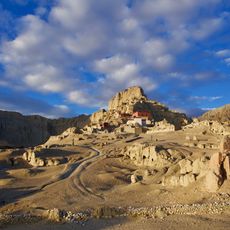
Donggar Ruins, Archaeological cave complex in Zanda County, China
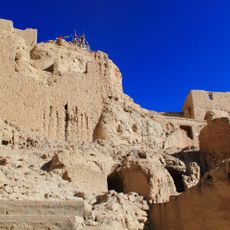
Donggar is an extensive Buddhist cave system spread across two kilometers along a cliff face, containing over 200 individual structures carved into the rock. The walls throughout these chambers are covered with painted religious scenes and figures.
These caves were established in the 10th century under the Guge Kingdom as part of eight monasteries founded by the religious leader Rinchen Sangpo. They represent a major expansion of Buddhist practice in this region at that time.
The painted walls display Buddhist figures and religious scenes that reflect the spiritual role this place held for monks and pilgrims. These images shaped how people experienced and understood their faith within these spaces.
You need permission from the Cultural Affairs Bureau in Zanda to visit the caves, which you should arrange before your trip. Wear comfortable shoes for climbing along uneven pathways, and bring water since the cliff face offers little shade.
The murals use mineral-based dyes that have kept their original colors intact over a thousand years, which explains why the paint remains vivid today. What makes this striking is that many scenes include non-native animals such as elephants and peacocks, revealing the artist's familiarity with distant places and trade routes.
The community of curious travelers
AroundUs brings together thousands of curated places, local tips, and hidden gems, enriched daily by 90,813 contributors worldwide.