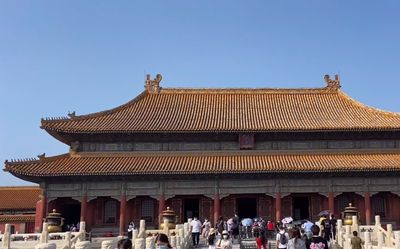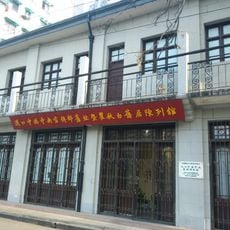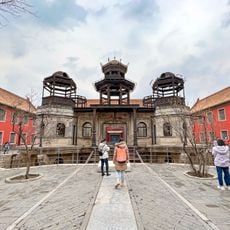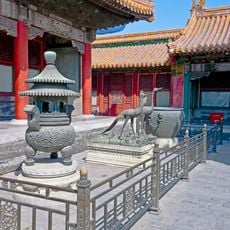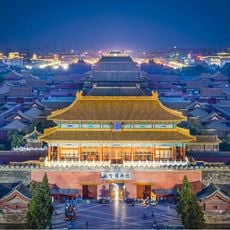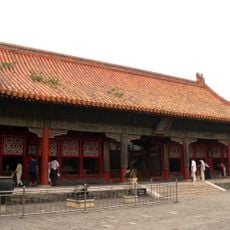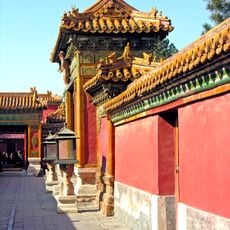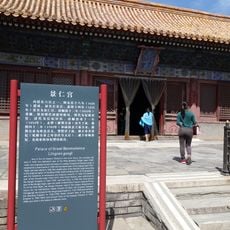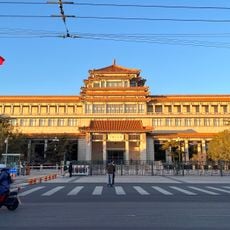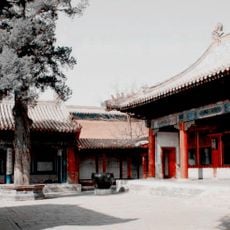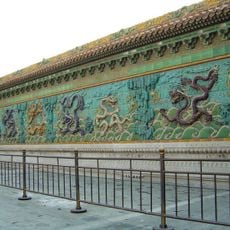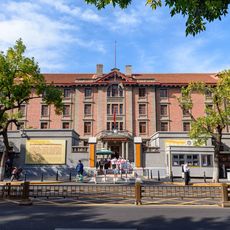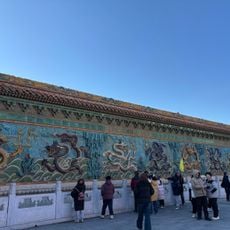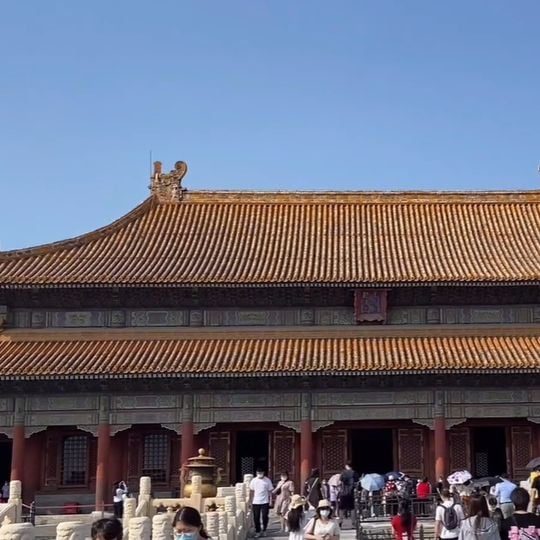
Jingyang Palace, Palace in the Forbidden City, Beijing, China
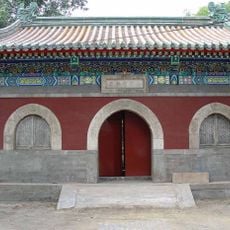
Jingyang Palace is a two-courtyard compound in the northeast corner of the Forbidden City's East Six Palaces, built in 1420 and rebuilt in 1686. Its front hall has three bays under a yellow-glazed hip roof, unlike the other five East Six Palaces, and faces a raised terrace. The rear hall, the Imperial Study, has five bays and a yellow-glazed gable roof.
The complex was built in 1420 during the Ming dynasty and later served as one of the Six Eastern Palaces for imperial consorts during the Qing period. The buildings were repeatedly modified and expanded over the centuries.
The name Jingyang means "revering the light", taken from the Yijing phrase for the northeast direction of the trigram Gen, where the palace stands. Since the Qing dynasty it held books rather than consorts: the Qianlong emperor kept Song Gaozong's copy of the Mao Shi and Ma Hezhi's Shijing illustrations in the rear hall, which he named Xueshitang, "Hall of Studying the Poems".
The palace can be explored as part of a visit to the Forbidden City, with access information found through the main complex listing. Wearing comfortable shoes is recommended since exploring all areas requires considerable walking.
The gold hair pagoda displayed here holds the combed hair of Empress Dowager Chongqing, Qianlong's mother; he ordered it made less than a month after her death. A 1987 lightning strike started the largest fire in the Palace Museum since 1949, after which lightning rods were fitted.
The community of curious travelers
AroundUs brings together thousands of curated places, local tips, and hidden gems, enriched daily by 93,093 contributors worldwide.