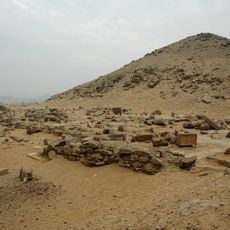
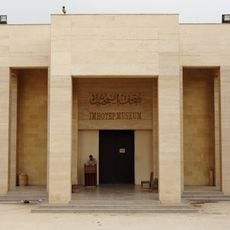
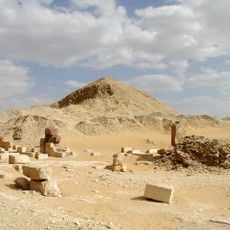
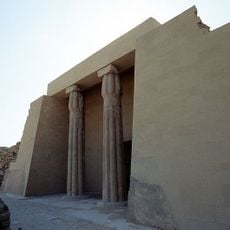
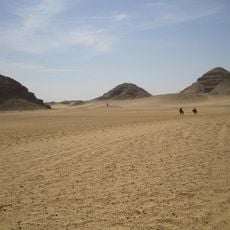
Serapeum of Saqqara, Underground catacomb for Apis bull burials in Saqqara, Egypt
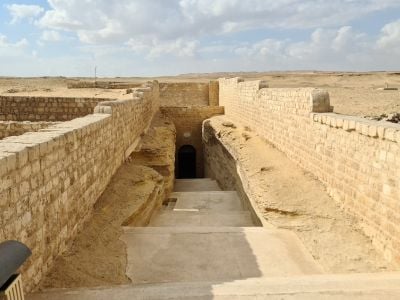
The Serapeum is an underground temple complex beneath Saqqara with long corridors housing massive stone sarcophagi. These containers were designed to hold the mummified remains of sacred bulls and are built from heavy stone blocks.
The earliest Apis burials, from the reign of Amenhotep III in the 14th century BC, were isolated tombs. Khaemweset, son of Ramesses II, ordered the tunnel now called the Lesser Vaults, while the Greater Vaults were begun under Psamtik I and extended to about 350 m in Ptolemaic times. Auguste Mariette, who had come to Egypt for Coptic manuscripts, followed a sphinx head protruding from the sand in 1850 and entered the catacombs in November 1851.
Ancient Egyptians revered certain bulls as living forms of the god Ptah and believed they became Osiris after death. This religious respect was so important that the animals received grand funerals and were placed in specially built underground chambers.
The complex lies underground and requires stairs to descend into the corridors, so comfortable shoes are important. The chambers are dark and cool, and visitors should allow time to explore the different rooms at a steady pace.
Only four of the 24 surviving sarcophagi carry inscriptions. Those of Amasis II are finely cut, while one anonymous lid was merely scratched onto the polished stone. In 1862 the Prince of Wales, later Edward VII, lunched with his party inside one of the sarcophagi.
The community of curious travelers
AroundUs brings together thousands of curated places, local tips, and hidden gems, enriched daily by 93,254 contributors worldwide.