Pyramid of Sahure, Egyptian pyramid in Abusir, Egypt
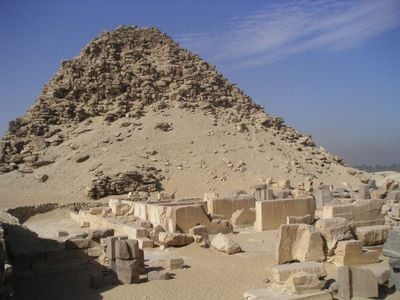
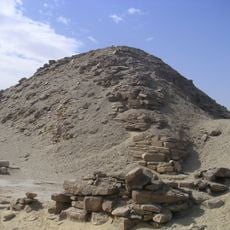
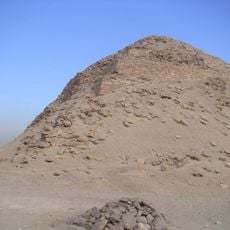
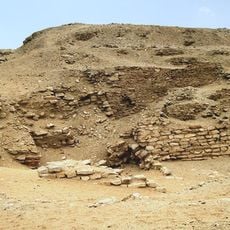
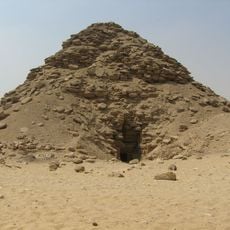
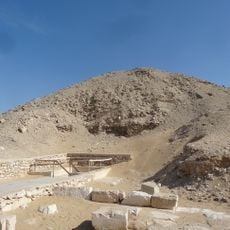
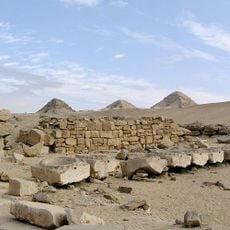
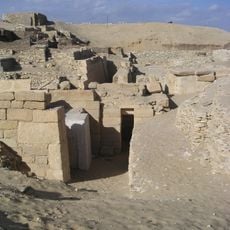
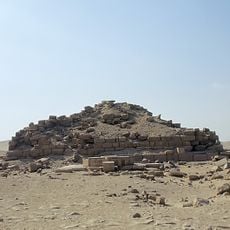
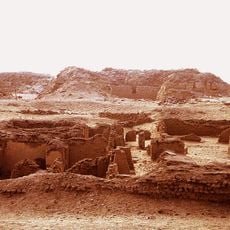
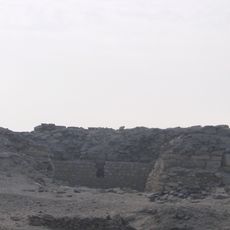
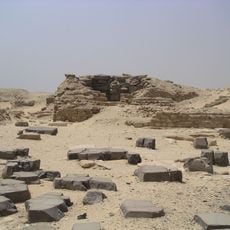
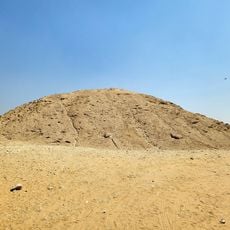
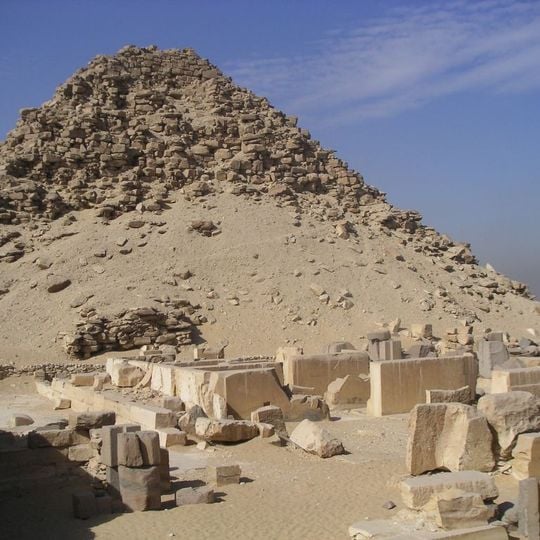
The Pyramid of Sahure is a ruined pyramid of rough limestone blocks in Abusir, its lower and middle sections buried under sand and rubble while the upper masonry remains visible. It was originally encased in fine white Tura limestone, with a base of about 78.75 m and a height of 47 m. At its base stand low walls and platforms of pale stone, remains of the mortuary temple.
Sahure, second king of the Fifth Dynasty, built the first pyramid at Abusir, choosing a site about 400 m southeast of Userkaf's sun temple. The complex was finished before his death and its layout became the model for Fifth- and Sixth-Dynasty royal tombs. A cult of Sekhmet in the mortuary temple from the Eighteenth Dynasty onward helped spare the monument from the destruction that hit other Abusir tombs.
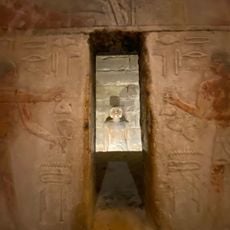
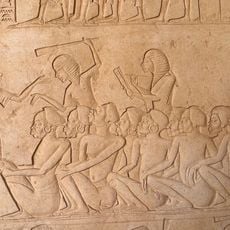
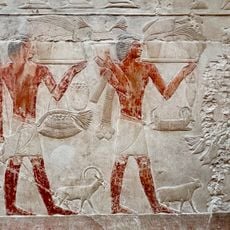
The name connects to Pharaoh Sahure, whose reign lasted about 13 years and opened a period of active trade. Reliefs show ships returning from expeditions and gods offering their hands to the king.
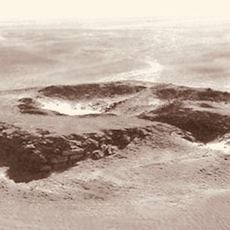
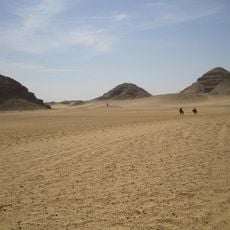
The pyramid's core is badly damaged and the internal chambers were devastated by stone thieves, so the substructure cannot be visited or reconstructed. The monument stands in the Abusir necropolis, where the sand-covered lower slope and exposed masonry make footing uneven. The mortuary temple on the east face and the cult pyramid to its south are the main surviving elements to examine.
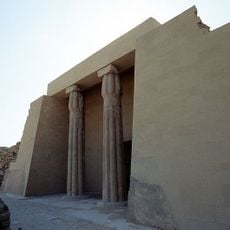
The valley temple structure holds granite palm columns, regarded as the earliest known use of plant-form columns in ancient Egyptian building. These columns provided later temples with a model for organic design elements.
The community of curious travelers
AroundUs brings together thousands of curated places, local tips, and hidden gems, enriched daily by 93,291 contributors worldwide.