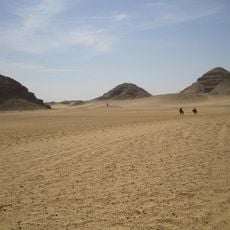
Pyramid of Nyuserre Ini, Egyptian pyramid in Abusir, Egypt.
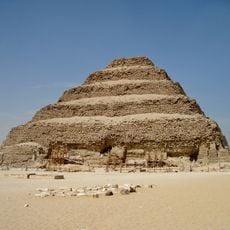
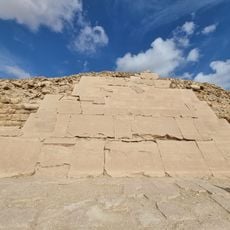
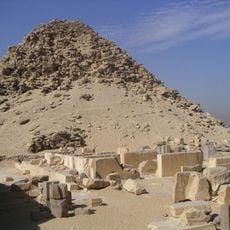
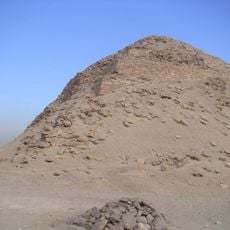
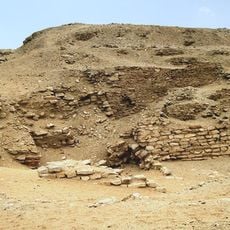
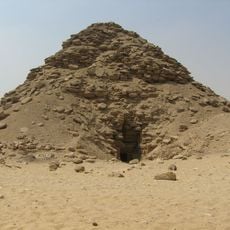
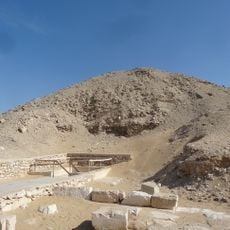
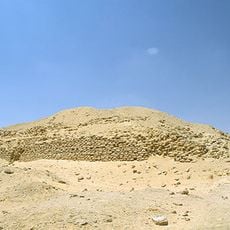
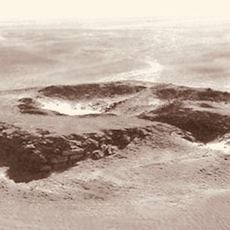
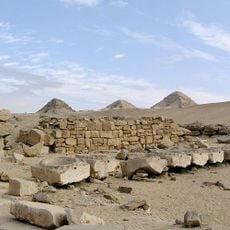
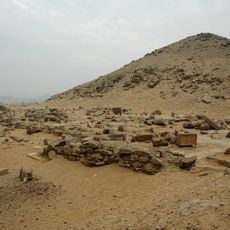
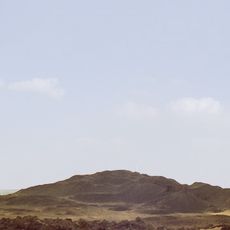
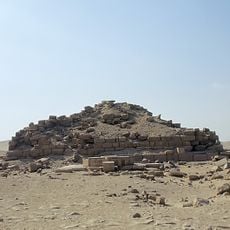
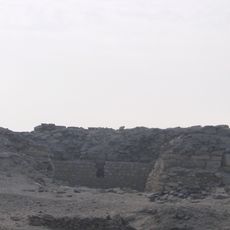
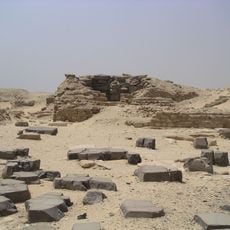
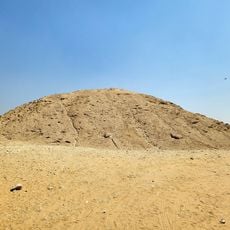
The Pyramid of Nyuserre Ini is a mound of pale limestone rubble in the Abusir necropolis, the remains of a stepped core of rough-cut limestone once encased in fine Tura limestone and nearly 52 m tall. Stone thieves stripped the casing, and the exposed core now rises to a blunt top, with a crumbling stepped cluster of masonry at its lower front and loose blocks at the base. Its substructure is dangerous to enter because of cave-ins.
The pyramid was built during the Fifth Dynasty around 2445 BC as the final royal burial in this necropolis. Its construction marks the end of a long tradition of royal burials at Abusir, a site that contains several other royal pyramids.
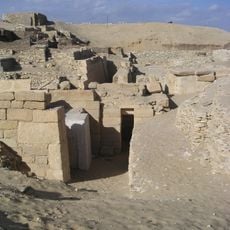
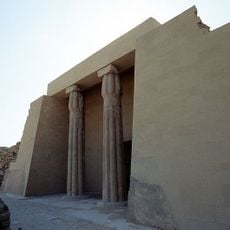
The mortuary temple's L-shaped plan, forced by mastabas to the east, replaced the usual T-shape. It debuted the antambre carrée, a square room with a single column, later standard in royal monuments. Its unexplained square platform may have held an obelisk pyramidion, a feature of sun temples rather than pyramid complexes.
The substructure is dangerous to enter because of the risk of cave-ins, so the interior passages should not be attempted; the monument is viewed from outside. The site lies in the Abusir necropolis between Saqqara and the Giza Plateau, and the pyramid is reached from the sandy ground at its foot. The mortuary temple adjoins the east face, and the causeway runs from it toward the valley temple.
The pyramid's name, Mn-swt Nỉ-wsr-rꜥ, means "Enduring are the places of Nyuserre". Its mortuary temple holds an unexplained square platform that led archaeologists to suggest a nearby obelisk pyramidion, a feature of sun temples rather than pyramid complexes.
The community of curious travelers
AroundUs brings together thousands of curated places, local tips, and hidden gems, enriched daily by 94,757 contributors worldwide.